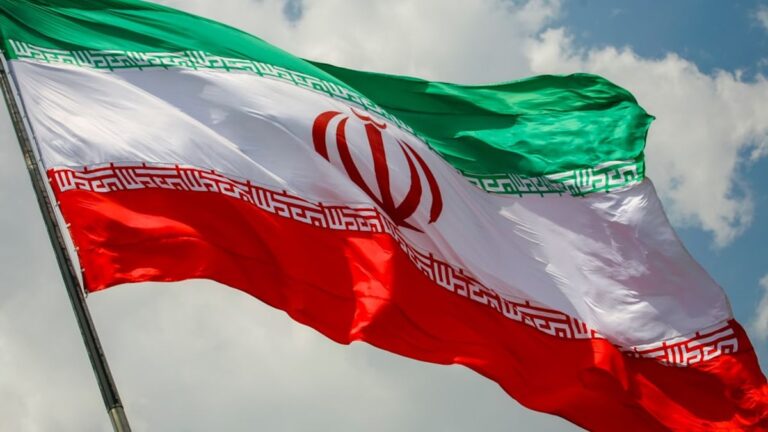

The first sign of the Iran sports disruption was not a affected stadium or an injured star. It was silence. A top-flight football match in Tehran, usually deafening, was called off minutes before kickoff. Players were already in the tunnel when a message reached the referee: travel restrictions, logistical challenges, and a rapidly escalating conflict meant everyone had to go home. That single postponement has since rippled across football leagues, Formula 1, cricket tours, and even Paralympic qualifiers from Doha to London. AI Athlete Data Fuels Iran’s Football Edge And Risks
As detailed by Reuters, the US-Israel confrontation with Iran has forced organisers to freeze or relocate events across West Asia, while competitions far from the front lines scramble to adjust travel and security plans. The Iran sports disruption in multiple ways: empty calendars in Iran, reshuffled fixtures in Qatar and Saudi Arabia, and a cloud of uncertainty over global tournaments like the FIFA World Cup and major boxing cards.
This article traces how the conflict is disrupting schedules, finances, athletes\u2019 careers, and fan culture. It also outlines practical steps federations, clubs, and athletes can take to plan, protect contracts, and maintain performance in a landscape where situation, not the whistle, now decides when the game starts.
turmoil on the calendar: how the Middle East crisis shut down and reshaped sporting events
The story of a single postponed match in Tehran quickly turned into a regional shutdown. Domestic leagues in Iran halted almost overnight, while nearby countries tried to keep their competitions alive under tighter security and constant risk assessments.
Coverage from The Economic Times describes how Iranian stadiums went dark even as the Qatar Stars League cautiously resumed, illustrating how geography and airspace exposure now shape who can safely host games. Organisers in the United Arab Emirates, Saudi Arabia, and Bahrain convened emergency meetings to evaluate escalations ranges, flight corridors, and insurance clauses alongside fixture lists.
Data compiled by outlets like Front Office Sports show a pattern of postponements, venue swaps, and \u201cbehind-closed-doors\u201d matches spreading from Iran to neutral sites. Football, cricket, basketball, and motorsport have all seen dates moved or erased.
- Domestic shutdowns in Iran: Professional leagues paused, youth tournaments cancelled, and training camps relocated or suspended.
- Neutral-venue planning: AFC competitions and national team fixtures shifted to stadiums in Gulf states perceived as safer, creating logistical strain.
- Airspace-driven scheduling: Routes that previously transited Iranian skies were rerouted, lengthening travel times and forcing calendar revisions.
- Security-first kickoffs: Local authorities in places like Doha and Riyadh now approve matches only after updated threat assessments.
- Layered contingency plans: Federations design A, B, and C schedules in case specific cities or air corridors become inaccessible at short notice.
The turmoil impacts sports scheduling in a way that feels more like crisis management than event planning. Every match is now a conditional promise rather than a fixed date.
From F1 to FIFA: how the US-Israel crisis with Iran disrupts global sports ecosystems
One stark reality stands out: the Iran sports disruption far beyond its borders, entangling global series like Formula 1, the FIFA World Cup qualifiers, and international cricket. The conflict acts as a pressure point on the entire sports ecosystem, from broadcasters to sponsors.
As Deutsche Welle explains, travel bans, insurance costs, and security requirements are forcing governing bodies to rethink where and how they stage events. A Grand Prix in the Gulf, a cricket series in the UAE, or a World Cup qualifier involving Iran all become high-risk operations overnight.
Travel bans, insurance costs, and security requirements are forcing governing bodies to rethink where and how they stage events. \u2014 Deutsche Welle
Broadcasters like beIN Sports and major networks in Europe must rework programming grids multiple times as fixtures slip, move, or vanish. This disrupts advertising campaigns that were tied to specific matches or tournaments. Sponsors who bought visibility in Tehran, Doha, or Jeddah now negotiate make-goods, alternative signage, or digital campaigns to replace lost exposure.
Clubs and federations also face practical disruptions. Player transfers and loan deals involving Iranian clubs stall as banks scrutinise payments and agents struggle to secure visas. Youth academies in the region, which depend on tournaments and scouting visits, lose critical windows for player evaluation.
For fans, the disruption is tangible but uneven. Supporters in Iran see live sport disappear from their cities. Fans elsewhere may only notice late-night kickoff changes or neutral venues listed on broadcast graphics. Yet beneath those minor inconveniences lies a deep structural shock that could reshape how sports bodies view the Middle East as a long-term host and commercial partner.
How the Iran crisis is disrupting athletes\u2019 careers, safety, and mental preparation
What does the Iran sports disruption mean for the individuals whose livelihoods depend on competing? The question is not abstract for footballers in Tehran, F1 mechanics flying through Dubai, or Paralympians training in Jordan. How Regional Instability Is Stalling Football Transfers and Disrupting Sport Calendars
Athletes now navigate a landscape where travel plans can collapse overnight, and loved ones may be living under air-raid sirens while they compete abroad. This dual pressure\u2014professional uncertainty and personal fear\u2014creates a complex risk profile.
- Career interruptions and lost peak years
Iranian athletes in football, wrestling, weightlifting, and volleyball face suspended leagues and blocked pathways to international exposure. A striker in his mid-20s may miss the narrow window when European clubs usually scout and sign talent. Without regular competition, performance data and match footage that agents use to market players simply do not exist. - Contract and income instability
Many contracts include force majeure clauses that allow clubs to delay or reduce payments during situation or political crises. Athletes must work with agents and legal advisers to clarify what is guaranteed and what is contingent. Some seek short-term deals in neighbouring leagues, but those markets are suddenly saturated with displaced players. - Mental health and performance under stress
Competing while worrying about family in Iran or Israel affects sleep, focus, and injury risk. Sports psychologists often recommend structured routines, limited news exposure on match days, and clear communication plans with families to reduce anxiety. Clubs can support by offering counselling and flexible leave when security situations escalate. - Safety decisions and personal red lines
Some athletes, especially high-profile stars like Lionel Messi or Lewis Hamilton mentioned in HuffPost coverage, may face choices about whether to travel to or transit through affected regions. They and their teams define non-negotiable safety thresholds\u2014such as avoiding flights over active conflict zones or declining friendlies in high-risk areas. - Practical steps for athletes and support teams
- Maintain updated travel risk assessments with club security officers.
- Ensure contracts specify payment protections during conflict-related suspensions.
- Build digital performance portfolios (GPS data, video) to offset fewer live matches.
- Schedule regular sessions with mental performance coaches during intense news cycles.
- Keep emergency communication plans with family and agents in case of sudden border closures.
In practical terms, the Iran sports disruption careers by compressing earning windows and forcing athletes to become risk managers as much as competitors.
\u201cWe\u2019re caught in the middle\u201d: inside the ripple effects on clubs, leagues, and host nations
\u201cWe\u2019re caught in the middle of something we can\u2019t control,\u201d one club executive in the Gulf told reporters, summarising how administrators feel as escalations and diplomatic statements dictate their fixture lists. That sentiment runs through coverage from BBC Sport, Reuters, and others charting how the Iran sports disruption governance.
For domestic Iranian clubs, the context is stark. Stadiums that once generated ticket revenue, concessions, and local sponsorships now sit idle. Youth academies lose match days that justified investment in coaches and facilities. Sponsors hesitate to renew deals tied to live attendance or local visibility.
By contrast, some neighbouring countries find themselves unexpectedly central. Qatar, Saudi Arabia, and the UAE become default hosts for \u201chome\u201d matches involving Iranian teams or neutral-site international fixtures. This creates both opportunity and strain: extra ticket and hospitality revenue on one hand, but compressed schedules and security costs on the other.
Comparing these experiences reveals three distinct tiers of impact:
- Direct conflict zone (Iran): Full or near-full shutdown of professional sport, with severe financial and developmental consequences.
- Near-region hosts (Qatar, UAE, Saudi Arabia): Operational overload as they absorb relocated events, plus heightened security and reputational risk if an incident occurs.
- Global partners (European leagues, US broadcasters): Contractual and programming headaches, but more flexibility to shift content or reschedule.
Leagues must balance competitive integrity with safety. For example, if Iran\u2019s national team cannot host qualifiers, federations debate whether to award automatic forfeits, choose neutral venues, or compress matches into tight windows in safer locations. None of these options is fully fair to all teams involved.
In this environment, clubs and leagues that perform best are those with robust scenario planning: pre-approved alternative venues, clear communication protocols, and legal frameworks that define how revenues and costs are shared when events move. The Iran sports disruption governance by turning contingency planning from an afterthought into a core competency.
Iran sports disruption finances: broadcast, sponsorship, and grassroots fallout
On paper, a postponed match looks like a line on a calendar. On the balance sheet, it is a cascade of lost tickets, refunds, unpaid bonuses, and renegotiated sponsorships. The Iran sports disruption economics from top-tier broadcast deals down to local youth clubs.
Broadcast and media contracts under pressure
Broadcasters that paid for rights to Iranian leagues or regional competitions suddenly hold inventory they cannot air. Networks may attempt to replace cancelled matches with archive content, studio shows, or games from other leagues, but this rarely satisfies advertisers who bought specific time slots linked to live sport. Iran Sports Technology Drives New Era In Athletic Performance
Rights contracts typically contain clauses for force majeure, but applying them can be contentious. Leagues argue for partial payment based on matches already played; broadcasters seek discounts or free rights extensions. Legal disputes can drag on, while fans experience more filler content and fewer live fixtures.
Sponsorship visibility and brand risk
Brands that invested in front-of-shirt deals with Iranian clubs, pitchside LED boards, or event naming rights lose visibility when games stop. Some shift budgets to digital campaigns or to clubs in safer markets. Others pause sports marketing entirely in the region, wary of reputational risks associated with dispute imagery or political messaging.
For companies like Nike, Adidas, or Puma, which outfit national teams and clubs across West Asia, the challenge is dual: fulfil existing kit contracts while managing supply chain disruptions and potential boycotts linked to perceived political stances.
Grassroots and community sport squeezed
At the base of the pyramid, local clubs and community facilities feel the pinch quickly. Municipal budgets may divert funds from sport infrastructure to emergency services. Youth leagues lose entry fees and sponsorship from small businesses focused on survival rather than marketing.
Practically, this means fewer training sessions, deteriorating pitches, and less access to coaching. For a generation of Iranian children, the Iran sports disruption participation could mean delayed or derailed development, both athletically and socially.
- Create emergency grants for grassroots clubs in conflict-affected regions.
- Promote low-cost, low-infrastructure sports (running, futsal, basic fitness) that can continue in smaller, safer spaces.
- Use digital coaching platforms to maintain skill development when organised leagues stop.
- Partner with international bodies like FIFA or the International Olympic Committee to fund safe community hubs.
Without such interventions, the financial shock at the elite level risks hollowing out the base that sustains long-term talent pipelines.
Strategic playbook: how federations and athletes can adapt to conflict-driven disruption
While no sports body can control geopolitics, they can prepare for its consequences. The Iran sports disruption planning in ways that other regions can study and apply as a risk-management template.
Scenario planning and flexible competition formats
Federations can design competitions with built-in flexibility. This may include modular group stages that can be completed in centralised \u201cbubble\u201d locations, or scheduling windows that allow for compressed mini-tournaments if travel becomes difficult.
For example, Asian football authorities already have experience from pandemic-era centralised qualifiers. Similar models can be adapted for conflict conditions, with pre-identified neutral venues in countries that maintain open airspace and stable security ratings. Lewis Hamilton Ferrari 2026: What It Means For F1’s Future
Contract design and legal safeguards
Clubs, leagues, and athletes should review contracts to clarify obligations during conflict. Key steps include:
- Defining specific triggers for force majeure and how payments adjust.
- Including clauses that allow relocation of matches without breaching sponsorship terms.
- Ensuring players\u2019 basic salaries are protected even when bonuses linked to appearances cannot be paid.
- Establishing arbitration mechanisms to resolve disputes quickly, avoiding long court battles.
Agents representing Iranian or regional athletes can push for \u201cconflict protection\u201d clauses that guarantee minimum income levels during prolonged suspensions.
Travel, security, and wellness protocols
Teams can standardise risk assessments for any trip touching the Middle East. This includes checking flight paths for overflight of conflict zones, coordinating with private security firms, and preparing evacuation plans.
On the human side, clubs should integrate mental health support as a core part of their response. Regular check-ins, access to counselling, and clear communication about risks help players and staff feel informed rather than helpless.
Finally, communication with fans matters. Transparent explanations of postponements, relocations, and safety measures build trust. In an era when misinformation can spread quickly on social media, leagues that explain how the upheaval impacts sports decisions in plain language reduce speculation and anger.
FAQ: Iran sports disruption, national teams, and regional fan culture
1. Has Iran qualified for the FIFA World Cup?
Historically, Iran has qualified for multiple FIFA World Cup tournaments and built a strong regional reputation. In the current conflict context, qualification is complicated less by on-pitch performance and more by logistics and politics. travel restrictions, security concerns, and the need for neutral venues can delay or relocate qualifiers involving Iran. Some reports, including coverage by Sportcal, note that Iran\u2019s participation in upcoming cycles is under review due to these operational constraints. Whether Iran ultimately qualifies will depend on both results and the ability of football authorities to stage fixtures safely and fairly.
2. What is Iran’s favorite sport?
Football (soccer) is widely regarded as Iran\u2019s favourite sport. The national team, known as Team Melli, won the Asian championships in 1968, 1974, and 1976 and made its World Cup debut in 1978, cementing football\u2019s place in Iranian culture. According to historical accounts referenced by outlets like DW, the 1979 revolution temporarily disrupted organised sport, as authorities viewed large stadium gatherings with suspicion. Over time, however, football re-emerged as a central part of public life. Even now, despite the Iran sports disruption scheduling and attendance, football remains the primary passion for many Iranian fans, from domestic league matches to international tournaments.
3. Which country is No.1 in sports?
There is no single universally accepted ranking of the \u201cNo.1\u201d country in sports, because it depends on the metric used. Some analysts look at Olympic medal tables, where nations like the United States and China often dominate. Others consider global popularity and success across multiple sports, where countries such as the US, the UK, and Germany perform strongly in football, athletics, basketball, and more. Organisations like the International Olympic Committee publish medal data, but they do not crown an overall \u201cbest\u201d sports nation. In the context of the Iran sports disruption, rankings matter less than the shared disruptions that affect athletes and competitions worldwide.
4. What is Israel’s favorite sport?
Football (Hebrew: \u05db\u05d3\u05d5\u05e8\u05d2\u05dc, Kaduregel) is considered the most popular sport in Israel. The Israel Football Association governs the professional leagues and national teams. Historically, Israel joined the Asian Football Confederation in 1954 but was expelled in 1974 amid political tensions linked to the Arab\u2013Israeli conflict, later integrating into UEFA\u2019s European system. Domestic clubs like Maccabi Haifa and Maccabi Tel Aviv enjoy passionate support. The current US-Israel confrontation with Iran complicates regional fixtures and travel, but the cultural centrality of football in Israel remains strong, with fans closely following both local leagues and European competitions broadcast nationwide.
5. How has the Iran crisis affected Iran\u2019s domestic football league?
The Iran sports disruption domestically by forcing league organisers to suspend or heavily modify competitions. Many top-flight matches have been postponed indefinitely due to security risks, travel restrictions, and the potential for stadiums to become targets or gathering points during heightened tensions. Clubs lose ticket revenue, broadcasters lack live content, and players miss crucial match practice. Training often continues in limited or relocated formats, but without regular fixtures, performance levels and scouting opportunities decline. Some clubs explore playing \u201chome\u201d games in neighbouring countries, yet this requires complex coordination and may not be financially viable for all teams in Iran\u2019s football system.
6. Are international events in Qatar and the UAE safe from the Iran conflict?
Events in Qatar and the UAE are not inside the immediate conflict zone, but they are influenced by regional dynamics. Authorities in Doha and Abu Dhabi conduct regular risk assessments before approving large gatherings, especially high-profile football matches or motorsport events. Airspace rerouting can lengthen travel times, and organisers must plan for enhanced security at stadiums and fan zones. According to reporting by Reuters, some competitions have proceeded with additional precautions, while others were shifted or delayed. No venue can be declared absolutely \u201csafe,\u201d but Gulf states invest heavily in security infrastructure to keep international events operational despite the Iran sports disruption logistics.
7. How are athletes managing travel and safety during the Iran crisis?
Athletes and teams now treat travel planning as a core part of performance preparation. Clubs work with security consultants to evaluate routes that avoid overflight of active conflict zones, and they coordinate closely with airlines and local authorities. Many teams maintain updated evacuation and contingency plans in case borders close rapidly. Players are briefed on emergency procedures and encouraged to keep personal documents and communication devices accessible. Some high-profile athletes may decline invitations to tournaments in higher-risk areas, prioritising safety over competition. The Iran sports disruption travel by turning what used to be routine flights into carefully managed operations with multiple backup options.
8. Could the conflict permanently change where major tournaments are hosted?
The Iran sports disruption hosting strategies by making federations more cautious about selecting venues in volatile regions. While many hope the conflict will be temporary, repeated disruptions can push organisers to favour countries with stable security profiles and open airspace when awarding World Cups, Asian Cups, or major boxing cards. However, there is also pressure to keep global sport inclusive and avoid permanently sidelining entire regions. A likely outcome is a more rigorous risk assessment process, stronger insurance requirements, and contingency plans built into hosting agreements. Permanent exclusion is unlikely, but the bar for hosting rights in and around Iran will probably be higher for years to come.
Action steps: immediate measures federations, clubs and athletes should take
Below are practical next steps to help decision-makers and competitors prepare for continued disruption and reduce short- and medium-term harm.
- Audit contracts and finances: Review force majeure language, secure minimum salary guarantees for players, and open early dialogue with broadcasters and sponsors about make-good clauses.
- Create a contingency calendar: Pre-identify neutral venues, reserve provisional dates, and build modular competition formats that can compress or pause without destroying sporting integrity.
- Strengthen travel and security protocols: Map flight paths to avoid risky overflights, contract vetted private security providers for critical trips, and maintain clear evacuation plans for staff and athletes.
- Invest in mental-health support: Provide routine counselling, limit exposure to sensational news ahead of competition, and establish family communication protocols to reduce anxiety.
- Protect grassroots pipelines: Establish emergency grant funds, expand low-cost local programming, and deploy digital coaching to keep youth development on track.
- Document performance remotely: Encourage athletes to maintain video and GPS logs of training to aid scouting and transfers when live matches are limited.
- Engage insurers early: Negotiate event insurance that explicitly covers regional conflict risks and confirm cover for relocated matches and additional security costs.
- Communicate transparently: Share clear public updates with fans and partners about safety decisions, refund policies, and contingency plans to preserve trust.
Conclusion: turning crisis into a blueprint for resilient sport
The Iran sports disruption at every level, from empty stadiums in Tehran to reshuffled broadcast schedules in London. What began as a series of emergency postponements has exposed how tightly global sport is woven into air routes, political alliances, and regional stability. Football leagues pause, F1 calendars wobble, and athletes juggle performance goals with concerns for family back home.
Yet this disruption also offers a hard-earned lesson: sport cannot afford to treat geopolitics as background noise. Federations, clubs, and athletes that adapt\u2014through flexible scheduling, robust legal frameworks, and serious investment in security and mental health\u2014will be better prepared not only for this conflict but for future crises, whether political, climatic, or health-related.
For Iranian athletes and fans, the priority is survival and continuity. Keeping grassroots programmes alive, preserving pathways for talent, and maintaining some form of competition\u2014even in reduced or relocated formats\u2014will determine how quickly sport can recover when the guns fall silent. For neighbouring hosts like Qatar and the UAE, the challenge is to manage the influx of displaced events without overextending infrastructure or compromising safety.
Administrators elsewhere should treat the Iran sports disruption as a warning and a guide. Now is the time to audit contracts, build contingency calendars, and establish transparent communication channels with fans and partners. Readers involved in sport\u2014whether as executives, coaches, or athletes\u2014can start by reviewing their own risk plans, asking where they rely on vulnerable routes or venues, and drafting realistic alternatives.
Conflict has pushed sport into a reactive stance. The next step is proactive resilience: using the painful lessons from Iran and West Asia to design a global sports system that can bend under pressure without breaking.
Disclaimer: This article is for informational purposes only. The content provided should not be used as a substitute for professional advice tailored to your specific circumstances.
\n
\n
\u270d\ufe0f\n
Combat-sports journalist and former national-level wrestler with 8 years reporting across domestic and international circuits. She produces in-depth fighter profiles, fight-camp reporting and coverage of Iran’s wrestling and MMA pathways, leveraging strong contacts inside gyms and federations.
\n \u2014 Fatemeh Kianpour\n
\n\n\n\n\n