


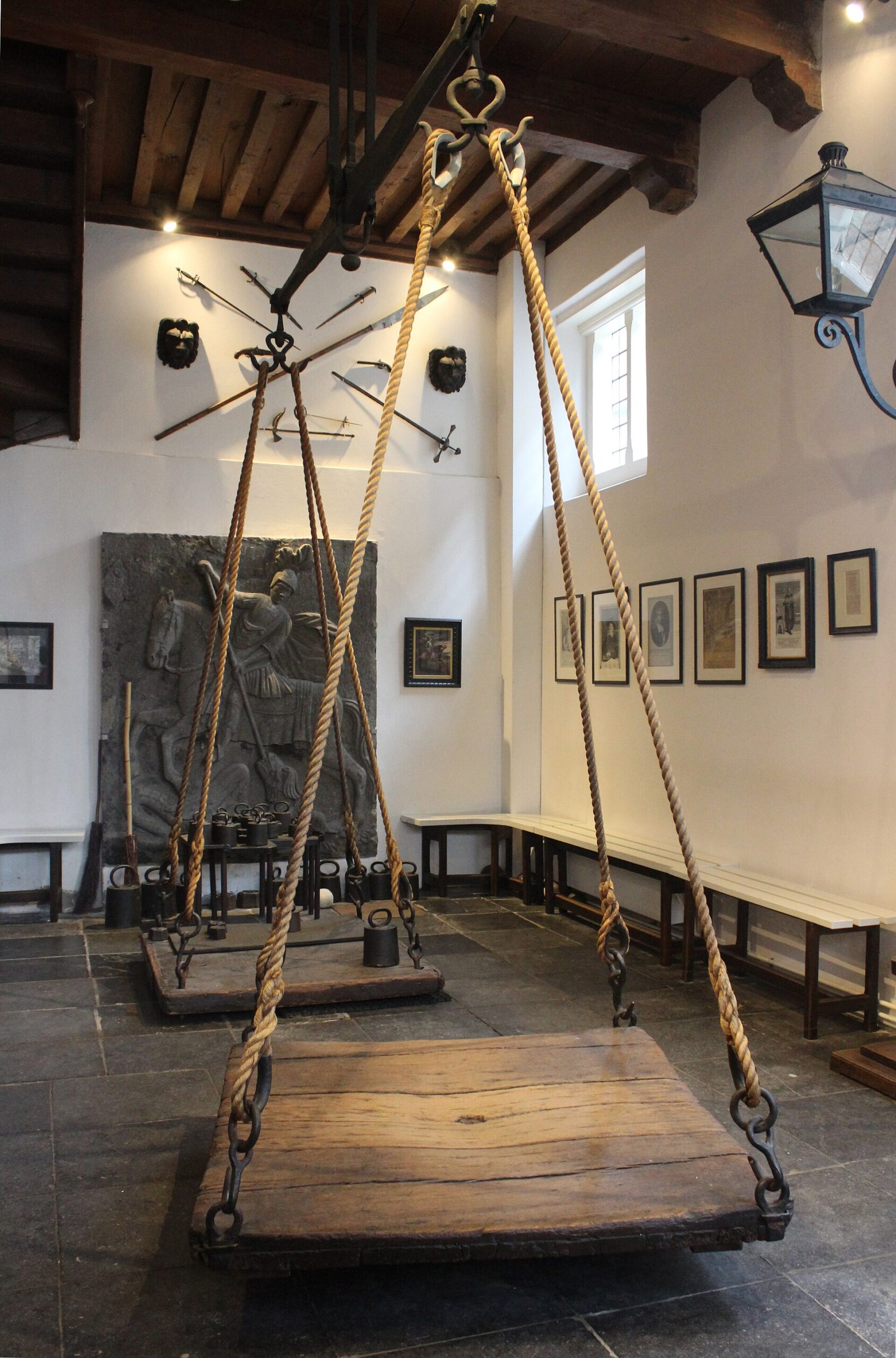
A wrestler who arrives at the scale two kilos over has a bad night ahead of him. A wrestler who arrives eight kilos over has a bad competition ahead of him, and he will discover it in the second bout rather than the first. Everything that has to come off in the last few days comes off as water, and the mat does not care where the number came from.
Same-day weigh-ins changed this problem rather than solving it. When wrestlers weighed in the evening before, there was a night to rehydrate. Weighing in on the morning of competition compresses the recovery window to a couple of hours, which alters what a descent can safely be.
What follows is the current rules framework, what acute fluid loss measurably does to a wrestler, and how coaches plan a reduction over weeks so that the last week has almost nothing left to do. None of it replaces medical supervision, and a young wrestler cutting weight without it is taking a risk nobody should carry alone.
The numbers a coach actually plans with
- Off-season weight. A margin above the competition class that can be removed by training and diet rather than by fluid loss.
- Weigh-in timing. The morning of the day the category is wrestled, which is the fact everything else is planned around.
- The recovery window. A small number of hours between the scale and the first bout, not a full night.
- What is prohibited. Saunas and rubber suits at the competition venue, and any assistance that makes a rapid loss the plan.
- What degrades first. Reaction time and decision-making, well before maximal strength does.
- The rule of thumb. If the last week has to remove more than a small fraction of body mass, the plan started too late.
What the wrestling weight cutting rules actually permit
The wrestling weight cutting rules are mostly rules about timing and about method rather than explicit limits on loss. The weigh-in for a category takes place on the morning of the day that category is wrestled, in a defined window, with a medical check alongside it. Where a category runs over two days, there is a second weigh-in on the second morning with a small allowance.
That structure was introduced deliberately to discourage extreme reductions. An evening weigh-in with a full night before competition rewards the biggest cut; a morning weigh-in a couple of hours before the first bout punishes it, because there is no time to put the fluid back.
Method is also restricted. Saunas and rubber suits are not permitted at the competition venue, which removes the most aggressive last-minute tools from the environment where they were most used. The medical check exists to catch wrestlers who arrive in a state that should not be allowed onto a mat, and it is the last safeguard in a sequence that should never have reached that point.
Same-day weigh-in changed the arithmetic
Under an evening weigh-in, a wrestler could lose several kilos of fluid, weigh in, and spend twelve to fifteen hours rehydrating and refuelling before wrestling. The cut was punishing and largely recoverable, so the incentive was to cut as much as possible.
With the scale on competition morning, that incentive reverses. Fluid taken on at eight in the morning is not fully distributed by ten, and a wrestler who removed four kilos of water overnight walks onto the mat still carrying most of the deficit. The competitive advantage of the bigger class disappears into the physiological cost of reaching it.
The practical outcome across the sport has been a shift toward wrestling closer to natural weight, and toward planning a reduction across a training block rather than across a week. That is the change the rule was designed to produce, and it works to the extent that coaches actually plan the block.
What the body loses when it loses water
Rapid weight loss in the final days is almost entirely fluid, and the fluid does not come evenly from everywhere. Plasma volume falls first, which is the part that matters most, because plasma volume is what the cardiovascular system uses to move oxygen and to move heat.
With less circulating volume, heart rate rises for any given effort, the body’s ability to shed heat through the skin declines, and core temperature climbs faster during a bout. A wrestler in this state is working harder to do the same thing and cooling himself less effectively while doing it.
The second loss is intracellular. Muscle holds water alongside stored carbohydrate, and stripping one takes some of the other. That is why a cut that also involves carbohydrate restriction, which most do, removes more than the label suggests. General clinical descriptions of fluid deficit apply directly here, with the difference that a wrestler chooses it deliberately.
Strength survives longer than people expect
Maximal strength is the quality most resistant to acute fluid loss. A single maximal effort, tested in a controlled setting, holds up reasonably well at modest deficits, which is why wrestlers who cut aggressively often feel fine in a warm-up and report that nothing is wrong.
The warm-up is the wrong test. What degrades is not the first effort but the fifth and the fifteenth: repeated high-intensity work with short recovery, which is precisely what a wrestling bout consists of and precisely what a day of four or five bouts consists of.
Anaerobic capacity and the ability to repeat efforts fall away measurably with the fluid, and they fall away faster in a warm hall. The wrestler who was fine in the first period is the same wrestler who has nothing in the second, and the explanation is on the scale rather than in his conditioning.
Reaction time and decision-making degrade first
The earliest measurable effects of a fluid deficit are not physical in the way athletes expect. Reaction time slows, attention narrows, and the ability to hold and update information under pressure declines, at deficits well below the point where strength is affected.
In a sport decided by the timing of a level change and by reading an opponent’s grip, that is the most expensive possible thing to lose. A wrestler half a beat late on a defensive reaction is not slower; he is scored on. A wrestler who forgets that his opponent has two cautions makes a decision in the last thirty seconds that costs him the bout.
Coaches who have watched a dehydrated athlete compete describe the same pattern: technically intact, tactically absent. The wrestler executes what he starts and stops noticing what is being done to him.
Injury risk: the mechanism, not the scare story
The link between rapid weight loss and injury is not a matter of a body being fragile in some general sense. There are specific mechanisms, and they are worth naming rather than gesturing at.
Neuromuscular control declines with fatigue and with fluid deficit together, which affects the joint positions a wrestler ends up in during a scramble. Reduced reaction time means landing positions are corrected later. Thermoregulation is impaired, so heat illness becomes a genuine risk in a warm hall over a long day. And a wrestler who is under-fuelled recovers less between bouts, so the fifth bout is contested in a worse state than the first in every respect at once.
The recurring conclusion in injury prevention work is that the risk sits in the combination rather than in any single factor. Weight cutting stacks three of them at the same time.
Fuel is lost with the water
A cut that restricts food as well as fluid removes stored carbohydrate, and stored carbohydrate is what a wrestler spends in a six-minute bout. Restoring it takes far longer than restoring fluid, and it cannot be done in the two hours between the scale and the mat.
This is the part of the problem the recovery drink does not solve. A wrestler can rehydrate partially in a short window; he cannot refill a depleted store in the same time. If the plan has emptied both, he is competing on the second one all day.
The practical implication for a descent plan is that food restriction should do its work early, weeks out, while there is time for the body to adapt and refill, and the final days should be about fluid and residue only. Standard guidance on competition nutrition points the same way for the same reason.
Planning a descent over weeks

A workable plan starts with an honest off-season weight and an honest target class. If the gap between them cannot be closed by training and diet over a block of several weeks, the class is wrong, and no amount of discipline in the final week fixes that.
The reduction itself should be gradual and mostly compositional: a modest daily energy deficit alongside a full training load, protein held high enough to protect muscle, and body mass tracked at the same time each morning so the trend is visible rather than the noise. Losing slowly preserves the training quality that the competition depends on.
The checkpoint is roughly a week out. A wrestler who is within a small percentage of the class at that point has a manageable final week. A wrestler who is well outside it has already lost the competition and is now choosing how much to damage himself in the process of turning up.
The last seventy-two hours
The final phase is about volume in the gut and water balance, not about starving. Reducing dietary fibre and residue empties the digestive tract of material that weighs something and does nothing. Managing sodium and total fluid over the last day or two shifts water without extreme measures.
What should not be in the plan is the traditional catalogue: prolonged sweating in heavy clothing, deliberate heat exposure, diuretics, and training sessions designed purely to lose fluid. The last of those also costs recovery the wrestler needs for the competition itself, which makes it the worst of both worlds.
The morning of the weigh-in is a checking exercise, not a fixing one. A wrestler who wakes up a kilo over has a bad hour available to him and no good options in it. That situation is created weeks earlier, and it is prevented weeks earlier.
Rehydration after the scale, and its limit
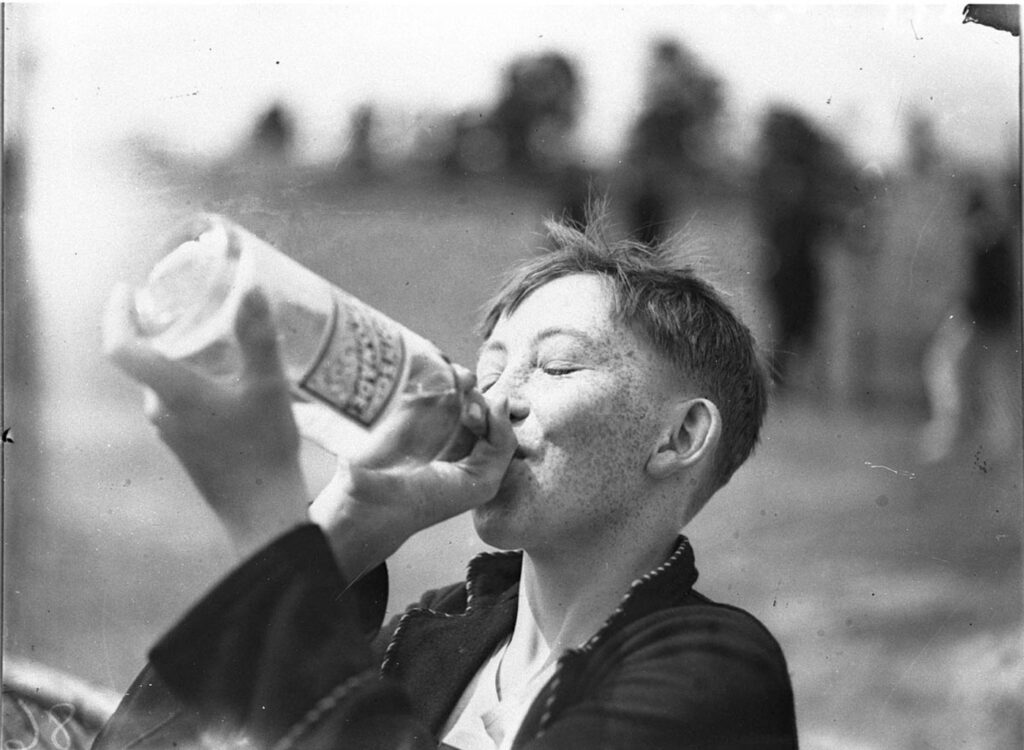
Once the number is recorded, the window opens and it is short. Fluid with sodium is absorbed and retained better than plain water, which is why a plain-water strategy in a two-hour window mostly produces urine. Carbohydrate goes in alongside it, in a form that empties from the stomach quickly and does not sit heavily before a warm-up.
Even done well, the recovery is partial. Plasma volume can be restored substantially in a couple of hours; muscle glycogen cannot. A wrestler who cut hard is competing with restored circulation and an empty tank, and the tank is what runs out in the third bout.
Between bouts on the same day the same logic applies in miniature. Small volumes of fluid with sodium and easily digested carbohydrate, taken consistently, are worth more than anything attempted in the ten minutes before a call to the mat.
A planned descent against a crash cut
| Element | Descent planned over weeks | Crash cut in the final week |
|---|---|---|
| What is lost | Mostly body fat | Mostly water and glycogen |
| Training quality | Largely preserved | Falls sharply in the final block |
| Reaction time on the day | Normal | Measurably slower |
| Repeated effort capacity | Normal | Reduced from the second bout |
| Recovery needed after weigh-in | Minimal | More than the window allows |
| Injury and heat risk | Baseline | Elevated across the day |
Frequently Asked Questions
When does the weigh-in take place now?
On the morning of the day the weight category is wrestled, within a defined window and alongside a medical check. Where a category runs across two days, there is a second weigh-in on the second morning with a small allowance.
Why is a morning weigh-in harder than an evening one?
Because the recovery window shrinks from a full night to a couple of hours. Fluid can be partially restored in that time; carbohydrate stores cannot, so the cost of a large cut is carried onto the mat rather than slept off.
Are saunas and sweat suits allowed?
Saunas and rubber suits are prohibited at the competition venue. The restriction removes the most aggressive last-minute methods from the place where they were most commonly used, and it is part of the same package as the same-day weigh-in.
How much weight can be lost safely in the final week?
The safe answer is a small fraction of body mass, achieved mainly through reduced residue and modest fluid manipulation, and the honest answer is that if more than that is needed the target class was wrong. Any individual plan needs medical supervision, particularly for junior athletes.
What should a wrestler drink immediately after weighing in?
Fluid containing sodium, in repeated modest volumes rather than one large one, alongside easily digested carbohydrate. Plain water in a short window is largely passed rather than retained, which wastes the only recovery time available.
The scale is a gate, not a contest. Wrestlers who treat it as a gate arrive with a plan that ended a week earlier, and they spend the day wrestling rather than recovering from their own preparation.