
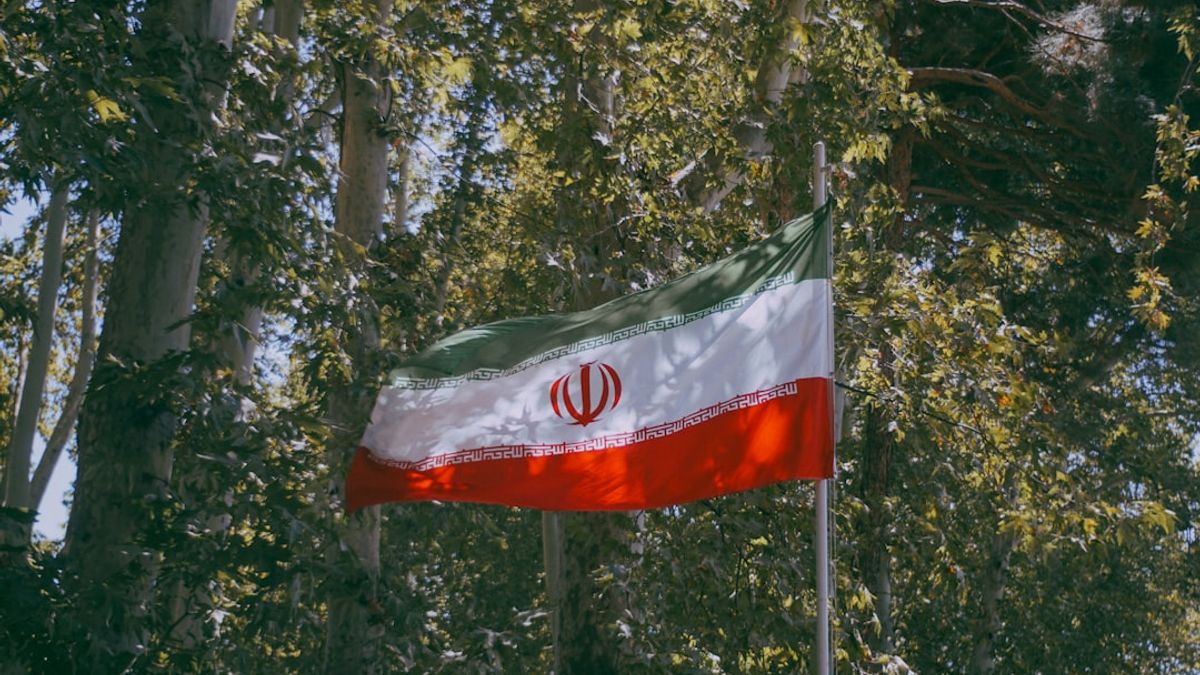
A charter flight full of footballers circled above the eastern Mediterranean, burning fuel while controllers scrambled to reroute traffic away from newly closed airspace. On the ground, a junior tennis tournament in Doha stopped mid\u2011match as phones buzzed with alerts about diplomatic escalations. Within hours, Formula 1 logistics managers were redrawing freight routes, and organizers of a U.S. flag football showcase were on emergency calls about moving their event. This is how the Iran football impact is being felt: not as an abstract headline, but as a chain of disrupted lives, torn schedules, and uneasy decisions. For practical tips, check Iran Sports Technology Drives New Era In Athletic Performance.\r\n\r\nConflict between the United States, Israel, and Iran has spilled into every corner of the sporting calendar. From the Iranian national team\u2019s World Cup 2026 plans in North America to pre\u2011season F1 testing in the Gulf, the shockwaves are immediate and global. Multiple international reports describe postponed fixtures, stranded athletes, and federations suddenly forced to weigh safety, politics, and commercial obligations all at once. The Iran football impact is no longer a distant concern; it is reshaping schedules, budgets, and careers in real time.\r\n\r\nThis disruption is not confined to stadiums in Tehran or Tel Aviv. It reaches training bases in Tucson, where Iran\u2019s World Cup squad was preparing to settle into the Kino Sports Complex. It reaches FIFA\u2019s headquarters in Zurich, where officials must decide whether Iran can safely participate in a tournament that kicks off in just a few months. It reaches broadcasters in major media markets, who have sold advertising around games that may never be played.\r\n\r\nIn this article, I trace how this conflict is reshaping five key fronts: regional leagues and tournaments in the Middle East, Iran\u2019s precarious World Cup 2026 campaign, the knock\u2011on effects on training hubs like Arizona, the disruption to global motorsport and air travel, and the commercial uncertainty facing events such as international showcases. Along the way, we look at how governing bodies have handled previous crises, and what this moment reveals about the fragile relationship between geopolitics and sport. If you care about the games themselves\u2014or about the people whose livelihoods depend on them\u2014understanding this landscape is no longer optional.\r\n\r\nKey emerging trends to watch\r\n
- \r\n \t
- Risk assessments now extend beyond stadium security to include airspace stability, diplomatic relations, and insurance viability\u2014sporting calendars will reflect geopolitical calculations more than before.
- Expect partial regionalization of preparation and fixtures: teams and federations may favor closer, politically stable training hubs and neutral venues within allied territories to reduce travel risk.
- Digital and localized engagement will accelerate as rights holders hedge against disrupted travel\u2014streaming, augmented fan experiences, and regionalized sponsorships will grow in importance.
\r\n \t
\r\n \t
\r\n
\r\n
How the US\u2013Israel\u2013Iran conflict is reshaping regional schedules
\r\nThe first hint that something was wrong for many fans came not from a battlefield update, but from a push notification: \u201cMatch postponed due to security concerns.\u201d In Dubai, a regional volleyball tournament quietly announced a delay. In Bahrain, a boxing card was rescheduled with no new date. The US\u2013Israel\u2013Iran hostilities have turned what should have been a routine spring of sport into a jigsaw puzzle of cancellations and emergency moves, illustrating the evolving Iran football impact on regional calendars.\r\n\r\ntravel restrictions after escalations strikes on U.S. targets forced airlines to reroute or suspend flights across key corridors. That instantly affected:\r\n
- \r\n \t
- Club teams traveling between Iran and Gulf states for league and cup competitions.
- Neutral\u2011venue matches hosted in countries that had been seen as safe intermediaries.
- International officials, referees, and support staff who rely on predictable flight paths to cover multiple competitions in a short window.
\r\n \t
\r\n \t
\r\n
\r\nOrganizers suddenly had to ask: can teams get in and out safely? Are insurers still willing to cover events in certain cities? Will broadcasters accept a change of venue or kickoff time with days\u2019 notice? In past conflicts these questions rarely have clean answers. Instead, every stakeholder pushes and pulls based on their own risk tolerance, commercial exposure, and political red lines.\r\n\r\nWhat makes this round of hostilities uniquely disruptive is the globalized nature of modern sport. Iranian athletes are scattered across European football leagues, Asian Champions League clubs, and U.S. college systems. An escalation in the Middle East doesn\u2019t just threaten matches in Tehran; it can derail an entire season\u2019s worth of interconnected competitions, from youth tournaments to elite championships. The Iran football impact is therefore felt in locker rooms and boardrooms far beyond the immediate conflict zone.\r\n
Iran\u2019s World Cup 2026 dilemma: qualified, but can they play?
\r\nOne of the most striking developments so far is the possibility that Iran might not appear at the FIFA World Cup 2026 at all. Attacks and counter\u2011measures have cast serious doubt over Team Melli\u2019s participation, even though they have already qualified on sporting merit.\r\n\r\nWorld Cups are usually insulated from late\u2011stage political turmoil. FIFA tends to argue that football should remain above geopolitics, and in the past it has gone to great lengths to keep qualified teams in the tournament. Yet this situation is different. Iran would be playing in host nations that are directly involved in the conflict\u2014most notably the United States. That raises obvious questions about visas, security clearances, and potential protests.\r\n\r\nContingency plans are reportedly being discussed, with other teams potentially called upon if Iran is unable to participate. For sponsors and broadcasters who have built marketing campaigns around Iran\u2019s passionate fanbase and its historic football culture, the uncertainty is deeply uncomfortable. For the players, many of whom are in their prime and may never get another chance at a World Cup, it is devastating.\r\n\r\nCould FIFA force Iran out? Historically, suspensions have been rare and usually tied to direct government interference in football associations or to widespread conflict making participation impossible. At the same time, host nations retain significant control over who can enter their territory. If authorities decide that granting visas to the Iranian delegation is not compatible with national security, FIFA\u2019s options narrow quickly.\r\n\r\nThe Iran football impact here is not abstract. It is a question of whether a team that has earned its place on the pitch can actually walk onto it. And that uncertainty cuts to the heart of what global tournaments are supposed to represent: merit, inclusion, and the idea that, for a few weeks, politics can at least be pushed to the margins.\r\n
Arizona under scrutiny: Iran\u2019s Tucson training base in limbo
\r\nWhat happens to a World Cup campaign when your training base sits thousands of miles away from home, in a country that is part of the conflict? That\u2019s the question hanging over Iran\u2019s plans in Arizona. Local reporting in Tucson has noted the team\u2019s intention to use the Kino Sports Complex as its home training camp for World Cup 2026.\r\n\r\nThat arrangement, on paper, made perfect sense. Tucson offers:\r\n
- \r\n \t
- Climate conditions similar to several World Cup host cities in the U.S. and Mexico.
- High\u2011quality training pitches and sports science facilities.
- Established travel connections to major hubs like Los Angeles and Dallas.
\r\n \t
\r\n \t
\r\n
\r\nBut once escalations start flying, nothing about that plan is straightforward. Local authorities must weigh public sentiment, security risks, and potential protests. Federal agencies will have a say in whether the team can enter, how they are protected, and what restrictions apply. Even something as basic as arranging friendly matches against MLS or USL clubs could become politically charged. You might also enjoy Lewis Hamilton Ferrari 2026: What It Means For F1\u2019s Future.\r\n\r\nFrom a performance standpoint, prolonged uncertainty is a nightmare. Coaches need to lock in training loads, acclimatization schedules, and tactical rehearsals months in advance. If the team cannot be sure whether they will be in Tucson, Doha, or a hastily arranged neutral venue, every part of that preparation becomes guesswork. The psychological strain may be as damaging as any logistical headache. Players will be thinking not only about their careers, but about family members back in Iran who may be living under threat.\r\n
- \r\n \t
- Visa approval and travel windows \u2013 If immigration rules tighten further, Iran\u2019s delegation could face delays or outright denials, forcing last\u2011minute moves to alternative training sites.
- Security protocols at Kino Sports Complex \u2013 Increased police presence, restricted fan access, and media limitations could turn what should be a focused camp into a tense, heavily surveilled environment.
- Contingency venues \u2013 Iran\u2019s federation will likely explore backup options in Mexico or Canada, but moving an entire World Cup base is costly and disruptive, especially for sports science and recovery setups.
\r\n \t
\r\n \t
\r\n
\r\nThese layers of complexity show how the dispute\u2019s influence on sport extends well beyond matchdays. It infiltrates the daily routines, sleep patterns, and mental preparation of athletes whose job is to be at their absolute best on a fixed date, regardless of what is happening in the skies above them. This is another facet of the broader Iran football impact.\r\n
\u201cWe\u2019re stranded\u201d: F1, travel restrictions, and athletes stuck in transit
\r\n\u201cWe\u2019re stranded in the hotel lobby. Our flight\u2019s been canceled twice.\u201d That kind of message, shared by a player after the latest strikes, captures the human side of the travel chaos. Industry reporting has highlighted how attacks and the resulting travel restrictions have disrupted Formula 1 plans and left athletes across multiple sports scrambling to get home.\r\n\r\nFor F1, whose logistics network is one of the most complex in global sport, any closure along key routes is a serious threat. Freight planes carrying cars, spare parts, and broadcast equipment typically hop from European bases to Gulf hubs before moving on to Asia or back to Europe. If they can\u2019t overfly certain regions, flight times extend, costs rise, and tight back\u2011to\u2011back race schedules become harder to maintain.\r\n\r\nThis is not the first time motorsport has collided with geopolitics. The Bahrain and Saudi Arabian Grands Prix have both faced intense scrutiny in the past, and F1 has been forced to balance lucrative hosting fees against reputational risk. But the Iran football impact adds another dimension: physical safety in the air. When airspace is considered unsafe due to potential escalations or drone activity, insurers may refuse coverage or demand premiums that make certain routes impractical.\r\n\r\nOther sports feel the squeeze too. Football clubs returning from Asian Champions League fixtures, tennis players moving between Middle Eastern tournaments, and even referees assigned to neutral\u2011venue matches can find themselves rerouted through distant hubs or stuck in transit for days. That has knock\u2011on effects:\r\n
- \r\n \t
- Matches postponed because one team cannot arrive on time.
- Training sessions lost to jet lag and extended travel.
- Increased injury risk due to compressed schedules once teams finally regroup.
\r\n \t
\r\n \t
\r\n
\r\nComparing this to earlier disruptions, such as the 2010 volcanic ash cloud over Europe, the difference is intent. Natural events are unpredictable but politically neutral. tensions\u2011related closures, by contrast, can change overnight based on political decisions. That makes long\u2011term planning nearly impossible. For leagues and promoters, the margin for error shrinks; for athletes and support staff, each trip becomes a calculated gamble. You might also enjoy Iranian Coach Lindsey Vonn Drives New Era In Sports Training.\r\n
Fanatics Flag Football Classic and the scramble to relocate events
\r\nFurther down the sports hierarchy, but still highly visible, sit showcase events like the Fanatics Flag Football Classic. Industry coverage has suggested that the Iran crisis could force the relocation of this upcoming event, which was initially planned for a Middle Eastern venue aiming to position itself as a hub for American football exhibitions.\r\n
When a neutral venue stops feeling neutral
\r\nThe logic behind staging such events in the Gulf has been clear for years: modern stadiums, generous hosting fees, and a strategic desire by some countries to diversify their sporting portfolios beyond football. But as the US\u2013Israel\u2013Iran conflict escalates, the perception of \u201cneutrality\u201d erodes. American brands involved must consider whether fans, sponsors, and athletes will feel comfortable associating with an event held within range of potential escalations exchanges or cyberattacks.\r\n\r\nRelocating an event of this scale is not as simple as booking a new stadium. Contracts with local organizing committees, tourism boards, and broadcasters all hinge on specific dates and locations. Moving the Fanatics Flag Football Classic to, say, London or Los Angeles would require renegotiating hotel blocks, security plans, and local promotional campaigns. Similar relocations in the past have been achieved but at significant cost.\r\n
The commercial ripple effect of relocation
\r\nThe impact on events like this extends into several commercial layers:\r\n
- \r\n \t
- Hospitality and tourism \u2013 Hotels, restaurants, and transport providers in the original host city lose a burst of economic activity they had already budgeted for.
- Broadcast scheduling \u2013 Networks that slotted the game into prime time in one time zone may find the new kickoff time less attractive for ad buyers.
- Brand positioning \u2013 Fanatics and any co\u2011sponsors must recalibrate messaging around \u201cglobal expansion\u201d when geopolitical risk suddenly dominates the narrative.
\r\n \t
\r\n \t
\r\n
\r\nCompared with the existential questions around World Cup participation, a flag football showcase might seem minor. Yet these mid\u2011tier events are often where new markets are tested and new fans are won. If companies decide that the Middle East is simply too volatile, even for short\u2011format exhibitions, the region\u2019s long\u2011term strategy of using sport as soft power and economic diversification could suffer a serious setback.\r\n
The wider picture: athletes, fans, and governing bodies under pressure
\r\nStep back from the individual headlines, and a larger picture emerges: the Iran football impact is testing every assumption about how global sport should operate. Athletes are caught between professional obligations and personal safety. Fans are asked to separate their love of the game from their anxieties about upheaval. Governing bodies are under scrutiny for every decision they make\u2014or avoid making.\r\n
Athletes navigating politics and personal risk
\r\nFor Iranian athletes playing abroad, the current conflict magnifies long\u2011standing tensions. Some may feel pressure from their government to project unity and defiance. Others may sympathize with protest movements inside Iran or disagree with the state\u2019s foreign policy. Public gestures\u2014refusing to sing the national anthem, posting on social media, or even speaking cautiously to journalists\u2014can carry real consequences for family members back home.\r\n\r\nNon\u2011Iranian athletes face their own dilemmas. Competing in or against Iranian teams can attract online abuse from politically motivated trolls. Travel to certain countries may void personal insurance policies or trigger clauses in club contracts. Players in similar situations have described a constant low\u2011level fear that one wrong step\u2014literally or metaphorically\u2014could end their career. Related reading: Iran U23 Football Crisis Threatens Team\u2019s Future Success.\r\n
Fans, media narratives, and the battle for attention
\r\nFor fans, especially those in the region, sport can be both an escape and a pressure valve. Yet when news bulletins cut into live coverage with updates on airstrikes, that escape collapses. Broadcasters must decide how to allocate airtime between match analysis and upheaval reporting. Social media feeds that once featured highlight reels now mix in footage of damaged stadiums or canceled flights.\r\n\r\nThis blending of narratives has consequences. Some fans may turn away from sport altogether, exhausted by the constant intrusion of politics. Others may become more engaged, using stadiums and online spaces to express solidarity or dissent. Either way, the idea that sport can remain a \u201csafe space\u201d untouched by geopolitics looks increasingly na\u00efve.\r\n
Governing bodies walking a tightrope
\r\nOrganizations like FIFA, the International Olympic Committee, and major commercial rights holders now face a familiar but sharpened dilemma: how to uphold their stated values while protecting their financial interests. Past decisions\u2014such as moving finals due to security concerns or allowing athletes to compete under neutral flags\u2014provide some precedent, but no easy template.\r\n\r\nIndustry observers note that these bodies often move slowly, issuing carefully worded statements that emphasize \u201cmonitoring the situation\u201d and \u201cprioritizing safety.\u201d Yet the Iran football impact may force quicker, bolder actions: relocating matches, suspending hosting rights, or even excluding teams if travel and security conditions deteriorate further. Every move will be judged not only by fans, but by governments eager to leverage sport for diplomatic advantage.\r\n
What this crisis reveals about the future of global sport
\r\n
\r\n
\r\nIn my view, the current conflict involving Iran, the U.S., and Israel is not just another chapter in the long history of politics intruding on sport. It is a stress test for an entire model of globalization that assumes athletes, fans, and sponsors can move freely across borders as long as the money is good and the stadiums are modern.\r\n
- \r\n \t
- Will federations diversify their event portfolios away from volatile regions? The Gulf\u2019s rise as a sporting hub has been built on a perception of stability. If that perception crumbles, rights holders may look more cautiously at future bids.
- Can teams maintain truly global preseason and training tours? Clubs and national teams have used far\u2011flung camps to tap new fan bases and sponsorships. The Iran football impact may accelerate a shift back toward regionalized preparation to reduce risk.
- How will fans respond to further politicization of sport? Some may demand that athletes and organizations take clearer stances on conflicts and human rights. Others will push back, insisting that sport should remain apolitical. That tension will shape everything from kit sponsorships to anthem protocols.
\r\n \t
\r\n \t
\r\n
\r\nThere is also a technological angle. As travel becomes more unpredictable, leagues may invest more heavily in digital engagement\u2014streaming, virtual reality experiences, and localized fan events that don\u2019t require international movement. That won\u2019t replace the atmosphere of a packed stadium in Tehran or Tucson, but it could soften the blow when fixtures are moved or canceled.\r\n\r\nFinally, this crisis underscores the need for more robust risk assessment within sports governance. It is no longer enough to evaluate stadium capacity and hotel availability when awarding hosting rights. Security, airspace stability, and geopolitical alliances must all be part of the equation. Organizations that fail to adapt may find themselves repeatedly blindsided by events they could, at minimum, have planned for.\r\n\r\n
Action steps for stakeholders
\r\nPractical next moves for teams, federations, broadcasters, and fans to manage immediate risks and prepare for near\u2011term uncertainty.\r\n
- \r\n \t
- For federations and clubs: Update contractual clauses and insurance reviews to include specific provisions for airspace disruptions, travel bans, and force majeure tied to geopolitical escalation. Build formal contingency lists of alternative training bases and neutral venues that can be activated quickly.
- For athletes and support staff: Maintain up\u2011to\u2011date travel documentation, emergency contact trees, and mental\u2011health support plans. Negotiate clear clauses in contracts about relocation, quarantine, and personal safety measures.
- For broadcasters and rights holders: Develop flexible programming windows, backup production teams in alternate regions, and contractual options with advertisers that allow for relocation without total loss of revenue.
- For fans: Keep ticket and travel insurance policies under review, follow official channels for updates, and prioritize guidance from event organizers about safety and access rather than social media speculation.
\r\n \t
\r\n \t
\r\n \t
\r\n
\r\n
Frequently asked questions
\r\n
Is Iran likely to be banned from the 2026 World Cup?
It is unlikely that FIFA would ban Iran purely for political reasons; past precedents show FIFA resists excluding teams that qualify on sporting merit. However, if travel and security conditions make participation impossible\u2014or if host nation visa rules prevent entry\u2014then Iran could be unable to attend, and FIFA would need to implement contingency plans such as replacing them with another team.\r\n\r\n
What happens if Iran cannot use the Kino Sports Complex in Tucson?
If Tucson is deemed untenable, Iran\u2019s federation will likely pivot to pre\u2011identified contingency venues in Mexico, Canada, or a neutral third country. Moving a full World Cup base is costly and logistically difficult, but federations typically keep a shortlist of fallback sites for such scenarios.\r\n\r\n
Will broadcasters still show matches if teams are forced to relocate?
Broadcasters generally prefer continuity and will adapt schedules where possible, but changes in time zone or venue can affect advertising value and rights agreements. Major networks often negotiate clauses that allow for schedule changes in extraordinary circumstances; smaller broadcasters may face greater strain.\r\n\r\n
Are athletes covered by insurance if travel is disrupted by conflict?
Coverage varies widely. Some teams and federations carry comprehensive travel and evacuation insurance; individual players may rely on club or personal policies. It\u2019s crucial for athletes and staff to review the fine print\u2014many policies exclude acts of situation or require specific add\u2011on coverage for geopolitical risk.\r\n\r\n
How does the Iran football impact affect everyday fans?
Fans may face postponed or relocated matches, higher travel costs, and increased uncertainty around ticket refunds. Those in affected regions might also encounter stricter security at venues or limits on crowd sizes. Emotionally, the blending of tensions coverage with sports broadcasts can make it harder to use sport as an escape.\r\n\r\n
Could other major events in the Middle East be moved or canceled?
Yes. Rights holders are actively reviewing risk profiles for tournaments and showcases across the region. While most prefer to avoid cancellations, they may shift events to alternative hosts or neutral venues if security assessments, insurance conditions, or government advisories demand it.\r\n\r\n
What can sports organizations do now to prepare for further escalation?
Organizations can run scenario planning exercises, identify backup venues and travel routes, strengthen crisis\u2011communication protocols, and ensure contracts include clear provisions for conflict\u2011related disruption. Investing in these preparations now can reduce chaos and financial loss if the situation worsens.\r\n\r\n
\r\n
Conclusion: Sport at the fault line of conflict\u2014and what comes next
\r\nLook again at that circling charter flight full of footballers, the empty training pitch in Tucson, the F1 freight planes idling on tarmacs far from their intended routes. Each is a snapshot of the broader Iran football impact: a world in which the simple act of playing a game has become entangled with escalations trajectories, diplomatic cables, and travel advisories.\r\n\r\nIran\u2019s potential absence from World Cup 2026 would not just be a sporting story. It would be a symbol of how fragile the promise of global competition really is when states go to turmoil. The uncertainty around the Kino Sports Complex camp in Arizona, the travel restrictions that have scrambled motorsport and stranded athletes, and the possible relocation of international showcases all point in the same direction: sport cannot float above geopolitics. It sits directly on the fault line.\r\n\r\nFor athletes, the challenge is to maintain focus and fitness amid a constant hum of anxiety. For fans, the task is to decide how to engage with competitions that may carry heavy political baggage. For governing bodies and brands, the responsibility is heavier still. They must make decisions that balance safety, fairness, and commercial survival, knowing that whatever they choose will be scrutinized by governments and supporters alike.\r\n\r\nCrises like this also create an opportunity. They force a reckoning with comfortable myths: that sport is purely entertainment, that politics can be kept outside the stadium, that global calendars will always run on time. If stakeholders accept that those myths are gone, they can begin to build more resilient systems\u2014ones that plan for disrupted airspace, that include clear contingency venues, and that take human rights and conflict risk seriously when awarding hosting rights.\r\n\r\nAs the situation evolves, staying informed will be essential. Follow detailed reporting from reputable journalists and official statements from governing bodies as developments unfold.\r\n\r\n
\r\n
\u2014: Fatemeh Kianpour
\r\n
Combat-sports journalist and former national-level wrestler with 8 years reporting across domestic and international circuits. She produces in-depth fighter profiles, fight-camp reporting and coverage of Iran’s wrestling and MMA pathways, leveraging strong contacts inside gyms and federations.
\r\n\r\n\n\n\n\n