


The Champions League quarterfinals represent the moment when European football’s greatest tournament separates genuine contenders from the merely hopeful. With the draw complete and eight clubs preparing for two-legged ties that will define their seasons, the path to the final in Munich has never looked more compelling or more unpredictable.
This stage of the competition carries a weight that earlier rounds simply cannot match. Every tactical decision is magnified, every individual error threatens elimination, and the margins between triumph and heartbreak shrink to almost nothing. The eight teams remaining have earned their place through months of consistent excellence, but only four will advance.
The Quarterfinal Draw: Four Ties That Promise Drama
UEFA’s draw ceremony in Nyon produced a bracket that few could have predicted and everyone can appreciate. The removal of country protection at this stage delivered an all-Spanish confrontation, while traditional European powerhouses were paired in fixtures that evoke decades of continental rivalry.
| Tie | Home (1st Leg) | Away (1st Leg) | 1st Leg Date | 2nd Leg Date |
|---|---|---|---|---|
| QF 1 | Real Madrid | Bayern Munich | April 8 | April 15 |
| QF 2 | Sporting CP | Arsenal | April 8 | April 15 |
| QF 3 | Barcelona | Atletico Madrid | April 9 | April 16 |
| QF 4 | PSG | Liverpool | April 9 | April 16 |
The bracket structure means the winners of Real Madrid vs. Bayern Munich and Sporting CP vs. Arsenal will meet in one semifinal, while the survivors of Barcelona vs. Atletico Madrid and PSG vs. Liverpool will contest the other. This creates a scenario where we could see a Madrid derby or a repeat of classic European finals in the last four.
Real Madrid vs. Bayern Munich: A Rivalry Renewed
When the two most decorated clubs in Champions League history collide, the weight of expectation is extraordinary. Real Madrid, holders of a record fifteen European Cups, face Bayern Munich’s six-time winners in a tie that has produced some of the tournament’s most memorable moments.
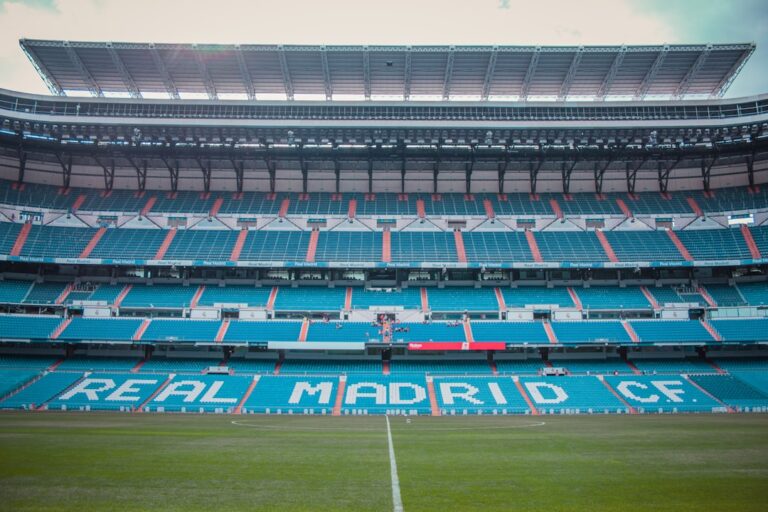
Real Madrid’s campaign has been built on the reliable foundation that Carlo Ancelotti’s successor has maintained. Their midfield axis remains one of the most technically gifted in world football, while the forward line’s ability to produce decisive moments in knockout competition is well documented. The Santiago Bernabeu’s atmosphere in European nights provides an intangible advantage that visiting teams consistently struggle to overcome.
Bayern Munich arrive with a point to prove after recent campaigns that ended in quarterfinal disappointment. The German champions have rebuilt with purpose, blending experienced internationals with young talent from their renowned academy. Their pressing intensity and directness in attack make them uncomfortable opponents for any team, regardless of setting.
The tactical battle will likely center on midfield control. Real Madrid prefer to dictate tempo through patient possession, while Bayern’s high pressing game aims to disrupt exactly that rhythm. Whichever approach prevails could determine the entire complexion of the tie. As noted in our Champions League 2026 Round of 16, both clubs demonstrated their knockout pedigree in the previous round.
Key Players to Watch
Real Madrid’s creative fulcrum will be essential to unlocking Bayern’s organized defensive structure. The Spanish club’s ability to rotate between wide attacks and central overloads gives them multiple avenues toward goal. For Bayern, the wide channels represent their most promising route to the Bernabeu goal, with pace and directness their primary weapons against Real Madrid’s high defensive line.
Sporting CP vs. Arsenal: The Surprise Package Meets the Contender
Sporting CP’s presence in the quarterfinals represents one of the most compelling storylines in this season’s tournament. The Portuguese champions have captured the imagination of neutral observers with their attacking verve and tactical courage, qualities that powered their remarkable run through the earlier rounds.
Their Sporting CP 5-0: The Champions League Comeback That Rewrote History in the previous round announced them as genuine contenders rather than mere participants at this level. The Estadio Jose Alvalade will be electric for the first leg, with Sporting’s supporters creating an atmosphere that has unsettled more established European clubs throughout this campaign.
Arsenal represent a very different challenge from anything Sporting have faced so far. Mikel Arteta’s side combines defensive organization that borders on miserly with a devastating counterattacking capability. The Gunners have matured significantly in European competition over the past two seasons, learning from past elimination disappointments to become one of the most complete teams on the continent.
According to UEFA’s official Champions League coverage, this represents the first competitive meeting between these clubs in European competition, adding an element of the unknown to tactical preparations on both sides.
Tactical Matchup Analysis
Sporting’s high-energy pressing game will test Arsenal’s ability to build from the back under intense pressure. However, Arsenal’s press resistance has improved markedly this season, and their composure in tight spaces could allow them to exploit the gaps that Sporting’s aggressive approach inevitably creates. The second leg at the Emirates Stadium gives Arsenal the advantage of knowing exactly what they need, a situation in which Arteta’s tactical precision tends to shine.
Barcelona vs. Atletico Madrid: The Spanish Derby
The all-Spanish quarterfinal brings together two clubs with contrasting philosophies but equal determination. Barcelona’s possession-based approach under their current system faces perhaps its sternest test against Diego Simeone’s Atletico Madrid, a team constructed to frustrate exactly the kind of patient build-up play that Barcelona depend upon.
Barcelona’s domestic form has been outstanding, with their La Liga Title Race: Barcelona, Real Madrid and the Sprint to the Finish performance demonstrating a consistency that was sometimes absent in previous European campaigns. Their young core has added a physical dimension to complement the technical excellence that defines the club’s identity, making them more resilient in the intense environments that Champions League knockout football demands.
Atletico Madrid approach this tie with the pragmatic ruthlessness that has defined Simeone’s entire tenure. The Argentine coach has built a squad capable of winning ugly when necessary and playing attractive football when the situation allows. Their defensive discipline remains elite, while the introduction of younger attacking talent has added a dynamic quality to their counterattacking play.
This fixture carries particular significance given its potential impact on the La Liga title race. Both managers must balance Champions League ambitions with domestic responsibilities, and the physical and emotional toll of an all-Spanish European tie adds an extra layer of complexity to squad management decisions. Reports from BBC Sport suggest both clubs are preparing with unprecedented focus for this clash.
Historical Context
Barcelona and Atletico Madrid have met frequently in recent Champions League campaigns, with the results often proving closer than the difference in squad values would suggest. Atletico’s ability to nullify Barcelona’s attacking patterns has been one of the consistent themes of European football over the past decade, and Simeone’s tactical record against Barcelona in knockout competition provides genuine grounds for confidence among Atletico’s supporters.
PSG vs. Liverpool: Clash of Attacking Philosophies
The Parc des Princes hosting Liverpool for the first leg sets the stage for what many analysts consider the most evenly matched tie in the quarterfinal draw. Paris Saint-Germain’s investment in squad building has produced a team that finally looks capable of sustaining a genuine Champions League challenge, while Liverpool’s European pedigree needs no introduction.
PSG’s evolution under their current tactical setup has moved away from the individual brilliance model that sometimes undermined their collective cohesion. The French champions now press with coordinated intensity, transition with purpose, and defend with a discipline that was often absent from earlier iterations of this project. Their home record in European competition this season is immaculate, setting up a daunting task for any visiting team.
Liverpool bring the experience of multiple Champions League campaigns under their belt, including deep runs that have tested every aspect of their squad’s resilience. Their midfield reconstruction has produced a unit that combines energy with technical quality, providing the platform for an attack that remains among the most potent in European football. The analysis available at ESPN’s Champions League hub highlights Liverpool as a dark horse pick given their impressive knockout record.
Where This Tie Will Be Won and Lost
The wide areas will likely prove decisive. Both teams possess fullbacks who contribute significantly to attacking play, creating width that stretches defensive structures and generates the crossing situations from which both forward lines thrive. The team that better manages these wide duels, both offensively and in tracking back, will gain a significant advantage over the two legs.
The Road to the Munich Final: Semifinal Implications
The bracket structure creates fascinating semifinal possibilities. Should Real Madrid and Arsenal both advance, the semifinal would feature two of the most tactically sophisticated teams in European football in a tie that could redefine attacking play at this level. Alternatively, a Bayern Munich vs. Sporting CP semifinal would pit German efficiency against Portuguese flair in an encounter that promises entertainment.
On the other side of the draw, a Barcelona vs. Liverpool semifinal would evoke memories of one of the greatest Champions League comebacks in history, while PSG vs. Atletico Madrid would represent an irresistible force meeting an immovable object. Every possible combination produces compelling narratives that underline the quality of this season’s quarterfinal field.
The Allianz Arena final adds a significant subplot. Bayern Munich have the unique motivation of potentially playing the Champions League final on their home ground, a scenario that could provide decisive extra motivation. However, as our coverage of the Champions League Quarterfinals: A Tactical Breakdown of Every Tie noted, home advantage in European finals is not always the determining factor that might be expected.
Statistical Breakdown: The Quarterfinal Teams Compared
| Team | CL Titles | Goals Scored | Goals Conceded | Clean Sheets |
|---|---|---|---|---|
| Real Madrid | 15 | 18 | 7 | 3 |
| Bayern Munich | 6 | 21 | 9 | 2 |
| Sporting CP | 0 | 14 | 6 | 3 |
| Arsenal | 0 | 15 | 5 | 4 |
| Barcelona | 5 | 20 | 8 | 3 |
| Atletico Madrid | 0 | 11 | 4 | 5 |
| PSG | 0 | 16 | 7 | 3 |
| Liverpool | 6 | 17 | 6 | 4 |
Predictions: Who Advances to the Last Four?
Predicting Champions League quarterfinals is an exercise in calculated uncertainty, but the evidence from this season’s competition allows for informed assessments of each tie’s likely trajectory.
Real Madrid vs. Bayern Munich: The tightest tie on paper. Both teams have the quality to dominate possession and the individual talent to produce match-winning moments. Real Madrid’s home advantage in the first leg could prove decisive, with the Bernabeu atmosphere tilting fine margins in their favor. A narrow aggregate victory for Real Madrid looks most probable, though this fixture has produced enough surprises to make certainty impossible.
Sporting CP vs. Arsenal: Sporting’s remarkable journey faces its sternest examination. Arsenal’s defensive structure has proven resistant to teams with far greater resources than Sporting, and the Gunners’ ability to manage two-legged ties with tactical precision gives them a clear edge. Arsenal should advance, though underestimating Sporting at this stage would be unwise given their demonstrated capacity for the extraordinary.
Barcelona vs. Atletico Madrid: The familiarity between these clubs adds complexity to prediction. Atletico’s ability to frustrate Barcelona is well documented, but Barcelona’s current attacking potency may simply be too powerful to contain over one hundred and eighty minutes. Barcelona are favored, with the caveat that no team in Europe is better at making favorites uncomfortable than Simeone’s Atletico.
PSG vs. Liverpool: This feels like the tie most likely to produce a dramatic storyline. Liverpool’s European experience gives them a psychological advantage in tight situations, while PSG’s home form creates a formidable first-leg obstacle. Liverpool’s ability to produce iconic European performances makes them the marginal pick, but this tie genuinely could go either way.
What Makes This Quarterfinal Stage Special
Several factors combine to make this particular quarterfinal lineup exceptional. The presence of clubs from five different countries ensures tactical variety, while the blend of historical heavyweights and rising challengers creates narratives that extend beyond individual matches.
The financial and competitive stakes have never been higher. Advancement to the semifinals guarantees significant broadcast revenue and the prestige that attracts world-class players and sponsors. For clubs like Sporting CP, a semifinal appearance would represent a transformative moment in their modern history. For established powers like Real Madrid and Liverpool, anything less than progression would be viewed as failure by demanding supporter bases.
The tactical evolution visible in this season’s Champions League quarterfinals also merits attention. The era of defensive pragmatism in knockout rounds appears to be giving way to a more progressive approach, with most of the remaining teams built around proactive, possession-oriented systems. This shift promises entertaining football and could produce the highest-scoring quarterfinal round in recent memory.
The Manager Factor
The eight managers overseeing these quarterfinals represent a compelling cross-section of modern coaching philosophy. From Simeone’s battle-hardened pragmatism to Arteta’s structured progressivism, each approach has proven effective enough to reach this stage. The manager who best adapts their system to the specific demands of each individual leg may ultimately be the one lifting the trophy in Munich.
Frequently Asked Questions
When are the Champions League quarterfinals played?
The Champions League quarterfinal first legs are scheduled for April 8-9, with the return legs on April 15-16. All matches follow a home-and-away aggregate format.
How was the Champions League quarterfinal draw determined?
The quarterfinal draw was conducted at UEFA headquarters in Nyon, Switzerland. Unlike previous rounds, there are no seeding restrictions or country protection rules at this stage, meaning any team can face any opponent.
Which team is the favorite to win the Champions League?
Real Madrid and Barcelona are widely regarded as co-favorites, given their domestic form and squad depth. However, Arsenal and Liverpool both possess the tactical discipline and firepower to mount serious challenges.
Can teams from the same country face each other in the quarterfinals?
Yes. From the quarterfinal stage onward, UEFA removes country protection, which is why Barcelona faces Atletico Madrid in an all-Spanish tie this round.
Where will the Champions League final be held?
The Champions League final will be held at the Allianz Arena in Munich, Germany. This adds an intriguing subplot to Bayern Munich’s campaign, as they could potentially play the final on home soil.
Editorial Disclaimer
This article is intended for informational and entertainment purposes only. The analysis, predictions, and opinions expressed are those of the editorial team and do not constitute professional advice. Statistics and results referenced are accurate at the time of publication. Readers are encouraged to verify current standings and results through official league and tournament sources.