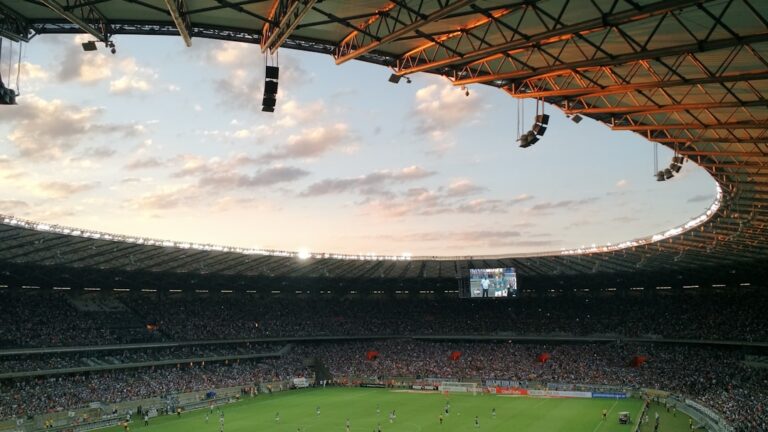


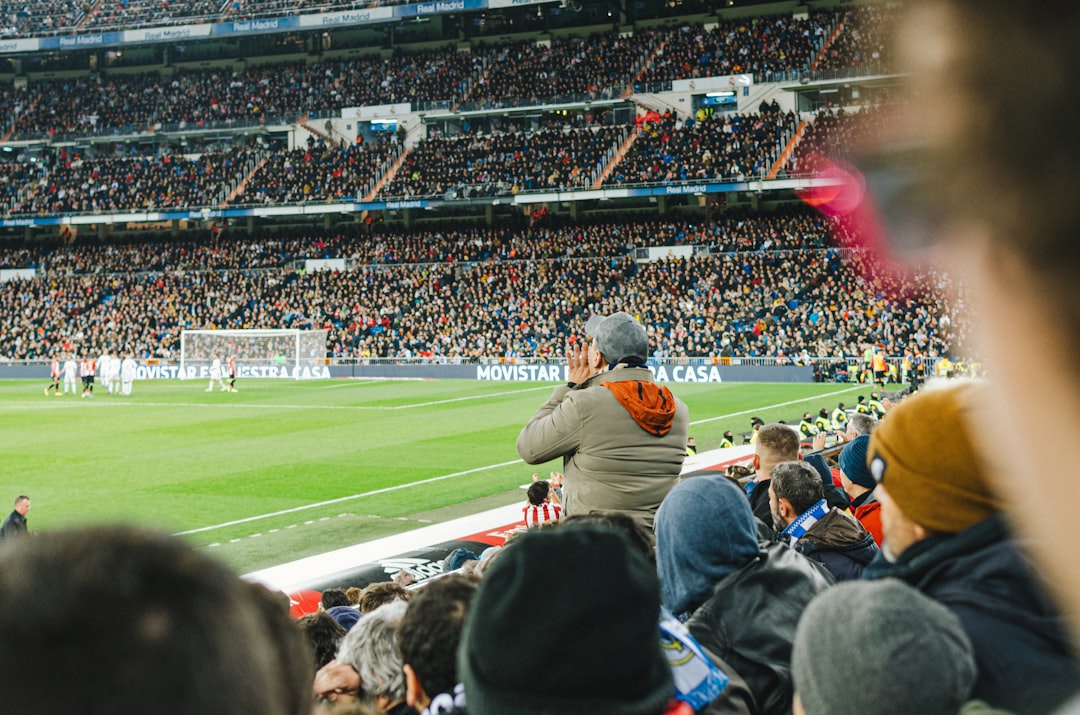
On the evening of March 17, 2026, the José Alvalade Stadium in Lisbon became the stage for one of the most extraordinary chapters in Champions League history. Trailing 3–0 from the first leg against Bodø/Glimt, Sporting CP needed a miracle. They delivered something greater: a 5–0 demolition that not only erased the deficit but rewrote the record books. Sporting became just the fifth team ever to overturn a three-goal first-leg deficit in the competition, joining Deportivo de La Coruña, Barcelona, Roma, and Liverpool in the most exclusive club in European football.
This was not a scrappy, desperate comeback built on luck and long balls. Sporting played with the tactical discipline of a team that had studied every frame of the first leg and identified exactly where Bodø/Glimt could be broken. The Norwegian side, so composed and clinical in the first leg, were systematically dismantled by a Sporting team that pressed higher, ran harder, and executed with a precision that improved with every passing minute. What follows is a complete tactical breakdown of how this Sporting CP comeback happened and where it sits in the history of the game.
Match Recap: 90 Minutes of Relentless Pressure, Then Extra Time to Seal History
Sporting’s manager set the tone from the first whistle. The home side pressed with a 4–3–3 shape that pinned Bodø/Glimt’s backline deep and denied them the transitional space they had exploited so effectively in Norway. By the 15th minute, Bodø/Glimt had completed just 38 passes, roughly half their first-leg average.
The first goal came in the 32nd minute — a corner whipped to the near post, flicked on, and bundled in at the far post. The stadium erupted, but the job was barely a third done. Sporting needed three more.
The second arrived before halftime, a through ball that split Bodø/Glimt’s high line and was finished with composure. At the break, the aggregate stood at 3–2, and the momentum was entirely with the home side.
The third goal, which leveled the aggregate at 3–3 and sent the stadium into delirium, came in the 72nd minute. A sweeping team move involving 14 passes ended with a low cross converted at the back post. The tie was level. Extra time beckoned.
Extra Time: The Final Act
If Bodø/Glimt harbored any hope of surviving to penalties, it evaporated within 90 seconds of extra time beginning. Sporting scored their fourth goal from a quick free kick that caught the Norwegian defense flat-footed, putting them ahead on aggregate for the first time across 210 minutes of football.
The fifth and final goal belonged to Rafael Nel, a 21-year-old making his Champions League debut. With the clock deep into the second period of extra time, Nel received the ball on the edge of the box and drove a shot into the roof of the net with the conviction of a player who did not know he was supposed to be nervous. The final score: Sporting CP 5–0 Bodø/Glimt, 5–3 on aggregate. History made.
The Five Greatest Champions League Comebacks
| Year | Team | 1st Leg | 2nd Leg | Agg | Round |
|---|---|---|---|---|---|
| 2004 | Deportivo La Coruña vs AC Milan | 1–4 | 4–0 | 5–4 | QF |
| 2017 | Barcelona vs PSG | 0–4 | 6–1 | 6–5 | R16 |
| 2018 | Roma vs Barcelona | 1–4 | 3–0 | 4–4 (away) | QF |
| 2019 | Liverpool vs Barcelona | 0–3 | 4–0 | 4–3 | SF |
| 2026 | Sporting CP vs Bodø/Glimt | 0–3 | 5–0 (AET) | 5–3 | R16 |
What Went Wrong for Bodø/Glimt?
The Norwegian champions entered the second leg as heavy favorites on aggregate. So what collapsed?
Physical fatigue. Bodø/Glimt’s season structure works against them in spring European competition. The Norwegian Eliteserien runs from April to November, meaning the squad was in pre-season conditioning during the Champions League knockout phase. By contrast, Sporting were deep into their competitive Primeira Liga campaign, match-sharp and battle-hardened.
Tactical rigidity. Bodø/Glimt attempted to play the same high-pressing game that won them the first leg, but Sporting had adapted. The Portuguese side played longer, more direct balls that bypassed the press entirely, turning Bodø/Glimt’s aggression into a liability as gaps opened behind their midfield.
The atmosphere. José Alvalade holds 50,000 and was sold out. The noise was described by Bodø/Glimt’s goalkeeper as “unlike anything I have experienced.” For a squad from a town of 50,000 people — the same as the stadium’s capacity — the sensory overload was a factor that no tactical preparation can fully address.
What This Means for Sporting and Portuguese Football
Sporting CP have now reached the Champions League quarterfinals for the first time in their history. For a club that has long lived in the shadow of Porto and Benfica in European competition, this is a transformative moment. It validates the post-Amorim rebuild and proves that the club’s youth development system — the same academy that produced Cristiano Ronaldo — continues to generate players capable of performing on the biggest stage.
For Portuguese football more broadly, this result reinforces the Primeira Liga’s status as one of Europe’s most productive leagues relative to its size. According to Opta Analyst, Portuguese clubs have now produced more Champions League quarterfinal appearances per capita than any other European nation over the last decade.
Quarterfinal Draw Implications
Sporting join Real Madrid, PSG, and Arsenal in the last eight, with Bayern Munich, Barcelona, Liverpool, and Atlético de Madrid likely to complete the lineup from the remaining second legs. As the lowest-ranked remaining team by UEFA coefficient, Sporting are unlikely to be seeded in the draw, meaning a match against one of Europe’s heavyweights awaits. For a detailed breakdown of how the first legs set up this scenario, see our complete R16 first-leg analysis.
The Tactical Shift That Changed Everything
The first leg in Norway had exposed a fundamental problem in Sporting’s approach: their 4-4-2 midfield diamond was too narrow to cope with Bodo/Glimt’s wide overloads. The Norwegian side had consistently found space in the half-spaces between Sporting’s full-backs and centre-backs, creating three goals from nearly identical positional patterns. For the return leg, Sporting’s coaching staff made a decisive change.
The Formation Switch
Sporting abandoned the diamond and deployed a 4-3-3 with an aggressive high press. The three-man midfield provided better coverage across the width of the pitch, while the two advanced wingers pinned Bodo/Glimt’s full-backs deep, preventing the overlapping runs that had been so damaging in the first leg. The single pivot sat deeper than usual, acting as insurance against the counter-attacks that Bodo/Glimt had used so effectively in Norway.
Pressing Intensity Data
The numbers tell the story of Sporting’s transformation. In the first leg, Sporting’s Passes Per Defensive Action (PPDA) — a standard metric for pressing intensity where lower numbers indicate more aggressive pressing — was 14.2, well below the Champions League average of 10.5. In the return leg, that number dropped to 7.8, one of the most intense pressing performances recorded in the competition this season. Sporting made 28 high recoveries (ball wins in the attacking third) compared to just 9 in the first leg. By the 60th minute, Bodo/Glimt had been forced into 14 turnovers in their own half, nearly triple their first-leg total.
The pressing was not random. It was triggered specifically when Bodo/Glimt’s centre-backs received the ball, with Sporting’s front three sprinting to close passing lanes to the midfield. This forced the Norwegian side into long, inaccurate balls that Sporting’s centre-backs won comfortably. The systematic dismantling of Bodo/Glimt’s build-up play was the tactical foundation upon which the entire comeback was built.
What Bodo/Glimt’s Coach Said Post-Match
In the post-match press conference, Bodo/Glimt head coach Kjetil Knutsen was remarkably candid about what went wrong. Speaking to assembled journalists in the mixed zone beneath Jose Alvalade Stadium, Knutsen acknowledged that his team had been overwhelmed from the opening whistle.
“We knew they would come with intensity, but the level of their press was beyond what we had prepared for,” Knutsen told reporters. “Our plan was to play through it, to find the spaces behind their midfield line the way we did in the first leg. But every time we tried to build from the back, they were already there. We could not get the ball to our number ten, and without that link, our attack had no oxygen.”
Knutsen also pointed to the physical disparity that became increasingly apparent as the match progressed. “After 60 minutes, we were running on empty. We are in pre-season conditioning. They are in mid-season form. That gap showed.” He praised Sporting’s performance generously: “They deserved this. They played the perfect match. When you concede five and create almost nothing, you have to accept that the better team won over 210 minutes, even if the first leg suggested otherwise.”
The press conference analysis revealed a coach who understood exactly what had happened tactically but had been unable to adjust in real time. His substitutions at half-time — bringing on a second defensive midfielder and dropping into a 5-4-1 — came too late. Sporting had already established the tempo and psychological momentum that would carry them through 120 minutes of football.
How This Affects the Quarterfinal Seeding
Sporting’s progression to the quarterfinals has significant implications for the draw. Under the current Champions League format, quarterfinal matchups are determined by a draw with seeding based on UEFA club coefficients. Sporting’s coefficient, while respectable for a Portuguese club, places them firmly in the unseeded category alongside teams like Atletico de Madrid and whoever emerges from the remaining Round of 16 ties.
This means Sporting are guaranteed to face one of the competition’s heavyweights in the last eight. Real Madrid, who topped the coefficient rankings among remaining teams, are a possible opponent, as are PSG and Arsenal. For a club making its first-ever Champions League quarterfinal appearance, drawing any of these sides represents both a monumental challenge and a historic opportunity.
The financial implications are equally significant. Reaching the quarterfinals guarantees Sporting an additional 12.5 million euros in UEFA prize money, bringing their total Champions League earnings for the season to approximately 45 million euros. For a club with an annual revenue of roughly 120 million euros, this represents a transformative injection of funds that can be reinvested in player contracts, infrastructure, and youth development.
From a sporting perspective, the quarterfinal draw also determines whether Sporting face a home or away first leg. Historical data suggests that teams playing the second leg at home in the knockout rounds have a slight advantage, as they can use their crowd to generate momentum in a decisive moment. Given that the Jose Alvalade atmosphere was a decisive factor in the comeback against Bodo/Glimt, Sporting’s camp will be hoping for a second-leg home draw that could produce another unforgettable European night in Lisbon.
Historical Comebacks: Where Sporting Stands
What makes Sporting’s comeback particularly remarkable in historical context is the method. Deportivo’s famous 4-0 comeback against AC Milan in 2004 was fueled by set pieces and defensive chaos. Barcelona’s 6-1 demolition of PSG in 2017 involved a controversial penalty and a 95th-minute winner that relied heavily on individual brilliance. Liverpool’s 4-0 against Barcelona in 2019 was built on tactical genius from Jurgen Klopp but also benefited from Barcelona’s notorious away-day fragility in Europe.
Sporting’s 5-0 was different. It was methodical, sustained, and tactically precise from minute one to minute 120. There were no fortunate deflections, no disputed officiating decisions, and no late collapse from the opposition. Bodo/Glimt were systematically taken apart by a team that had clearly identified every weakness exposed in the first leg and built a game plan to exploit them ruthlessly. That level of preparation and execution, maintained over 120 minutes of do-or-die football, arguably makes this the most complete comeback performance in the competition’s history.
The Role of the Jose Alvalade Crowd
No analysis of this comeback is complete without addressing the atmosphere inside Jose Alvalade Stadium. The 50,000-capacity arena was sold out hours after tickets went on sale, and supporters groups organized coordinated displays, chants, and tifo banners that created a wall of sound from the moment the players emerged from the tunnel.
Academic research on home advantage in football has consistently shown that crowd noise influences referee decisions, increases home-team testosterone levels, and disrupts visiting teams communication. All three factors were visible in the Sporting-Bodo/Glimt second leg. The referee awarded Sporting 22 free kicks compared to 11 for the visitors. Bodo/Glimt players were observed covering their ears during set-piece routines, unable to hear tactical instructions from their coaching staff. And Sporting played with a visible emotional intensity — sprinting to retrieve every loose ball, celebrating every tackle — that suggested the crowd was functioning as a twelfth player in a very literal sense.
Bodo/Glimt come from a town of approximately 50,000 people — coincidentally the exact capacity of Jose Alvalade. Their home ground, Aspmyra Stadion, holds just 7,500. The sensory gap between playing in front of 7,500 familiar faces in Arctic Norway and facing 50,000 roaring Portuguese supporters in a cauldron of noise and light was a factor that no amount of tactical preparation could fully mitigate. Several Bodo/Glimt players spoke afterward about the difficulty of maintaining concentration under sustained acoustic pressure, with the goalkeeper describing the noise as unlike anything he had experienced in his career.
For Sporting, this crowd energy fed a virtuous cycle: the louder the crowd, the harder the players pressed; the harder they pressed, the more mistakes Bodo/Glimt made; and the more mistakes, the louder the crowd became. By the time the third goal went in to level the aggregate, the stadium had reached a noise level that was physically felt as much as heard — a sustained roar that carried through the final 48 minutes of football and played a direct role in transforming an improbable deficit into one of the greatest European nights in Portuguese football history.
Frequently Asked Questions
Has any team come back from 3-0 down in the Champions League before Sporting?
Yes, four times: Deportivo La Coruña (2004), Barcelona (2017), Roma (2018), and Liverpool (2019). Sporting CP became the fifth team to achieve this feat on March 17, 2026.
Did Sporting CP need extra time to complete the comeback?
Yes. Sporting scored three goals in the 90 minutes to level the aggregate at 3–3, then scored two more in extra time to win 5–3 on aggregate. No penalties were needed.
Who scored for Sporting CP in the 5-0 win?
Five different players found the net, with Rafael Nel scoring the fifth and final goal on his Champions League debut in extra time.
Is this the first time Sporting CP reached the Champions League quarterfinals?
Yes. Despite a rich domestic history and one of Europe’s most famous academies (which produced Cristiano Ronaldo), Sporting had never previously progressed beyond the Round of 16 in the Champions League era.
When is the Champions League quarterfinal draw?
The quarterfinal draw typically takes place in the week following the completion of the Round of 16 second legs. Check UEFA.com for the confirmed date and time.
The Verdict
The Sporting CP comeback against Bodø/Glimt will be remembered as one of the defining nights of the 2025–26 Champions League season. It had everything: a seemingly impossible deficit, a ferocious home crowd, tactical adaptation, and a debut goal from a 21-year-old who chose the perfect moment to announce himself to the world. Football, at its best, reminds us that the scoreboard at halftime is not the scoreboard at full time. Sporting CP proved that emphatically.
Disclaimer: This article is for informational and entertainment purposes only. Match statistics are sourced from publicly available data. This content does not constitute betting advice.