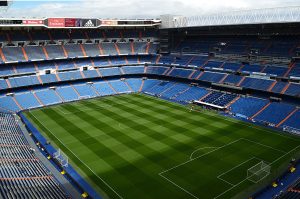
Poznan in early May smells of limestone and river water and, depending on the wind, Lech Browary’s old brewery chimneys a few kilometres north. The city does not feel like a football capital at first glance. Its cathedral predates Warsaw. Its market square dates to the thirteenth century. Its old town is a slow, postcard version of central European history. But walk ten minutes south and the Stadion Miejski rises above the suburban rooflines, and on matchday its lights can be seen from across the Warta River, and a surprising number of those matchday hats pulled low against the wind read “Kolejorz” — the nickname Polish supporters have given Lech Poznan for more than a century.
Inside the stadium, wearing shirt number ten, an Iranian winger from Sanandaj has become one of the Ekstraklasa’s most-watched attackers of the 2025/26 season. Ali Gholizadeh Nojedeh, born 10 March 1996, twenty-nine years old on the opening day of the current campaign, has recorded five goals, three assists and a FotMob average rating of 7.29 across roughly 974 minutes in the Polish top flight as of the early spring. For a player whose first eighteen months at Lech were ruined by two knee injuries and surgery, the numbers are the kind of confirmation the club’s scouting department waited three years to see.
He is not the biggest Iranian name in European football — Taremi and Azmoun still carry that weight — but he is, by a growing margin, the one whose club form in April 2026 most clearly confirms readiness for the World Cup.
From Saipa to Charleroi: The Belgian Apprenticeship
Gholizadeh’s career path is Iranian football’s classic template for a modern winger. Born in the Kurdish city of Sanandaj in western Iran, he progressed through youth and then senior football at Saipa in the Persian Gulf Pro League before moving abroad at twenty-two. Charleroi in the Belgian Pro League signed him in 2018. He scored his first goal for the club on 25 November 2018 against Lokeren. He extended his contract in January 2020 through June 2024.
The Charleroi years were the making of him as a technical winger. Belgian football is physically demanding but tactically open. He learned to ride challenges he would never have faced in Iran, to play on both wings, to cut in onto his stronger foot and shoot early. When the opportunity for a loan move to Turkey came in February 2023, with Kasimpasa offering increased exposure and higher wages, he took it. The loan was, by most assessments, mixed. He played regularly but not consistently. His body language at times suggested a player ready for a bigger challenge.
The Lech Poznan Move and the Injury Years
On 10 July 2023, Lech Poznan announced his signing on a three-year contract. The fee, reported at roughly €1.8 million, was a club record. The Polish media coverage was extensive: Lech are one of Poland’s biggest clubs, runners-up in multiple recent seasons, and their fan base treats signings of this size as statements. Gholizadeh arrived with a reputation as a direct winger who could score goals. The expectation, on the club’s part, was a summer adjustment followed by a strong first season.
What followed instead was one of the more brutal injury sequences of any Iranian player’s European career. A knee problem suffered in March of that year kept him out of the opening weeks of the 2023/24 Ekstraklasa. He did not make his Lech debut until 31 October. He then played fewer than ten matches before a second knee injury, sustained in a goalless draw against Stal Mielec on 1 April 2024, required surgery and ruled him out for the rest of the season.
For a twenty-seven-year-old winger whose game depends on acceleration and direction changes, the medical timeline was terrifying. Iranian football journalists began writing pre-emptive elegies. Polish commentators, more pragmatic, noted that Lech had managed worse injury sequences before and that modern knee rehabilitation had improved markedly in the preceding decade. The club stuck with him. The rehabilitation worked. And the 2024/25 season, when it came, was a transformation.
The 2024/25 Title and the Breakout
Lech Poznan won the 2024/25 Ekstraklasa title — their first in several seasons — with Gholizadeh as a central figure. By May 2025, PersianFootball.com had published a detailed piece arguing that he was not just Lech’s star but the Ekstraklasa’s, citing his goals, assists and expected-goals contributions across the full season. The title, combined with his personal form, qualified him as the first Iranian to win a Polish top-flight championship medal.
The title also qualified Lech for the 2025/26 UEFA Champions League league phase — the expanded 36-team format introduced in 2024 that gives Ekstraklasa winners a full league-phase fixture list rather than a qualifying-round elimination risk. For Gholizadeh personally, the competition was an overdue return to European football’s top table. He had played Europa Conference League football at Charleroi and Lech before. Champions League group-stage football, against the calibre of opposition the 2025/26 league phase produced, was a new order of visibility.
The 2025/26 Numbers in Context
Five goals and three assists in approximately 974 Ekstraklasa minutes as of the spring represents a goal contribution every 121 minutes, or roughly every 1.35 matches. For a winger, that rate is elite. The 7.29 FotMob rating places him in the top tier of the Polish top flight on a per-match basis. His 2024/25 title-winning season produced comparable numbers, suggesting that the current form is not an outlier but a new baseline.
What the raw numbers cannot fully capture is how Lech’s manager uses him. Gholizadeh plays primarily as a left winger with the licence to drift into central areas on counter-attacks. In the club’s 4–3–3, he is the third of three forward options, with his combination play alongside the central striker and the attacking midfielder producing most of his non-goal contribution. His three assists this season have been, by scout reports, the kind of cutback-from-the-byline passes modern winger analysis values highly.
Poznan, the Diaspora, and the Iranian Fan Base Abroad
Poland’s Iranian community is small compared to Germany, the UK or the United States, but it is growing. Warsaw, Krakow and Poznan each host Iranian student populations and a network of professionals who have arrived in Poland since 2018. For many of them, Gholizadeh’s presence at Lech has become an anchor. Attendance data from Iranian diaspora social media suggests that a recognisable contingent shows up to Lech home matches wearing Iran scarves.
For Iranian supporters further afield, the Lech connection is the kind of story that builds slow loyalty. A Persian-language Lech blog emerged in 2024. Polish broadcasters have occasionally included Farsi interviews in their post-match packages. The club shop stocks shirts with “Gholizadeh” printed on the back and has reportedly seen orders from outside Poland rise meaningfully since his title-winning season.
Statistical Summary
| Season | Competition | Apps / Minutes | Goals | Assists |
|---|---|---|---|---|
| 2023/24 | Ekstraklasa | ~10 / limited | low | low |
| 2024/25 | Ekstraklasa (title) | Full season regular | Double figures | Multiple |
| 2025/26 (to Apr) | Ekstraklasa | ~974 minutes | 5 | 3 |
| 2025/26 | Champions League | League-phase involvement | As reported | As reported |
The 2024/25 column is intentionally summarised rather than itemised; contemporary PersianFootball.com coverage placed his goal total in double figures across all competitions, with detailed match-by-match data available at Transfermarkt. The 2023/24 numbers are the ones the current figures should be read against: they represent the damage done by the knee injuries and demonstrate how far he has come.
The Iran National Team Role
Gholizadeh debuted for Iran on 17 March 2018 against Sierra Leone, scoring twice in what remains one of the most impressive debuts of any recent Iranian international. Two months later, Carlos Queiroz named him in the preliminary squad for the 2018 World Cup in Russia. He did not make the final cut but by then was established as a senior international. He was in Queiroz’s 2022 World Cup squad in Qatar, and under Amir Ghalenoei in the 2026 cycle he has become a regular starter on the left wing.
For the 2026 tournament, Gholizadeh’s role is arguably the most clearly defined in the Iranian squad. He is the first-choice left winger. He will start all three group matches if fit. His direct running at Belgium’s right-back, his finishing in behind the New Zealand high line, and his combination with Taremi in transitions are the three tactical mechanisms Ghalenoei has been building around him.
The Case for Him Being Iran’s Most In-Form Player
Taremi is scoring more. Azmoun has more name recognition. But when Amir Ghalenoei’s staff watch match video in April 2026, the player whose Ekstraklasa form most directly translates into the kind of output Iran will need in North America is Ali Gholizadeh. His minutes are consistent. His goal contribution rate is elite for a winger. His Champions League exposure this season means he has already played against the kind of European opposition Iran will face. He is fit, motivated and, at twenty-nine, in the prime physical window for a wide forward.
The Iranian press has, in the last month, started to notice this. Tehran Times ran a feature under the headline “I knew that my time would come,” quoting Gholizadeh’s own words about his recovery from the knee injuries. The phrase has since become a kind of motto for his supporters. The implication is clear. He has waited. He is ready.
What Comes Next
Contractually, Gholizadeh’s deal at Lech runs into the summer of 2026. The club will almost certainly seek to extend, particularly if his form holds through the end of the domestic season and he produces a strong World Cup. Bigger European clubs — mid-table Bundesliga, Dutch Eredivisie, smaller Premier League — would represent the natural next step. Polish reporting has begun to mention potential summer suitors, though no concrete offers have been reported publicly.
For Iranian football, the outcome that would carry the most weight is a strong World Cup in which Gholizadeh scores one of the goals Iran needs to advance from the group. A left-footed strike into the Belgium top corner in Inglewood. A tap-in against Egypt in Seattle. A counter-attacking winner against New Zealand. Any of those would, in combination with his current club form, make him the kind of mid-career Iranian export whose value doubles in a single month.
Lech Poznan know that. So does the player. So does Amir Ghalenoei. The spring and summer of 2026 may end up being the most consequential six months of Ali Gholizadeh’s career.
The Kurdish-Iranian Identity on a European Stage
Sanandaj, Ali Gholizadeh’s home city, sits in the Kurdistan province of western Iran and carries a cultural identity distinct from Persian-majority Tehran. Sanandaj produces Kurdish-language music, a specific cuisine, and a small but passionate footballing tradition. The city’s domestic club, Paas Sanandaj, has dipped in and out of Iranian top-flight football over the decades. Kurdish players from Sanandaj who have reached Europe have, historically, carried a double identity: Iranian internationally, Kurdish locally, with supporters in both communities claiming their successes.
Gholizadeh has never publicly foregrounded the Kurdish dimension of his identity, in the way that some Iranian sports figures have and many have not. What he has done, more quietly, is visit Sanandaj between seasons, maintain connections to his family there, and participate in community events when his schedule permits. In Poznan, the small Iranian community that supports him at Lech home matches includes both Persian- and Kurdish-speaking members, a detail that Polish sport media has occasionally reported without always understanding.
This matters because the Iranian football diaspora in Europe is not monolithic. Iranian Turks, Iranian Kurds, Iranian Arabs, Iranian Lurs, and Iranian Persian speakers all support the national team but bring different cultural resonances to the act. Gholizadeh, by playing well at a major European club, functions as a symbol for a specific subset of that diaspora in a way Taremi (from Bushehr, Persian) or Azmoun (from Gonbad-e Kavus, ethnically Turkmen) function as symbols for others. The 2026 World Cup, played for the first time in a country with a large Iranian diaspora, will put all of these identities in the same stadium.
The Polish Football Context
Polish football has entered a quiet renaissance in the 2020s. The Ekstraklasa’s best clubs — Lech Poznan, Legia Warsaw, Jagiellonia Bialystok — have invested in infrastructure and squad depth at a rate unmatched in most of Eastern Europe. Television coverage has improved. Stadium attendances have recovered and, in some cases, exceeded pre-pandemic levels. The league’s UEFA coefficient has risen, expanding European competition slots. Lech’s 2025/26 Champions League participation is one of the visible results.
Foreign players have taken notice. Scandinavian, Balkan and Iberian imports have increased. Iranian players, historically rare in Polish football, now have at least one high-profile representative in Gholizadeh and the beginnings of a scouting pipeline that could produce more. Persian-language Polish football coverage, almost non-existent three years ago, now produces regular content on major sports portals. Ekstraklasa shirts appear in Tehran replica markets for the first time.
For Gholizadeh personally, this broader Polish football trajectory matters. Had he signed for Lech in 2017 rather than 2023, his visibility outside Poland would have been minimal. Signing during the Ekstraklasa’s current upswing means his Champions League appearances are watched internationally. His club form translates into scouting reports at Bundesliga and Eredivisie clubs in a way that Polish-based performances of a decade ago simply did not.
The Technical Signature: Left Foot, Cut Inside, Near Post
Every productive winger has a signature move. For Gholizadeh, it is the near-post shot from a left-flank position after a cut inside onto his right foot. This is the move he produces in training repeatedly, and the one that has produced a plurality of his Ekstraklasa goals across both his 2024/25 and 2025/26 seasons. Polish analytical blogs have mapped his shot locations in detail, and the clustering is unmistakable: a dense group of shots originating from the left half-space between the edge of the penalty area and roughly twenty-five yards out, angling toward the near post rather than the more obvious far-corner finish most right-footed left-wingers prefer.
The tactical implication for Iran is specific. Belgium’s right-back, whoever starts, will spend much of 21 June trying to force Gholizadeh outside rather than inside. If he fails, the near-post shot is the threat. If he succeeds, Gholizadeh’s left-footed cross into the box for Taremi is the secondary option. Either way, the right-back position is the seam Iran can most realistically attack, and Ghalenoei’s staff has reportedly identified it as the most promising Belgium matchup across the entire field.
What a Bad World Cup Would Look Like
Every preview of an upcoming tournament tends toward optimism. The honest analysis of Gholizadeh’s 2026 prospects, however, must account for the scenarios in which things go wrong. He could be injured in a late-season Ekstraklasa fixture. He could lose form in the final two months of the club season. He could start the New Zealand match, fail to impact it, and be relegated to substitute status for the remaining group games. He could find that Belgium’s right-back, whoever Domenico Tedesco selects, is a matchup nightmare for his specific style.
The risk that rates highest among Iranian football analysts is the one of over-expectation. Gholizadeh’s current form is producing Iranian press coverage that treats him as a decisive figure. That coverage creates pressure. Iranian attacking players who go into World Cups carrying heavy domestic expectations have, historically, underperformed. Azmoun in 2022 is the obvious recent example. The psychological management of expectation is, for a player of Gholizadeh’s current profile, as important as any tactical preparation the staff can provide.
A bad World Cup is not the end of his career. He is twenty-nine, under contract at a Champions League club, with a rehabilitation story already on his CV. But it would set back the trajectory of a career that has, to this point, been defined by delays. It would mean that the thirty-year-old version of Ali Gholizadeh enters the 2027 Asian Cup cycle without the tournament breakthrough the last two years have been building toward. That is the stake that matters for him personally.
Frequently Asked Questions
What position does Gholizadeh play?
Primarily a left winger in Lech’s 4–3–3, with the flexibility to play on the right or as an attacking midfielder. For Iran he has also started on the left, occasionally drifting centrally in transitions.
How much did Lech pay for him?
A reported club-record fee of approximately €1.8 million in July 2023, on a three-year contract running through summer 2026.
Did the knee injuries have lasting effects?
Not visibly. His 2024/25 title-winning season and current 2025/26 output suggest the surgery and rehabilitation were successful. His sprint data, according to Polish coverage, is back to pre-injury levels.
How does he compare to other Iranian wingers?
Alireza Jahanbakhsh, historically Iran’s most prominent winger abroad, is at a later career stage and now plays in Belgian second-tier territory. Sardar Azmoun is a central forward. Mohammad Mohebi offers speed but lacks Gholizadeh’s technical finish. In a 2026 comparison within the Iran squad, Gholizadeh is comfortably the most productive wide player.
Sources
- Wikipedia — Ali Gholizadeh
- Transfermarkt — Gholizadeh player profile
- Tehran Times — I knew my time would come
Further SportsPersia reading: our Iran at the 2026 World Cup preview, our Champions League coverage, and our spring 2026 tournament guide.