
Alireza Moeini — Iran’s First World Record Holder Since the Moradi Era
By Arman Petrosian — Published 1 May 2026

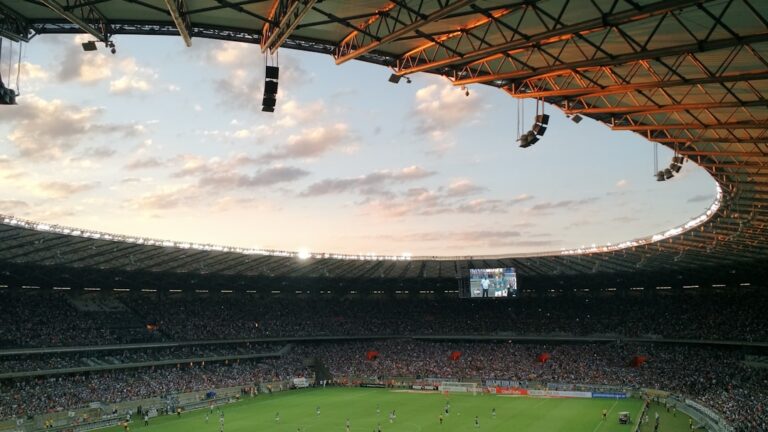
The bar came off the platform in Førde at 18:47 on the evening of 9 October 2025. Its progress from floor to overhead had a kind of metronomic quality, which is the language weightlifting judges and coaches use when they mean that a lift is moving exactly on the line it needs to move, not early, not late, not out of position. At the top, Alireza Moeini locked his elbows, waited the half-second the judges required, and stepped away from the weight. The scoreboard flashed 182. The record that had stood since 2022 was gone.
For Iranian weightlifting, the moment was more than a sentence in a results bulletin. It was the first men’s world record an Iranian had set in any weight class since the Sohrab Moradi era closed in 2018. Seven years without an Iranian name on the record board. Seven years during which the country produced world-level totals, Olympic medals, and plenty of near-records, but never quite the single lift that cleared the last kilogram. Moeini, twenty years old, a full decade and a half younger than Moradi at his peak, stepped off the platform and looked genuinely puzzled by what had just happened.
In the tunnel afterward, asked by the Iranian state broadcaster what the number meant, Moeini shrugged in a way that did not read as false modesty. “I trained for it,” he said, “so it should have happened. Now we do the clean and jerk.” He did — 209 kilograms — before the microphones could find him again.
The Sedeh of Isfahan Province
Moeini is from Sedeh, a town of around 6,000 people in the Lenjān County of Isfahan Province in central Iran. Sedeh is not on the Iranian weightlifting map the way Juybar is on the wrestling map or Abadan is on the football map. It is a rural town, surrounded by farmland and a few small industrial operations, with a population that has historically sent its ambitious children to Isfahan city or Tehran for education and sport. Moeini’s emergence from Sedeh is, in its own way, a minor redistribution of the Iranian strength-sport geography.
He started lifting at age 12 at the local Azadegan sport complex, a basic weightlifting hall with a single platform and a set of training equipment that would embarrass a well-funded gym anywhere else in the world. His first coach was Mohammad Jafari, a former national junior lifter who had returned to Sedeh after a middling senior career to teach. The decision to begin lifting, in Moeini’s telling, was casual. A cousin was doing it. The hall was a few hundred metres from the family home. There was no formal talent-identification programme in Sedeh, and there was not a federation scout within a hundred kilometres.
Within three years the federation had noticed. At 15, Moeini won the Iranian Junior Championship in his weight class. At 17, he won the Asian Junior Championship. At 19, he was competing at the senior world level. At 20, he was a world record holder. The compression of that timeline is not normal, even in a weightlifting nation with Iran’s depth.
What a 182-Kilogram Snatch Actually Is
For readers who are not weightlifting specialists, it is worth a moment of technical explanation. The snatch is the first of weightlifting’s two competition lifts. The bar travels from the platform to an overhead lockout in one continuous motion. The lifter receives the bar in a deep squat, with arms fully extended, and then stands up. The 94-kilogram class is, in the IWF’s old weight-class system, the upper-middle range of the sport — heavy enough to allow the kind of absolute strength that produces large numbers, light enough that the lifts are fast and technically clean.
At 182 kilograms, Moeini’s snatch is in the top one or two percent of all snatches ever recorded in that class. Sohrab Moradi’s own snatch record during his peak was 189, but that was set at 94.00 kilograms of bodyweight with the old bar specification, and the current record Moeini broke was the modern re-established 94-kilogram class mark. The comparison is imperfect by design, because the weight categories and bar specifications have changed in the intervening years. What is consistent across eras is the technical purity required to put 182 over the head cleanly. Moeini did it on his third attempt, with both heels touching the ground in the receive, no press-out, no stumble, and no forward pivot.
The Moradi Shadow
Sohrab Moradi is, for Iranian weightlifting, a figure closer to a founding myth than to a remembered competitor. He won Olympic gold at Rio 2016 in the 94-kilogram class. He set the 94-kilogram snatch world record at 189 kilograms at the 2018 Asian Games in Jakarta, breaking a record that had stood for nineteen years. He held the 94-kilogram total record at 417 kilograms. For a stretch of roughly 18 months between 2017 and 2018 he was unequivocally the best 94-kilogram lifter in the world, and Iranian weightlifting ran most of its identity through his shoulders.
The reconfiguration of the IWF weight classes after 2018 erased most of Moradi’s records on paper without erasing any of them in memory. He retired effectively after the Tokyo 2020 cycle was disrupted by injury and the pandemic, and Iranian weightlifting entered a roughly seven-year interregnum during which multiple lifters — Ali Hashemi, Ayat Sharifi, Ali Davoudi — produced medals but not records. Moeini is the first Iranian since the Moradi era to close that particular circuit. In Iranian sports media the framing is almost inescapable: the Moradi heir has arrived.
Moeini himself is politely careful about the comparison. In interviews he has said that he watched Moradi’s lifts on video repeatedly as a teenager, that the style of the older lifter — a long, almost lazy first pull followed by an explosive second pull — influenced his own approach, and that Moradi is the lifter whose technique he most admires. He has also said, correctly, that he is not Moradi and that he would prefer to be measured against his own future rather than against the past.
The Training Model
Iranian weightlifting’s training model since the 2022 reform has been built on two principles: a longer youth pipeline that emphasises technique over load, and a senior preparation camp that runs ten months of the year at the national centre in Tehran. Moeini spent three years in the youth pipeline before graduating to senior camp at 18. He has lived at the Tehran centre since 2022, returning to Sedeh for roughly six weeks a year around the Nowruz new year and the summer break.
His typical training week, according to federation reports, includes nine platform sessions and four accessory sessions. The platform work runs the standard Bulgarian-influenced split of snatch, clean and jerk, and snatch-pull/clean-pull variations, with maximum-effort singles on two days per week. The accessory work is built around back squats, front squats, Romanian deadlifts, and shoulder-girdle stabilisation exercises introduced after the 2023 arrival of a European sports-science consultant. Moeini does not do traditional heavy bench press. He does not do long conditioning runs. He does swim three times a week for recovery.
His bodyweight sits at roughly 93.7 kilograms most of the year, with a brief cut to 93.9 in the final week before a competition to ensure he qualifies into the 94-kilogram class. Weight cuts of any larger magnitude are not part of his preparation. Nutritionally, his diet follows the federation’s standardised plan — high-protein, moderate-carbohydrate, timed around sessions — supplemented by the family food packages his mother sends from Sedeh roughly once a month.
The Førde Session Hour by Hour
The 94-kilogram session in Førde began at 17:30 on 9 October 2025. Moeini’s coaches opened his snatch at 174 kilograms, a conservative choice intended to secure an early good lift and stabilise the competition rhythm. He made 174 on the first attempt with visible ease. The second attempt was 179, also made cleanly. At that point the snatch silver was already secure, and the team had to decide whether to chase the record on the third attempt.
The decision, according to coaching-staff accounts later published in Iranian media, took about ninety seconds and was made by Moeini himself with head coach Sajjad Anoushiravani’s approval. The call to the loaders came through at 182. The bar went on. Moeini stood over it for approximately eighteen seconds before setting his grip. Those eighteen seconds, in video review, show a lifter with a completely neutral facial expression, moving his toes once inside his shoes, and then dropping into the lift without any adjustment.
The lift was clean from the floor. The second pull generated the vertical bar path Iranian lifting technicians had been working on with him for three years. The receive was deep. The stand was unhurried. The lockout held. Three white lights. The record. In Iranian strength sport circles, the video has been watched, frame by frame, more times than any single weightlifting clip in recent memory.
The 2026 Asian Games and Beyond
Moeini’s next major event is the 2026 Asian Games in Riyadh, scheduled for the autumn of 2026. The 94-kilogram class will field a strong Asian bracket, with Chinese, North Korean, and Kazakh lifters all targeting the top of the podium. Moeini, as the world record holder, enters as favourite. The question the Asian Games will answer is whether he can repeat the world-record lift in a different competition environment and, more importantly, whether he can do it in a different phase of his training year.
The bigger horizon is Los Angeles 2028. The Olympic weightlifting programme for LA 2028 has not yet fully finalised its men’s weight classes, but current proposals place the 94-kilogram class at the centre of the lightweight-to-middleweight category structure. Assuming the 94 exists in its current form at LA, Moeini at 23 will be in physical prime. Iranian weightlifting’s long-term plan is broadly built on that expectation.
The Isfahan Weightlifting Revival
Moeini’s emergence from Sedeh has had a side-effect that few outside Iranian weightlifting fully appreciate: it has revived the Isfahan provincial weightlifting scene in a way that reshapes the geography of the sport inside Iran. For three decades Iranian weightlifting was a north-Iranian affair, concentrated in Lorestan, Mazandaran and Khuzestan provinces. Isfahan province, with its larger population and more developed industrial economy, had oddly underperformed relative to its demographics. The Azadegan complex in Sedeh, and two sister facilities in the nearby towns of Fuladshahr and Lenjan, have added two senior national team lifters and seven junior national team lifters to the Iranian program since 2022.
That regional revival matters for long-term federation planning. Iran’s national pipeline has traditionally depended on a handful of provincial academies that feed a small number of elite lifters up to the Tehran national centre each year. Broadening the pipeline across additional provinces, particularly in central and southern Iran, diversifies the genetic and training-culture base from which the national team is drawn. It also addresses the soft political issue that provincial resentment over uneven federation investment has, at various times in the past fifteen years, produced public disputes that reached the Ministry of Sport.
Moeini, without trying or seeking to, has become a provincial ambassador. His public profile has drawn new youth enrolment to the Sedeh Azadegan complex, which reported a doubling of registered junior weightlifters between the 2024-25 and 2025-26 seasons. The complex itself has received a federation grant to upgrade its platform equipment and add a second full-time coach. The ripple effects, measured over the next several years, will be visible in the composition of the national team at future world events.
Character, Modesty, and the Small-Town Grip
One of the small observations Iranian weightlifting reporters keep making about Moeini is that he has not, in three years of senior international exposure, said anything that could reasonably be called arrogant. He treats his training partners as peers. He defers to his coaches in public settings. He answers questions about his own records in the plural, crediting “the team” and “the programme” in a way that, in other athletes, would read as rehearsed. In Moeini it reads as the ingrained modesty of a small-town Iranian upbringing that has not yet been undone by the celebrity structures surrounding world-record lifters.
Whether that equilibrium will survive the next four years is an open question. Iranian sport has a habit of putting heavy psychological loads on its rising champions. Moeini is about to experience, for the first time, what it means to be the expected gold medal at an Asian Games, then a World Championship, then an Olympic Games. The federation has assigned him a sports psychologist, which is itself a novelty within Iranian weightlifting, and his support team includes two of his older cousins from Sedeh who travel with him to major events.
The Broader Iranian Strength Story
Moeini’s world record, arriving in the same championship that delivered Iran’s first men’s team title in eight years, sits at the centre of a larger narrative about Iranian strength sport in 2026. The freestyle wrestling team won its first world team title in a decade. The Greco-Roman team continues to produce medals at every major event. The men’s weightlifting team is back on top. The zoorkhaneh culture, inscribed by UNESCO in 2010, has seen a renaissance in youth enrolment. Across the board, Iranian strength disciplines are in a phase of consolidation that has not been this broad-based since the late 2010s.
None of that sequence is coincidental. Behind the headline performances sits a federation-level reform of coaching education, a sports-ministry investment in provincial academies, and an intergenerational conversation within Iranian strength sport about how to maintain a thousand-year-old tradition inside a modern international system. Moeini’s 182-kilogram snatch is a thing unto itself. It is also a single bar in a much longer musical phrase. The phrase is still being written.
The Competitors He Will Meet Next
The men who will contest the 94-kilogram class with Moeini over the next four years are a specific and identifiable group. Liao Guifang of China is a long-standing technical threat whose total has climbed consistently through the 2022-2025 cycle. Kim Il-gwang of North Korea, introduced to international competition in Førde, has the kind of closed preparation program that produces surprises. Uzbekistan has two emerging 94-kilogram lifters from its Tashkent-based national centre. The United States, traditionally less visible at this weight, has an NCAA-pathway lifter named Ethan Smith who produced a world-qualifying total at Pan-American Championships in spring 2025.
Each of these competitors brings a different technical profile. Liao is a clean-and-jerk specialist whose snatch has historically been his weaker lift. Kim has shown in limited footage a Bulgarian-influenced training model that emphasises near-maximal singles. The Uzbek lifters tend toward a high-volume preparation style. Moeini’s technical signature — the vertical bar path snatch, the patient first pull, the conservatism on opening attempts — suits him particularly well against the volume-style competitors and presents specific challenges against the single-focused Bulgarian approach. How he navigates those match-ups over the next four championships will determine the shape of the 94-kilogram story heading into LA 2028.
The Business and Sponsorship Dimension
Iranian weightlifting lives inside an austere economic environment by international standards. Sanctions have long restricted the federation’s access to Western sponsorship, and domestic sponsors tend to be state-linked industrial firms rather than consumer brands. Moeini’s personal income from his world-record lift comes primarily from federation bonuses, Ministry of Sport awards, and modest commercial agreements with Iranian sportswear and supplement brands. A comparable lifter from a Western country would expect to earn several times as much from endorsement income at this career stage.
That said, Iranian weightlifting’s internal reward structure, while modest by international comparison, is genuinely substantial for a young athlete from a rural provincial town. The combined prize money, federation bonus, and Ministry of Sport award for a world-record performance sits in the range of what an Iranian engineer with five years of experience would earn in a year of salary. Moeini has reportedly directed a portion of that income toward upgrading the Sedeh Azadegan complex where he began training and toward supporting his younger brother’s education. The rest, by all accounts, stays in a bank account he does not touch.
Moeini’s Career Milestones
| Year | Age | Event | Result |
|---|---|---|---|
| 2020 | 15 | Iranian Junior Ch. | Gold |
| 2022 | 17 | Asian Junior Ch. | Gold |
| 2024 | 19 | Worlds — Bahía | 5th |
| 2025 | 20 | Worlds — Førde | Snatch Gold — WR 182 kg |
| 2026 (sched.) | 21 | Asian Games — Riyadh | — |
Frequently Asked Questions
What world record did Moeini set?
The men’s 94-kilogram snatch world record at 182 kilograms, set on 9 October 2025 at the IWF World Championships in Førde, Norway.
Who was the last Iranian man to hold a weightlifting world record?
Sohrab Moradi, whose 94-kilogram snatch and total records were set between 2017 and 2018. Moeini’s 182 is the first Iranian men’s world record since that era closed.
Where is Moeini from?
Sedeh, a town of roughly 6,000 people in Lenjān County, Isfahan Province. He began lifting at the local Azadegan sport complex at age 12 under coach Mohammad Jafari.
What is his next major event?
The 2026 Asian Games in Riyadh, followed by the 2026 and 2027 World Championships as qualification stepping stones toward the Los Angeles 2028 Olympic Games.
Sources
- Guinness World Records — Heaviest men’s 94kg snatch
- International Weightlifting Federation — World Records database
- Tehran Times — Iran at the 2025 World Weightlifting Championships
Related coverage on Sports Persia
Arman Petrosian covers combat sports, wrestling, and strength athletics for Sports Persia. He writes from Tehran and Yerevan.