
Iran Reclaims World Weightlifting Crown in Førde After Eight-Year Wait
By Arman Petrosian — Published 22 April 2026
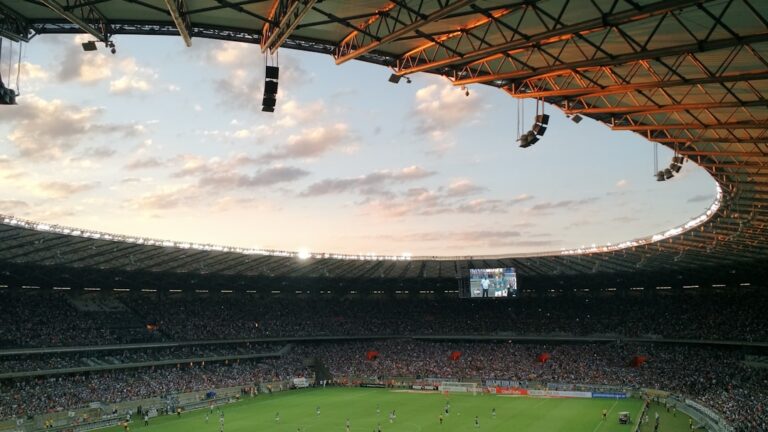
The Sunnfjord hall in Førde had been built for cross-country skiing, not for men who carry 230 kilograms above their heads. Its rafters are low, its lighting is the cold Scandinavian white that flattens shadows, and its acoustic behaviour favours the murmur of polite applause. On the night of 10 October 2025, that acoustic profile changed. The Iranian team had just locked the men’s classification. A cluster of around forty supporters in the west stand unfurled a flag the size of a small car, and the hall, to its own surprise, learned what Persian celebration actually sounds like.
The math was quiet and final: 387 points for Iran, North Korea second, Uzbekistan third, the rest of the field trailing. One gold medal, four silvers, and a bronze in the individual events, two world records in different weight classes, and a junior world record to close the week. For a federation that had last held this trophy in Anaheim 2017, the scene was both overdue and deeply specific. Iranian weightlifting had returned to the top rank of the sport without a single podium from its marquee 109-kilogram or +109-kilogram finisher in that particular edition — which is to say, the team won the way a team is supposed to win.
In the mixed zone afterward, head coach Sajjad Anoushiravani stood with his hands clasped in front of him, refused a translator, and spoke for almost five minutes in Farsi to the Iranian state television reporter. Asked to summarise the team’s performance for the international press, he offered one English sentence: “Eight years is a long time.”
The Shape of a Championship
The 2025 IWF World Weightlifting Championships ran from 2 to 11 October in Førde, a small Norwegian town in the Vestland region that had never before hosted an event of this scale. The competition was the qualifying championship for the 2028 Los Angeles Olympics, which gave every lifter an extra layer of consequence and every federation an extra layer of calculation. King Harald V attended the women’s 86kg final. The men’s 94kg session, which would produce two of the week’s loudest Iranian moments, was on 9 October.
Iran arrived with a seven-man roster assembled over the previous 18 months of domestic and Asian competition: Abdollah Beiranvand at 65kg, Ilya Salehipour at 79kg, Alireza Moeini at 94kg, Ali Alipour at 94kg as well, Abolfazl Zare at 109kg, Ayat Sharifi at +109kg alongside the veteran Ali Davoudi. Observers of Iranian weightlifting will note what that roster lacks: a superstar in the super-heavyweight class. For twenty years, Iran’s world gold had flowed through the mouth of Hossein Rezazadeh’s successors at +105 and later +109. This time the team was built around 94, 102 and 109 kilograms.
The 94-Kilogram Session: When the Record Board Fell
The 94-kilogram class in Førde was, without argument, Iran’s platform. Two Iranian lifters, Moeini and Alipour, were separated by less than two kilograms of bodyweight and less than a year of age. Both had come up through the youth and junior pipelines in the Lorestan and Mazandaran provincial academies. Both opened their snatches in the 170-kilogram range with the economy of lifters who have decided that the session is already in their hands.
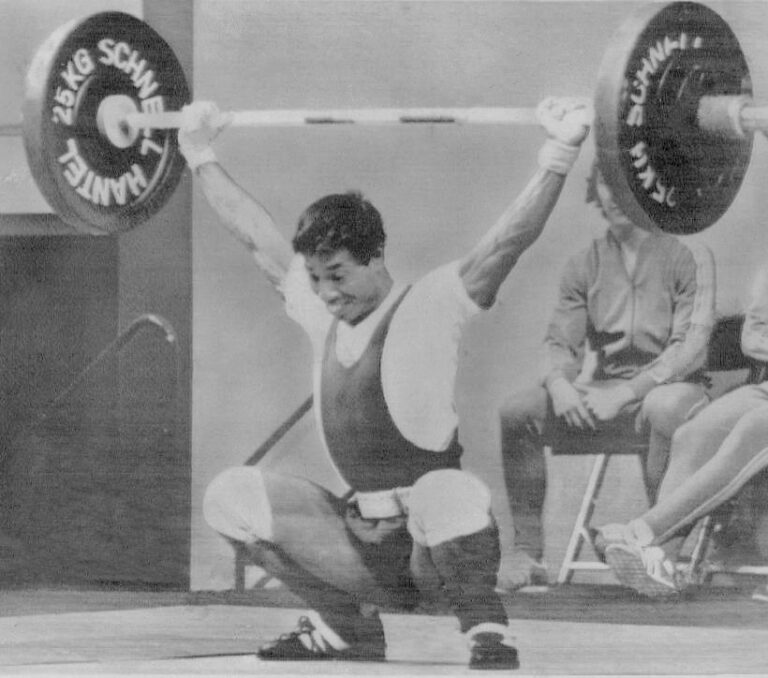
At 174 kilograms Moeini moved to the bar. A clean lift. At 179 another. Still clean. The coaches called 182. Everyone in the hall who knew weightlifting knew what 182 represented — one kilogram over the standing world record in the 94-kilogram class, a record that had lived on the books for three years without serious challenge. Moeini rolled his shoulders once, set his feet, and pulled the bar in a line so vertical that the judges did not have to look at the floor. The lockout was clean. Three white lights came up. The record was his.
His training partner Alipour followed with a 179-kilogram snatch for silver in the lift. Moeini closed the session with 209 in the clean and jerk for a 391-kilogram total and the snatch gold. The world record flashed on the scoreboard, the hall exhaled, and the 94-kilogram session was effectively a one-country show.
The 110-Kilogram Session: A Junior Record at 20
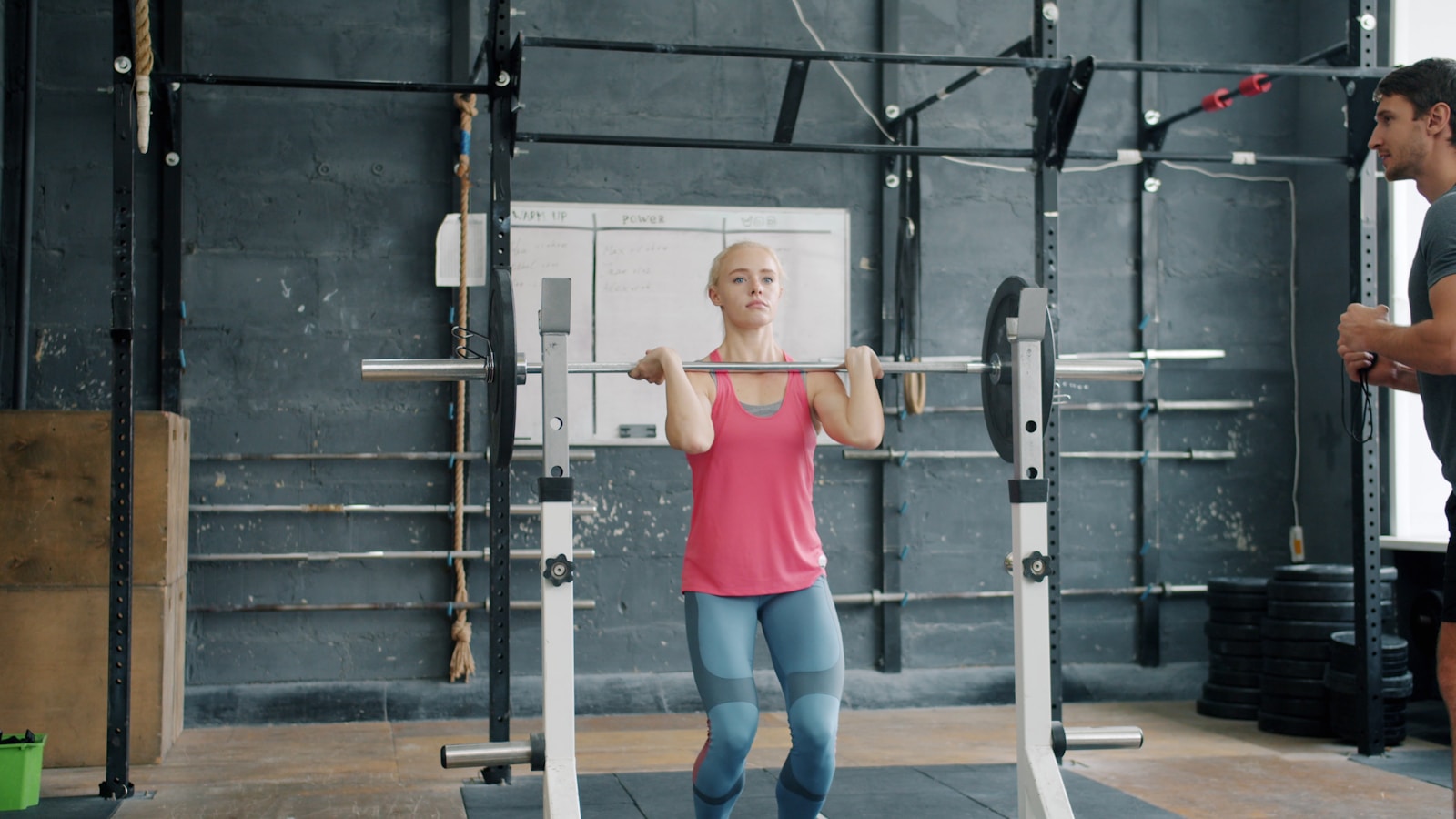
The 110-kilogram final was meant to be an Uzbek coronation. Akbar Djuraev, back at his natural bodyweight after two years sliding down to 102, arrived with the intention of breaking three world records in a single session. He largely did, finishing with a 196-kilogram snatch, a 232-kilogram clean and jerk, and a 428-kilogram total, all standing as world marks. Iranians who remembered the Rezazadeh years nodded at the screen: this is what peak super-heavyweight weightlifting looks like, even if it was happening in somebody else’s uniform.
The remarkable footnote came from the Iranian camp anyway. Alireza Nasiri, 20 years old, second appearance at the senior world level, lifted 184 in the snatch and closed the competition with a 231-kilogram clean and jerk to post a 415-kilogram total. That number gave him two silver medals — clean and jerk silver, total silver — and, more quietly, a new junior world record in both lifts, surpassing the previous marks by a kilogram each. The sequence had the specific atmosphere of a passing-of-the-torch moment; a Uzbek senior rewriting the senior books on the same platform where an Iranian junior was rewriting the junior books beneath him.
The Team Arithmetic
Weightlifting’s team title is assembled from the individual scores of a federation’s best finishers in each event (snatch, clean and jerk, total), with points awarded on a declining scale. It is a format that rewards depth rather than a single pair of huge lifts. The Iranian roster produced medal-level points from six of its seven lifters. The combined scoreline — one gold, four silvers, one bronze — was more decorative than determinative; the decisive contribution came from the near-podium points that lifters like Abolfazl Zare at 109 and Ayat Sharifi at +109 earned by finishing inside the top eight.
When the points were totalled after the final session, Iran had 387 and an unassailable lead. North Korea, returning to the international scene with a disciplined young team, finished second. Uzbekistan’s Djuraev-led squad took third. China had sent a reduced delegation. Russia was not in the building. The geography of the sport in 2025 is what it is.
The Coach Who Said “Eight Years Is a Long Time”
Sajjad Anoushiravani took over as head coach of the Iranian men’s team in mid-2022 with a mandate from the federation that was uncomfortably simple: stop losing to North Korea, Uzbekistan, and China in order, and get back on top of the world podium before Los Angeles 2028. At the time, Iranian weightlifting had drifted through two Olympic cycles without a men’s world team title, watched its super-heavyweight tradition thin out, and seen its domestic depth crowded by new training cultures elsewhere in Asia.
Anoushiravani, who had himself taken silver for Iran at +105 kilograms in Beijing 2008, did three things that observers of the federation’s inner workings have since documented. He imported sports-science personnel from Europe, tightened the recovery and nutrition standards at the national centre in Tehran, and rebuilt the provincial pipeline around identifying and moving 15 to 17-year-olds up through the youth and junior ranks with a patience that earlier generations had not been given. Moeini and Nasiri are the two most visible products of that pipeline. Salehipour at 79 kilograms and Sharifi at +109 are the next two.
What Eight Years of Losing Looked Like
To understand the Førde celebration, it helps to understand the eight years of near-miss that preceded it. Iran had come second at the 2018 World Championships in Ashgabat, second in Tashkent in 2021, third in Bogotá in 2022, third in Riyadh in 2023. The pattern was consistent: enough individual medals to stay in the top three, never quite enough depth to dislodge China or North Korea at the top. The super-heavyweight class, which had once been a reliable Iranian gold, cycled through Ali Davoudi and then Ayat Sharifi without producing a consistent world champion.
Behind the results was an administrative story that Iranian weightlifting observers have tracked with frustration: budget squeezes, a slow federation presidency turnover in 2020, tension between domestic coaches and the new generation of sports-science staff, and the usual low-grade friction between the Ministry of Sport and Youth and the federation over allocation. By 2023 most of those frictions had been resolved in favour of the coaching staff. Førde is the first international championship in which the new model was fully operational.
The LA 2028 Calculation
Winning the 2025 world team title carries a practical consequence for Iran beyond the emotional one: it anchors the federation’s position in the IWF’s internal ranking and gives it both the maximum quota allocation and the institutional credibility to argue for Olympic qualification slots in every men’s weight class it contests. In the Olympic weightlifting programme, that matters more than it used to, because the LA 2028 event will feature five weight classes for men rather than the seven of Førde.
The decision about which Iranian lifter occupies which Olympic weight class will be made through 2027. Moeini will almost certainly be the 94-kilogram representative, and Nasiri may move up to the LA-programme 109-kilogram class to give Iran a credible challenge against Uzbekistan and Armenia in that slot. Whether Davoudi or Sharifi takes the super-heavyweight seat is a question the domestic competitions will answer over the next two years. None of those plans existed with this specificity before the team title was won.
The Tradition Underneath
Iranian weightlifting’s international story began in the early 1990s with Hossein Tavakoli, continued through Hossein Rezazadeh’s two Olympic gold medals in 2000 and 2004, carried through Kianoush Rostami and Sohrab Moradi in the 2010s, and arrived in Førde on the backs of a new generation. But the deeper foundation is older than that. Weightlifting in Iran sits on top of a century of varzesh-e bastani and zoorkhaneh tradition, the oldest institutional strength culture in the world. The mil, the kabbadeh and the stone — sang — are the first strength tools most Iranian boys ever touch, and the federation’s coaching manuals still quote pahlevan Takhti on the subject of athletic humility.
That continuity is not a marketing brochure. When Moeini finished his world-record snatch and walked back to the Iranian bench in Førde, he bowed once toward the camera — a single bow of the head, precisely the same gesture a zoorkhaneh athlete makes when he enters the pit. The gesture was brief and probably unplanned. It was also the exact ceremonial bow that has existed in Persian strength culture for about eleven centuries.
The Super-Heavyweight Question
If there is a single weakness in the Iranian 2025 world title squad, it is in the super-heavyweight bracket. For two decades, the +105-kilogram and later +109-kilogram class was Iranian weightlifting’s gold mine. Hossein Rezazadeh took Olympic gold in Sydney 2000 and Athens 2004, along with multiple world titles, establishing a dominance that carried the federation through its weaker years at other weights. Behrouz Hemmati, Saeid Ali Hosseini, Sajjad Anoushiravani himself, and eventually Behdad Salimi maintained the tradition through the 2010s. In Førde, the Iranian super-heavyweights Ayat Sharifi and Ali Davoudi finished outside the medals in their individual competitions and contributed points to the team title through depth rather than podium placements.
That represents both a challenge and a story in development. China’s Liu Huanhua and Uzbekistan’s Akbar Djuraev, the latter now moving back up to +109 after his 110-kilogram campaign in Førde, are the current class leaders. Georgia’s Lasha Talakhadze, a three-time Olympic champion, has been the dominant super-heavyweight of the last decade and will be a presence through the LA 2028 cycle. Iran’s answer is a pair of younger lifters at Tehran’s provincial academies who have not yet reached the senior international stage. The federation’s internal timeline places a super-heavyweight world medal on the 2027 target list. In Førde, that gap was real but not fatal.
The Quiet Rebuilding
Iranian weightlifting’s recovery, it turns out, was not built on one freakish talent. It was built on a coaching reform, a revamped junior pipeline, and a willingness to let the points pile up quietly rather than chase headline-grabbing Olympic lifts in the middle of a rebuild. The championship in Førde proved the model. The practical question now is whether the federation can keep the pipeline open through LA 2028 without losing its best young lifters to injury, politics, or the international transfer market that increasingly draws on Iranian strength athletes.
If Førde is the beginning of a new Iranian weightlifting era rather than an isolated peak, it will be because the current generation of lifters accept the obligation that goes with wearing the national red, white and green on a world platform. The signals so far are good. Moeini is 20. Nasiri is 20. Salehipour is 22. Abolfazl Zare is 24. A team that averages under 25 years of age does not win a world title by accident, and it rarely wins only once.
The Financial and Political Context
The Førde title also sits inside a specific administrative context that Iranian weightlifting watchers know well. Sanctions, currency devaluation and federation budget constraints have shaped Iranian Olympic sport for the better part of a decade. International travel for training camps in Bulgaria, Greece and Kazakhstan — once a routine part of elite Iranian lifter preparation — was curtailed between 2019 and 2023. The federation under Ali Moradi, elected president in 2021, restructured its competition schedule around domestic events and selected Asian and regional competitions that could be reached without full Schengen visas.
That period of domestic concentration, which was initially an adaptation to constraint, turned out to have unexpected competitive benefits. Iranian lifters spent more consecutive months training together under a single set of coaches, and the national team’s internal cohesion deepened in a way that international travel had not previously allowed. Several senior coaches, speaking to Iranian media after the Førde title, described the 2022-2024 period as an unintended pressure-cooker that helped produce the current generation’s specific technical consistency. Constraint, in this case, was opportunity.
Going forward, the federation will have to balance its renewed access to international camps with the institutional lessons of the closed period. The coaches will want European exposure. The lifters will need competitive match-ups. But nobody inside the program wants to dilute the domestic training culture that just delivered the first men’s world team title in eight years. The balance between international exposure and domestic cohesion is, in 2026, the most active internal debate in Iranian weightlifting.
The Women’s Program, Still Waiting
One conspicuous absence from the Førde Iranian delegation was a women’s weightlifting team. Iranian women have not competed internationally in weightlifting since a brief experimental period in the mid-2010s when two women lifters were sent to Asian Junior Championships under special dispensation. The sport’s competition uniform requirements, which include a standard singlet that does not accommodate the Iranian women’s dress code, have been the nominal obstacle, and the IWF has historically declined to accept modified uniform variants for Iranian women lifters.
The topic has re-emerged on the federation’s agenda in the last two years, partly because women from other majority-Muslim countries have begun competing internationally with custom uniform arrangements that the IWF has accepted on a case-by-case basis. The Iranian federation has tentatively explored the possibility of introducing a women’s national team for regional competition in 2026 and 2027, with a view toward Asian and potentially world-level participation by 2028. Nothing is formalised. But the conversation is live, and it is another dimension of the broader rebuilding that the Førde title has accelerated.
Iran’s 2025 World Weightlifting Championship Medal Haul
| Lifter | Weight Class | Best Snatch | Best C&J | Result |
|---|---|---|---|---|
| Alireza Moeini | 94 kg | 182 kg WR | 209 kg | Gold snatch, Silver total |
| Ali Alipour | 94 kg | 179 kg | 210 kg | Silver snatch |
| Alireza Nasiri | 110 kg | 184 kg | 231 kg JWR | Silver C&J, Silver total |
| Ilya Salehipour | 79 kg | 160 kg | 190 kg | Bronze total |
| Team Total | — | — | — | 387 points — Gold |
Frequently Asked Questions
When was Iran’s last men’s world team title before Førde?
Anaheim 2017. The eight-year gap between titles was the longest in Iranian men’s weightlifting since the country began consistently competing on the world stage in the mid-1990s.
Who set world records for Iran in Førde?
Alireza Moeini set the senior world record in the 94-kilogram snatch at 182 kilograms. Alireza Nasiri set new junior world records in both the 110-kilogram clean and jerk (231 kg) and the junior 110-kilogram total (415 kg).
Who is the Iranian head coach?
Sajjad Anoushiravani, a 2008 Olympic silver medallist in the +105-kilogram class, has led the men’s team since mid-2022. His reform of the junior pipeline is widely credited for the Førde title.
What does the win mean for LA 2028?
It secures Iran’s maximum qualification quota and gives the federation strong negotiating ground within the IWF during the ongoing Olympic weight-class redesign. The core roster averages just under 25 years of age, so the same team is broadly available for LA.
Sources
- Tehran Times — Iran clinch historic 2025 World Weightlifting Championship title
- International Weightlifting Federation — World Records database
- Wikipedia — 2025 World Weightlifting Championships
Related coverage on Sports Persia
Arman Petrosian covers combat sports, wrestling, and strength athletics for Sports Persia. He writes from Tehran and Yerevan.