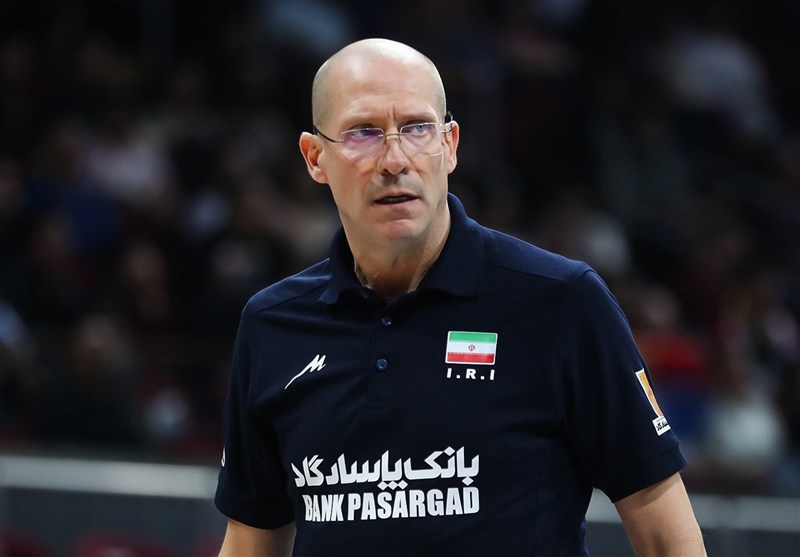
Roberto Piazza’s Iran: Inside the 42-Player Blueprint for VNL 2026
By Saman Azizi — Published April 24, 2026
The Azadi Volleyball Hall hums before a ball is ever struck. Coaches trade clipboards, physios tape ankles, and on the far baseline a cluster of young setters run through a jumping drill while Roberto Piazza watches from half-court, arms folded, expression unreadable. The Italian does not raise his voice. He does not need to. A whistle, a single gesture, a quiet word in English to an assistant who relays it in Persian — and the tempo changes.
This is the Iran men’s national volleyball team in the spring of 2026, and it looks nothing like the team that stunned the Olympic world a decade ago. The faces are younger. The bench is deeper. And for the first time in federation memory, 42 names are stitched onto the training-camp shortlist rather than the customary 22 or 25. Piazza and his staff have cast the widest net in the program’s history, and the reason is as much philosophical as it is practical.
Iran volleyball, once a story about a single golden cohort, is finally trying to build a system.
The Widest Net in Program History
On March 11, Iran’s federation confirmed the 42-player expanded squad for the 2026 Volleyball Nations League cycle. The list, published in Persian and English across Tehran Times, Mehr, and Volleyball World, was unusual not just for its size but for its balance. Six setters. Eight opposites. Eleven outside hitters. Eleven middle blockers. Six liberos. The volume ensures Piazza can rotate combinations through May without burning starters in the run-up to the tournament opener.
Federation president Mohammadreza Davarzani, a veteran administrator who rarely speaks for the sake of speaking, framed the move as deliberate. “We are not choosing a team for one summer,” he told reporters at the announcement. “We are choosing a pipeline for the next Olympic cycle.” Los Angeles 2028 is the subtext of every decision the Iranian volleyball machine now makes, and Davarzani knows it.
The roster mixes experience with a wave of players born between 1999 and 2003. Amin Esmaeilnezhad, the powerful opposite who has carried the attacking load through the last two VNL summers, returns. So does captain Morteza Sharifi and the reliable middle Mohammad Valizadeh. But the eye is drawn to names lower on the list — Arshia Behnezhad at setter, Bardia Saadat at opposite, Mobin Nasri on the outside — young players whose club form in the Iranian Super League has forced their way into the conversation.
Piazza’s Italian Template
Roberto Piazza arrived in Tehran in 2024 with a résumé that read like a map of Italian volleyball’s past quarter-century. Power Volley Milano. Piacenza. Modena. A stint with Slovenia’s national team that produced a silver medal at the 2019 European Championship. Before Iran, he had never coached outside Europe. He took the job, he said, because Iran’s federation “believed in the project” and because succeeding Julio Velasco — the Argentine who had led Iran to a 2014 World League bronze medal and the country’s Olympic debut in Rio — was the kind of challenge that still quickens the pulse after thirty years on the bench.
Piazza’s volleyball DNA is Italian in the classical sense. He prizes a fast, pass-dependent offense that spreads the court horizontally, relies on libero-led defense, and asks middle blockers to read setters rather than simply react. In his first season he pushed Iran up three spots in the FIVB rankings — a modest but measurable gain — and guided them to ninth place in the VNL 2025 final standings, a hair short of the Finals weekend.
He is candid about what Iran still lacks. “Our transitions are good, our attacks are good, but we must be more stable in reception against elite serving,” he told a Tehran-based reporter in February. “That is the final twenty percent.”
From Mahmoudi’s Generation to the Next
To understand why the 2026 camp feels like a hinge moment, walk the federation hallways in central Tehran and look at the photographs. Behnam Mahmoudi stares back from one wall, frozen mid-jump-serve in a 2010 Asian Games frame. Saeid Marouf, the setter who orchestrated Iran’s rise, smiles from another. Farhad Ghaemi, Seyed Mohammad Mousavi, Shahram Mahmoudi — a constellation of names that defined a decade in which Iran went from continental afterthought to a team capable of stealing sets from Brazil and Russia.
That generation is essentially gone. Marouf retired after Tokyo. The Mahmoudi brothers stepped away years ago. Mousavi is coaching now. What remains is a handful of carry-over players still in their prime and a younger wave whose international résumés are still being written.
Piazza’s 42-player list is a confession of sorts: the bridge between the two eras still has gaps. Of the six setters on the shortlist, none has yet established himself as an undisputed starter. Of the eight opposites, only Esmaeilnezhad has logged consistent minutes against Poland, Italy, or the United States. The middles are strong on paper but unproven in the decisive fifth-set moments that separate top-eight teams from top-sixteen ones.
It is, in other words, a real rebuild. Not a reset — Iran remains the strongest volleyball nation in Asia and a fixture in the top fifteen globally — but a genuine regeneration. And Piazza, methodical as ever, is approaching it with the patience of a coach who has done this before.
The VNL 2026 Draw and Schedule
Iran learned its 2026 VNL opponents at the December 2025 draw in Lausanne. The preliminary round, split across three weeks in Rio de Janeiro, Ottawa, and Ljubljana, features matches against Brazil, Japan, Canada, Poland, Italy, France, Turkey, and the United States — eight of the top twelve ranked nations. There are no easy weeks. There is no hiding.
Tehran Times reported in late March that Piazza intends to split minutes aggressively during Week 1 in Brazil, giving younger players exposure to the raw decibel level of the Maracanãzinho. “You cannot rehearse that environment,” he said. “You throw them in, they learn, you adjust.” The plan is that by Week 3 in Ljubljana, the final 14-man VNL roster has settled — and Iran has a clear picture of who belongs in the LA 2028 discussion.
The Ranking Math and the Olympic Race
World No. 13 sounds like a comfortable address, but FIVB’s points system is ruthless. A single bad VNL week can cost a program fifteen spots. Conversely, a breakthrough win against a top-five opponent — the kind of upset Iran managed against the United States in 2022 — can vault a nation into the provisional Olympic qualifier brackets.
For Los Angeles 2028, the qualification math is three-layered. First, the FIVB Olympic Qualifying Tournaments in 2027 will offer six direct tickets. Second, the continental confederations will distribute additional slots, almost certainly including an Asian berth. Third, the ranking points accumulated through VNL 2026, the 2026 World Championship (Poland and Philippines), and various continental competitions will determine seedings. Iran cannot afford to slide.
Iran’s Place in the Global Order
A comparison is useful here. Volleyball’s global map has shifted notably in the post-Tokyo era, and Iran’s positioning relative to its peers tells a clear story.
| Nation | FIVB Rank (Apr 2026) | 2025 VNL Finish | Recent Olympic Appearance | Head Coach |
|---|---|---|---|---|
| Italy | 1 | Gold | Paris 2024 | Ferdinando De Giorgi |
| Poland | 2 | Silver | Paris 2024 | Nikola Grbić |
| Brazil | 3 | 4th | Paris 2024 | Bernardinho |
| Japan | 6 | 7th | Paris 2024 | Philippe Blain |
| Iran | 13 | 9th | Rio 2016 | Roberto Piazza |
The gap from 13 to 6 is not enormous on paper, but in a sport where a single unreturned float serve can shift momentum for a full set, it is real. Japan — Iran’s most direct Asian rival — spent a decade climbing from ranked teenager to bona fide top-six under Philippe Blain. That is the blueprint Iranian officials privately study.
Inside the Domestic Pipeline
The Iranian Super League, the domestic competition that feeds the national team, has been quietly upgraded over the past five seasons. Paykan Tehran, Shahdab Yazd, and Foolad Sirjan Iranian have added foreign imports, improved strength-and-conditioning programs, and begun filming practices at a level once reserved for European clubs. Coaches from Italy and Serbia now pass through as technical consultants.
Piazza has pushed the federation to formalize the pipeline with a U-21 shadow program that mirrors the senior team’s tactical system. The idea is simple: by the time a teenager is called into senior camp, he already speaks the same on-court language as the incumbents. Brazil has run this kind of pipeline for decades. Italy too. Iran is, in federation terms, catching up.
You can see the results in the 42-player list. Setters like Behnezhad and Imran Kokjili, opposites like Pouya Ariakhah, middles like Seyed Issa Naseri — these are not names pulled from nowhere. They are the products of a youth system that is finally producing more than one usable senior player per age cohort.
The Quiet Question of Depth at Setter
Every volleyball team lives or dies with its setter, and Iran’s most pressing question sits precisely at that position. Saeid Marouf’s retirement left a crater. Javad Karimi and Mohammad Taher Vadi have rotated through the starter’s shirt since 2022 without either truly claiming it.
The 42-man list offers six candidates. Piazza has hinted that he will use VNL Week 1 as a live audition. “A setter is not made on the practice court,” he said. “A setter is made in the fifth set, when his libero shanks a serve and the hitters are tired. I must see that in my players.”
If one of the younger setters emerges — Behnezhad and Ali Ramezani are the names most often whispered in Tehran volleyball circles — Iran’s ceiling rises sharply. If none does, Piazza will likely extend the audition into the 2026 World Championship and beyond.
The Asian Competitive Landscape
Iran’s position as Asia’s strongest volleyball nation is no longer uncontested. Japan, under a long-running development project, has stabilized in the global top seven. China is rebuilding with a generational talent influx. South Korea’s men’s program has been weaker than its women’s but is investing aggressively. Qatar and Saudi Arabia have entered the Asian conversation through naturalization programs and heavy federation spending on foreign coaches.
For Iran, the concrete implication is that continental dominance can no longer be assumed. Asian Championships, AVC Cup tournaments, and Asian Games medal targets that were once taken for granted now require full-strength lineups and serious preparation. The 42-player camp approach under Piazza is partially a response to this widened continental competition: Iran needs more tested senior and near-senior players than it used to, because any given Asian tournament can now throw up a competitive four-team knockout bracket.
Beyond Japan and China, the rising concern in Tehran is the trajectory of countries that were, until recently, non-factors. Qatar’s men’s program has qualified for multiple AVC Championship finals in recent years. Saudi Arabia’s investment in both junior pipelines and senior imports has begun producing competitive performances. The Asian pyramid is broader at its top than it has been in twenty years.
What Success Looks Like in Summer 2026
Ask Piazza directly and he will not commit to a medal or a ranking. He will talk about “identity” and “consistency.” But the markers are not hard to guess. A VNL finish inside the top eight — qualifying for the Finals weekend — would be an unambiguous step forward. A ranking climb into the top ten would be a statement. And at least two upset wins against top-five opposition would signal that Iran’s rebuild has teeth.
Anything less, and the 42-player experiment will be judged, fairly or not, as a holding pattern. Iran’s fans are patient about many things; they are not patient about volleyball.
Piazza, for his part, has shown no sign of flinching from the ambition. He arrived in Tehran with a clear-eyed understanding of what Iranian volleyball had been and what it could become. His body of work in Milan, Piacenza, Modena, and Ljubljana suggests a coach who prefers slow, thorough institutional construction to dramatic short-term results. The federation’s decision to extend his mandate through the 2026 VNL cycle, and the Davarzani administration’s willingness to invest in analytics, club partnerships, and an expanded national roster, all suggest that the Italian project is intended to run through the full LA 2028 Olympic window. That sort of institutional patience is itself a departure from how Iranian volleyball has historically managed its senior coaching positions.
The Azadi Volleyball Hall, on a quiet training afternoon in April, is again the site of the usual rhythms: whistle, reset, whistle, reset. The players run another sequence of serve reception drills. Piazza watches from his customary position at half-court. Somewhere in the building, a federation analyst is tagging video from a recent Italian Serie A match for opposition-scouting reference. Somewhere else, a U-21 setter is being put through tempo-decision drills that mirror exactly what the senior team works on each morning. It is, by any honest measurement, the most organized Iranian volleyball program has ever looked. What remains to be seen is whether the organization translates into the wins that would vault Iran back into the global top ten, and onto the Olympic floor in Los Angeles.
The Analytics Upgrade
One of the quieter revolutions inside Iranian volleyball under Piazza has been the formal introduction of performance analytics. Julio Velasco, the Argentine coach who preceded Piazza, had introduced basic statistical tracking in the early 2010s, but the tools were limited. Hand-charted serve-reception grades. Paper rotation sheets. A single laptop with early Data Volley software shared among three assistants.
Piazza arrived with an expectation of a full analytics stack. Tehran Times reported in late 2024 that the federation had invested in updated tagging software, two dedicated video analysts, and a part-time consultant from Italian volleyball federation’s digital-scouting unit. The result: Iran enters the 2026 VNL with the most complete opposition-preparation profile in its history. Piazza’s assistants can generate a twelve-page tactical dossier on any VNL opponent within 48 hours of a draw.
The analytics are also reshaping player development. Every training set is filmed. Every serve reception is graded. Young setters’ tempo decisions are visualized on heatmaps and reviewed individually after each camp block. It is the kind of granular feedback loop that has been standard in Italian club volleyball for a decade. For Iranian volleyball, it is new.
The Libero Question
Iran’s libero position has been anchored for much of the past decade by Mohammad Reza Hazratpour — steady, experienced, quiet in leadership, a reliable passer against top-tier serving. He remains on the 42-man list. What has changed is the depth behind him.
Four other liberos appear on the shortlist, each with a distinct profile. Iman Yousefi, 24, is the most physically gifted of the group and the most aggressive on defensive digs. Adel Gholami brings a veteran passing sensibility. The two younger names — Parham Heydaripour and Saeid Rajaei — are the federation’s investment in the next cycle.
The libero position in modern volleyball has grown more technically demanding. Serves are faster. Float-serve variations are more numerous. Short-serve tactics targeting specific passer zones require the libero to read angle changes within milliseconds. Piazza’s technical staff have identified serve reception as the area where Iran most needs improvement against top-five opponents. The libero room is where that improvement begins.
The Club Season’s Influence
Unlike in football, Iranian volleyball’s club season aligns reasonably well with the international calendar. The Iranian Super League typically runs from October through March, concluding just as VNL preparation camps begin. This allows the national team to recruit players who have just finished competitive domestic seasons rather than pulling them out of mid-season fatigue.
The 2025-26 Super League season was won by Shahdab Yazd, which swept through the playoffs with a young, aggressive lineup. Several Shahdab Yazd players appear on the national team shortlist, including two of the setters competing for starting minutes. Paykan Tehran, historically Iran’s most successful club, finished third and contributed five names to the 42-man roster.
Foreign imports are also shaping the development environment. The current Super League features players from Brazil, Cuba, Bulgaria, and Argentina, each bringing a slightly different technical vocabulary to domestic training environments. For Iranian players in their early twenties, the daily exposure to international styles is a meaningful asset.
Sources
- Tehran Times — Piazza will continue with Iran volleyball team
- Volleyball World — Team Iran VNL 2026 roster
- Wikipedia — Iran men’s national volleyball team
Related Reading
- Iran’s delicate international sporting posture into 2026
- Tactical breakdowns from our Champions League quarterfinals preview
Frequently Asked Questions
Who is the current head coach of Iran’s men’s national volleyball team?
Italian coach Roberto Piazza, appointed in 2024 as the successor to Julio Velasco and confirmed through the 2026 VNL cycle by federation president Mohammadreza Davarzani.
How big is the Iran VNL 2026 squad?
Piazza announced a 42-player training camp roster from which the final VNL-eligible group will be selected. It is the widest net the federation has ever cast ahead of a major summer campaign.
Where does Iran currently rank in the FIVB world standings?
Iran rose two positions after VNL 2025 to sit at No. 13 in the FIVB men’s world rankings with 222.91 points, a top-tier Asian placement just outside the global elite.
What happened to Iran’s golden generation under Behnam Mahmoudi?
The generation that carried Iran to the 2014 World League bronze and the Rio 2016 Olympic debut has largely retired. Piazza is rebuilding with a core of players born after 1998, blending them with established stars like Amin Esmaeilnezhad and Morteza Sharifi.