

A move abroad is usually reported at the point where it is least real: the handshake. Two clubs agree a fee, an agent confirms terms, and a player is described as having signed. What has actually happened is that a queue of administrative steps has been unlocked, and the queue runs on the calendars of institutions that have never heard of the transfer window.
The steps are known, they are sequential, and several of them cannot be started until the previous one has finished. That is the whole problem. A single step that takes three weeks instead of one can push a player past a registration deadline, and a player who misses a deadline does not play until the next window opens.
What follows is the sequence for a move from a domestic club to a foreign one, who owns each step, how long each realistically takes, and the specific timing traps that turn an agreed deal into half a season on the sidelines.
The chain, in the order it has to happen
- Club agreement. Fee, instalments, sell-on terms, solidarity contributions. The part that gets reported.
- Player contract. Terms, duration, currency, tax treatment, and who pays what if the paperwork fails.
- International clearance. The new association requests the certificate; the former association responds inside a short fixed window.
- Work authorisation. A national permit or a federation endorsement, on criteria that vary sharply between countries.
- Entry visa and residence. Consular application, biometrics, legalised documents, then a residence permit after arrival.
- Banking and payroll. A local account and a tax number, without which the salary cannot legally be paid.
- Registration. The league list, and separately the continental squad list, each with its own deadline.
The agreement is the start of the queue, not the end of it
Football reporting treats agreement as completion because agreement is the part with news value. Administratively it is the least binding stage of the process: a club-to-club agreement creates obligations between the clubs, and it does not make the player eligible for anything.
Eligibility is created by registration with the destination association, and registration has preconditions that sit outside football entirely. An immigration authority, a consulate, a tax office and a bank each hold a veto, and none of them adjust their processing times because a fixture list exists.
This is why experienced agents work the chain backwards. They start from the registration deadline, subtract the residence permit, subtract the visa appointment, subtract the document legalisation, and arrive at a date by which the contract has to be signed. Deals agreed after that date are not deals; they are options on the next window. The commercial and contractual side of that work is a specialism in itself, as any account of the representative’s role makes clear.
International clearance, and the short window that governs it
A player registered with one national association cannot be registered with another until the first association releases him. The mechanism is an international transfer certificate, requested electronically by the new association through the global registration system and answered by the former association within a short, fixed window.
The former association can respond in three ways: it can issue the certificate, it can reject the request with a stated reason, or it can fail to respond, in which case the system provides for provisional registration after the deadline passes. The most common stated reason is that the player’s contract with his current club has not expired or been terminated by mutual agreement.
The trap here is administrative rather than adversarial. The request has to be made by the new association, which usually means the new club has to lodge a complete file with its own federation first. A club that lodges an incomplete file on the last day of the window has not requested the certificate; it has requested a rejection. Bodies such as FIFA publish the underlying regulations, and the national association applies them with its own internal deadlines layered on top.
Work authorisation is a different regime in every destination
Immigration is where the sequence usually stretches, because football has almost no influence over it. Broadly, three models exist, and a player’s route depends entirely on which one applies where he is going.
The first is the endorsement model, in which a national football body assesses whether the player meets a published standard before an immigration authority will consider the application. Criteria typically include international appearances over a defined recent period, the standard of the league he is leaving, the level of the transfer fee and wage relative to the destination league, and continental competition experience. Where a player falls short, an exceptions panel may hear the case, which adds time.
The second is the labour market model, in which the employer must demonstrate that the role could not reasonably be filled locally. The third is the quota model, in which a country simply limits how many non-domestic players a club may register, so the constraint is the club’s squad rather than the individual’s record.
All three interact with a fourth factor: whether the player holds a second nationality or long-term residence somewhere that grants freedom of movement. A player with a European passport skips most of this section, and one without it does not. That single fact explains more about which destinations are realistic than any assessment of playing ability. It is also why a first move to a league with a lighter regime, of the kind covered in reporting on moves within the region, is often the practical route rather than a step down.
Visas, legalisation and the documents that have to be translated
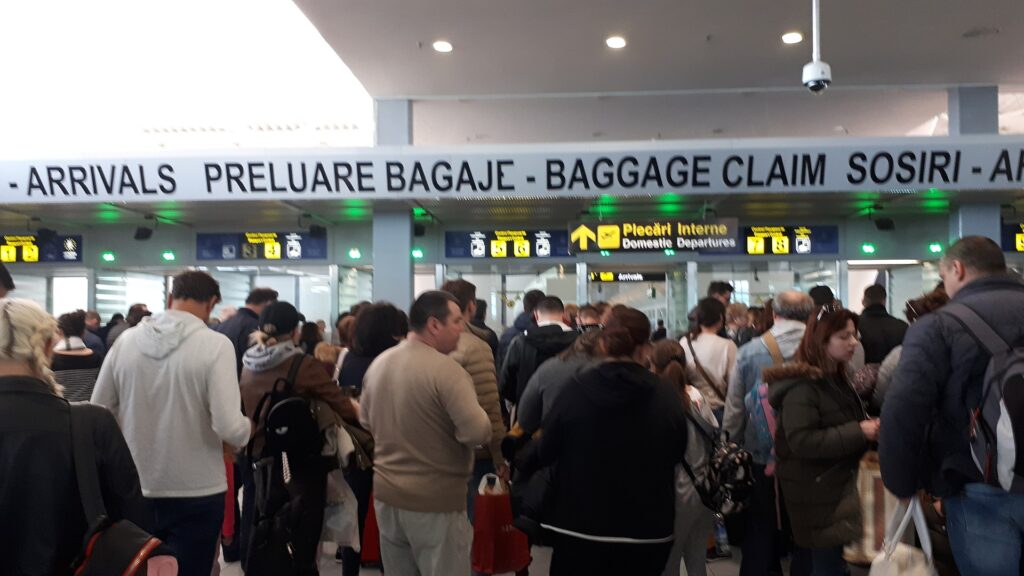
With authorisation granted in principle, the player applies for an entry visa at a consulate, usually in person and usually with biometrics. The application requires a set of civil documents that most people have never needed to produce in a foreign format.
- Passport with sufficient validity. Many regimes require a period of remaining validity well beyond the contract’s start date.
- Birth and civil status documents. Legalised or apostilled according to the destination country’s requirements, which differ.
- Certified translations. By a translator the destination authority recognises, not simply by a competent one.
- Criminal record certificate. Frequently required, with its own issuing time and its own legalisation.
- Medical and insurance documents. Sometimes required for the visa, always required by the club.
- Proof of the employment relationship. The contract, and often a separate employer declaration in a prescribed form.
Each item has a lead time and the lead times do not overlap neatly. Legalisation is the one that surprises people: it involves more than one authority, it cannot be accelerated by paying more in most jurisdictions, and it has to be repeated if a document is superseded. Two to six weeks for the document set is normal, and consular appointment availability sits on top of that.
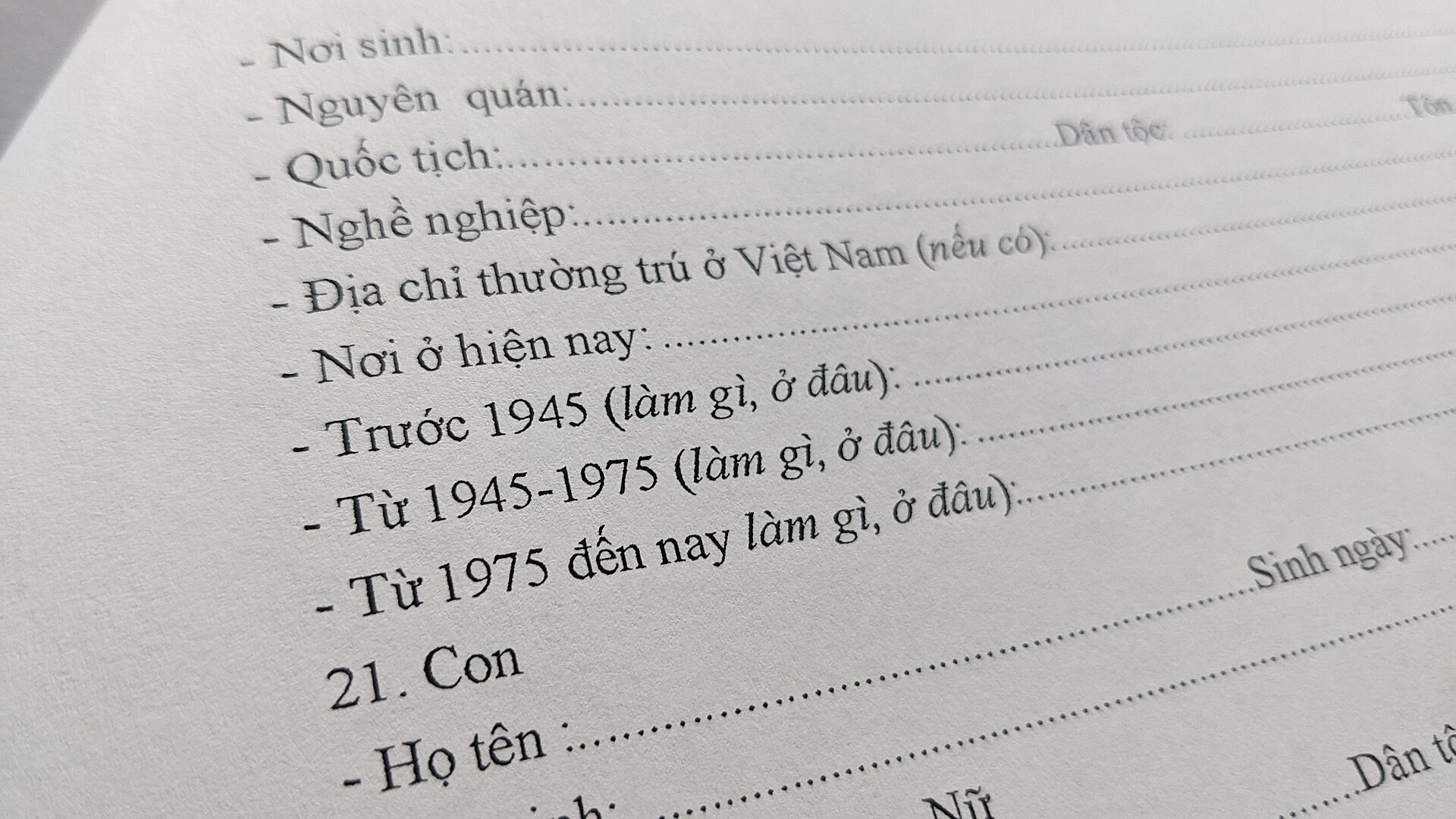
For male players of conscription age there is an additional layer, because a long absence abroad requires the relevant national service documentation to be in order before a long-stay visa application is credible. That paperwork is obtained at home, on a domestic timetable, and it is the item most often left until the football side is settled.
Residency: the permit that arrives after the player does
An entry visa is permission to arrive. It is not permission to live and work indefinitely, and in most destinations the player must apply for a residence permit within a defined period after arrival, at a local authority, with another appointment and another document set.
The gap between arrival and permit is where practical life stalls. Until the permit exists, or at least a receipt confirming the application, the player may struggle to sign a lease, register with a health system, obtain a tax number or open a bank account. Clubs with experienced player liaison staff handle this in a week; clubs without them leave a twenty-year-old in a hotel for two months.
Family members are a separate track with separate applications, and the timelines rarely align. A player whose partner and children arrive weeks or months after he does is a common and underestimated cause of an unsettled first season, and it is an administrative problem before it is a personal one.
Banking is the step nobody schedules

A salary cannot be paid into an account that does not exist, and opening an account generally requires proof of address, a tax number and a residence document, each of which sits behind the step above. The result is a player who is registered, training and playing, and who has not been paid.
Cross-border payments add a second layer. Sending money home involves correspondent banking, compliance checks and documentation of the source of funds, and the checks apply to legitimate transfers as much as to anything else. Transfers can be delayed while a bank requests evidence, and the evidence is usually the employment contract and the residence permit.
The workable approach is preparation rather than improvisation. Clubs that handle foreign signings routinely have a relationship with a bank, a template document pack and a named contact; the player provides documents once and the account exists before the first payroll run. Everything else is a series of appointments made by somebody who has never done it before.
The registration windows, and the two deadlines people confuse
The destination country’s registration period is set by its own association and does not necessarily align with the window in the country the player is leaving. A player can be free to leave and unable to arrive, or the reverse, and the overlap between two windows is often shorter than either of them.
The second deadline is the competition one. A player registered inside the league window may still be ineligible for a continental campaign if the squad list for that competition closed earlier, and continental squad lists are frequently the tighter constraint. A club signing a player specifically for a continental campaign has to work to that date, not the domestic one.
The mid-season window functions as the escape hatch for deals that miss. It is shorter, it is more expensive, and it arrives after the player has spent months training without competitive football, which is its own cost. Players who move mid-season into an established side, as most of the reported moves between European leagues illustrate, arrive with a fitness deficit that takes weeks to clear.
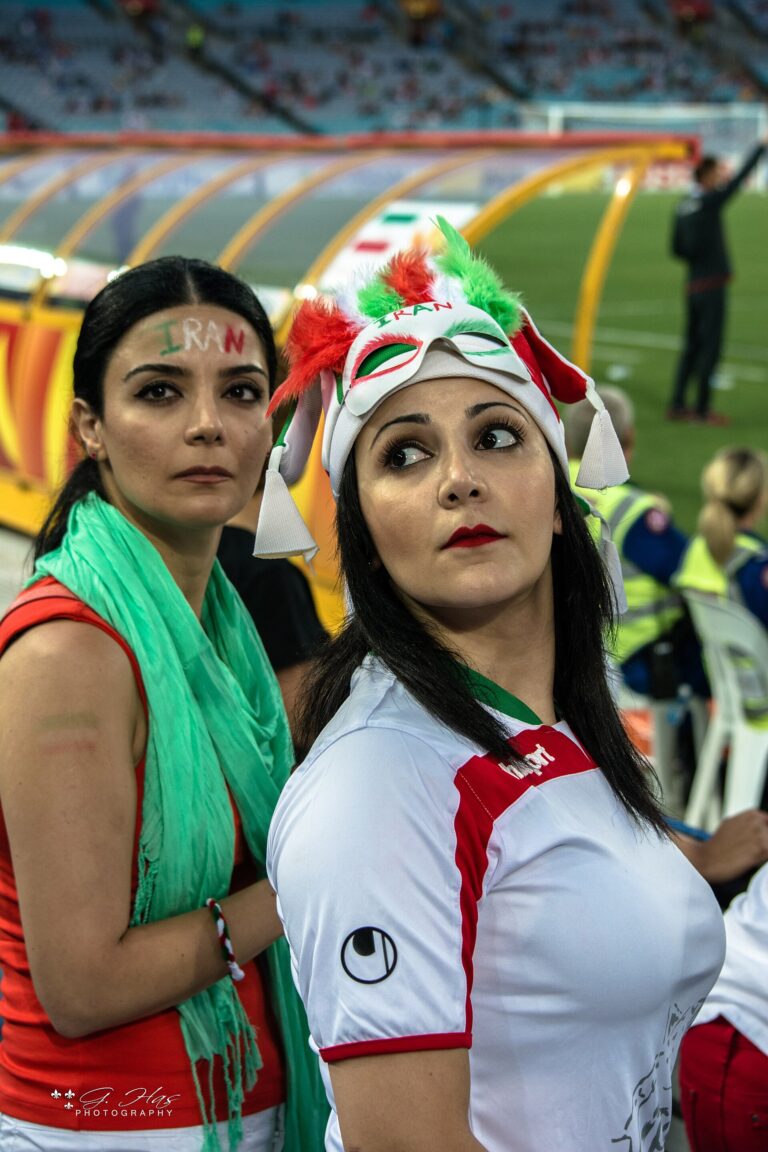
Where Iranian players moving to Europe lose the most time
Across the whole chain, the delay is not evenly distributed. For Iranian players moving to Europe the three slowest points are consistently document legalisation at home, the consular appointment, and the work authorisation assessment, and only the last of those is football’s business.
Legalisation is slow because it involves more than one office and because the sequence is fixed: a document is issued, then certified, then legalised, then translated, and a mistake at any stage sends it back to the start. Consular appointments are slow because capacity is finite and demand is seasonal, and the football calendar concentrates demand into exactly the weeks when capacity is worst.
Authorisation is slow for a different reason. Where the destination uses a points or endorsement system, the assessment is made against a published standard, and a player close to the threshold triggers a panel review rather than a decision. That review is scheduled, not immediate, and its timetable belongs to a body with no interest in a fixture list. A club that shortlists three players and checks all three against the criteria before opening talks avoids most of this; a club that negotiates first and checks afterwards does not.
Why deals collapse after they are agreed
| Step | Who owns it | Realistic lead time | Most common failure |
|---|---|---|---|
| Clearance request | New association, at the club’s request | Days, once the file is complete | Incomplete file lodged too late |
| Work authorisation | Immigration authority or federation panel | Two to eight weeks | Player falls short of published criteria |
| Document legalisation | The player, at home | Two to six weeks | Started after the contract, not before |
| Consular appointment | Consulate | Days to several weeks | No appointment available in the window |
| Residence permit | Local authority after arrival | Weeks to months | Blocks banking and housing meanwhile |
| Registration | Destination association | Fixed deadline | Everything above arrives one day late |
The pattern in that table is that only the first and last rows are football’s to control. A collapse after agreement is almost always a collision between an immovable deadline in the last row and a variable delay in one of the middle four, and it is visible weeks in advance to anyone tracking the file rather than the negotiation.
What a player can do before anything is agreed
Most of the delay is front-loadable, and almost none of it is. A player who assembles the civil document set, has it legalised and translated, checks his passport validity, resolves his national service documentation and obtains a criminal record certificate before a club is involved removes several weeks from the critical path.
The second preparation is informational. Knowing which authorisation model applies in the leagues realistically open to him, and whether he meets the published criteria, changes the shortlist. A move that cannot be authorised is not an opportunity, and it is better identified in June than in August.
The third is contractual. A well-drafted contract states what happens if authorisation is refused or a deadline is missed: whether the agreement lapses, whether either party owes anything, and who bears the costs already incurred. Contracts without that clause produce disputes that outlast the transfer window and occasionally the contract itself. The commercial trajectory of players who have made several moves, such as those documented in reporting on a difficult spell at a European club, tends to reflect how well that groundwork was done at the start.
Frequently Asked Questions
Why do Iranian players moving to Europe often need longer than players from other markets?
Because more of the chain applies to them. A player without a second passport needs full work authorisation, a visa, legalisation of civil documents and, for men of conscription age, national service paperwork, none of which a player with freedom of movement inside the destination bloc requires. It is a sequence effect rather than a judgement about any individual.
Can a player train with the new club while the paperwork is processed?
Usually he can train, subject to immigration status, and he cannot play competitively until he is registered. Training on a visitor status is legally delicate in several countries, so clubs generally wait for at least a provisional permission. It is a question for the club’s legal department, not for the coach.
What happens if the certificate is requested after the window closes?
The registration cannot be completed in that window. The player remains registered with his existing club and the parties wait for the next one, unless the destination association operates a limited exceptional registration provision, which is narrow and not designed to rescue administrative delay.
Who pays for the visa, legalisation and relocation costs?
It depends entirely on the contract. Established clubs generally cover the direct immigration costs and a relocation allowance; smaller clubs frequently do not, and a player who assumes otherwise discovers it after arrival. It is worth an explicit clause rather than an assumption.
Does a residence permit expire with the contract?
In most regimes the permit is tied to the employment, so a contract that ends, is terminated or is not renewed starts a clock on the permit. That linkage matters at the end of a spell abroad as much as at the beginning, and it is a reason to take advice before agreeing an early termination.
How early should the process realistically start?
Document preparation can begin at any time and should. For the football steps, working backwards from the destination’s registration deadline and allowing eight weeks for authorisation, visa and travel is a conservative planning assumption. Anything faster is possible and should not be the plan. A valid passport with generous remaining validity is the cheapest insurance in the whole sequence.
The football part of a transfer abroad is settled in a week. The rest of it is a queue of institutions, each with its own calendar, and the players who lose the least time are the ones who joined the queue before anybody agreed anything.