

A fixture list says a club is at home. The competition regulations say a club may host, if a list of conditions is satisfied on the day the organiser checks them. Those are not the same statement, and the gap between them is where a home tie turns into a thousand-kilometre flight.
Losing the right to host is rarely a surprise to the people inside the club. It is the outcome of a written procedure with defined triggers, a defined approver and a defined notice period. What varies between cases is how early the club saw it coming and how much of the cost it has to absorb alone.
What follows is the mechanism: the routes by which a club stops playing at its own ground, who signs off the alternative, when the decision becomes final, and what the move does to the team and to the budget. This is a rules explainer. No club is being described and no fixture is being previewed.
The five routes to a neutral ground
- Disciplinary sanction. A decision of a disciplinary body ordering matches behind closed doors or away from the club’s own ground, generally after crowd disorder or a repeated offence.
- Safety and security. An assessment finding that the venue, or the environment around it, cannot be secured to the competition standard for that particular fixture.
- Infrastructure. A stadium that has lost, or never held, the certification the competition tier requires: pitch, floodlighting, seating, medical access or media facilities.
- Force majeure and travel. Circumstances outside either club’s control that make travel to or from the venue impracticable for one participant.
- Competition design. Regulations that centralise a stage of the tournament, or place a single-leg tie at a pre-selected ground, for reasons that have nothing to do with the clubs drawn into it.
- The variable that decides everything. Notice. The same outcome is manageable with two months of warning and close to ruinous with ten days.
Home advantage is a permission, not a possession
The first correction is conceptual. A club does not own the right to play at home in a given competition; it is granted that right for each match by the body running the competition, on evidence submitted in advance. The ground has to be registered, inspected and approved for the tier, and the approval attaches to a venue for a season rather than to a club for ever.
That is why the withdrawal of hosting rights is administrative rather than punitive in most cases. The organiser is not taking something away. It is declining to renew a permission whose conditions are no longer met, which is a much easier decision to defend and a much harder one to argue against.
It also explains an asymmetry supporters find unfair. A club can be entirely blameless, with a certificate that lapsed because a contractor missed a delivery date, and lose the same advantage as a club sanctioned for disorder. The regulation is written around the state of the venue, not around the conduct of the club.
Route one: a disciplinary decision closes the ground
The sanction route runs through a disciplinary body rather than through the competition department. A charge is laid after a match report, the club answers it, and the body imposes a penalty from a scale set out in the disciplinary code: a partial closure of a stand, a full closure of the ground, a fixed number of matches at a venue a defined minimum distance away, or a combination of those with a fine.
Two features of this route are worth knowing. The first is that the penalty is frequently suspended, meaning the closure applies only if a further offence occurs within a probation period. A club can therefore be carrying a sanction that nobody outside the building is tracking. The second is that appeals suspend some penalties and not others, and the interaction between an appeal timetable and a fixture date is where clubs get caught.
Distance is usually specified rather than left open. A code that requires the match to be played a set minimum number of kilometres from the club’s registered ground removes the obvious workaround of moving across the city to a stadium that shares the same supporters and the same problem.
Route two: the safety and security assessment fails
Security assessment is a separate process with its own officials. Before a fixture identified as elevated risk, the organiser can require a joint inspection involving the venue operator, the local police authority and a match safety officer, and the output is a written recommendation with conditions attached to it.
Those conditions are often satisfiable: a reduced capacity, a closed section, segregation arrangements, a different kick-off time, additional stewarding. A neutral venue is the last step on that ladder, reached when the assessment concludes that no combination of conditions produces an acceptable arrangement at that ground.
The nuance worth holding on to is that this route is fixture-specific. A stadium can be perfectly acceptable for eleven matches and unacceptable for the twelfth, because the assessment considers the visiting support, the history of the tie, the date and what else is happening in the city that week. Clubs that treat a single relocation as a verdict on their ground have misread the document.
Route three: the stadium certificate lapses at the wrong moment
Infrastructure is the least dramatic route and the most common one. Continental competitions publish stadium standards covering pitch dimensions and surface, individual seats, floodlighting levels for television, dressing rooms, doping control and medical rooms, vehicle access, media positions and a working area for the press. A ground is inspected against the list and certified for a tier.
Certification lapses for ordinary reasons. Resurfacing work overruns. A floodlighting upgrade needed for broadcast is ordered late and the equipment arrives after the deadline. A stand is closed for structural work and the remaining capacity falls under the minimum. Where stadium construction and upgrade programmes run through a season, the question is never whether the work is a good idea. It is whether the certificate exists on the inspection date.
The club’s exposure here is that infrastructure decisions are usually taken by somebody else. Many grounds in the region are owned by a municipality, a ministry or a provincial authority, and the tenant club cannot order the work, only request it. A club can lose hosting rights over a decision it did not make and cannot reverse.
Route four: force majeure, travel and a competition-wide instruction
The fourth route covers circumstances outside the control of either participant: a natural event, an infrastructure failure, a public emergency, or a travel restriction that prevents one club from reaching the other’s country. The regulations generally give the organiser a broad discretion here, precisely because the situations cannot be listed in advance.
What matters in practice is that the decision moves up to competition level once more than a handful of matches are affected. When the organiser concludes that a whole group of clubs cannot host, it will typically nominate a small number of approved venues and run a block of fixtures through them, which is administratively simpler and produces a very different experience for everyone involved.
The fifth route is a cousin of the fourth and is not a penalty at all. Some competitions place their final, or an entire knockout stage, at a venue chosen in advance for reasons of broadcast, capacity or logistics. Nobody has failed anything. The regulations simply never promised the tie to a home ground.
What the AFC neutral venue rules ask a club to prove
Where a club is required, or chooses, to play away from its registered ground, the burden of the proposal falls on the club. The AFC neutral venue rules operate as an approval process rather than as an instruction: the club nominates, the organiser inspects and approves, and the fixture is confirmed only once the nominated ground has been accepted for the tier.
A nomination file usually has to establish the following, in writing and well before the fixture.
- Certification. That the alternative ground already holds, or can hold in time, the approval required for the competition stage in question.
- Right of use. A written agreement with the venue owner covering the match, the day before it and the training session, not a verbal understanding.
- Distance and compliance. Where a sanction specifies a minimum distance from the registered ground, evidence that the nomination satisfies it.
- Security plan. A plan written for the alternative venue, with the local authority’s agreement, not a copy of the plan for the usual ground.
- Travel and accommodation. Arrangements for the visiting club and the match officials, including the airport of arrival and the internal transfer.
- Broadcast feasibility. Confirmation that the host broadcaster can produce from the ground to the standard the competition contract requires.
The sixth item is the one clubs forget. A ground can be sound in every sporting respect and still be refused because it cannot support the camera positions and the transmission the broadcast agreement specifies.
Who approves the move, and on what timetable
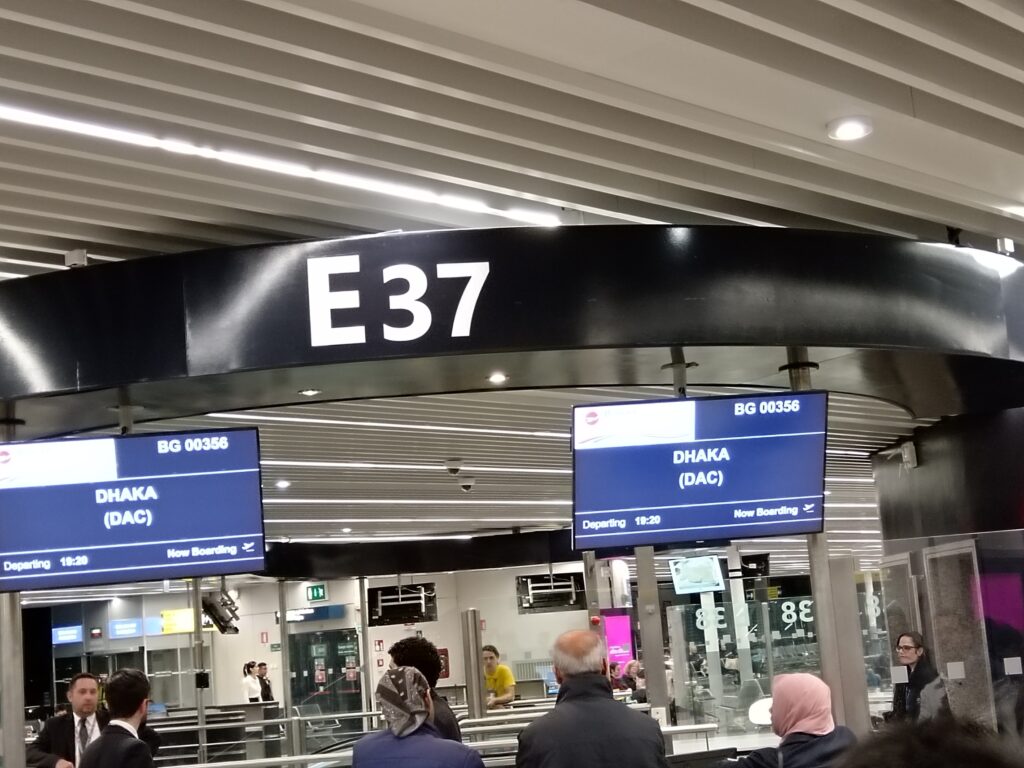
Three bodies are usually involved and they are easy to confuse. The disciplinary body decides whether a sanction applies. The competition department decides whether a nominated venue is acceptable. The national association sits between them, because the venue is in its territory and its own regulations govern who may play there.
The timetable runs backwards from the fixture. The organiser publishes a deadline by which venues for a stage must be registered, and a later, shorter deadline for a change to an already registered venue. Miss the first and the club has no approved ground on file; miss the second and the change is refused even if the ground itself would have passed.
Appeals run on their own clock and rarely on a helpful one. An appeal body can suspend a sanction pending its decision, which sounds like relief and creates a planning problem: the club has to prepare for two versions of the fixture, sell tickets for neither, and hold a travelling party on standby. Several clubs would rather accept a sanction early than win an appeal late.
Notice periods, and the point where a fixture stops moving
Every competition sets a point after which a fixture cannot be relocated except for a safety reason. Before that point, relocation is an administrative task. After it, only the safety route remains open, because ticketing, travel and broadcast commitments have hardened around the original venue.
| Route | Who decides | Typical warning | Appeal available |
|---|---|---|---|
| Disciplinary sanction | Disciplinary body | Weeks, sometimes suspended for a season | Yes, on its own timetable |
| Safety assessment | Organiser with local authority | Days to weeks, fixture by fixture | Limited in practice |
| Certification failure | Competition department | Months, if the club is watching | Not an appeal; a remedy deadline |
| Force majeure or travel | Organiser, at competition level | Highly variable | Rarely |
| Competition design | Set in the regulations | Known before the draw | Not applicable |
The third row is the useful one for supporters. A certification problem is visible to anyone reading the club’s own announcements about building work, and it is the only route with a genuine remedy period. The clubs that end up relocated on that route are usually the ones that treated the remedy period as optional.
The sporting cost, measured without romance
The honest version of home advantage is narrower than the emotional version. Travel and crowd both contribute, and in a continental competition a relocated home fixture removes the crowd, adds a journey, and leaves the pitch and the routine unfamiliar. That is a real disadvantage and a smaller one than most previews suggest.
The concrete losses are easier to list than to quantify. The team loses its own dressing room and warm-up routine. It loses the pitch dimensions and the surface it trains on, which matters most to sides whose plan depends on width or on a fast surface. It loses the referee’s exposure to a home crowd, which is the mechanism most of the work on home advantage actually points to. And it loses the recovery time that not travelling buys.
Squad depth becomes the binding constraint. A club playing two away fixtures in a continental week, one of them nominally at home, is asking the same eleven to cover roughly twice the travel of a normal round while the domestic competition regulations leave the league fixture where it was. This is where relocated ties are lost, not in the atmosphere.
The financial hole, line by line
The revenue side disappears almost entirely. Gate receipts go, because the club is not selling into its own market and often is not selling at all. Hospitality goes with them, and hospitality carries a much better margin than general admission. Matchday retail, catering concessions and car parking follow.
Sponsorship is the second layer and it is more damaging than it looks. Most regional sponsorship agreements bundle perimeter advertising, hospitality allocations and activation rights at a specified number of home matches. Relocation triggers a shortfall against a contracted deliverable, and the remedy is either a make-good in a later season or a rebate now.
The cost side rises at the same moment. The club pays a hosting fee to the alternative venue, charter or scheduled travel for the squad and staff, accommodation, freight for equipment, and in many cases the visiting club’s reasonable additional costs where the relocation is the host’s fault. For a club whose budget already leans on continental participation revenue, two relocated fixtures can convert a profitable campaign into a loss without a single result changing.
Frequently Asked Questions
Does a relocated match still count as a home fixture?
Yes. For the table, the aggregate score, away goals where they still apply and the fixture list, the nominated club remains the home team. It keeps the home dressing room designation, the kit priority and the administrative obligations of a host, including delivering the broadcast feed.
Can a club choose to move a match to a neutral ground voluntarily?
It can propose it, and the reasons are usually capacity or certification. The organiser still has to approve the nominated venue against the same standards, and a voluntary move does not relieve the club of any hosting obligation. The costs of a voluntary move fall entirely on the club that proposed it.
How far in advance is a relocation normally known?
It depends on the route. Certification problems are visible months ahead. Disciplinary sanctions are known when the decision is published, subject to appeal. Security relocations can arrive inside a fortnight, which is why they are the most expensive kind for a club that has already sold tickets.
Who pays the visiting club’s additional travel costs?
Where the relocation follows from the host’s own failure or sanction, the regulations commonly place the visitor’s reasonable additional costs on the host. Where it follows from force majeure or from a competition-level instruction, each club generally bears its own. The precise allocation sits in the competition regulations rather than in the disciplinary code.
Are closed-doors orders and neutral-venue orders the same penalty?
No, although they are often imposed together. A closed-doors order keeps the match at the registered ground without spectators. A neutral-venue order moves it elsewhere, with or without spectators depending on the terms. The second is materially more expensive because it adds travel and a hosting fee to the lost gate.
Can a supporter get a refund when a home match is moved?
Ticketing terms are set by the club rather than by the confederation, and a relocation is normally treated as a cancellation of the ticket contract with a refund due. Clubs that sell season packages including continental fixtures have to price that risk in advance, which is one reason many of them sell continental matches separately. The confederation is not a party to that relationship.
The pattern behind all five routes is the same. Hosting is a permission renewed against conditions, and the clubs that lose it least often are the ones that treat those conditions as a year-round file rather than as a form to complete in the week before a deadline.