


A league table is settled on the pitch. Continental entry is settled in a filing cabinet, months earlier, by people who never watch the club play. Those two sentences describe the same season and almost nobody reads them together.
The document that connects them is a club license. It is granted by the national association, not by the confederation, against a written set of criteria in five families, and without it a club may finish at the top of its division and still not appear in the continental draw. Nothing about that outcome is exceptional or scandalous. It is the system working exactly as designed.
What follows is what each of the five files actually asks for, how the criteria are graded, when the decision is taken, and which items cause the most trouble for clubs in this region. It is a rules explainer. No club is being described.
The five files, in one list
- Sporting. Youth teams at defined age levels, a written youth development program, medical care of players, registered and contracted squads.
- Infrastructure. A certified stadium meeting the competition standard, plus training facilities secured for the whole season.
- Personnel and administrative. Named roles with named minimum qualifications, each on a written contract.
- Legal. Registration documents, statutes, disclosure of ownership and control, and a signed declaration of participation.
- Financial. Audited annual accounts, and no overdue payables to clubs, employees or the tax and social authorities at a defined date.
- The trap. The assessment date is not the day the season starts. It is months earlier, and evidence produced afterwards is late.
Who actually issues the license
The confederation writes the regulations. The national member association applies them, acting as the licensor, and has to build a small institution to do it: a licensing manager, a first instance body that takes the decision, and an appeals body that is independent of the first and hears challenges to it.
That structure exists for a reason. A licensing decision refuses a member of the association entry to a competition worth money and prestige, so it has to be taken by a body that can defend its reasoning, with a route of appeal that is not the same people in a different room. Clubs that treat the process as a formality between friends discover otherwise at the first refusal.
The association then submits the list of licensed clubs to the confederation before the entry deadline. From that point the confederation is working from a list, and the argument about who should have been on it is a domestic one.
Sporting: youth teams are a license item, not a hobby
The sporting criteria are the part clubs most often underestimate, because they read as encouragement rather than as obligation. They are obligations. A licensed club has to field youth teams within defined age ranges, run them under a written development program covering objectives, coaching methods and player education, and be able to show that the program exists as a document rather than as an intention.
Medical care sits in the same family: pre-season medical examinations for registered players, access to a doctor, and records that can be inspected. So does the requirement that players are properly registered and that professionals hold written contracts, which is less trivial than it sounds in a market where verbal understandings have a long history.
The practical effect is that a youth section cannot be a cost line to be cut in a difficult year. Cut it far enough and the first team loses its continental entry, which is an expensive way to save money on under-16 coaching.
Infrastructure: a stadium is judged on a checklist, not on atmosphere
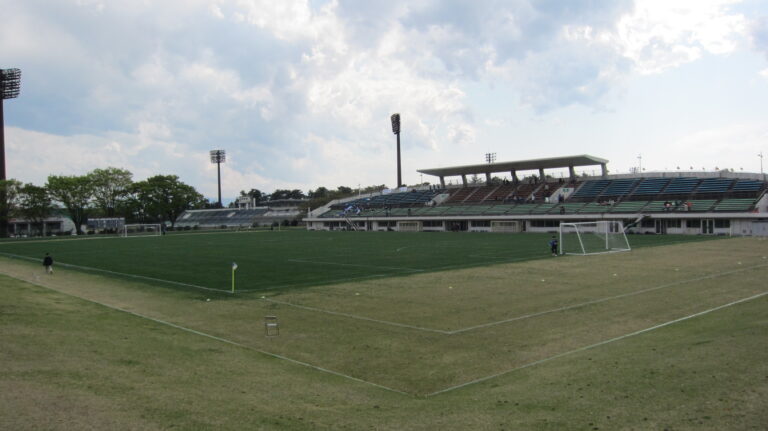
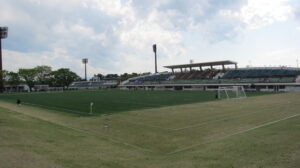
The infrastructure file is where romance goes to die. A ground with a famous crowd and a poor floodlighting level fails the same test as an empty one. The assessment covers pitch dimensions and surface quality, individual fixed seats, covered areas, floodlighting to the level specified for television, dressing rooms and officials’ facilities, a doping control room, a medical room and its access for a vehicle, media positions and a press working area.
Safety and security form their own block within it: evacuation routes and times, emergency lighting with independent power, a public address system audible under crowd noise, a control room with a view of the stands, and segregation arrangements. Several of these items cannot be produced quickly, because they involve procurement, installation and inspection rather than a decision.
Training facilities are assessed too, and the criterion is availability across the whole season rather than ownership. A club that trains on borrowed pitches with no written arrangement has a weaker file than one that leases a modest ground for twelve months on paper. Where stadium construction and upgrade work is under way, the timing question is whether the certificate arrives before the assessment date or after it.
Personnel: named roles with named qualifications
The personnel criteria replace the idea of a club as a group of people who know each other with the idea of a club as an organization chart. The file asks for named individuals in defined functions, each with a written contract and, where the role requires it, a specified qualification.
The list typically covers a general manager or chief executive, a finance officer, a security officer, a media officer, a doctor, a physiotherapist, a head coach holding the highest coaching diploma the confederation issues, an assistant coach, a head of youth development and coaches for the youth teams. Some frameworks add a supporter liaison role.
Two failure modes recur. The first is one person holding three of these functions, which the criteria are written to prevent. The second is a head coach appointed mid-season without the required diploma, which is a sporting decision with a licensing consequence that nobody raises in the press conference.
Legal: who owns the club, on paper
The legal file is short and unforgiving. It asks for the club’s registration documents and statutes, a written declaration signed by an authorized representative confirming that the club accepts the competition regulations and the jurisdiction that comes with them, and a description of the legal group structure including who ultimately controls the club.
Ownership disclosure exists to enforce one rule above all others: no person or entity may have a decisive influence over two clubs in the same competition. That rule protects the integrity of the draw, and it is the reason the file wants beneficial ownership rather than the name on the letterhead.
For clubs owned through state enterprises, holding companies or industrial groups, the disclosure is administrative work rather than a problem. It becomes a problem when the ownership itself is in transition, because a file cannot describe a structure that is being argued about.
Financial: overdue payables end more campaigns than results do

The financial criteria have two halves. The first is documentary: annual financial statements, audited by an independent auditor, prepared to a defined standard and covering the club as a legal entity rather than as a football department inside something larger.
The second half is the one that actually removes clubs. At a defined assessment date, the club must have no overdue payables in three directions: to other clubs arising from transfers, to its own employees including players and coaching staff, and to social security and tax authorities. Overdue means past the contractual date without a written agreement to extend it or a properly documented dispute.
That definition explains the classic failure. A club with a chronic wage-arrears cycle can be paying everyone eventually and still fail, because the test is a date rather than an intention. A settlement signed a week after the assessment date does not retroactively make the file clean, and an unresolved decision from a dispute body sits on the record as an admitted debt.
A, B and C: what AFC club licensing requirements actually oblige
Not every criterion carries the same weight, and reading the file without the grading produces a misleading picture of severity. AFC club licensing requirements follow the same three-level grading used across the confederations: mandatory criteria whose breach refuses the license, mandatory criteria whose breach triggers a sanction short of refusal, and recommendations that carry no penalty at all.
| Grade | Status | Consequence of failing it | Typical examples |
|---|---|---|---|
| A | Mandatory | License refused | Certified stadium, audited accounts, no overdue payables, declaration of participation |
| B | Mandatory | Sanction imposed; license may still be granted | Certain administrative posts, some documentation deadlines |
| C | Best practice | None; recorded as a recommendation | Additional youth age groups, extended medical provision, supplementary reporting |
The distinction matters when a story appears saying a club has failed a criterion. Failing a B item produces a sanction and a corrective deadline. Failing a single A item ends the application, whatever the state of the other four files, and that asymmetry is why licensing managers spend most of their year on a short list of items rather than on the whole manual.
The calendar: the file is judged long before the season it covers
Licensing runs on its own calendar, set by the association and anchored to the confederation’s entry deadline. The club submits, the licensing department assesses, the first instance body decides, and any appeal is heard, all of it comfortably before the season the license applies to has begun.
That timing is the single most useful thing for a supporter to understand. When a club is described in April as having a continental place, the licensing decision has usually already been taken or is days away, on evidence from a period that ended months earlier. A strong finish improves the sporting qualification and does nothing for the file.
It also means a club can know in advance that it will fail. Licensing rarely surprises a well-run club; it surprises clubs that did not begin the audit until the deadline, or that assumed a payables problem would resolve itself. The domestic competition regulations set the sporting route to a place, and the license decides whether the route leads anywhere.
What happens to the slot when a club fails
A refused license does not delete the country’s entry. The place generally passes down the domestic order of merit to the next eligible club that holds a license, under the rules of the relevant competition. That club may be several positions lower and may have planned its budget without any expectation of continental football.
The consequences ripple. The promoted club faces the travel, the registration deadlines and the squad depth requirements of a continental campaign it did not prepare for. The refused club loses participation revenue it had already counted in a budget. And the association loses standing in the conversation about how many places the country should hold, because slot allocation across the confederation is influenced by how reliably a member’s clubs can actually take up the places they win.
Where no eligible licensed club can be named, the entry can be forfeited entirely. That is the rare and severe version, and it is the reason associations lean on clubs about the file long before any club is close to qualifying.
The twelve months before the file is due
- Give licensing to one person. Not as a second job for the club secretary. The role needs authority to demand documents from the finance department.
- Start the audit early. An auditor working under time pressure produces qualifications in the report, and qualifications create questions the licensor has to ask.
- Clear payables against the assessment date, not the season. Settle, or obtain a written deferral agreement, before that date. Afterwards is too late by definition.
- Put the youth section on paper. Age groups, coaches, qualifications, the written program, the medical records. Most clubs are doing more than their file shows.
- Fix the slow stadium items first. Floodlighting, seating, the control room and the medical access route all involve procurement lead times measured in months.
- Write the ownership structure down. Including anything in transition. An unresolved structure described honestly is easier to license than a clean one that is not accurate.
Frequently Asked Questions
Can a club win its league and still be excluded from continental competition?
Yes. Sporting qualification and the license are separate conditions and both must be satisfied. Winning the domestic title establishes the entitlement to a place; the license establishes the eligibility to take it up. A club that lacks the second does not enter, and its place moves down the order.
Who decides, the confederation or the national association?
The national association decides, applying regulations written by the confederation. The confederation sets the standard, audits how the association applies it, and receives the final list of licensed clubs. Appeals against a refusal are heard by the association’s appeals body first.
What counts as an overdue payable?
An amount past its contractual due date at the assessment date, without a written agreement extending it and without a properly lodged dispute. Wages, transfer instalments owed to other clubs, and social and tax liabilities all count. Intention to pay is not a defense; a signed deferral is.
Can a club use a different stadium to pass the infrastructure criteria?
In general yes, by nominating an alternative certified ground within the association’s territory and demonstrating a right to use it for the relevant matches. It is a recognized solution rather than a loophole, and it carries obvious costs in travel, revenue and atmosphere.
How far in advance is the decision taken?
Months before the season the license covers, because the association has to submit its list before the confederation’s entry deadline. By the time the domestic season ends, the licensing outcome is usually already known internally even where it has not been published.
Does the license carry over from one season to the next?
No. It is granted for a single season and reassessed every cycle. A club that passed comfortably one year can fail the next on a payables date or an expired stadium certificate, which is why licensing departments treat the work as continuous rather than annual. The confederation revises the criteria periodically as well, so last year’s file is a starting point rather than a template.
Licensing is unglamorous by design, and that is its point. It converts questions about whether a club is properly run into a list of items that can be checked by someone with no interest in the answer, and the clubs that resent it most are usually the ones it was written for.