



Two matches kick off on the same evening in the same division. In one, a goal is checked against an offside three phases earlier and disallowed after ninety seconds of silence. In the other, an identical situation is settled by an assistant’s flag and never revisited.
The gap gets reported as inconsistency, which it is, and blamed on officials, which it is not. Video review is an installation before it is a decision. It needs cameras in defined positions, a room, a synchronised feed of every angle, a communication loop, a crew, and a referee certified to use all of it. Remove any one item and the venue simply does not have the system, regardless of who is refereeing.
What follows is that bill in the order it has to be paid, the certification an official goes through before being allowed near the monitors, and why coverage inside a single division can be uneven for reasons that have nothing to do with willingness.
What a single installation actually needs
- Angles. A synchronised set of camera positions, not a highlights feed. The minimum is defined by the protocol, not by the broadcaster.
- A room. A dedicated operations space, either inside the stadium or centralised, with a stable link to the venue.
- People. A video official, an assistant video official and at least one replay operator, per match, every match.
- A loop. Radio between the review room and the referee, plus a way to tell the crowd a check is happening.
- Certification. Officials trained and signed off on the protocol before a competition is permitted to use it.
- A record. The full communication and the reviewed footage, retained, because the audit is part of the system.
The protocol decides the minimum, not the budget
The framework is not open to local interpretation. The laws of the game and the accompanying protocol set out what may be reviewed and how, and a competition that departs from them is not running video review, it is running something else that will not be recognised.
Four categories are reviewable: whether a goal stands, whether a penalty is awarded, a direct dismissal, and mistaken identity in a caution or dismissal. Nothing else. A second yellow card is outside the scope, and so is every foul in midfield, however loudly it is discussed afterwards.
The threshold is the other half of the design. The video team intervenes only for a clear and obvious error or a serious missed incident, and the referee on the pitch keeps the final decision. Both constraints exist to keep the number of interventions low, because every intervention costs playing time and credibility.
Cameras: position matters more than count

The instinct is to count cameras. The protocol cares about what they cover. A goal-line pair, a pair of tight positions at each side of the halfway line for offside geometry, high positions for the phase of play, and reverse angles behind each goal do more work than a dozen loosely placed units on one side.
Angles that are not synchronised are close to useless. If two feeds are a frame or two apart, the review of an offside becomes an argument about which frame is the touch, which is exactly the argument the system exists to end. Synchronisation is a technical requirement, not a refinement.
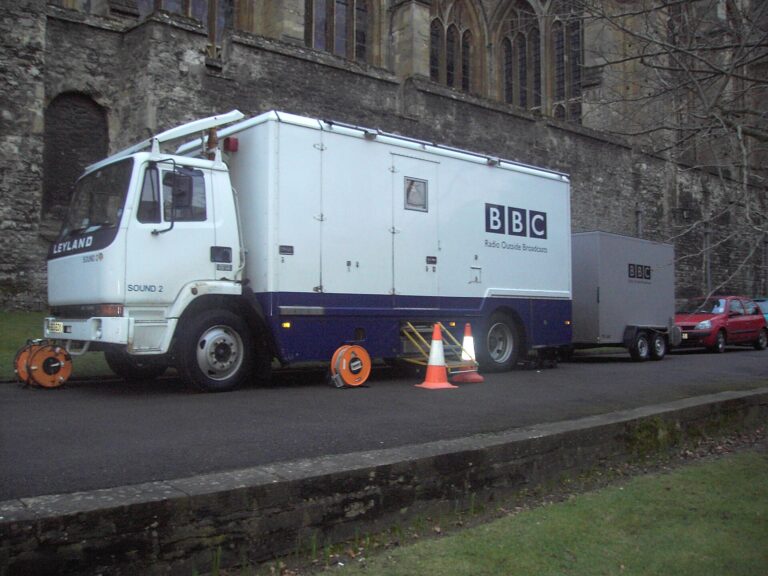
This is why a venue that already hosts a full outside broadcast is far cheaper to equip than one that does not. The cameras are largely there. What has to be added is the routing, the synchronisation and the review positions, and that is a different order of expense from building a broadcast setup from nothing.
What VAR in Iranian football asks of a venue
Reduced to a list, VAR in Iranian football asks a ground for four things it may not have. A broadcast standard camera plan for every match rather than for selected fixtures. A cabled path from those cameras to a review position. Power and connectivity that do not drop during a match. And a physical room, secured, with controlled access.
The first is the one that quietly excludes most grounds. A stadium that receives a two-camera production for a routine league fixture cannot support a review of an offside, because the angles required for the line do not exist in the recording. Adding them means adding a production, not adding a monitor.
The centralised model solves part of this and creates a dependency. If the review room sits in one building and serves several stadiums, the venue needs a reliable high-capacity link out of the ground for the whole match. Where that link is solid, the model is far cheaper than a room per stadium. Where it is not, a match is one outage away from reverting to no system at all mid-fixture, which the protocol has to be prepared for.
The room, the feeds and the recording obligation
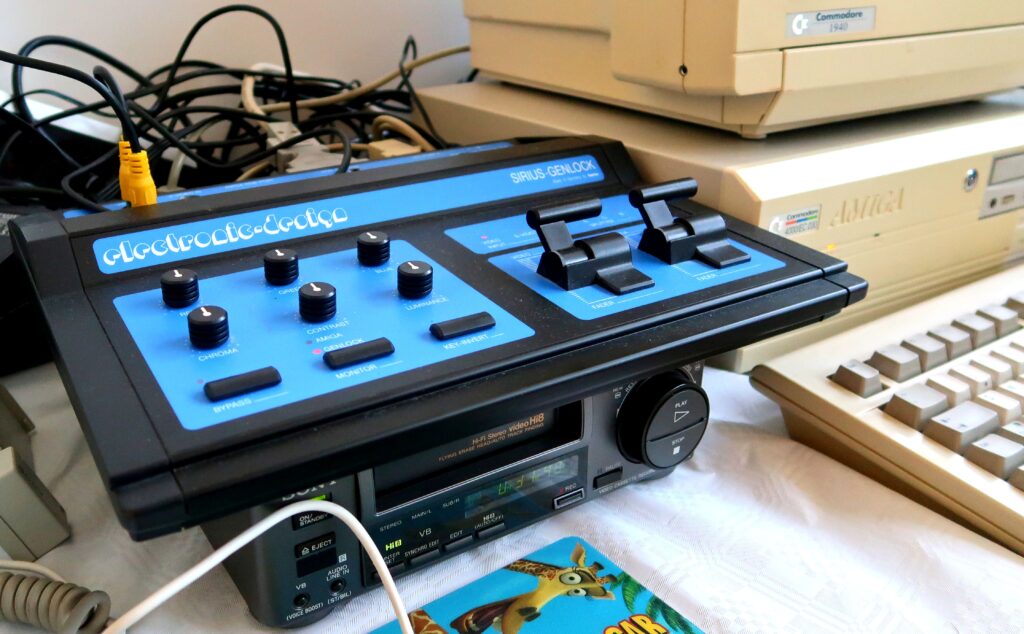
The review position is not a desk at the back of the stand. It is an operations room with every camera feed available simultaneously, replay controls that can move frame by frame, a communication panel and, in most implementations, a second screen showing what the broadcaster is showing so the team knows what the public has seen.
Access is controlled for a reason that is administrative rather than technical. If the integrity of a decision is ever questioned, the competition has to be able to say who was in the room. That means a log, a door and a named list, which sounds trivial and is the sort of requirement that stops an otherwise ready venue from being approved.
Retention is the last piece. The reviewed footage and the audio of the review are records, and competitions that publish or release them need them to exist in a retrievable form. A system that reviews correctly and keeps nothing has failed the part of the job that matters after the final whistle.
The crew is three or four people, every match
Hardware is a one-off. Staffing is a per-match cost, and across a full season it is the larger number.
The minimum working crew is a video official, an assistant, and a replay operator who finds and cues the angles. In busier implementations there are two operators, because the person hunting for the offside frame cannot also be scrolling the phase of play. Add a technical engineer on site for anything that fails, and the payroll for a single fixture is four people who did not previously exist.
Multiply by the number of matches in a round, by the number of rounds, and the annual figure is a recruitment problem before it is a budget problem. There is a fixed and small number of officials qualified to sit in that chair, and they cannot cover more matches than there are weekends.
Certification is a second referee career
A referee is not automatically a video official. The skill being tested is different: reading a replay at speed, deciding whether an error is clear, and communicating a conclusion in a sentence rather than a paragraph, while a stadium waits.
The route is a course and then supervised practice. Candidates work through the protocol, the reviewable categories and the intervention threshold, then run reviews on recorded matches with known outcomes, then sit in a live room under supervision before being appointed alone. Competitions that skipped the supervised stage have consistently had to go back and add it.
Recertification follows the same logic as the fitness test on the pitch. The protocol is amended, the guidance on intervention shifts, and an official who trained three seasons ago is working from an old threshold. The body that maintains the laws issues the amendments, and the certification calendar has to follow them rather than the domestic season.
Training hours are the bottleneck, not hardware
A camera plan can be bought and installed in a summer. A pool of certified video officials cannot, because the binding input is supervised hours on live matches, and live matches happen at a fixed rate.
The arithmetic is unforgiving. If a competition wants coverage of every fixture in a round, it needs enough certified officials to staff every fixture, plus reserves for illness and conflict of interest, plus the operators. Producing that pool takes seasons, and the officials being trained are drawn from the same small group already refereeing on the pitch. Training a video official removes a referee from availability on the same weekend.
This is the single best explanation for phased rollouts everywhere the system has been introduced. Competitions start with a subset of fixtures not because they doubt the technology but because they cannot staff more, and the domestic competition regulations have to say explicitly which matches are covered so that the ones that are not cannot be protested afterwards.
The offside line and the calibration behind it
Drawing a line on a frozen frame looks simple and is the most technically demanding thing the room does. The line has to sit on a model of the pitch, not on the image, which means the camera position has to be calibrated against known pitch dimensions before the match.
Two sources of error survive calibration. The first is the frame at which the ball is played, which is limited by how many frames per second the camera captures: at a standard broadcast rate the moment of contact is known only to within a fraction of a second, and a sprinting attacker covers a measurable distance in that time. The second is the choice of body part, which is a judgment made by a human on a still image.
Semi-automated systems reduce both by tracking limb points at a much higher rate and proposing the line, but they add their own requirements: more cameras, in fixed positions, with their own calibration and their own maintenance. They are a further installation on top of the first, not a substitute for it.
Why coverage is uneven inside one division
Put the constraints together and the unevenness stops looking like a policy choice. A fixture is covered when the venue has the camera plan, the link works, a certified crew is available, and no other fixture in the same slot has a stronger claim on the same people.
Grounds that host continental fixtures are usually equipped first, because those competitions impose their own broadcast standards and much of the plant is already installed. Grounds in cities with an established outside broadcast base follow. A club that plays in a stadium receiving a minimal production for domestic fixtures sits at the back of the queue whatever its league position, which is how a title contender ends up playing uncovered matches while a mid-table side does not.
The consequence worth naming is competitive rather than technical. A season in which some fixtures are reviewed and others are not is not a level season, and every partial rollout carries that cost. It is accepted because the alternative is waiting several more years for full coverage, and because reviewing some clear errors is judged better than reviewing none. Reasonable people disagree about that trade, and the disagreement is about fairness rather than about the technology itself.
A requirement checklist, venue by venue
The table below is the order in which a venue is usually assessed. Failing an early row makes the later ones irrelevant, which is why an approval visit can end in twenty minutes.
| Requirement | What is checked | Common failure |
|---|---|---|
| Camera plan | Positions and count for every covered fixture | Only selected matches receive a full production |
| Synchronisation | All feeds locked to a common timing reference | Mixed equipment with no shared reference |
| Calibration | Offside positions surveyed against pitch dimensions | Cameras moved between matches |
| Connectivity | Sustained link for the full match plus margin | Capacity shared with other stadium systems |
| Room | Dedicated, secured, access logged | Space borrowed from broadcast or hospitality |
| Crew | Certified officials plus operators, per fixture | Pool too small to staff a full round |
| Records | Footage and audio retained and retrievable | No retention policy written down |
Frequently Asked Questions
Why can a second yellow card not be reviewed?
Because it is outside the four reviewable categories. The protocol limits review to goals, penalties, direct dismissals and mistaken identity, deliberately, to keep the number of stoppages low. A second caution is a cautionable offence reviewed as such, and cautionable offences are not in scope.
Does a centralised review room make the system cheaper?
Usually yes, because one room and one crew rota can serve several venues instead of one each. It shifts the cost from rooms to connectivity, and it makes the link out of each stadium a single point of failure that has to be engineered accordingly.
How long does it take to certify a video official?
Longer than a course. The classroom part is measured in days, the supervised practice on recorded and then live matches is measured in a season or more, and recertification is required whenever the protocol or the intervention guidance changes.
Why do offside decisions still take so long?
Because two separate judgments have to be made before the line is drawn: which frame shows the ball being played, and which body part is being measured. Neither is automatic in a standard installation, and both are made by people looking at still images.
What happens if the system fails during a match?
The match continues without it. The competition regulations set out that the referee informs both teams, and decisions from that point are taken as they would be at any uncovered fixture. A failure does not void what was already reviewed.
Is semi-automated offside a replacement for the basic setup?
No. It is an additional layer that needs its own dedicated cameras, its own calibration and its own maintenance, sitting on top of an installation that already meets the standard requirements. Competitions add it after full coverage, not instead of it.
Coverage maps onto plant and payroll almost perfectly, which is why the argument about consistency is really an argument about capital spending and recruitment. Until the pool of certified officials is large enough to staff a full round, some matches will be reviewed and some will not, and no amount of protocol drafting changes that arithmetic.