



A player’s shot lands a fraction of a second after it should have, the target already moved off screen, and the death that follows has nothing to do with reaction speed or aim. It is the round-trip time between a keyboard input and a distant server, repeated thousands of times a match, and it is a disadvantage no amount of practice removes.
Esports latency Iran teams face when competing on infrastructure built around servers physically located in Europe or East Asia is not a marginal inconvenience. It is a measurable, repeatable handicap that shows up in the same way regardless of individual skill, and it has shaped how competitive teams here schedule practice, choose titles, and structure their travel to tournaments.
This is a technical look at why routing distance produces a real disadvantage, how large that disadvantage actually is in game-relevant terms, and what teams do about it short of relocating entirely.
- Core problem: distance to the nearest competitive server adds real, unavoidable delay to every input
- Scale: added latency commonly runs from tens to well over a hundred milliseconds depending on the title and route
- Titles affected differently: fast-twitch shooters suffer more than turn-based or slower-paced strategy titles
- Workarounds: regional server negotiation, LAN qualifiers, and pre-tournament travel to reduce the gap
What latency actually is, in practical terms
Network latency is the time a signal takes to travel from a player’s device to a game server and back, measured in milliseconds, and it is governed largely by physical distance and the quality of the routing infrastructure in between. Even at the speed of data through fibre-optic cable, distance imposes a floor on how low that number can go, regardless of how fast a player’s own internet connection is.
A connection that shows an excellent speed test result can still carry high latency to a specific server if the physical or network-routing distance to that server is long, which is why local internet quality alone does not solve the problem competitive teams actually face.
Bandwidth and latency are frequently confused by players new to the technical side of competitive gaming, but they measure entirely different things: bandwidth describes how much data can move at once, while latency describes how long any single piece of that data takes to arrive. A connection can have generous bandwidth and still suffer from poor latency, which is exactly the profile many players in distant regions experience.
Jitter, the variation in latency from one moment to the next, compounds the issue further, because a player can partially adapt to a consistent delay but struggles to adapt to a delay that keeps shifting by tens of milliseconds within the same match.
Packet loss is a related but distinct problem, occurring when data fails to arrive at all rather than simply arriving late, forcing a game client to either wait for a retransmission or interpolate the missing information as best it can. A connection with moderate latency but frequent packet loss can feel worse to a competitive player than one with higher but perfectly stable latency, because the unpredictability of dropped information is harder to compensate for than a consistent, known delay.
Esports latency Iran teams cannot simply train away
The esports latency Iran-based competitive players deal with is structural rather than a matter of local infrastructure quality alone, because the nearest server clusters for most major titles sit in regions several thousand kilometres away, and no amount of local network investment shortens that physical distance. A team can have excellent local internet and still compete at a measurable disadvantage the moment matchmaking or a tournament routes them to a distant server.
This distinguishes the problem from ordinary connectivity issues that better local infrastructure can fix. Faster domestic broadband improves the connection to the nearest access point; it does nothing for the leg of the journey between that access point and a server on another continent.
International internet exchange points and the specific submarine and terrestrial cable routes a country’s traffic depends on add a further layer of variability on top of raw distance, since two countries at similar physical distance from a target server can experience noticeably different latency depending purely on how well-connected their outbound routing infrastructure is. This is part of why comparing latency figures between neighbouring countries sometimes produces results that raw geography alone would not predict.
How much delay this actually adds

Depending on the specific route and server region, players commonly see added latency ranging from the low tens of milliseconds up to well over a hundred, compared with players competing on servers close to their own location. In fast-paced shooters, where a competitive edge is frequently decided by differences of ten to twenty milliseconds in reaction and input registration, a gap of that size is the difference between a contested duel and a clean loss before the opponent’s action is even visible on screen.
The effect compounds under load. Server-side performance during a heavily attended tournament match can add further delay on top of the baseline routing distance, meaning the gap measured in a quiet practice session often understates what a team actually experiences in a live, high-stakes match.
Time of day matters too, since regional internet traffic patterns mean the same route can carry noticeably different latency during peak local usage hours compared with off-peak periods, a variable that teams scheduling their own practice sessions can control for even though they cannot control it during an officially scheduled tournament match slot.
Which titles suffer most, and which barely notice
Fast-twitch, precision-aiming shooter titles are the most latency-sensitive category, because their competitive mechanics reward reaction times measured in single-digit to low double-digit milliseconds, a scale where added network delay directly and visibly changes outcomes. Real-time strategy and fighting games sit in a middle tier, sensitive to latency but somewhat more forgiving of small variations because their core mechanics operate on slightly longer decision windows.
Turn-based and slower-paced strategy titles are the least affected, since their format builds in enough time between actions that a latency gap of even a hundred milliseconds rarely changes a decision’s outcome. Teams choosing which titles to specialise in competitively sometimes weigh this factor directly, favouring games where the geographic disadvantage matters least.
| Title category | Latency sensitivity | Typical impact |
|---|---|---|
| Fast-twitch shooters | Very high | Directly decides individual duels |
| Fighting games | High | Affects timing-based inputs and combos |
| Real-time strategy | Moderate | Slows reaction to opponent actions |
| Turn-based strategy | Low | Rarely changes decisions |
The server-region negotiation teams actually have
Competitive teams and regional organisers have, in some titles, successfully lobbied publishers to add or expand regional server infrastructure closer to underserved regions, which is the only true fix for the underlying distance problem. These negotiations move slowly, because publishers weigh server costs against the size of the regional player base, and a region with a smaller competitive scene has correspondingly less leverage in that conversation.
Where a dedicated regional server does exist, teams still often see routing inefficiencies that add latency beyond what the raw distance alone would predict, because internet traffic does not always take the shortest physical path between two points, and fixing that routing is a separate, ongoing technical problem outside any single team’s control.
Travelling to remove the problem entirely
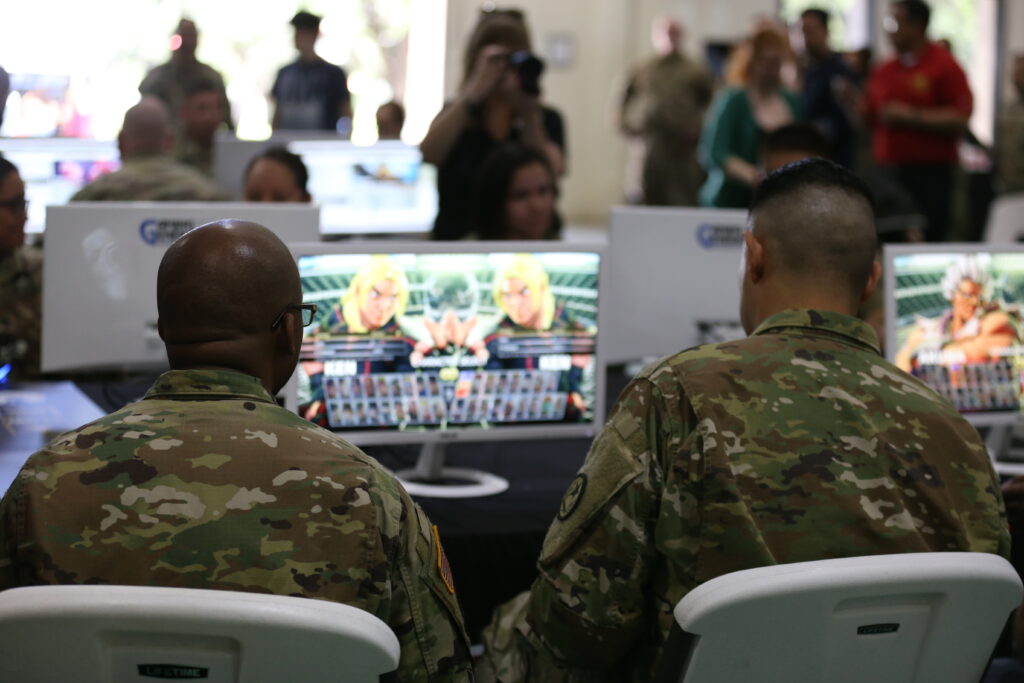
For the biggest tournaments, the most reliable fix remains physical: travelling to compete on-site, on local area network infrastructure that removes the internet routing problem altogether by connecting all competitors directly within the same venue. Nearly all top-tier international tournaments now run this way for exactly this reason, since online qualifiers riddled with regional latency disparities are widely seen as producing less trustworthy competitive results.
This shifts the disadvantage from a technical one to a logistical and financial one: teams from more distant regions face higher travel costs and jet lag heading into a LAN event, a real cost but a fundamentally different and more manageable problem than an unfixable network disadvantage.
Practice routines built around the gap
Teams that take the latency gap seriously often structure scrimmage schedules specifically around it, deliberately practising against opponents on distant servers to condition themselves to the added delay rather than only training in ideal, low-latency conditions that will not reflect an actual tournament match. This builds a kind of calibrated intuition for how much earlier an action needs to be initiated to land as intended under the expected delay.
Some coaching staffs also use latency simulation tools during practice, deliberately injecting artificial delay into local matches to recreate tournament conditions without needing an actual distant connection, treating the adaptation itself as a trainable skill rather than an unavoidable weakness.
Individual players sometimes keep a personal log of how a specific delay value affected their performance in scrimmage, refining their own sense of how many milliseconds earlier a given action needs to be initiated at a particular latency. This kind of self-tracking is time-consuming but produces a more precise, individually calibrated adjustment than a generic team-wide rule of thumb about compensating for delay.
What this means for scouting and roster building
Talent evaluators working in regions affected by this gap increasingly account for it when assessing a player’s raw mechanical skill, recognising that a player who performs competitively despite a latency disadvantage may have an underlying skill ceiling that would look considerably higher under equal network conditions. This adjustment matters most for players being scouted by organisations based in lower-latency regions, where a straightforward comparison of online statistics would understate the disadvantaged player’s true ability.
It also shapes how teams from affected regions market themselves internationally, often emphasising LAN tournament results specifically because those results are not distorted by the routing disadvantage that shapes their online statistics.
Why a faster home connection is not the fix people assume
Players and even coaching staff new to competitive titles often assume that upgrading a home internet plan will close the gap, since that is the intervention that solves most everyday connectivity complaints. It does not touch the actual bottleneck, because the delay is accumulated over long-distance routing between countries and continents, a stretch of the journey that sits entirely outside any single household’s control regardless of connection speed.
Explaining this distinction clearly to sponsors and organisations funding a competitive roster is itself part of a team manager’s job, since a sponsor unfamiliar with networking fundamentals can otherwise misdiagnose a losing streak as a preventable technical failure rather than a structural disadvantage the team is already working around as well as it can.
How organisers try to level the field for regional qualifiers
Some tournament organisers address the imbalance directly by rotating server regions across a qualifying bracket, ensuring that no single region’s teams are permanently disadvantaged by every match being hosted on a distant server. Others allow a measured, fixed latency compensation in matchmaking calculations for certain slower-paced titles, though this approach remains contested in fast-twitch genres where any artificial adjustment risks introducing its own unfairness.
Regional qualifying leagues, run entirely on infrastructure closer to the competing teams before a global final moves to neutral or LAN conditions, have become the most widely accepted structural fix, because they remove the disparity for most of a competitive season and confine the higher-stakes neutral-ground matches to a smaller number of finals.
Frequently Asked Questions
Why does esports latency Iran-based teams experience differ from ordinary internet lag?
It stems from physical and routing distance to distant competitive servers, a structural issue that faster local internet cannot fix on its own.
How much of a disadvantage does added latency actually create?
In fast-paced shooters, a gap of ten to twenty milliseconds can decide a duel, and affected players often face delays well beyond that compared with opponents near the server.
Do all competitive game genres suffer equally from latency?
No. Fast-twitch shooters and fighting games are highly sensitive, while turn-based and slower strategy titles are far more forgiving of the same delay.
Can better local internet fix the problem?
Only partially. It improves the connection to the nearest access point but does nothing for the long-distance leg to a server on another continent.
How do top teams work around the disadvantage for major tournaments?
Mainly by travelling to compete on local area network infrastructure at the event itself, which removes the routing problem entirely for that competition.
The scoreboard rarely explains the delay behind a lost duel. The routing table would, if anyone bothered to check it before blaming the player.