



A scouting department with three full-time staff and a video subscription can outperform one with fifteen staff and no clear brief, because the number of people on the payroll says almost nothing about what the department actually watches, records or acts on. Most Iranian clubs run departments far closer to the first description than the second, and the gap between the two is mostly a question of what the budget was spent on.
A functioning scouting operation is not a scattering of contacts who send names. It is a structure with a defined territory, a reporting format that a coach can actually use, and a budget line that someone has to defend every year against more visible demands on the same money. Where that structure is missing, a club is not failing to find players; it is failing to look in any organized way at all.
This is a description of how scouting is staffed in practice, why video has become the default over live viewing, where the coverage genuinely thins out, and what it costs to run a department that does more than react to agent phone calls.
- Typical staffing. A head of recruitment, two or three regional scouts, and a video analyst, in a department that is taken seriously.
- Where video dominates. Top-flight and continental competition, where footage is produced to a broadcast standard.
- Where it breaks down. Lower divisions and provincial competition, where no camera exists and live viewing is the only option.
- What it costs. Salaries are the smaller line; travel and footage access are usually the larger one.
- The honest failure mode. Not a lack of talent to find. A lack of anyone assigned to look in the gap.
Who actually sits in a scouting department
A club running scouting properly has a head of recruitment who answers to sporting management rather than to the head coach directly, because a department tied to one coach’s preferences disappears with that coach’s contract. Under that role sit regional scouts, usually assigned by geography rather than by position, each responsible for staying close to the clubs and competitions in a defined area.
A video analyst, distinct from the scouts who attend matches, is now a standard fourth role wherever the budget allows it, handling the footage that regional scouts flag and preparing the clips that a coaching staff will actually watch before a transfer decision is made. Smaller departments collapse these roles into one or two people, which is workable for a while and tends to fail exactly when several targets need attention in the same week.
What a functioning department does not run on is a network of unpaid or loosely paid informal contacts sending names on request. That model exists at almost every club to some degree, and it is useful as a supplement; treated as the whole system, it produces a list with no consistent standard behind any name on it.
Why video replaced live viewing as the default
A scout can watch one match live in an evening. The same scout can review edited footage of four or five players across multiple matches in the same time, which is the entire economic argument for the shift toward video as the primary scouting method over the past decade.
Video also solves a problem live viewing cannot: a single ninety minutes tells a scout very little about a player who had a quiet game for reasons that have nothing to do with ability, an isolated role in a losing team, an early substitution, a match played out of position. A body of footage across several matches filters out that noise in a way one live attendance never can.
What video cannot replace is context that does not show up on a screen: how a player trains on a bad day, how he responds to being substituted, how a dressing room actually receives him. Departments that rely entirely on footage and skip the in-person visit before a final decision are trading a real risk for a scheduling convenience, and most experienced heads of recruitment still insist on at least one live look before a significant fee is committed.
Football scouting department structure, from brief to shortlist
The football scouting department structure that produces a usable shortlist runs through a defined sequence rather than an open-ended search. It starts with a brief from the coaching staff specifying the position, the profile within that position, and the budget band, because a scout sent out to find a good winger with no further detail returns a list too broad to be useful.
Regional scouts and the video analyst then work that brief against the competitions they cover, producing an initial long list with a short written note on each name rather than a name alone. The head of recruitment filters that list against budget and squad need before anyone is watched in person, and only a shortened group reaches the stage of a dedicated live viewing or an in-depth video breakdown built specifically around the coaching staff’s stated need.
The department that skips the written brief at the start is the one most often accused of bringing in players who do not fit the system, not because the scouting missed something technical, but because nobody defined what was actually being searched for before the search began.
The coverage gap starts below the top division
Top-flight matches are filmed to a standard a video analyst can actually use: multiple camera angles, a broadcast feed, sometimes a tactical camera positioned specifically for analysis. Continental competition adds another layer of footage on top of that. A player in either of these tiers is, in a real sense, easy to scout, because the raw material already exists.
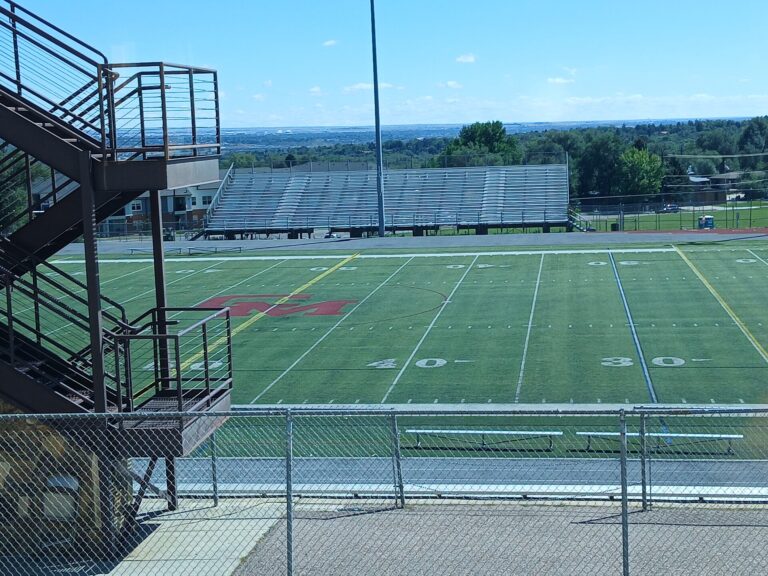
Lower divisions are a different problem entirely. Filming is inconsistent, often a single fixed camera run by a volunteer, sometimes absent altogether, and a scout who wants to assess a player at that level has no substitute for attending in person. This is where a regional scout’s actual value shows up, not in confirming what video already suggests about a well-covered top-flight player, but in producing the only usable assessment of someone no camera has recorded.
Provincial and youth competition below that is thinner again, and departments that are honest about their coverage describe it as patchy rather than comprehensive, dependent on which regional scout happens to have a relationship with which local club or school programme in a given area.
What a functioning department actually costs
| Cost item | Typical share of budget | What happens if it is cut |
|---|---|---|
| Salaries: head of recruitment, scouts, analyst | Moderate, the more visible cost | Fewer eyes, but the structure can survive a lean version |
| Travel for regional scouts | Large and recurring | Coverage collapses toward whichever region is cheapest to reach |
| Footage access and analysis software | Large, mostly for top-flight and continental coverage | Video scouting reverts to whatever is on free broadcast |
| In-person trial and assessment costs | Small but essential at decision point | Final judgement rests entirely on footage, raising risk |
| Data subscriptions where used | Small at most Iranian clubs currently | Little immediate effect; adoption is still limited |
Travel, not salary, is usually the item a club under financial pressure cuts first, because it is the easiest to defer without an immediate visible consequence. The consequence arrives a season or two later, as coverage narrows to whatever region is cheapest to reach and the department’s shortlist quietly stops reflecting the whole country.
Why the head of recruitment’s reporting line matters
A recruitment department that reports to the head coach rather than to a sporting director tends to chase whatever profile the current coach wants, which changes with every coaching appointment and leaves no continuity in how players are assessed from one season to the next. A department reporting to a sporting director or technical committee builds a more consistent model over time, because the person overseeing it is not the person who might be gone in six months.
This distinction explains a pattern visible across many clubs: a coaching change followed by a wholesale change in recruitment targets, sometimes discarding work a department had done over an entire transfer window. It is not usually a sign of poor scouting. It is a sign of a reporting structure that ties recruitment to an individual rather than to an institution.
The informal network, used correctly
Every department, however well structured, relies to some degree on informal tips: a former player now coaching youth football who flags a name, an agent with a genuine relationship rather than a transactional one, a provincial board official who mentions a standout at a championship. None of this is a weakness in itself.
The weakness appears when a club has no formal structure at all to check an informal tip against, no video review, no live viewing, no written note comparing the player to the stated brief, and simply acts on the tip because it arrived from a trusted source. The informal network is a useful first filter. It is a poor substitute for the verification steps a structured department is built to provide.
What good scouting reports look like
A usable scouting report is short, specific and comparable across players, not a narrative essay. It states the position and the specific role within it, three or four concrete strengths tied to observed moments rather than general impressions, the same number of concrete weaknesses, and an explicit judgement on fit against the brief that was issued at the start of the process.
Departments that let reports drift into open-ended prose make the shortlisting stage slower and more subjective than it needs to be, because a coaching staff comparing five long, differently structured reports is doing more interpretive work than comparing five reports built to the same template. The template is not bureaucracy for its own sake; it is what makes the shortlist meeting productive.
How a department is judged a year later
The scouting decision that matters most is rarely visible at the time it is made. It becomes visible twelve or eighteen months later, when a signing has either settled into the squad or been quietly moved on, and a department that never looks back at its own record has no way of improving the brief it writes for the next window.
A small number of clubs now run a basic form of this review: for every significant signing, a short note comparing the original scouting report against what actually happened in the first season, not to assign blame but to check whether the report’s stated strengths and weaknesses matched reality. Where they consistently did not, on a specific type of profile or a specific competition the reports were drawn from, that is a signal about where the department’s judgement needs adjusting rather than about any single player.
Most departments skip this step entirely, because a transfer window ends and attention moves immediately to the next one. The cost of skipping it is subtle rather than dramatic: the same avoidable misjudgement, a player who looked effective in a weaker league but could not adjust to a faster one, tends to repeat every few seasons in exactly the profile that a review would have flagged the first time.
Frequently Asked Questions
Why do clubs increasingly rely on video instead of live viewing?
Video lets one scout cover multiple matches for multiple players in the time a single live viewing would take, and it smooths out the noise of one player having an isolated bad game.
Where does scouting coverage actually break down?
Below the top division, where filming is inconsistent or absent, live attendance by a regional scout is the only real option, and this is where coverage is most dependent on individual scouts’ local relationships.
What is the biggest ongoing cost in a scouting department?
Travel for regional scouts, more than salaries, because staying close to competitions across a wide territory is a recurring expense that is easy to defer and costly to rebuild later.
Does a bigger scouting staff mean better recruitment?
Not reliably. A small department with a clear brief, a consistent reporting format and defended travel budget regularly outperforms a larger one without those elements.
Why does recruitment often change completely with a new head coach?
Because in many clubs the recruitment department reports to the coach rather than to a sporting director, so the profile being searched for changes whenever the coach does, discarding continuity that a differently structured department would keep.
The department that finds the useful player in a provincial fourth division is rarely the biggest one. It is the one that sent somebody there in the first place, with a brief specific enough to know what to look for once they arrived.