

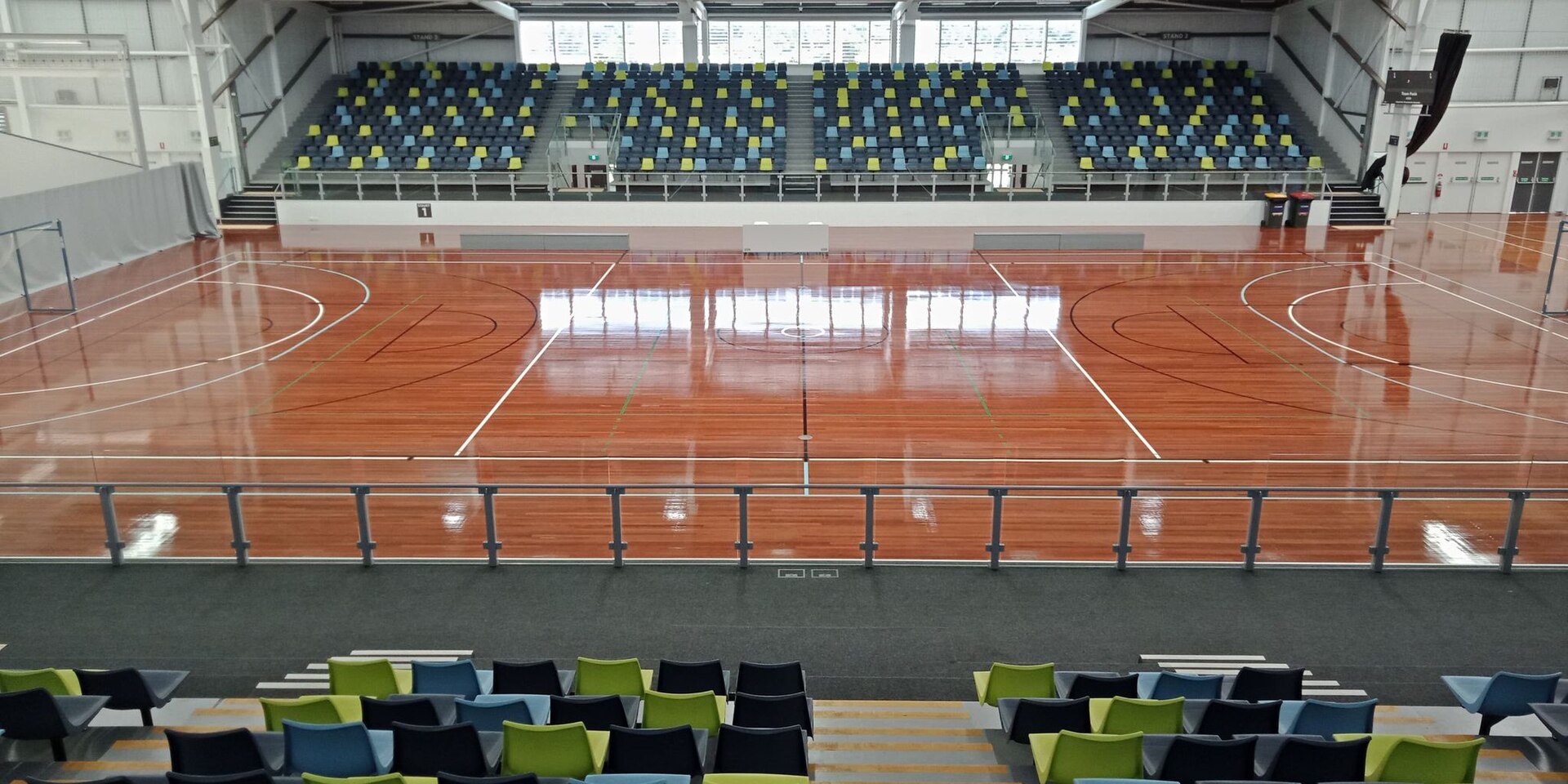
A youth coach watching a futsal session and a football session back to back notices the same players moving differently in each one, sharper in the tight exchanges, quicker to disguise a pass, more comfortable under pressure with the ball at their feet. The technical carryover between the two games is real and well documented by coaches who work across both. What is less often examined honestly is where that carryover actually stops, and why a futsal specialist does not automatically become a finished football player just by making the switch.
Futsal in Iran runs a domestic structure of its own, distinct from but adjacent to the football pyramid, with its own clubs, its own competitions and, increasingly, its own player pathway that intersects with football at specific, identifiable points rather than merging into it completely. Understanding where those intersection points are, and where they are not, is more useful than the general claim that futsal produces better technical footballers, which is true as far as it goes and incomplete on its own.
This is a look at what futsal actually develops technically, how the two structures operate side by side, and specifically where the transfer of players and ideas between them tends to break down.
- What transfers well. First touch under pressure, quick decision-making in tight spaces, close control at speed.
- What does not transfer automatically. Positional discipline across a much larger pitch, aerobic endurance for a ninety-minute match, heading and long-range physical duels.
- The structure. A separate domestic futsal league and competition system, run alongside but distinct from the football pyramid.
- Where players actually move. Mostly from futsal into football at youth and lower-league level, rarely at the elite senior level in the other direction.
- Where the transfer breaks down. Physical conditioning for the outdoor game and tactical adjustment to a much larger playing area.
Futsal development iran: a parallel structure, not a feeder league
Futsal development iran runs through its own domestic league and club structure, with clubs, competitions and a national team programme that function as a genuine sport in their own right rather than existing primarily as a development pipeline for football. This distinction matters because it shapes how the sport is actually organized: futsal clubs compete for futsal results, and player development toward an eventual football career, where it happens, is frequently a byproduct of an individual player’s ambition rather than a designed function of the futsal system itself.
The country has a genuine competitive tradition in futsal specifically, with meaningful continental and international results in the sport on its own terms, which reinforces that the structure exists to produce good futsal, not merely as a farm system waiting to be raided by football scouts. Treating it primarily as a source of football talent undersells the sport and also misdescribes how the two structures actually relate to each other.
What futsal genuinely develops technically
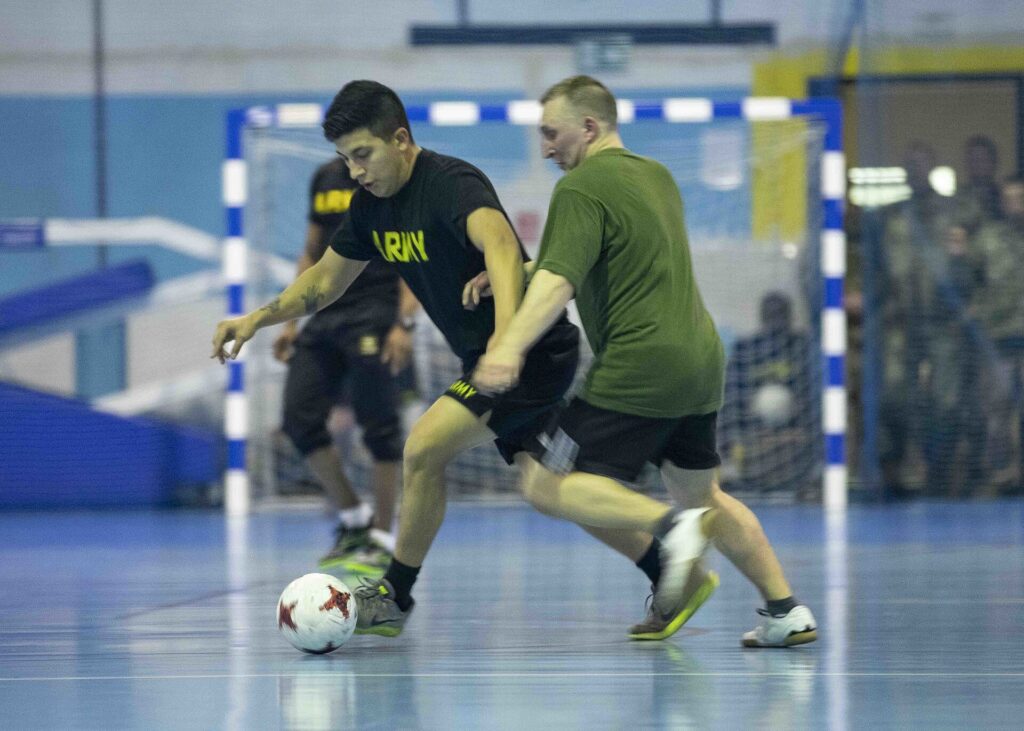
The technical case for futsal’s developmental value is well supported by what the game’s format demands. A smaller playing surface, a heavier, less bouncy ball, and continuous close-quarters pressure from opponents force a player to control the ball cleanly under pressure far more frequently per minute than an equivalent outdoor football match does, building a first touch and a passing technique under duress that transfers directly and usefully into football.
Decision-making speed is the second major transferable skill. Futsal’s tighter spaces and shorter reaction windows train a player to scan the pitch, identify an option and execute a pass or a take-on more quickly than the more spread-out spacing of an eleven-a-side football match typically requires at a youth level, and players who have spent formative years in this environment frequently show that faster decision cycle when they move into football, even before any football-specific tactical coaching has been applied.
Where the transfer genuinely stops
The honest limitation is physical and tactical rather than technical. Futsal is played on a surface a fraction of the size of a football pitch, over a shorter match duration with rolling substitutions, which means it does not develop the sustained aerobic endurance a ninety-minute football match at a competitive level demands, nor does it develop the positional discipline required to defend and attack across a pitch roughly seven times larger in area.
Heading, a skill entirely absent from futsal since the game does not feature it in any meaningful capacity, has to be built from scratch by any player moving into football regardless of futsal background, as does the physical duel work involved in football’s outdoor defensive contests, tackling, aerial challenges, holding off a stronger opponent in open play, none of which futsal’s format meaningfully replicates.
A coach receiving a talented futsal convert into a football academy is therefore not receiving a finished product needing only tactical polish. He is receiving a player with a genuinely superior technical foundation in specific areas and a set of physical and positional gaps that have to be built through dedicated outdoor training before that technical advantage can be fully expressed in the larger game.
Comparing the two games directly
| Attribute | Futsal | Football |
|---|---|---|
| Playing surface | Small indoor or hard court | Full-size outdoor pitch, roughly seven times the area |
| Ball control demand | Very high frequency, close pressure | Lower frequency per minute, more space to receive |
| Aerobic endurance requirement | Lower, shorter matches with rolling substitutions | High, sustained over ninety minutes |
| Heading and aerial play | Not a feature of the game | A core defensive and attacking skill |
| Positional structure | Fluid, fewer fixed zones | Structured positional roles across a large area |
The transfer mechanism: how a player actually moves between the two

The practical route a player follows from futsal into football is rarely a formal, structured pathway managed by either sport’s federation; it typically happens through a football youth coach or scout personally recognizing a futsal player’s technical quality at a school or local level and inviting a trial, or through a young player himself deciding to pursue football more seriously after building a technical foundation in futsal during childhood, sometimes because futsal facilities were simply more accessible in his area growing up than a full football pitch.
This informal, individual-driven mechanism means the transfer happens inconsistently and depends heavily on whether a given region’s football scouting network is paying attention to the local futsal scene at all, which many are not, treating the two sports as separate worlds worth monitoring for entirely different reasons rather than as connected talent pools.
Where coaching ideas move, separately from players
Beyond individual player movement, technical and tactical ideas move between the two sports in ways that are easier to trace among coaches than among players. Rondo-style possession drills, tight passing patterns under simulated pressure, and specific ball-mastery exercises originally refined in futsal coaching have been adopted widely into football training methodology, used by coaches who have never worked in futsal themselves but recognize the training value of the constrained-space problems the sport specializes in creating.
This idea transfer is, in a sense, a cleaner and more consistent version of the player transfer described above, since a training exercise can be adopted deliberately and immediately by any coach who sees its value, without needing to wait for an individual talented player to make the personal decision to switch sports.
Why the reverse transfer, football to futsal, is much rarer at the top level
Player movement in the opposite direction, an established football player moving into competitive futsal, is considerably rarer at a serious competitive level, largely because futsal’s technical demands, that same high-frequency, close-control pressure discussed earlier, are difficult to acquire quickly as an adult without the years of formative exposure that produces it naturally in a player who grew up in the sport. A football player attempting a late transition into serious futsal competition is, in effect, trying to acquire in a short period what futsal specialists built over a childhood, which is a much harder direction of transfer than the one this piece has focused on.
Where football players do participate in futsal, it is more commonly during an off-season period for fitness maintenance and ball-work variety rather than as a genuine competitive career move, which is a meaningfully different relationship between the two sports than the one-directional development pipeline sometimes assumed in casual conversation about the two games.
What a structured academy would do differently
A small number of academies have begun building a deliberate bridge between the two sports rather than leaving the transfer to individual initiative: younger age groups train partly in futsal formats specifically for the ball-mastery and decision-speed benefits, with a planned transition to full outdoor football training and match play as players move into older age groups, rather than treating futsal purely as an off-season variation or an entirely separate track.
This structured approach requires coaches qualified to teach both formats and a facility plan that supports both, which is a genuine resource commitment few academies outside the largest clubs currently make. Where it has been tried, the reported benefit is not that players arrive in senior football fully formed, but that the technical foundation built through the futsal-formatted early years gives coaches a stronger base to build the missing physical and positional elements onto, compressing the overall development timeline somewhat compared with a player who received no structured futsal exposure at all.
What youth football coaches should actually watch for in a futsal convert
A coach evaluating a promising futsal player for a football trial benefits from a specific checklist rather than a general impression of technical quality. Ball control and passing accuracy under pressure, the skills futsal reliably develops, are usually evident immediately and do not need extensive testing. What requires closer, honest evaluation is aerobic capacity across a full-length session, comfort and technique in aerial duels, and positional awareness across a much larger space than the player is used to defending or attacking within.
Treating these three gaps as expected rather than as red flags disqualifying the player is the more useful coaching posture, since penalizing a technically excellent futsal convert for gaps that are a predictable consequence of the sport’s format, rather than a sign of poor overall athletic ability, risks discarding a player whose technical foundation would, with dedicated conditioning and positional coaching, translate into a genuinely valuable football asset within a reasonable development window.
Frequently Asked Questions
Does playing futsal as a child guarantee a smoother path into football?
It provides a genuine technical advantage in ball control and decision-making speed, but it does not substitute for the aerobic conditioning, positional discipline and heading ability that football specifically requires, all of which have to be developed separately.
Is Iran’s futsal league mainly a feeder system for football?
No. It operates as a genuine competitive structure with its own clubs, national team and international results, and player movement into football tends to happen through individual initiative rather than as a designed function of the futsal system.
What skill does futsal not develop at all?
Heading, since the game does not feature it, along with the sustained aerobic endurance and larger-pitch positional discipline that a full ninety-minute football match demands.
How do coaching ideas move between the two sports?
Through training methodology rather than only through player movement. Constrained-space possession and ball-mastery drills developed in futsal coaching have been widely adopted into football training independent of any individual player’s career path.
Why don’t more football players move into competitive futsal?
Futsal’s technical demands are difficult to acquire quickly as an adult, since they are typically built through years of formative exposure, making that direction of transfer considerably harder than the more common futsal-to-football movement.
What futsal gives football is real and worth taking seriously: a sharper first touch, a faster read of tight spaces, decisions made under more pressure than the bigger game usually applies. What it does not give, on its own, is a finished footballer, and pretending otherwise is where the transfer actually breaks down.