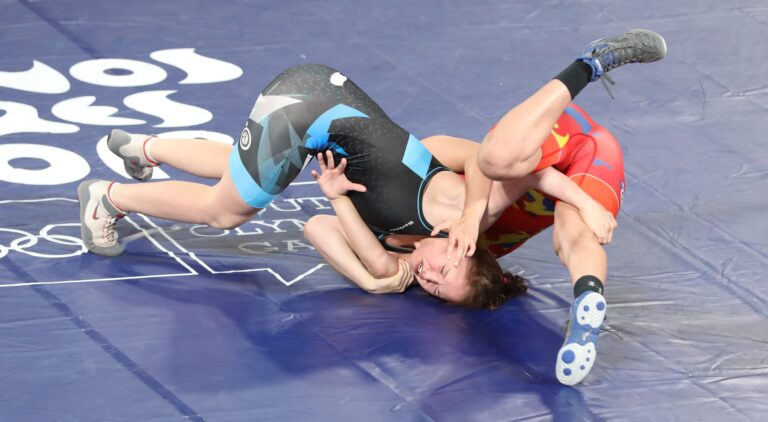

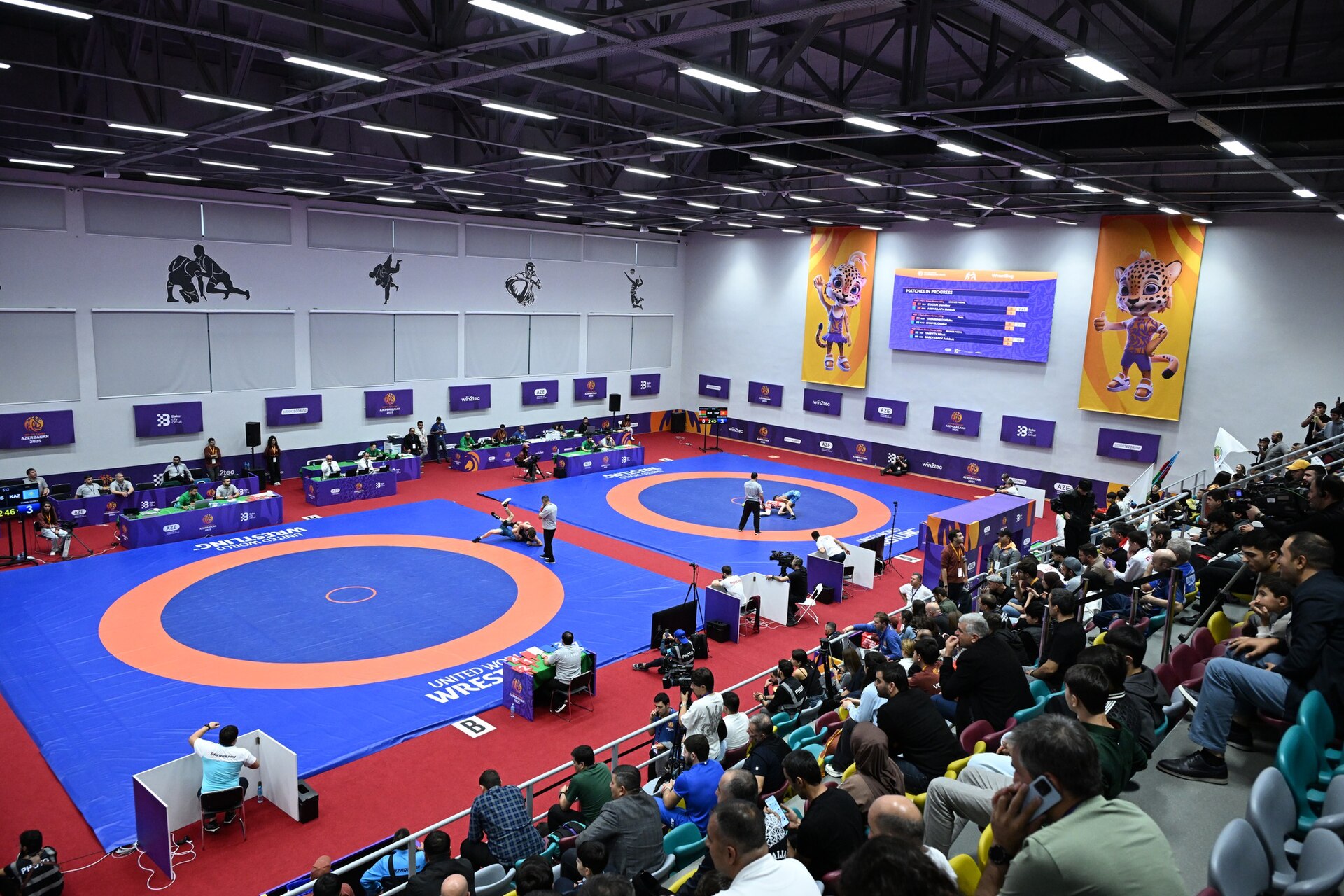
A wrestler who mastered the ground position a decade ago would recognize almost nothing about how it is scored today. The clock allotted for the top wrestler to act has shrunk, the passivity calls that used to buy extra time have tightened, and a technique that once reliably produced points now often produces nothing at all because the opponent has learned a specific counter the old rules never rewarded developing.
Greco-Roman wrestling bans leg attacks entirely, which makes the ground position, referred to universally in the sport as par terre, one of the two or three moments in a match where a genuinely large swing in score is possible in a single action. Governing bodies have adjusted the rules around this position repeatedly over the past two decades, each time in response to matches that officials judged too passive or too easily stalled.
Each rule change did more than adjust a scoreboard. It changed what a coach spends training time on, months before the next rule cycle even reaches a competition mat.
- What par terre is. The ground position, where one wrestler starts on all fours and the other attempts to score from above.
- Why it matters more in Greco-Roman. With leg attacks banned, par terre is one of the few remaining high-value scoring moments.
- What changed. Shorter time limits to score, tighter passivity criteria, and revised rules on what counts as a legal turn.
- The training response. More explosive, time-pressured drilling and specific counter-defense work from the bottom position.
- Who this affects most. Wrestlers who built their whole competitive identity around a slower, patient top-position game.
Why the ground position carries so much weight in this style
Freestyle wrestling allows leg attacks, giving a wrestler several distinct ways to build a lead across a match. Greco-Roman wrestling removes that entire category of technique, which concentrates scoring opportunity into upper-body throws, clinch exchanges, and the par terre position specifically. A wrestler who is a genuine specialist from the top position in par terre can build a decisive lead from very few opportunities across a whole tournament.
This concentration of scoring opportunity is precisely why rule changes to this single position have had an outsized effect on the sport compared with adjustments made to standing exchanges, where the range of technique available makes the sport more naturally resistant to any single rule tweak reshaping training priorities.
A coach preparing a roster for a major tournament will often say privately that a Greco-Roman match is won or lost in a handful of seconds spent in this specific position, more than in the minutes spent upright exchanging grips and setups that rarely convert into points on their own.
What the top position now has to accomplish quickly
Successive rule revisions have shortened the effective window a top-position wrestler has to score before the referee restarts the action or calls a passivity infraction against him instead, which reverses the pressure onto the wrestler who was previously the one applying it. A technique that took several seconds of careful positioning to set up under older rules now often has to be attempted and completed inside a much tighter window, or abandoned before it produces a call that costs rather than gains a point.
This has pushed coaches toward drilling a smaller number of high-percentage turns repeatedly to the point of near-automatic execution, rather than teaching a wide repertoire of positional setups that assume the luxury of time the older rules provided.
A national team coaching staff will often narrow a wrestler’s top-position repertoire deliberately down to two or three variations he can execute at genuine speed, judging that reliability under the current time pressure matters more than breadth of technique that would only have been useful under the older, slower version of the position.
Passivity calls: the rule that punishes patience
Passivity rules, which penalize a wrestler judged to be avoiding engagement rather than actively competing, have tightened specifically around the par terre position because officials identified it as the most common site of deliberately slow, low-risk wrestling under older rule sets. A bottom-position wrestler who previously could survive by simply resisting without attempting any escape now risks conceding a point purely for that passivity, independent of whether the top wrestler ever completes a scoring action.
This single change did more to accelerate the pace of matches at this position than any adjustment to the scoring technique itself, since it removed the safest low-effort option that a defensively-minded wrestler previously had available to him.
Officials assessing passivity from the bottom position now look specifically for continuous, purposeful movement, a wrestler attempting to change his base, deny a grip, or work toward an escape, rather than accepting stillness as acceptable defense the way an older interpretation of the same rule sometimes did.
What counts as a legal turn, and what changed
The technical definition of a legal scoring turn from par terre, how much of an opponent’s shoulders must touch the mat, and for how long, has been revised more than once, generally in the direction of stricter, more clearly defined criteria that leave less room for a subjective judgment call by the mat-side officials. A turn that would have scored under an older, looser standard can now be ruled incomplete, sending both wrestlers back to the starting position rather than awarding points.
Coaches have had to retrain the specific finishing mechanics of a turn to match the current standard exactly, since a technically sound turn under a previous rule cycle can now simply fail to register as a score under the current one if the finishing detail does not meet the tighter definition.
This retraining is not cosmetic. It usually means adjusting the exact angle and duration of the final hold at the moment of contact, details fine enough that a wrestler can execute the same broad technique for years and still need a coach’s correction once the definition tightens again.
Greco-roman par terre rules: reading the current scoring criteria
Understanding the current greco-roman par terre rules requires separating three distinct questions officials are trained to answer in sequence: was the position entered legally, did the top wrestler make active, sustained effort to score within the permitted window, and did any resulting turn meet the current definition of a legal, complete action. A coach preparing a wrestler for a specific tournament checks which version of these criteria the presiding federation is currently enforcing, since minor variations between the exact wording used by different competition organizers still occur despite the broader push toward a single unified standard.
This layered structure is why match commentary from experienced analysts increasingly walks through each of these three questions individually rather than simply announcing a score, since the reasoning behind a given call is no longer obvious from the action alone to a viewer unfamiliar with the current standard.
What the bottom position had to learn defensively
The tightened passivity rules did not only pressure the top wrestler into faster action; they also forced the bottom-position wrestler to develop genuine, active defensive technique rather than relying on passive resistance, since simply refusing to move is now itself a scoring risk under the current passivity standard. Specific defensive skills, hip movement to deny a grip, timed counter-rolls, and controlled escapes that do not concede a turn in the process, have become a coached, drilled component of preparation rather than an instinctive skill left to develop on its own.
A wrestler strong only in standing exchanges but weak in this specific bottom-position defensive skill set is now a more exploitable target than an equivalent wrestler would have been under the older rules, which rewarded simple resistance far more generously.
Some coaches now dedicate a specific block of every training week solely to bottom-position defense, treating it as its own discipline rather than as a secondary skill picked up incidentally while a wrestler mainly practices offense from the top position.
The strength work that followed the rule changes
Faster, more time-pressured turns from the top position demand a different physical preparation than the older, more patient version of the same technique, specifically explosive hip drive and grip strength that can be applied in a single committed burst rather than sustained gradually over a longer setup. Strength programs built around Olympic lift variations and short-duration explosive work have become a larger share of preparation time relative to the longer isometric holds that suited a slower version of the position.
Bottom-position defensive strength work, core stability under an opponent’s weight and the specific hip mobility needed for a fast counter-roll, has similarly expanded as a training category, reflecting how much more active the bottom wrestler now has to be under the current passivity standard.
Conditioning coaches working alongside technical staff have also shortened rest intervals in specific drilling blocks to mimic the compressed decision window a wrestler now faces at this position, reasoning that physical preparation should match the actual time pressure of competition rather than a more relaxed pace that no longer reflects how the position is officiated.
Comparing the position across two rule eras
| Aspect | Older rule cycle | Current rule cycle |
|---|---|---|
| Time to score from top | Longer, more forgiving window | Shorter, strictly enforced window |
| Passivity from bottom | Simple resistance generally tolerated | Active defense required to avoid a penalty |
| Legal turn definition | Looser, more subjective standard | Tighter, more clearly defined standard |
Why officials keep adjusting this specific position
Governing bodies revisit par terre rules more often than most other parts of the sport’s rulebook because the position sits at the intersection of two competing priorities: rewarding genuine technical skill from the top position while preventing matches from being decided by a single early score followed by extended defensive stalling for the remainder of the bout. Every adjustment tries to nudge that balance without swinging so far that the position becomes either too easy to exploit or too difficult to score from at all.
This ongoing tuning means coaches cannot treat any single rule cycle’s training emphasis as permanent, and building a wrestler’s preparation around adaptability to the next likely adjustment has become as much a part of long-term coaching as any specific technique itself.
Wrestlers with a long international career have generally lived through at least two or three distinct versions of this rule, and the ones who kept competing successfully through each transition tend to describe the adjustment less as learning new technique and more as unlearning timing habits that had become automatic under the previous standard.
What this means for a wrestler’s overall development
A young wrestler entering the sport today trains a genuinely different par terre skill set than one who came up two rule cycles earlier, faster and more explosive from the top, more actively defensive from the bottom, and drilled specifically against the current definition of a legal turn rather than a more generous historical standard. Coaches who adapted their programs early to each rule change have generally produced wrestlers who transition more smoothly between domestic and international competition, since international federations tend to enforce the current standard more consistently than lower-level domestic events sometimes do.
This adaptability, more than any single technique, has become the actual marker of a well-prepared modern Greco-Roman wrestler at this specific position.
Provincial and club-level coaches, who often have less direct contact with the international federation’s rule announcements than national team staff, tend to lag behind in adopting a new standard, which is one reason a wrestler moving up from domestic competition to an international training camp sometimes has to unlearn habits that were perfectly legal at the level he came from.
Frequently Asked Questions
Why does par terre matter more in Greco-Roman wrestling than in freestyle?
Because leg attacks are banned in Greco-Roman, concentrating high-value scoring opportunity into upper-body exchanges and the ground position specifically.
What changed about passivity calls at this position?
The bottom wrestler can no longer rely on simple resistance without risking a penalty, since passivity rules now require genuinely active defense.
Why do some turns that used to score no longer count?
The technical definition of a legal, complete turn has tightened over successive rule cycles, so a turn meeting an older standard can fail the current one.
How has training changed in response to a shorter scoring window?
Coaches now drill a smaller number of high-percentage turns to near-automatic execution rather than a broad repertoire assuming a longer setup time.
What physical training has this shift emphasized?
Explosive hip drive and grip strength for the top position, and core stability with hip mobility for active defense from the bottom.
The mat has not changed size, and the position has not changed name. What counts as winning it has changed enough that a training plan built for the last rule cycle is already out of date.