3,600 Metres Above Tehran: Inside Dizin, Shemshak, and Iranian Alpine Skiing
By Saman Azizi — Published May 9, 2026
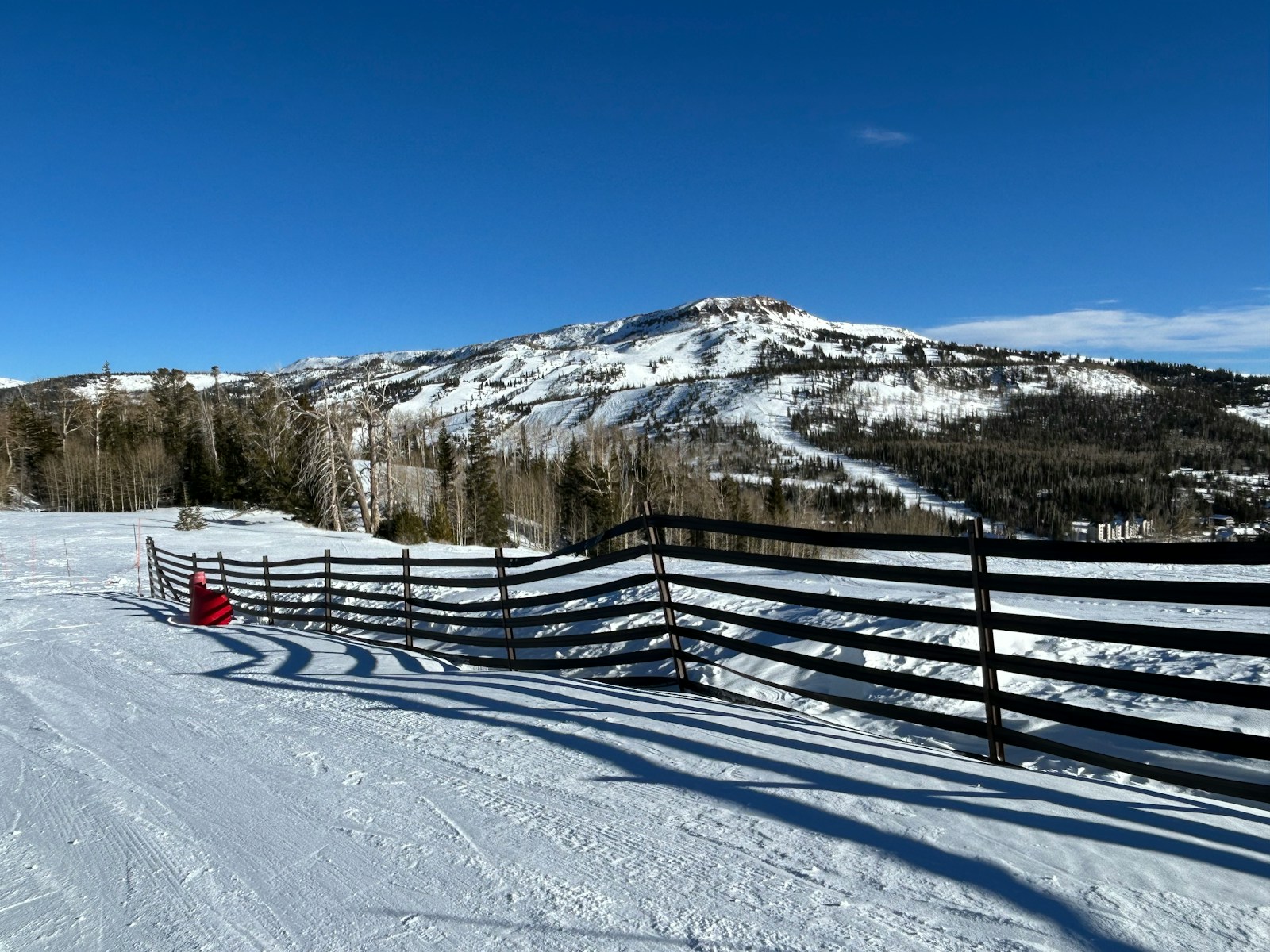
The road north from Tehran to Dizin follows the Karaj River for an hour before it begins to climb. By the time it reaches the upper Alborz, the air thins, the pavement narrows, and the only traffic is the occasional minibus of weekend skiers and an old pickup loaded with rental poles. Near the tree line, the resort appears suddenly: a cluster of low concrete buildings, a bank of gondolas humming in the cold sunlight, and above it all a ridge of white that extends past 3,600 metres in elevation — the highest operating ski lift anywhere in the Middle East.
This is Dizin. It is not famous in the way Chamonix or St. Moritz are famous. It will never be. But it is the geographic heart of a small, persistent, and improbable sporting tradition: alpine skiing in Iran.
Iran is not a country the international ski world associates with winter sport. The image Western audiences carry is of desert cities, oil refineries, long-distance runners, and wrestling mats. It is not an entirely wrong image. But it is an incomplete one. For more than sixty years, Iranian skiers have trained on the slopes above Tehran, sent teams to Winter Olympics, and built a modest but functioning federation around a sport that, logistically, should not exist in the Middle East at all.
The Geography That Makes It Possible
The Alborz mountain range runs across northern Iran, bending around the Caspian Sea like a southern wall. It is a young mountain system by geological standards, still rising, with peaks that regularly exceed 4,000 metres. Mount Damavand, the range’s tallest peak at 5,610 metres, is the highest volcano in Asia. The lesser peaks surrounding it — Sichal, Alam-Kuh, the ridges above Shemshak — hold snow from November through late spring at the highest elevations.
This is what makes skiing viable near Tehran. The city itself, at roughly 1,200 metres, sees only occasional winter snow. Drive an hour and a half north, however, and the elevation jumps to 2,700 metres. The snowline is reliable. The season is long. And, in a country where much of the domestic tourism economy runs on the Caspian coast, the Alborz winter offers Tehranis a second kind of weekend retreat.
Dizin: The Flagship Resort
Dizin opened for skiing in 1969, built under the Pahlavi government as part of a broader modernization push that saw Iran invest in tourism, hotels, and winter sports. The original resort was modest: a handful of tow lifts, a small hotel, a restaurant. The expansion came steadily through the 1970s. By the Islamic Revolution in 1979, Dizin had four gondolas, multiple chair lifts, and a base hotel comparable to European resorts of the same era.
The post-1979 period complicated the picture. Western sanctions, currency volatility, and shifting cultural policies all affected the resort’s operation and marketing. But it never closed. Iranian skiers continued to use it. Tehran families continued to drive north for weekend trips. The infrastructure, though aging, kept running.
Today Dizin’s skiable terrain covers roughly 70 kilometers of marked runs. The lift network includes four gondolas, three chairlifts, and nine surface lifts. The lift-served summit is 3,600 metres — higher than most resorts in the Alps. FIS (the International Ski Federation) has sanctioned Dizin as a competition venue, making it the only facility in the Middle East with that classification.
The resort remains state-owned in its core operational structure, with the management handled through a combination of sports-ministry subsidies and private concessions for hotels, rentals, and food services. Prices for lift tickets remain substantially lower than comparable European resorts, and the crowd is dominated by Tehrani families and, increasingly, international visitors from the Gulf and Central Asia.
Shemshak and Darbandsar
Shemshak sits about 45 minutes south of Dizin by road and is the older of the two. It opened in 1958 as Iran’s first modern ski resort. Shemshak is smaller than Dizin, steeper on average, and has a reputation among Iranian skiers as the “expert’s mountain.” Its runs include some of the steepest groomed terrain anywhere in the region, and the resort has traditionally hosted the country’s slalom and giant-slalom competitions.
Darbandsar, even smaller, fills out the trio. It sits between Shemshak and Dizin geographically and functions as a training hill for younger Iranian racers. The federation uses Darbandsar extensively for its junior programs, where the tighter terrain and shorter runs are ideal for technical development.
Most serious Iranian alpine athletes train across all three resorts during a single season — Dizin for long-course practice, Shemshak for steep-terrain conditioning, and Darbandsar for gate work. The ecosystem is compact but functional.
Marjan Kalhor: The First Winter Olympian
The story of Iranian alpine skiing changed decisively in February 2010. Marjan Kalhor, born in Tehran in 1988 and a national-team racer since her early teens, walked into the Vancouver Winter Olympics opening ceremony carrying the Iranian flag. She was the first Iranian woman to compete at a Winter Olympic Games in the country’s history.
She skied in two disciplines — slalom and giant slalom — and did not medal. Her times were outside the top fifty in each event. But her participation was the point. Iran had never before sent a female athlete to a Winter Games, and the federation’s decision to do so, despite the practical and political hurdles involved, opened a door that has not closed since.
Kalhor has spoken in subsequent interviews about the patchwork way she reached Vancouver: the inconsistent funding, the constant need to raise money privately to attend European training camps, the sheer difficulty of operating a women’s alpine program in a country that was still building the institutional infrastructure for it. Her achievement is better understood not as an athletic breakthrough (her times confirm this) but as an institutional one.
In the years after 2010, the pipeline widened. Forough Abbasi, another Tehran-based alpine skier, has carried the Iranian women’s skiing flag into multiple FIS seasons. The men’s side, historically stronger, has continued to send small delegations to the Winter Games — typically two to five athletes across alpine, cross-country, and a handful of other disciplines.
The Men’s Winter Olympic Tradition
Iran has been sending athletes to the Winter Olympics since Sapporo 1972. The country has never won a Winter Olympic medal. The delegations have typically been small — two to five athletes — and focused heavily on alpine skiing, with occasional entries in cross-country and other disciplines. The results have been modest in competitive terms but meaningful in institutional terms: the program has maintained continuity across the 1979 revolution, the 1980s war years, and every Winter Games of the modern era.
The Practicalities of Skiing in Iran
| Resort | Opened | Base / Top Elevation | Lifts | Notable |
|---|---|---|---|---|
| Dizin | 1969 | 2,700m / 3,600m | 4 gondolas + 12 surface/chair | Largest in the Middle East, FIS-certified |
| Shemshak | 1958 | 2,550m / 3,050m | 2 chairlifts + surface | Iran’s oldest; steep expert terrain |
| Darbandsar | 1970s | 2,600m / 3,050m | Surface + chair | Junior-program training hill |
| Pooladkaf | 2000s | 2,350m / 3,200m | Gondola | Southern Iran (Shiraz region) |
| Tochal | 1976 | 1,900m / 3,740m | 7-km gondola from Tehran | Accessible by cable car from central Tehran |
A Tourism Economy That Supports the Sport
The Iranian federation of skiing and snowboarding has a fraction of the budget of its European equivalents, but it does not rely entirely on federation funding to keep the slopes open. The three main resorts — Dizin, Shemshak, and Darbandsar — are commercial operations with weekend crowds substantial enough to subsidize off-peak training hours and junior programs.
During peak season, Dizin alone can accommodate several thousand skiers per weekend day. Prices are accessible by Iranian middle-class standards. Rental equipment is available on site, hotels are functional if not luxurious, and the food — mostly kebab, traditional stew, and rice dishes — is priced within Iranian domestic tourism norms.
International tourism has fluctuated with geopolitics. Iranian ski tour operators report significant interest from European skiers curious about an exotic destination, but visa complications and sanctions-related financial-transfer issues limit the actual flow. The customer base, in practice, is dominated by Iranians themselves, with a modest supplement of Gulf, Russian, and Central Asian visitors.
The Training Reality for Iranian Racers
A young Iranian alpine racer in 2026 follows a predictable annual rhythm. November through April: training at Dizin, Shemshak, and Darbandsar. April through June: off-season conditioning in Tehran, including track work, gym sessions, and dryland ski-specific drills. July through September: whenever possible, training camps in Europe (Austria and France are the most common destinations), funded through a combination of federation support, family resources, and private sponsorship. October: pre-season conditioning and early-season races in whatever Northern Hemisphere venues open first.
It is not an easy program. The Iranian Rial’s exchange rate has made European training camps substantially more expensive than they were fifteen years ago. Federation budgets have not grown proportionally. Young racers now frequently operate as semi-independent athletes, with their families underwriting significant portions of their training calendars.
Despite these constraints, the pipeline has not collapsed. Iranian racers continue to appear at FIS competitions across Europe. The country regularly sends small delegations to Winter World Championships. And the federation, quietly, continues to graduate a small number of athletes each cycle who can compete respectably at Asian Winter Games level.
The Cultural Meaning
Skiing in Iran is not a mass sport in the way wrestling or football is. It has never been. Participation is concentrated in the urban middle class, particularly in greater Tehran, and the total number of active racers across all age groups is likely in the low thousands.
But the sport’s cultural meaning exceeds its participation numbers. For many Iranian families, a weekend at Dizin represents something harder to quantify than sport: a break from Tehran’s density, a glimpse of mountain landscape that the country is otherwise rich in but that urbanization has pushed into abstraction, and a form of outdoor leisure that feels simultaneously modern and traditional.
The resorts themselves have become a kind of quiet cultural institution, surviving revolutions, wars, sanctions, and currency crises. That they continue to operate, that a women’s alpine team continues to exist, that a 3,600-metre lift continues to run on weekend mornings — these are not small things.
A View from the Summit
On a clear April morning at the top of the Dizin gondola, the view stretches south toward the hills above Karaj and, on the haziest days, toward the edge of greater Tehran. Skiers exit the gondola and pause for a moment at the platform, adjusting goggles, exhaling in the cold dry air. The runs below them drop through wide bowls, then narrow into tree-flanked trails. It is a mountain like any other.
Except, of course, it is not. It is the highest point in Iranian skiing, in a country whose relationship with winter sport has always been improbable, and it is still open on a Saturday morning in April, still serving ordinary people on ordinary weekends, still feeding the quiet pipeline that has produced every Iranian Winter Olympian since Sapporo 1972. A country that outsiders rarely associate with snow has a winter tradition. You just have to drive north to find it.
Beyond the Central Alborz: Regional Resorts
While Dizin, Shemshak, and Darbandsar anchor Iran’s alpine skiing, several regional resorts extend the sport’s footprint across the country. Pooladkaf, near Shiraz in the south, operates at elevation in the Zagros mountains and serves the Fars province population. Alvares, in East Azerbaijan, provides winter skiing to the Tabriz region. Payam, in Ardabil province, is a smaller resort that has grown its junior racing pipeline through a regional development programme.
Each of these regional resorts operates at a smaller scale than Dizin, with shorter seasons and less substantial infrastructure. Combined, however, they represent a meaningful decentralization of the Iranian ski sport. Junior racers from outside Tehran no longer need to relocate to the capital to access the sport, and the federation’s regional pipelines have grown stronger as a result.
The north-central Alborz will likely remain the national team’s primary competitive and training base for the foreseeable future — the altitude, terrain, and infrastructure are simply better there than elsewhere — but the broader geographic distribution matters for the sport’s participation numbers and for its long-term institutional depth.
The Ice Sports Context
Alpine skiing is by far the most visible Iranian winter sport, but the country also maintains programmes in speed skating, figure skating, and ice hockey. These sports operate at a smaller scale than skiing, with facility constraints limiting the depth of their pipelines. Tehran has a handful of indoor ice rinks that support recreational skating and the modest competitive programmes built around them.
Iran has not yet qualified a competitor for a Winter Olympics in ice sports, though the federation’s long-term strategic planning includes targets for this. The challenge is infrastructural more than talent-driven: a country with limited indoor ice facilities cannot easily produce Olympic-level ice athletes. Recent investment in additional ice rinks, particularly in Isfahan and Mashhad, may begin to shift this equation over the coming decade.
For now, the ice programmes serve primarily as recreational outlets and as regional youth-development platforms rather than as international-medal programmes. Alpine skiing remains the country’s winter competitive priority.
The Skier’s Calendar at a Glance
A typical Iranian ski season, from the perspective of a Tehran-based weekend enthusiast, follows a predictable arc. The earliest snow usually appears at Dizin and Shemshak in late November, with the resorts opening their first lifts in early to mid-December. The high-season period runs from late December through mid-February, with weekend crowds peaking around the Nowruz holiday in March. Late-season skiing continues into April and, at Dizin’s higher elevations, occasionally into early May.
For competitive racers, the calendar is denser. National and regional FIS races begin in January and run through March. The Iranian Alpine Skiing Championships typically take place in February at Dizin. International travel for European training blocks occurs in the early winter pre-season or during specific mid-season windows. By the time the domestic season closes in May, most elite racers have logged 80 to 100 training and competition days across the winter.
The rhythm is familiar to anyone who has followed alpine skiing elsewhere. It just happens to occur in a country whose skiing culture rarely appears in the international imagination, on slopes that rise higher than most European resorts, with lift tickets priced at a fraction of Alpine rates, and served by a federation whose institutional persistence has outlasted more upheavals than any comparable programme in the region.
The Snow Economics
Snowmaking equipment at Iranian resorts has lagged behind European and North American standards for much of the modern era. Dizin does have some snowmaking capacity, but the resort relies primarily on natural snowfall, which has been increasingly variable over the past decade. Warmer winters in 2019 and 2022 produced shortened seasons. Colder winters in 2021 and 2024 produced snowpack that extended into June.
The climate variability has pushed the federation and the resort operators to invest in additional snowmaking infrastructure. The 2023-2024 off-season saw the installation of new snow cannons on the middle sections of Dizin, which are the most vulnerable to mid-season warm spells. Further expansion is planned for the 2027 off-season, contingent on federation and ministry-of-sport funding.
These investments matter not only for tourism but for the training calendar of national-team racers. A resort that cannot guarantee racing conditions from mid-December through late March cannot reliably host technical training blocks. The snowmaking expansion, modest as it is by European standards, represents a meaningful investment in the sport’s domestic viability.
The Federation’s Women’s Program
Iran’s women’s alpine program has grown slowly but steadily since Marjan Kalhor’s 2010 appearance. The federation now maintains a women’s national squad of roughly a dozen racers across the disciplines of slalom, giant slalom, and super-G. Junior programs feed into this senior squad through regional qualifications held annually at Dizin, Shemshak, and Darbandsar.
The practical realities of operating a women’s alpine program in Iran require accommodation of cultural and regulatory requirements. Women athletes train and compete with head coverings, and training sessions are organized to meet federation guidelines regarding attire and venue access. These requirements shape how practice blocks are scheduled, how race uniforms are designed, and how international travel is planned.
Despite these constraints, the program has been remarkably persistent. Several of the younger racers now coming through the pipeline have competed at FIS World Championships. The federation’s investment in women’s alpine development has increased in recent years, and the competitive gap between the Iranian women’s program and regional peers — Turkey, Central Asian republics, some Arab Gulf programs — has narrowed meaningfully.
The Après-Ski Culture
The social dimension of Iranian skiing has its own character, distinct from its European or North American equivalents. The resorts themselves do not operate alcohol-serving bars, consistent with domestic law. Après-ski culture in Iran centers around tea, hot soups, traditional snack foods like dried fruit and nuts, and extended conversation in the mountain lodges.
Weekend crowds at Dizin skew toward families and groups of twenty-something friends from Tehran. The resort’s main hotel, though dated compared to European equivalents, functions as a social hub through the long Alborz afternoons. Many Iranian ski enthusiasts describe the overall atmosphere as more contemplative than the louder après-ski environments of European resorts.
The mountain culture also has its own linguistic texture. Iranian skiers use a mixture of Persian terms and imported technical vocabulary — “piste,” “gondola,” “off-piste” — that reflects the sport’s imported origins while grounding it firmly in the Iranian context. The names of specific runs at Dizin and Shemshak are a mixture of Persian descriptors and European-style toponyms.
The International Development Programs
In recent years, the Iranian federation has developed exchange and training programs with counterparts in Austria, Italy, and Bulgaria. Junior racers spend blocks of the European season in Alpine training camps, often hosted through reciprocal arrangements. Iranian coaches attend FIS-accredited certification programs in Europe. The flow of technical knowledge into Iranian alpine skiing has accelerated meaningfully.
These programs have been funded through a mix of federation budgets, private sponsors, and in some cases personal resources from the athletes’ families. The financial model is fragile but functional. The competitive return — measured in FIS race results, in junior world championship qualifications, and in Olympic pipeline viability — has been modest but real.
Sources
Related Reading
- Iran’s international sporting posture
- Coverage from across the SportsPersia desk
Frequently Asked Questions
How high is Dizin ski resort?
Dizin sits in the Alborz mountains, about 120 km from Tehran. The base elevation is approximately 2,700 metres and the top ski lift reaches 3,600 metres — making it the highest and largest resort in the Middle East.
When is the ski season in Iran?
The season at Dizin runs from December through May, one of the longest in Asia due to the resort’s high elevation.
Who was the first Iranian woman at a Winter Olympics?
Marjan Kalhor, an alpine skier from Tehran, competed in the slalom and giant slalom at the Vancouver 2010 Winter Olympics. She was Iran’s flag bearer at the opening ceremony.
Which other ski resorts are near Dizin?
Shemshak and Darbandsar are within a short drive of Dizin. All three resorts sit in the central Alborz range, and many Iranian skiers train across all three during a single season.