
Draw a line down the middle of a domestic season and the interesting question is not who plays whom. It is why one weekend is empty, why three rounds are squeezed into eleven days in October, and why a club that landed home from the Gulf coast at four in the morning is asked to play again on Friday evening.
The fixture list reads like an editorial decision. It is closer to arithmetic done under constraints that were set somewhere else and handed over as fixed. By the time the domestic list is drafted, the international windows exist, the continental matchdays exist, and the temperature in Ahvaz in August is not open to appeal.
What follows is the order in which those constraints bind, and what each one costs the clubs that absorb it. None of it forecasts a particular season. All of it repeats.
The constraints, in the order they bind
- Fixed elsewhere. International windows and continental club matchdays. Both are published before a domestic list is drawn, and neither moves for a league.
- Fixed by geography. Summer heat on the southern plain and along the Gulf littoral; snow, frost and short daylight in the northwest.
- Fixed by the civil and religious calendar. Nowruz, the fasting month, and mourning days that fall on different dates each solar year.
- Semi-fixed. Shared stadiums, broadcast slots, and the small number of grounds in any city that meet competition standard.
- What absorbs the remainder. The squad. Compression never disappears; it gets paid for in minutes, travel and recovery.
International windows come first, and clubs do not argue with them
The world governing body coordinates a calendar of periods in which national associations may call up players, and clubs are obliged to release them. Those periods are agreed years ahead, which makes them the hardest object in the whole scheduling problem. A league can play through a window with depleted squads or it can pause. Most choose to pause, because playing through punishes the clubs that supply the most internationals.
A first-tier squad here can lose players in three directions at once: to the senior national side, to the under-23 group during its own competition cycle, and occasionally to youth teams. A club that has contributed six or seven players is not training with a full group for the best part of two weeks.
Foreign players complicate it further. They answer to their own associations, and while the windows coincide, the travel does not. A player returning from a fixture two time zones away arrives later and in worse condition than one who played in Tehran, and the coach has to plan the weekend around a body he has not seen since Monday.
Continental midweeks are set before the domestic list exists
The confederation publishes its club competition matchdays in advance, in midweek blocks. Every domestic weekend that sits next to one of those blocks has to bend: kick-offs move, whole rounds shift, and occasionally a match is played out of sequence with the rest of the division. Clubs entered in continental competition effectively play a different season from the clubs that are not.
The cost is not only the ninety minutes. An away leg inside the confederation can mean a charter or a connecting flight, a night in a hotel, customs, and a return that lands in the early hours. Three days disappear from a training week that had five in it.
League administrators try to protect those clubs by giving them the earliest or latest slot of the round, which is a real help and also a visible advantage that the rest of the division notices. There is no arrangement that satisfies everyone; there is only the least damaging one.
Heat in the south, snow in the northwest
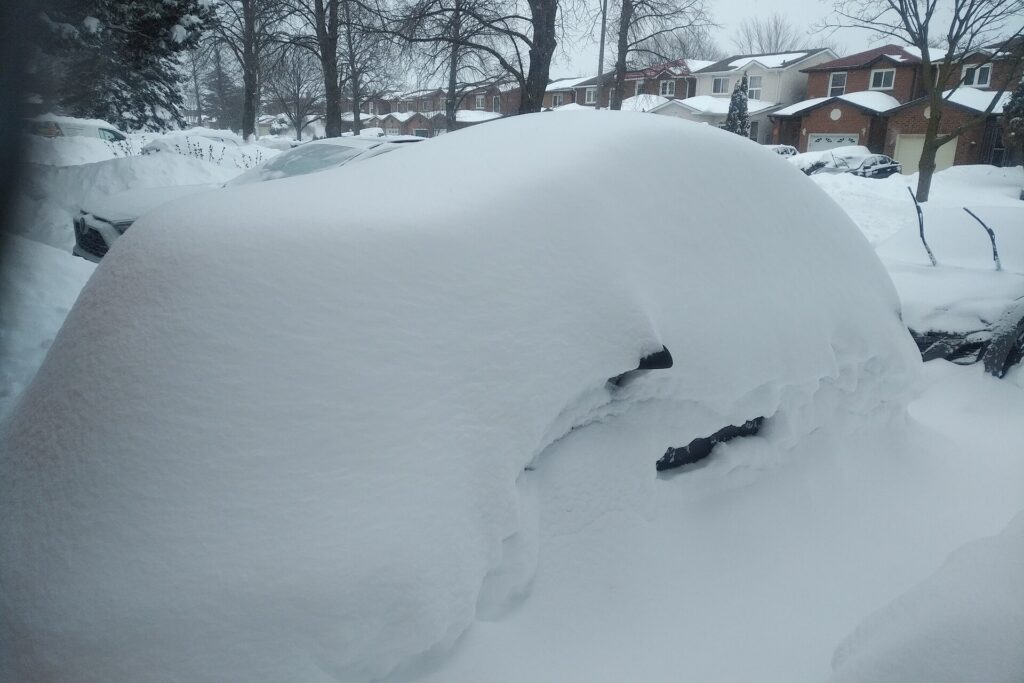
Iran spans an unusually wide climatic range for a single league. Khuzestan and the Gulf coast produce some of the hottest urban summer conditions on the planet, and on the coast the humidity keeps night temperatures high, which is the part that matters for players. Dry heat is survivable with fluid and shade. Humid heat blocks evaporative cooling, and no amount of water fixes that.
Six hundred kilometers to the northwest the problem inverts. Tabriz, Ardabil and the mountain provinces get hard frost, snow cover and short daylight. A pitch that is frozen at three in the afternoon is a safety question, not an aesthetic one.
The visible consequence is kick-off time. Across a season the starting hour drifts by two or three hours, late in summer and early in winter, and the drift is not uniform across the country on any given weekend. Two matches in the same round can start four hours apart for entirely rational reasons.
The mid-season pause is not only about weather
A break of several weeks in the coldest part of the year is usually explained as a weather measure, and weather is part of it. The rest is administrative. The winter registration window sits inside the pause, which means squads change while nobody is playing. Deferred medical work gets done. Clubs run a conditioning block that is impossible to run in a competitive week.
The pause is also the league’s shock absorber. Matches postponed in autumn for snow, air quality or fixture clashes need somewhere to go, and midweeks after the restart are where they go. A break that looks generous on paper is often half-spent before it begins.
The predictable side effect is that the restart looks like a different competition. Squads have new players, conditioning bases have moved, and form from November is a poor guide to February.
Nowruz, the fasting month and mourning days
Three separate calendars overlap here, and only one of them is the Gregorian one. The solar year begins at Nowruz, at the spring equinox, and the holiday period around it empties offices and fills roads for roughly two weeks. Attendance collapses, staff travel, and in most seasons the league thins its program rather than playing to empty stands.
The fasting month runs on the lunar calendar and therefore moves back around eleven days against the solar year, which means it drifts through the football season over a decade. When it lands in a playing period, kick-offs move to after sunset and training loads get rebuilt around a narrow eating and drinking window.
The mourning days of Tasua and Ashura are days of public commemoration, and competitive sport is not scheduled on them. Like the fasting month, they move against the solar calendar. A scheduler working two years ahead has to place these dates first and build the football around them.
One stadium, two landlords
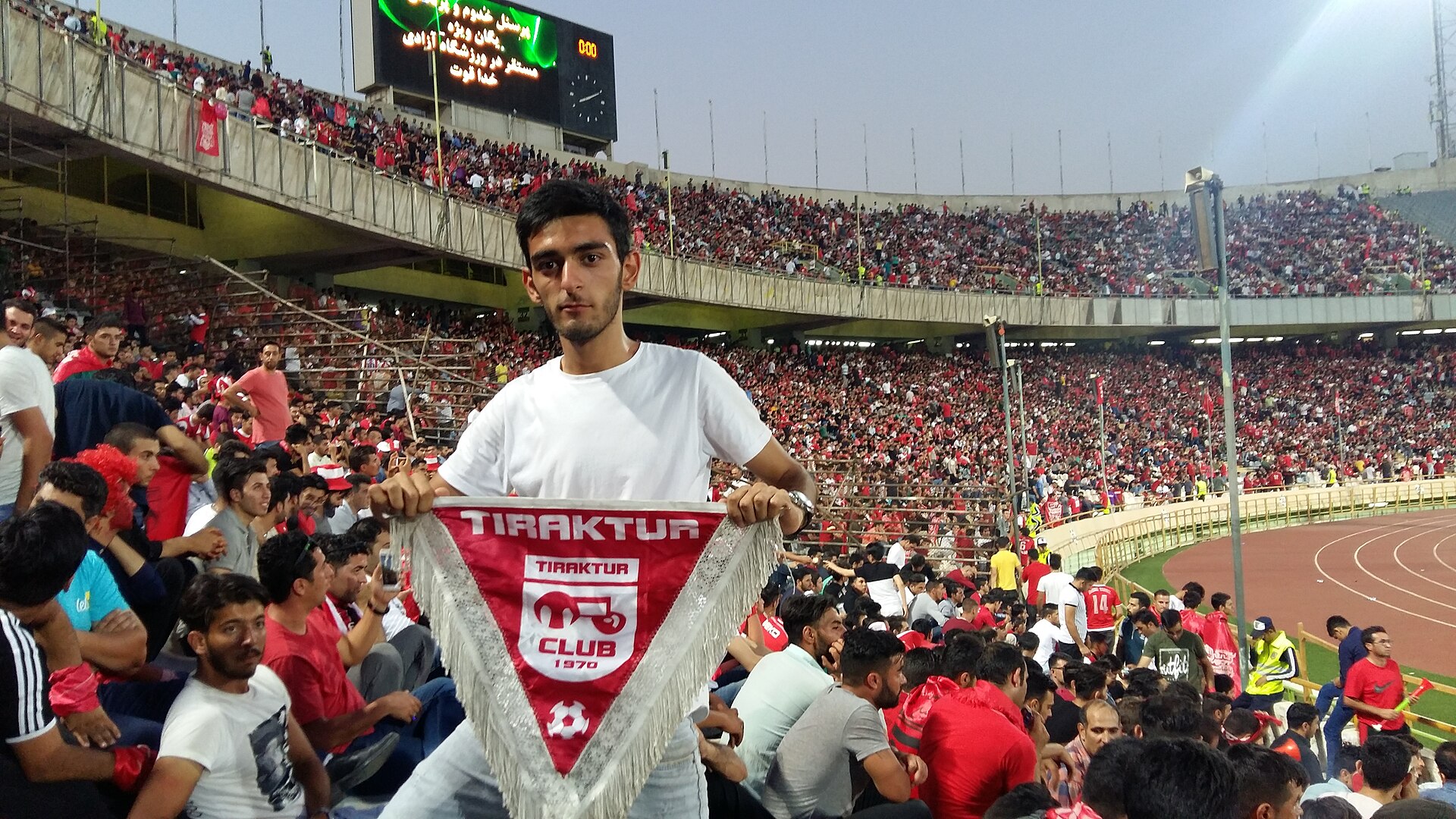
Tehran’s largest ground is home to both of the capital’s biggest clubs, which creates a constraint that has nothing to do with football and everything to do with turf. Two home matches cannot be staged on the same day, and stacking them on consecutive days damages a surface that has to last a season. The scheduler is therefore obliged to alternate, which locks in a pattern for two clubs and forces the rest of the round to arrange itself around it. The same clubs also produce the fixture that draws the largest crowd of the year, which brings policing and transport requirements of its own.
Smaller cities have a version of the same problem. Where one ground meets competition standard and three clubs across three divisions want to use it, the lower divisions get the leftovers, usually a weekday morning.
Borrowed venues add a second layer. A club whose own ground is under repair, or whose ground has failed an inspection, plays somewhere else, and that somewhere else already has its own occupants. One relocation can force four fixtures to move, which is why a single infrastructure problem in September is still distorting the calendar in December.
Distance is a scheduling input, not a footnote
The country is large enough that a trip from the northwest corner to the southeast is a serious journey by any means. Domestic flights exist but the network is not built around football, seat availability is finite, and a squad of thirty traveling with equipment is not a booking that can be made late.
Clubs therefore leave early. An away fixture consumes three days rather than an afternoon, and the schedule tries to avoid stacking two long trips in the same week for the same club. When it cannot, the second trip is where the damage shows: not in the result necessarily, but in the training week that never happened.
Regional pairing is the standard remedy. A club sent to the far south is given two fixtures in that half of the country within the same block where the rest of the list allows it, so one journey covers two matches. The saving is real and the constraint is severe: pairing only works if both intended opponents happen to be at home in adjacent rounds, which is a condition that fails more often than it holds.
Altitude is the quieter half of the same problem. Several first-tier venues sit well above the coastal cities, and a squad that trains at sea level and plays at height is dealing with a different session, not merely a longer trip. Clubs that can afford it move their arrival forward; clubs that cannot land the night before and hope.
What compression does to a squad
Three competitive matches inside eight days is the point at which physical preparation stops and maintenance begins. The practical floor for a full-intensity match turnaround is around three days, and below that the observable pattern is consistent across sports science literature: high-speed running volume falls, sprint counts fall, and soft-tissue injury risk climbs.
Squads answer with rotation, which requires depth, which requires budget. Where the budget is not there, the same eleven play, and the deterioration arrives later in the block rather than being spread across it.
The first casualty is never the match. It is the training content between matches. A congested week becomes recover, travel, play, and any tactical work a coach intended dies quietly.
How to read the Iranian football calendar as a supporter
Four checks explain most of what looks arbitrary. First, is the round inside an international window, and how many of this club’s players are away. Second, is the club in continental competition that week, in which case the domestic match is the second priority whatever anyone says publicly. Third, what is the kick-off time, which is a reliable proxy for heat and for broadcast demand. Fourth, which ground, because a shared or borrowed stadium explains a surprising share of odd scheduling.
Run those four checks and the Iranian football calendar stops looking like a series of decisions and starts looking like what it is: a set of simultaneous constraints with a small number of legal solutions. The competition regulations published each season set out the rules that govern postponements and replays, and reading them once is worth a season of speculation; the domestic competition framework is the document that decides what a scheduler is permitted to do.
A period-by-period reference
The table below is a pattern, not a promise. Divisions differ, and the first tier of Iranian club football, the Persian Gulf Pro League, carries constraints that the divisions below it do not, chiefly continental entry and broadcast obligations. Read the rows as pressures rather than as dates.
| Period | What binds it | What clubs feel |
|---|---|---|
| Late summer | Heat in the south; squads still forming after the summer window | Late kick-offs, heavy substitution use, low running volumes |
| Early autumn | First international window; continental matchdays begin | Split preparation; internationals absent from a full training block |
| Late autumn | Air quality in the capital; second window; accumulated congestion | Midweek rounds, postponement risk, rotation forced |
| Winter | Frost and snow in the northwest; the pause; registration window | Conditioning block, squad turnover, deferred medical work |
| Late winter | Restart plus catch-up of postponed matches | The most compressed stretch of the year |
| Early spring | Nowruz holidays and national travel | Reduced program, attendance dip, broken rhythm |
| Late spring | Run-in, returning heat in the south, further windows | Congestion against a thinning squad |
Frequently Asked Questions
Why do some rounds go ahead during an international window?
Because the obligation to release players falls on clubs, not on leagues. A league is allowed to play, and sometimes does when the calendar leaves no alternative. The clubs that lose the most players object, reasonably, and the compromise is usually a partial round or a round involving mostly clubs with few call-ups.
Is the winter break a fixed length?
No. It is a window with a planned length that gets eaten by postponements from earlier in the season. Its published start and end dates are best understood as intentions rather than guarantees, and clubs plan their conditioning blocks with that uncertainty built in.
Why do two matches in the same round start hours apart?
Heat, broadcast slots and stadium sharing, usually in that order. A southern venue in early season needs the latest slot available; a broadcaster wants its main match alone in the schedule; and two clubs sharing a ground cannot both kick off at six.
What happens to a match postponed for weather?
It goes into the pool of outstanding fixtures and is rescheduled by the competition organizer, generally into a midweek slot after the winter pause. The competition regulations set the notice period and the criteria, which is why the same weather produces a postponement in one venue and not in another.
Why do clubs in continental competition seem to play more league matches in short bursts?
Because their free midweeks are already spoken for. When the confederation’s matchdays are absent, the league uses those midweeks to catch up on the fixtures it moved earlier for the same club. The total is the same; the distribution is far worse.
Does the tournament calendar for national teams affect club scheduling beyond the windows?
Yes, in the years when a major international tournament sits in the summer. Preparation camps eat into the end of the domestic season and the start of the following one, and clubs supplying several internationals begin pre-season with an incomplete group. The international tournament cycle is the outer frame that everything else is fitted inside.
A fixture list is the most public document a league produces and the least understood. Read it as a solution to a constraint problem rather than as a statement of intent, and the odd Tuesday kick-off in Bandar Abbas stops being a grievance and becomes what it always was: the only remaining legal slot.