

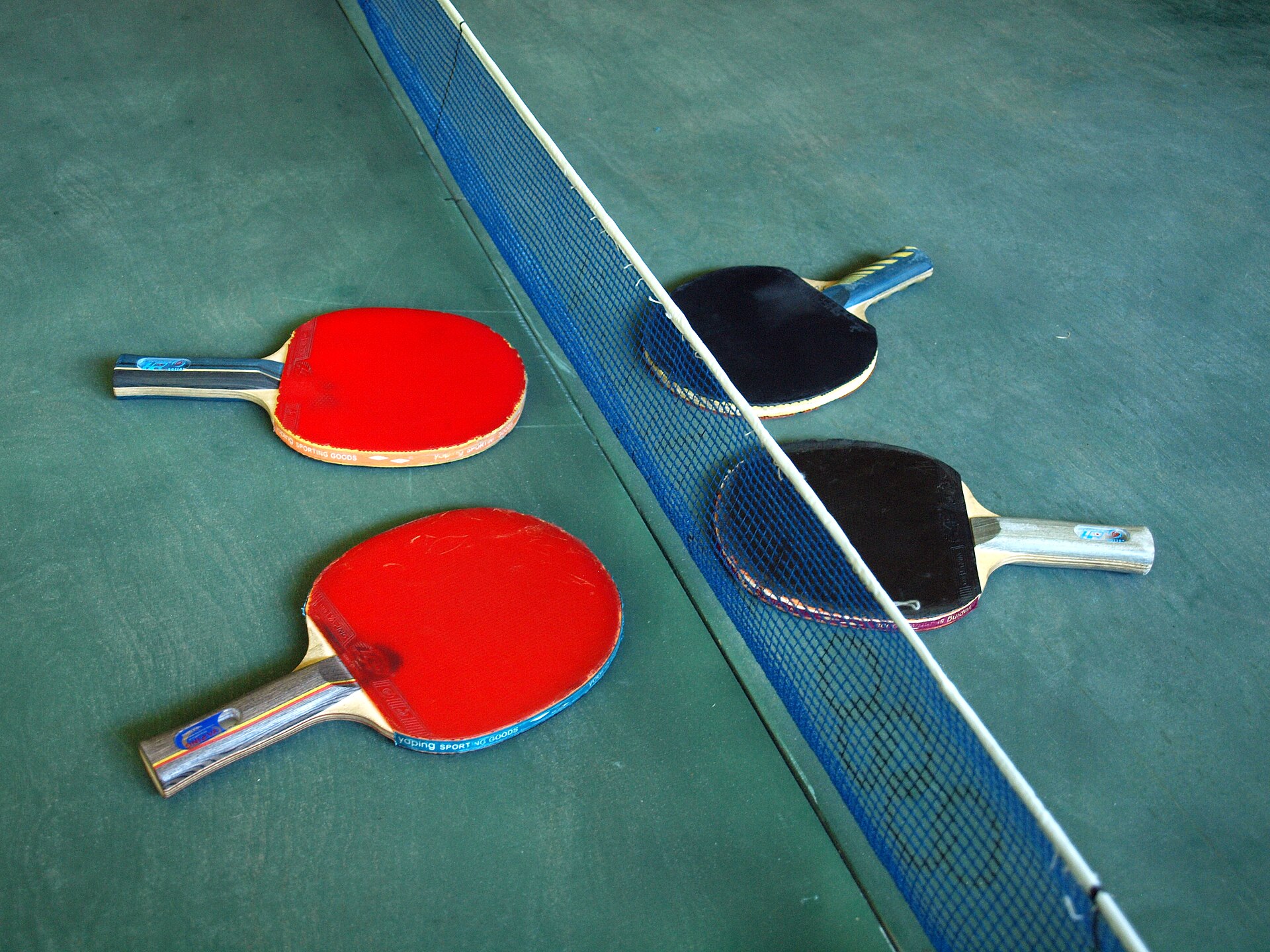
A school hall with two tables, a rolled-up net that never sits at the right height, and eleven children waiting for a turn. That is where most players in this sport begin, and it is also where most of them stop, because the hall is booked for volleyball on Sunday and the tables go back against the wall.
The gap between that room and a first-division fixture is not mainly a gap in talent. It is a sequence of practical filters, each of which removes a large share of the people who reached it: table access, cost, distance to a coach who knows the sport, competition that means something, and finally training volume that a school timetable cannot absorb.
What follows is the pathway described level by level, with the cost and the bottleneck attached to each stage. It is written for parents deciding whether to start, for players deciding whether to continue, and for anyone who has wondered why a country with enormous participation at the recreational end produces a narrow senior pool.
The pathway on one page
- Entry. School halls and municipal centres. Free or nearly so, and limited by shared use of the room.
- Club. A registered club with dedicated tables and a coach. The first real cost, and the first real coaching.
- Province. Provincial ranking events and age-group championships. The first competition that selects anyone.
- National age groups. Under-13, under-15 and under-19 competition, run to the international age structure.
- Domestic league. Club competition beneath and inside the top division, with the Super League at the top.
- The bottleneck. Coaches qualified above entry level, and hall hours. Not enthusiasm, and not tables.
How table tennis in Iran is organised, level by level
The structure has three layers that mostly do not talk to each other. Schools and municipal sports centres provide access. Registered clubs provide coaching and are the unit that enters competition. Provincial boards run the local calendar and the age-group championships that feed the national one, and the federation sits above all of it running the league and the national teams.
Table tennis in Iran benefits from one structural advantage most sports here do not have: the equipment is compact and indoor, so a table fits in a school corridor, a mosque annexe, a workplace recreation room or a community centre. Participation at the informal end is consequently very wide, far wider than the competitive pool suggests.
The disadvantage arrives immediately after. A table in a shared room produces a player who can rally; it does not produce a player who can serve with spin variation, read an opponent’s contact or move on the third ball. That requires a coach, a table available for several sessions a week, and someone to play against who is better. The pathway is the story of how few children reach all three at once.
The school hall is the entry point, and a narrow one
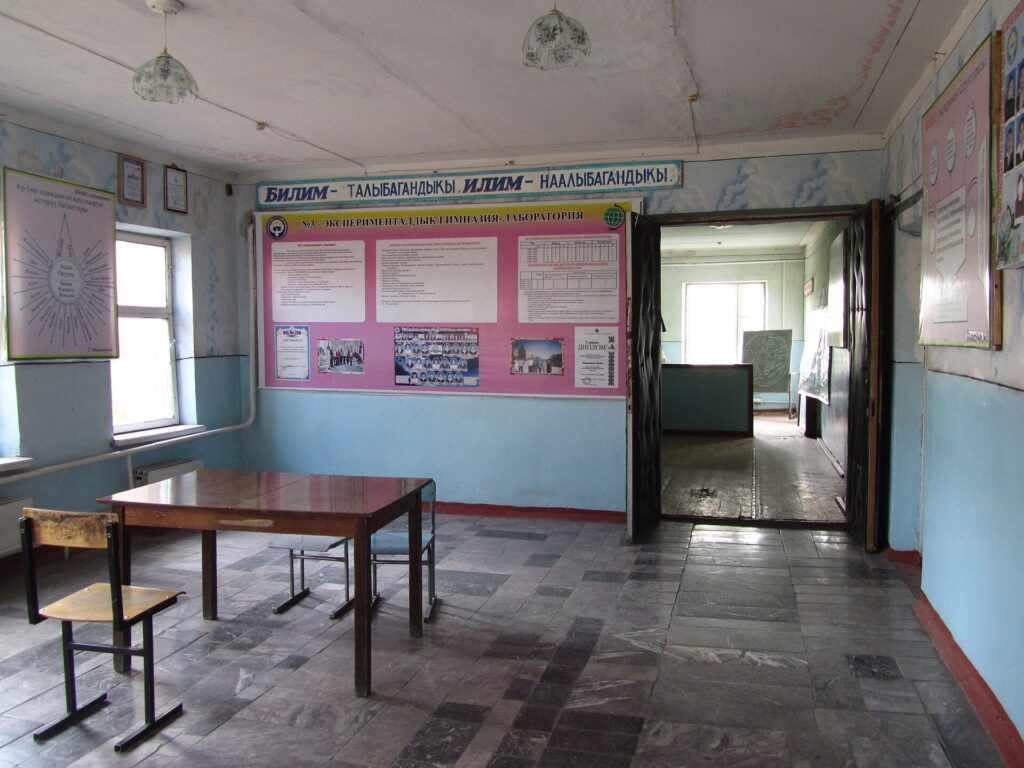
Physical education timetables allocate a fixed number of hours a week, and those hours are shared across every sport the school offers. Where the hall is also the assembly space, the exam room and the venue for the volleyball and futsal programmes, table tennis gets a slot rather than a season.
Equipment condition compounds it. A school table that has been folded, wheeled and stored for a decade is rarely flat, and a warped surface teaches a bounce that does not exist anywhere else. Nets are the other recurring problem: an incorrect net height changes the geometry of every stroke, and almost nobody checks it.
The schools that do produce players tend to share three features: a teacher with a personal interest in the sport, a permanent table that is not folded away, and a link to a local club that takes the interested children onward. None of those is a matter of funding, which is why the map of productive schools looks arbitrary until you know who teaches where. The wider question of what school sport actually delivers comes down to exactly this kind of detail.
What a club place actually costs a family
Joining a registered club is where the sport stops being free. The monthly fee is the visible cost and usually the smallest one. Around it sit transport to and from sessions several times a week, competition entry fees, travel to provincial events, and the equipment the club does not provide.
Transport is the item that decides most cases. In a large city, a club forty minutes away by public transport means an adult accompanying a child for three hours on a training night, several times a week, for years. Families with one adult available for that will continue; families without will not, regardless of how much the child wants to.
Distance also sorts the country. Provincial capitals have clubs with coaches and full-size tables. Smaller towns often have a table and an enthusiast, which is enough to start and not enough to progress, and the practical answer for a promising player is to move training to a larger city at fourteen or fifteen. That is a family decision rather than a sporting one, and it removes a proportion of the pool at exactly the age when specialised coaching starts to matter.
Equipment: where the money goes and where it does not
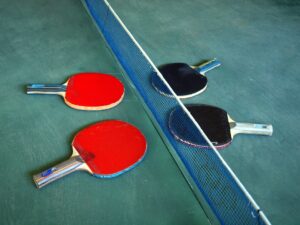
The bat is not one object. A competition setup is a wooden blade with a sheet of rubber glued to each side, chosen separately, and the rubber is a consumable. At serious training volume it loses grip and needs replacing every few months, which turns equipment from a purchase into a subscription.
Rules constrain the choice. Rubber has to appear on the governing body’s approved list, one side is red and the other black or a permitted contrasting colour, and blades must be predominantly natural wood. The ball is a 40 millimetre plastic sphere, standardised across the sport, and competition balls are graded. None of this is expensive relative to other sports; all of it is a recurring cost a family has to plan for.
What does not need to be bought is more interesting. Robots, video and specialised flooring are pleasant and not decisive. The two things that actually determine progress are table hours and a training partner of a similar or higher level, and neither can be purchased at a shop. Clubs that understand this spend on coaching time rather than on equipment, and the international federation’s own equipment rules are short enough to read in a single sitting.
Provincial competition is the first real filter
Provincial ranking events and age-group championships are where a player first meets opponents from outside his own club, and the effect is usually sobering. A player who dominates a club session can lose in straight games to someone with a serve he has never seen, because club training tends to produce familiarity rather than adaptability.
The age structure follows the international one: under-13, under-15 and under-19 categories, with an under-11 level where entries justify it. That structure has a known side effect. Within a single year band, children born early in the year are physically ahead of those born late, and selection at the youngest ages rewards maturity as much as skill.
Provincial results feed national age-group competition, and this is the point at which a player becomes visible to anyone beyond his coach. It is also the point at which the cost curve steepens, because national competition means travel, accommodation and time away from school for the whole family.
The league above the provinces
Club competition at national level is organised in divisions, with a top tier commonly known as the Super League and further divisions beneath it. Clubs are a mixture of institutional and municipal sides, and squads are small: a team fixture involves a handful of players, so a roster spot is genuinely scarce compared with a team sport.
The format concentrates the calendar. Rather than a fixture every weekend across nine months, the league is often played in blocks at a single venue over several days, which suits a sport where a match takes under an hour and a hall can run several tables at once. It also means a player’s competitive season is short and intense rather than continuous.
Overseas players appear in the top division, as they do in most domestic leagues in the sport, and the effect is the familiar one: the standard rises and the number of places available to developing domestic players falls. A young player’s route into a Super League squad usually runs through a lower-division club first, and the same logic applies on the women’s side of the competition structure, where the club network is thinner and the pathway correspondingly narrower.
The coaching bottleneck between junior and senior
The shortage in this sport is not tables and it is not children. It is coaches qualified beyond the entry level, and the gap appears at a predictable point: around fifteen or sixteen, when a player needs someone who can rebuild a technical fault rather than run a session.
Certification runs in levels, from an introductory qualification that equips a coach to run group sessions safely and competently, through to advanced levels that involve technical analysis, match strategy and long-term planning. Courses at the higher levels are held infrequently, cost more, and require candidates to travel, which means the coaches who hold them cluster in a few cities.
The consequence is a plateau that gets mistaken for a lack of talent. A player trains hard for two years without technical change because nobody in the hall can identify what needs to change. He is not short of ability or effort; he is short of a coach with the specific competence his stage requires, and that competence is distributed unevenly across the country.
Training volume is the number that separates the levels
The clearest difference between a good provincial player and a national-level one is not technique in isolation. It is hours. Serious junior programmes in this sport work on daily table time, often twice a day in blocks, with physical preparation alongside it. A club player training three evenings a week is not doing a smaller version of that; he is doing something different.
School timetables are the binding constraint, and the compromise most families reach is a morning session before school and a longer one at the weekend. Where a sports school or a supportive academic institution exists, the load becomes possible. Where it does not, the player either trains less or falls behind academically, and most choose the first.
There is a physical caution that belongs alongside this. High-volume racket training loads one shoulder, one elbow and one side of the trunk repeatedly, and overuse problems in young players are common and preventable. Any programme raising volume sharply should do so under supervision, with genuine rest days and a strength routine that addresses the asymmetry rather than adding to it.
Officials and umpires are the other shortage
A competition needs umpires, and umpires need training and a reason to keep turning up. Provincial events run on volunteers, usually coaches and parents, which creates an obvious conflict and an inconsistency of standard that players notice long before administrators do.
Service is where it shows. The service rules in this sport are precise and demanding to enforce: the ball has to be tossed near vertically from an open palm, from behind the end line, and visible to the receiver throughout. Enforcement varies enormously between events, and a player who has never had an illegal serve called learns a habit that will cost him at national level.
The remedy is unexciting and effective. A province that trains and retains a small group of qualified umpires raises the standard of every event it runs, at a cost far below anything else on the list. It is the cheapest improvement in the pathway and consistently the last one funded.
What each level demands
The table sets out the practical requirements at each stage. The scoring format is constant throughout: games to eleven points, two clear points required, service alternating every two points, and matches decided over the best of five or seven games. What changes is everything around the table.
| Level | Table hours a week | Coaching required | Main cost | Usual reason players stop |
|---|---|---|---|---|
| School hall | One to two | A teacher with interest | Effectively none | The hall is booked for something else |
| Local club | Three to five | Entry-level certified coach | Fees and transport | Travel time for the family |
| Provincial competition | Five to eight | Coach who travels to events | Entry fees and equipment renewal | Losing early and repeatedly |
| National age groups | Eight to twelve | Technical coach at intermediate level | Travel and accommodation | School conflict; coach not available locally |
| Divisional club league | Twelve or more | Advanced coach and a training group | Relocation for training | No senior squad place available |
| Super League | Daily, often twice | Full-time coaching and support | Time; the sport becomes the job | Small squads and overseas competition for places |
Frequently Asked Questions
What age should a child start if the aim is competition?
Somewhere between seven and nine is typical for structured coaching, mainly because the technical patterns are easier to build before habits set. Starting later is not disqualifying at recreational and provincial level. It becomes a real disadvantage at national age-group level, where opponents will have several years of daily table time behind them.
Is a full-size table necessary to train at home?
For rallying, yes; a smaller surface teaches a bounce and a timing that do not transfer. For everything else, no. Serve practice needs one end of a table and a bucket of balls, and footwork patterns, shadow strokes and physical preparation need no table at all. A player with limited access should spend club hours on rallying and home hours on the rest.
How much does the rubber choice actually matter for a junior?
Far less than the marketing suggests, and it matters in the wrong direction. Very fast or heavily spin-oriented rubbers hide technical faults by producing a result the player did not earn. Most coaches put juniors on controlled, forgiving equipment for years, and change it only when the stroke is reliable enough to justify the extra speed.
Can a player from a small town realistically reach the league?
It happens, and it usually involves relocating for training in the mid-teens or a coach in that town who is unusually well qualified. The obstacle is not scouting: provincial competition makes strong players visible quickly. The obstacle is the training volume and coaching standard available where they live.
How does this pathway compare with the newer racket sports?
The contrast is instructive. Newer racket sports growing quickly here depend on purpose-built commercial facilities and adult participation, while table tennis has enormous school-level reach and a thin competitive middle. The growth of padel is a facility story; table tennis is a coaching story.
Does university competition help a player continue?
It keeps players in the sport who would otherwise stop at eighteen, which is its main value. As a development route it is limited, because the competitive calendar is short and the training load is lower than a club programme. University sport works best alongside a club rather than instead of one.
The sport’s problem here is not the top of the pyramid and it is not the bottom. It is the two or three years in the middle, where a player needs daily table time and a coach who can rebuild a stroke, and where the number of places offering both is small enough to count.