

A second-tier club secures promotion in the spring. The celebration lasts a weekend. On the Monday, somebody in the office opens the competition regulations for the division above and starts a list, and the list is longer than anything the football department has ever been asked to produce.
Promotion is a sporting result that unlocks an administrative obligation. The club has bought the right to apply for a place in the tier above, and the application is judged against criteria that have nothing to do with the season just finished. Some clubs pass it comfortably. Some pass it after emergency spending. A few do not pass it at all.
What follows is the structure of the divisions, how promotion is decided within them, and the specific items a newly promoted club has to produce between the last match of one season and the first match of the next. It is a structural explainer rather than a report on any club.
What a promoted club has to produce in one summer
- A certified stadium meeting the top-tier standard, or a written agreement to use one that does.
- Professional contracts for a registered squad, replacing whatever informal arrangements existed below.
- Named staff with qualifications, including a head coach holding the required diploma and defined medical and administrative roles.
- Youth teams at the specified age groups, with coaches and a written development programme.
- Audited accounts and no overdue payables at the assessment date.
- A budget that survives the travel, because fixtures in the top tier cross the country rather than a province.
The Iran football league pyramid, tier by tier
The Iran football league pyramid is conventional in shape and unusual in the size of the step between its top two rungs. The first tier is the Persian Gulf Pro League, fully professional and nationally broadcast. Below it sits the second tier, the Azadegan League, which is professional in name and mixed in practice. Below that come the third and fourth national divisions, and beneath those the provincial leagues that form the base of the structure.
Two features distinguish the system from most European pyramids. The first is geography: the country is large, and the lower divisions are organised into regional groups to keep travel manageable, with the groups converging into a national stage only at the promotion end of the season. The second is ownership: a substantial share of clubs at every level are attached to a company, a ministry, a municipality or a provincial authority rather than to a private owner or a membership.
Those two features interact. A club promoted out of a regional group inherits national travel and, frequently, an owner whose budget was set for a regional competition. The gap between tiers is therefore financial and logistical before it is technical, and the technical part is the one everybody discusses. General material on promotion and relegation describes the sporting mechanism; the administrative one is where clubs actually fail.
How promotion is decided, and where the regulations do the deciding
Promotion from the second tier is settled on final league position, with the number of places set in the competition regulations for that season. The regulations also govern tie-breaking, and the order of criteria varies between competitions, which is why two clubs level on points can be separated by head-to-head record in one division and by goal difference in another.
Below the second tier the format is more involved. Regional groups produce qualifiers, the qualifiers meet in a national stage, and the promotion places are decided there. That structure means a club can dominate its group and still fail to go up, and it means the season’s decisive matches are played by clubs that have already travelled a long way to reach them.
The practical reading point is that the format is published before the season and is not always identical to the previous one. Anyone following a promotion race should read the current season’s regulations rather than assume last year’s, and the same applies to the number of clubs relegated, which is adjusted when the size of a division changes. The published rules for a top-tier season are the reference document for anything above the second tier.
The licensing file a promoted club suddenly needs
Clubs in the top tier operate under a licensing regime administered by the national association. Second-tier clubs are subject to a lighter version of it, and the step up is not incremental. A promoted club moves from a short compliance list to a full one, with a submission deadline that falls in the summer.
The file covers five areas: sporting, infrastructure, personnel and administrative, legal, and financial. Each contains items graded by severity, and the items graded most severely refuse the licence outright rather than attracting a sanction. A club that has never assembled such a file has to build the capability and the evidence in the same summer.
The sequencing problem is acute. Audited accounts require an auditor, who requires records; a stadium certificate requires an inspection, which requires the work to be finished; a coaching appointment requires a diploma the candidate either holds or does not. None of these can be compressed by working harder in August, which is why well-run second-tier clubs start the file in the winter, before they know whether they will need it.
Stadium: what the tier above asks that the tier below does not
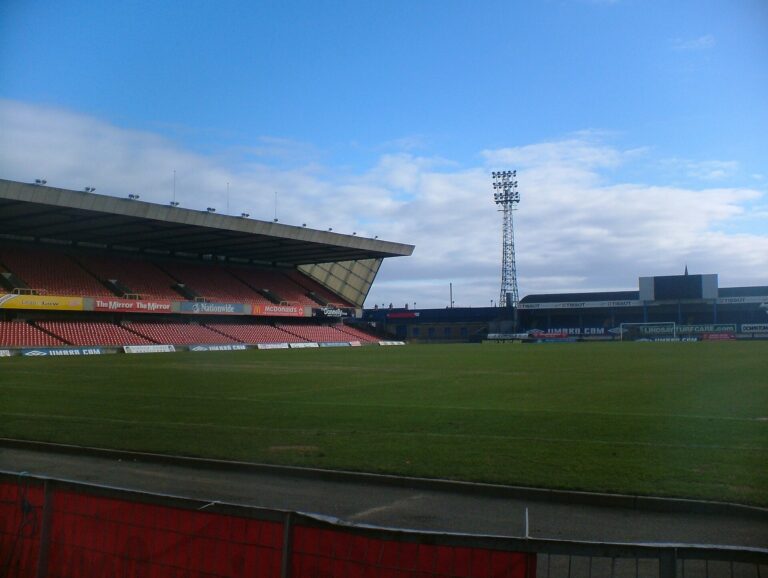
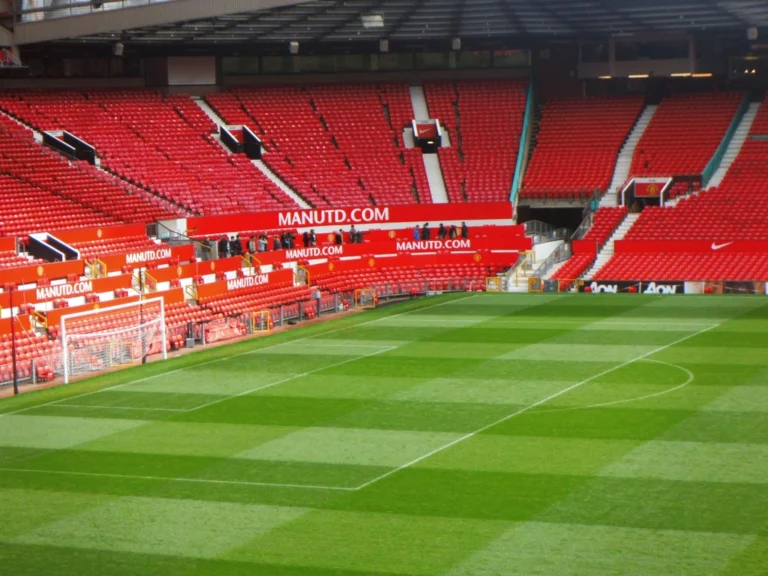
Infrastructure is the most common obstacle, and it is rarely about capacity alone. The top-tier standard covers the pitch surface and dimensions, individual fixed seats rather than terracing, floodlighting to a level that supports live broadcast, dressing rooms and officials’ facilities, a medical room with vehicle access, a doping control room, media positions, a press working area and a control room with a view of the stands.
Several of those items are slow rather than expensive. Floodlighting to broadcast level involves specification, procurement, installation and measurement, and the measurement can fail. Seat installation is quick and the structural work underneath it may not be. A pitch that has carried a second-tier season may need renovation that takes a full growing period.
The complication specific to this system is ownership. Most grounds belong to a municipality or a provincial authority rather than to the club, so the club requests work rather than commissioning it, and the timetable belongs to a public body with its own budget cycle. Where a club is fortunate enough to be attached to a stadium development programme, the promotion year is when that relationship is tested.
Squad: the jump from arrangements to contracts
Second-tier squads frequently contain players on part-time terms, on short verbal understandings, or combining football with other employment. Top-tier registration requires written professional contracts lodged with the association, and that alone reshapes a wage bill.
Recruitment then runs into a market problem. A promoted club is buying in the same window as established top-tier clubs, with less money, no continental prospect and a reputation that has not yet been made. It usually ends up recruiting late, from the group of players released elsewhere, which is the most expensive way to build a squad in quality terms even when it is the cheapest in cash.
The foreign player allocation is a further decision. A fixed number of registration slots is available, and a promoted club has to decide whether to spend them on immediate survival or to keep the wage structure intact. Clubs that spend all of the slots in a promotion summer are betting the season on scouting they have never had to do before, and clubs that spend none are usually the ones relegated straight back.
Staff, youth teams and the roles nobody has yet
Licensing turns a club into an organisation chart. The file requires named individuals in defined functions, each on a written contract, several with mandated qualifications: a head coach with the top diploma, an assistant, a head of youth development, youth coaches, a doctor, a physiotherapist, a security officer, a media officer and a finance officer.
Youth teams are the item most often underestimated. The criteria require teams at defined age levels, run under a written development programme with coaching and education provisions, and evidenced rather than asserted. A club that has run an informal youth section for years may be doing enough football and none of the documentation, which fails the same test as doing nothing.
The competence gap is real and it is fixable. Most promoted clubs can find the people; what they cannot do quickly is find people who have done the job at that level before. The wider difficulties in the age-group system, described in coverage of structural problems at under-23 level, are the same shortage seen from the other end.
Matchday operations, from stewarding to the broadcast feed
The tier above is televised, and television turns a matchday into a production. A club that has been running a gate, a turnstile count and a handful of stewards has to deliver camera positions, cable routes, a commentary position, a mixed zone, a press conference room and a kick-off time it does not choose.
Security scales at the same moment. Crowd sizes rise, visiting support arrives from further away, and the safety plan has to be agreed with the local authority against a standard written for the top division. Stewarding numbers, segregation, evacuation timings and a control room with sightlines into the stands all become licensing items rather than good practice.
None of this is glamorous and all of it is chargeable. The operating cost of a top-tier matchday is a multiple of a second-tier one, it is incurred whether the crowd arrives or not, and it is the line most frequently left out of a promotion budget written by people whose experience is of the division below.
Money: the revenue rises and the costs rise faster
| Line | Second tier | First tier | Effect on a promoted club |
|---|---|---|---|
| Travel | Regional, mostly by road | National, frequently by air | Largest single new cost |
| Wages | Mixed and part-time | Full professional contracts | Step change, not a percentage |
| Stadium | Basic certification | Full broadcast standard | Capital cost in one summer |
| Staff | Small, multi-role | Named roles with qualifications | New salaries and new contracts |
| Central revenue | Minimal | Broadcast and competition income | Arrives later than the costs |
| Sponsorship | Local or parent company | National exposure | Depends on results, not on promotion |
The timing mismatch in the last two rows is the mechanism behind most promotion crises. The costs land in June and July; the revenue arrives across the season, and part of it arrives on the strength of performances that have not happened yet. A club that funds the summer from expected income is one poor autumn from an arrears problem, and arrears are a licensing issue as well as a cash one. The financial profile of an established club such as a well-backed provincial side in the top tier is not a guide to what a newly promoted one can carry.
The build sequence, working backwards from the deadline

- December. Read the licensing criteria for the tier above, whatever the league position. Identify the items with procurement lead times.
- January. Appoint an auditor and get the records into a state an auditor can work with.
- February. Commission the stadium assessment. Find out what fails before it matters.
- March. Document the youth section: age groups, coaches, qualifications, the written programme, medical records.
- April. Map the payables position against the assessment date and negotiate written deferrals where needed.
- May. Confirm the head coach’s diploma status and identify the named roles the file requires.
- June. Submit. Then recruit, with the licence question already answered rather than hanging over the squad.
Clubs that follow something like this sequence spend the promotion summer on football. Clubs that begin in June spend it on paperwork and recruit whoever is left in August, which is a sporting decision made by an administrative failure.
What happens when a promoted club cannot comply
The outcomes vary by which item fails. A stadium that cannot be certified in time is usually solved by a temporary arrangement at another certified ground, at a cost in travel, revenue and support. A personnel gap is normally correctable within a deadline. A financial failure, particularly overdue payables, is the one with no quick remedy.
Where a licence is refused outright, the regulations determine what happens to the place, and the possibilities range from the promotion passing to the next eligible club to the club being admitted subject to conditions and monitoring. What does not generally happen is a season delayed while a club catches up; the calendar is fixed and the competition starts without it.
The consequence that lasts longest is reputational and financial rather than sporting. A club that spends a promotion summer in emergency mode carries the debt into the season, and a squad recruited in the last week of the window carries the deficit onto the pitch. Immediate relegation follows often enough that the pattern has its own vocabulary in every league that has a pyramid.
Frequently Asked Questions
How many clubs are promoted each season?
The number is set in the competition regulations for that season rather than fixed permanently, and it changes when the size of a division is adjusted. Checking the current regulations is the only reliable method; assuming last season’s number is how most promotion-race arguments start.
Can a club refuse promotion?
In practice a club that cannot meet the criteria will not be licensed, which produces the same outcome without anyone declining anything. Formally declining a place is unusual and the regulations generally treat it as a failure to comply rather than as a choice.
Is the second tier professional?
Partly. It operates as a professional competition and contains clubs with very different financial models, some fully professional and some running mixed arrangements. That variation is exactly why the licensing step at promotion is so large for some clubs and routine for others.
What is the single most common reason a promoted club struggles?
Late recruitment. The licensing work absorbs the summer, the squad is completed in the final days of the window, and the team plays the first two months without a settled shape. It is an administrative cause with an entirely sporting effect.
Do the lower divisions use play-offs?
The third and fourth tiers are organised in regional groups feeding a national stage, so the decisive matches function as a play-off even where they are not named one. The exact structure is published each season and is worth reading rather than inferring.
Where can a supporter check a club’s licensing status?
Licensing decisions are taken by the national association and are not always published in detail, so the practical sources are the association’s competition announcements and the club’s own statements about stadium and registration matters. Background on the top division itself is available through general references such as the Persian Gulf Pro League entry, which covers the structure rather than the compliance file.
The football part of promotion is decided over a season by players. The rest of it is decided over a summer by a small number of people with a checklist, and the clubs that stay up are usually the ones who started reading that checklist while the season was still in progress.