


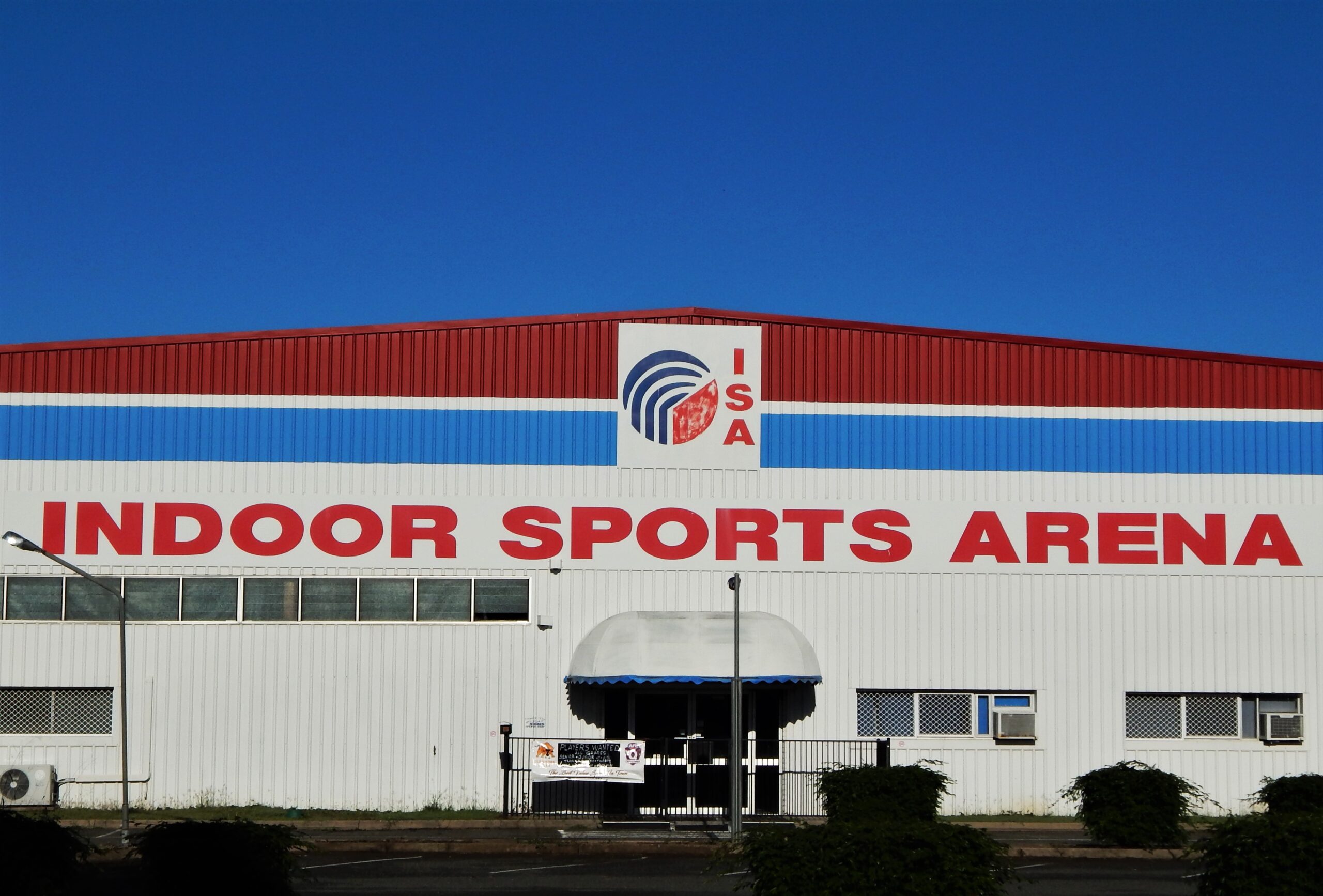
An arena does not host a league. It hosts an evening. Between one evening and the next, a floor is swept and remarked, a net is taken down and two hoops are lowered, a scoring console is reprogrammed, and a different set of officials is issued a different set of dressing rooms. The building is the scarce resource, not the calendar.
Through the autumn, three indoor leagues want the same halls on the same nights in the same handful of cities. Volleyball, basketball and futsal are separate competitions with separate federations and separate broadcast negotiations, and they overlap almost completely in venue requirements.
This is how that overlap is resolved in practice, what it forces each competition to concede, and how to plan a month of watching around it without relying on a preview that will be out of date by the second round.
What shares a building, and what does not
- Shared. The floor, the seating bowl, the dressing rooms, the officials’ room, the parking and the local stewarding contract.
- Not shared. Court markings, net or hoop hardware, scoring consoles, and the technical tables each federation specifies.
- The bottleneck. Evenings. There are far fewer usable evening slots than there are fixtures wanting them.
- The second bottleneck. Broadcast. A hall can host an afternoon match; a television slot cannot be created on request.
- The compromise. Afternoon kick-offs, split rounds, and midweek fixtures in the smaller of two city venues.
- What to check. The venue name, not the date. A fixture that moves usually moves buildings first.
The Iran indoor sports season, league by league
The Iran indoor sports season is really three calendars running in parallel from early autumn to spring, each with its own logic. Volleyball opens first and carries the largest domestic audience, with a league structure built around weekend rounds and a long regular season before playoffs.
Basketball opens shortly afterwards into the same buildings, with a schedule that leans more heavily on midweek fixtures because it has more matches to fit and less priority in the venue queue. Futsal is the third claim, and the one most often displaced, despite drawing crowds that would embarrass several outdoor competitions.
Layered over all three are national-team windows, continental club competitions and age-group championships, each of which removes players and sometimes removes buildings. Understanding the season means holding three schedules in view at once and knowing which yields when they collide. Anyone following only one code can work from the relevant rulebook, such as the volleyball regulations, and still be surprised by a venue change.
One floor, three sets of lines
A multi-purpose hall floor carries the markings of every sport it hosts, usually in different colours, and the result is a surface that looks chaotic on television and is entirely legible to a player. The lines are permanent; what changes between events is the hardware.
Volleyball needs floor sockets for the net posts and a free zone around the court that is larger than the court itself. A basketball court needs backboards, either wall-mounted, ceiling-suspended or on rolling stanchions, and a shot clock at each end. Futsal needs goals anchored so they cannot shift, and a surround that keeps a ball in play at speed.
The free-zone requirement is the one that creates most conflicts. A hall built with seating close to the court can host basketball comfortably and struggle to provide the run-off a volleyball match needs, which is why some venues host one code and not another despite having plenty of capacity.
The turnaround between two different nights
Converting a hall is a defined operation with a defined duration, and the duration is what decides whether two events can share a day. Taking down a volleyball net, removing posts, capping the floor sockets, rolling out basketball stanchions or lowering suspended backboards, and reprogramming the scoring and shot-clock system is straightforward work that still takes hours with a full crew.
Add to that the parts nobody photographs. Advertising boards belong to different rights holders and have to be swapped. Technical tables are specified differently by each federation. Dressing rooms have to be cleaned and reallocated. The medical position and the anti-doping room may sit in different places depending on the competition’s own requirements.
None of it is difficult. All of it takes time and a crew, and the crew is usually employed by the venue rather than by any of the three leagues. That is why the practical limit is one competitive event per hall per day, and why a doubleheader across two codes is rare even where it would sell.
Why one hall cannot serve two matches in an evening
Supporters reasonably ask why a building that seats several thousand cannot host a match at five and another at eight. The obstacles are mostly not sporting.
The first is the turnaround described above, which cannot be completed with an audience in the seats. The second is crowd management: emptying a hall and refilling it with a different set of ticket holders requires two separate security operations and a gap between them that swallows most of the time saved.
The third is broadcast. Two matches back to back need two production slots, and the second one runs into prime-time commitments made elsewhere. The fourth is officiating: referees, delegates and technical staff for two competitions have to be present, accommodated and paid, and the federations do not share those budgets.
The exception proves the rule. Two matches of the same code on the same day in the same hall is entirely normal, because nothing has to be converted between them, and finals weekends in every indoor sport are organised exactly that way. It is the change of code, not the change of teams, that costs the day.
There is also a maintenance argument nobody outside the building makes. A floor that hosts two full events in twelve hours is cleaned twice, marked twice and stressed twice, and venue managers who are responsible for the surface for the rest of the season are conservative about it for reasons that have nothing to do with either league.
Seating, sightlines and the capacity question
Capacity is quoted as a single figure and behaves as several. A hall listed at a given number seats that many for basketball, fewer for volleyball once the free zone is respected, and a different number again for an event with a raised stage or a temporary technical area.
Sightlines vary by code as well. Volleyball rewards elevation, because the play is vertical and the ball spends time above the net where a low seat cannot follow it. Basketball tolerates low seating better. Futsal is the most forgiving of the three and is often the code that ends up in the smaller secondary hall for exactly that reason.
These differences explain apparently strange scheduling decisions. A federation that moves a well-supported fixture from the largest hall in a city to a smaller one is not always downgrading it; sometimes it is choosing the building where the sport can actually be watched.
Broadcast slots are scarcer than courts
There are more usable halls in the country than there are evening broadcast slots for indoor sport, which inverts the intuitive picture of the problem. A fixture can be staged almost anywhere; it can only be televised in a small number of windows.
Those windows are allocated across the whole sporting output, and indoor competitions are competing not only with each other but with football, which will take the prime evening slot on any weekend where it wants one. The residue is early evenings, afternoons and midweek.
The consequence for a follower is practical. A televised fixture is more likely to move than an untelevised one, and it usually moves to accommodate a production constraint rather than a sporting one. Coverage of a competition like continental basketball qualification takes priority over any domestic round in the same window.
Fixture clashes inside the same city
The sharpest conflicts are local. Where two clubs from different codes share a city and a venue, their home fixtures cannot be on the same night, which means one of the two calendars is being written around the other before either federation begins.
Resolution is usually by seniority and by audience. The competition with the larger local following gets the weekend evening; the other takes the afternoon or the midweek. That is a rational allocation and it produces a visible inequality, because afternoon attendance is lower in every code and in every country.
It also affects the clubs’ finances asymmetrically. A club permanently scheduled into afternoon slots earns less at the gate and less from local sponsorship, and the gap compounds across a season without anyone having made a decision to disadvantage it.
National-team windows empty the calendar
All three codes pause for international commitments, and the pauses do not coincide. A volleyball window, a basketball qualification window and a futsal championship can fall in three different weeks of the same month, producing a stretch where at least one league is always suspended.
For clubs, the disruption is the familiar one: players leave, training groups shrink, and the restart looks like a different competition. For venues, the effect is the opposite of helpful, because the freed evenings arrive in the wrong weeks and cannot be used to catch up on postponed fixtures from a different code.
Age-group championships add a further layer. A youth tournament occupies a hall for consecutive days rather than for one evening, which is far more disruptive to a shared venue than a single senior fixture. Programmes like the ones behind the women’s futsal set-up depend on exactly those blocks of days.
Travel between provinces on a midweek round
Indoor leagues cover the same distances as football and with smaller budgets. A midweek round that sends a team from the northwest to the southeast is a two-day operation by road or an expensive one by air, and the squad returns to train on the day it should be recovering.
Because indoor squads are smaller, the load is concentrated. A volleyball side plays six or seven starters through most of a season, and a basketball rotation is not much deeper. Rotation is therefore a weaker tool than it is in football, and travel fatigue lands on the same bodies week after week.
The scheduling response, where it exists, is to pair away fixtures geographically so that a long trip covers two matches. That helps the travelling club and complicates the venue calendar for two hosts at once, which is the pattern of this entire problem.
What each code asks of the same hall
| Requirement | Volleyball | Basketball | Futsal |
|---|---|---|---|
| Fixed hardware | Net posts in floor sockets | Backboards and shot clocks | Anchored goals |
| Space beyond the court | Large free zone required | Moderate | Moderate |
| Ceiling height | Critical | Important | Important |
| Best sightlines | Elevated seating | Low or elevated | Low seating acceptable |
| Typical slot | Weekend evening | Weekend and midweek | Whatever remains |
| Turnaround from previous event | Hours | Hours | Hours |
Planning a month of viewing
The reliable method is to work from venues rather than from fixture lists. Pick the two or three halls within reach, find what each is hosting across the month, and accept that a date on a federation website is a proposal until the venue confirms it.
Three habits help. Check the venue name every time, because a moved fixture usually changes buildings. Treat televised weekend evening fixtures as the most likely to shift. And assume that any week containing an international window will lose at least one round somewhere.
Done that way, a month of indoor sport is entirely followable. Done from a printed calendar in September, it will be wrong by the third week, and the error will look like disorganisation when it is really three federations negotiating over the same floor.
Frequently Asked Questions
Why do indoor fixtures change venue so often?
Because the building is shared. When a hall is committed to another competition, a maintenance job or an international event, the fixture moves rather than the date, and the alternative venue is usually smaller.
Can a hall host two different sports on the same day?
Rarely. The conversion between codes takes hours with a full crew and cannot be done with spectators present, and two events also require two security operations, two sets of officials and two broadcast slots.
Why does futsal so often get the worst slots?
It has the least leverage in the venue queue and the most forgiving sightline requirements, so it is the code that can be moved to a smaller hall or an afternoon without making the match unwatchable. Crowd size is not the deciding factor.
Do all three indoor leagues pause at the same time?
No. Each code has its own international windows, which fall in different weeks. The practical result through autumn is that at least one of the three is usually suspended while the others play.
What is the most reliable way to check a fixture?
Confirm the venue rather than the date, and check it again in the final week. A fixture that has been moved almost always shows the change at the venue first, because the building’s own calendar is what caused it.
Follow the buildings and the season stops looking arbitrary. Three competitions, one floor, and an evening that only one of them can have.