



A club signs three players in July and cannot register any of them. The paperwork is complete, the medicals are done, the shirts have numbers. The obstacle is a decision issued months earlier about money owed to a former player, and until that money moves, the squad list is closed.
Registration bans are described in the press as punishments, which is only half right. They are enforcement tools. The governing body has no power to seize a club’s bank account, so it uses the one lever it does control: access to the transfer system. The debt is the cause; the closed window is the pressure.
What follows is the mechanism from the first missed payment to the moment a club can sign again, and what the intervening period does to a squad that has to keep playing through it.
From a missed payment to a frozen window
- The origin. Unpaid wages, an unpaid transfer instalment, training compensation or solidarity contribution, or costs awarded in a dispute.
- The decision. A judicial body of the world governing body orders payment within a set period, with a stated consequence for non-compliance.
- The sanction. A ban on registering new players, domestically and internationally, for a defined number of consecutive registration periods.
- The scope. It stops new registrations. It does not void existing contracts or remove players already on the list.
- The exit. Payment. The ban lifts on proof that the outstanding amount has been settled, even mid-window.
- The cost. A squad that shrinks by attrition for two windows while every rival replaces its losses.
Where the debt usually comes from
Four sources produce most cases. The largest is unpaid salary to a player or coach who has left, taken the club to the relevant body and obtained a decision. The second is an unpaid instalment on a transfer fee, where a club agreed to pay in three or four tranches and stopped after the first.
The third is training compensation and solidarity contribution: the payments owed to the clubs that developed a player when he moves between associations. These are frequently overlooked entirely, because the buying club does not think of them as part of the deal and the developing clubs are often small and slow to claim.
The fourth is procedural costs and interest awarded on top of any of the above. That last category catches clubs out, because a club that finally pays the principal and ignores the interest has not complied, and the sanction remains available.
The decision that turns a debt into an obligation
A private debt between two parties is a contractual matter. What converts it into something with sporting consequences is a decision by a competent body, usually the chamber of the world governing body that handles player status and disputes, or an arbitral award on appeal.
The decision does three things. It establishes that the money is owed and how much. It sets a deadline for payment, typically a defined number of days from notification. And it states the consequence of missing that deadline, which is where the registration ban is written in.
Once the deadline passes without payment, the file moves to the disciplinary side, and the sanction is applied on the creditor’s request rather than automatically. That request is a step clubs sometimes forget exists: a creditor who never asks may never see the ban imposed, which is why some long-standing debts produce no visible consequence at all.
The FIFA transfer ban explained in one sequence
The FIFA transfer ban explained without the file numbers is a chain of five links. A debt exists. A judicial decision confirms it and sets a deadline. The deadline passes. The creditor requests enforcement. A disciplinary body imposes a ban on registering new players for up to three entire and consecutive registration periods, and warns that failure to pay may bring further sanctions.
Two features of that chain are commonly misunderstood. The first is that the ban is conditional throughout: it exists to force payment, and it disappears the moment payment is made. The second is that the ban attaches to the club as an entity, so a change of president, board or legal representative does not reset it.
The regulatory framework sits with the world governing body and applies uniformly across member associations, which is why the same mechanism produces the same headlines in leagues with entirely different domestic rules.
What three registration periods actually means

A registration period is a transfer window, not a season. Three entire and consecutive periods therefore covers roughly eighteen months in a league with a summer and a winter window, and the word entire matters: a ban imposed halfway through a window does not consume that window, it starts at the next full one.
That detail is worth understanding because it changes the negotiation. A club sanctioned in October has the rest of the autumn to settle before the count starts, and clubs frequently pay in exactly that gap.
The practical effect over three windows is severe and cumulative. Window one is survivable because the squad is intact. Window two is where the losses show, because contracts have expired and cannot be replaced. Window three is where the squad list falls below what a competitive season needs. Registration deadlines under the domestic competition rules keep running normally throughout; the club simply cannot use them.
What the ban does not stop
The scope is narrower than the reporting suggests, and knowing the boundaries is how a sanctioned club survives. Existing contracts remain valid, and players under contract keep playing. Contract renewals with players already registered are generally permissible, because no new registration is being created.
Players can still leave. That is the asymmetry that makes the sanction bite: the club can lose squad members through expiry, mutual termination or a sale, and cannot replace any of them. A ban is a one-way valve.
Promotion of academy players to the senior list is the one meaningful channel that often stays open, subject to how the domestic association handles first registrations of a club’s own trained players. Clubs under sanction lean on it heavily, and clubs without an academy discover they have no lever at all.
Bans that come from the rules on minors
A second family of registration bans has nothing to do with debt. The rules restricting the international transfer of players under eighteen are deliberately obstructive, and clubs that register foreign minors outside the narrow permitted exceptions are sanctioned for it.
These cases differ in an important way: there is no payment that ends them. A debt-based ban has an exit route the club controls; a minors-based ban runs its stated term. That makes them harder to plan around, and it is why compliance staff treat under-eighteen registrations with far more caution than the transfer fees involved would suggest.
Both types produce the same visible outcome, which is why coverage often conflates them. The distinction only becomes obvious when one club settles a debt in January and signs immediately, and another waits out a year.
Lifting it: payment is the only reliable route
The clean exit is payment in full, including interest and costs, with proof submitted to the body that imposed the sanction. On that proof, the ban is lifted, and it can be lifted in the middle of a window, which is why sanctioned clubs sometimes complete signings in the last days of a transfer period.
Partial payment does not work. Neither does a payment plan agreed privately with the creditor unless the creditor formally withdraws the request for enforcement. A settlement agreement is common and is the route many clubs take, but it has to be communicated properly or the sanction stays in place while the club believes it is resolved.
Where a club genuinely cannot pay, the practical outcome is a negotiated discount. A creditor holding an unenforceable debt against an insolvent club often prefers a fraction now to the full amount never, and the ban is the pressure that brings both sides to that conversation.
Appeal, suspension and the clock
A club can appeal, and an appeal to the relevant arbitral body can in some circumstances suspend the effect of a decision while it is heard. That possibility is worth less than it sounds. Suspension is not automatic, it has to be requested and justified, and an appeal that fails leaves the club where it started with more costs and less time.
The timing is what matters. Proceedings take months, windows do not wait, and a club that appeals rather than settling in the autumn can find itself entering the summer window still sanctioned. Appeals to the sport’s arbitral court are a legitimate route where the underlying decision is genuinely disputed, and a poor tactic where it is not.
What it costs a squad over two windows
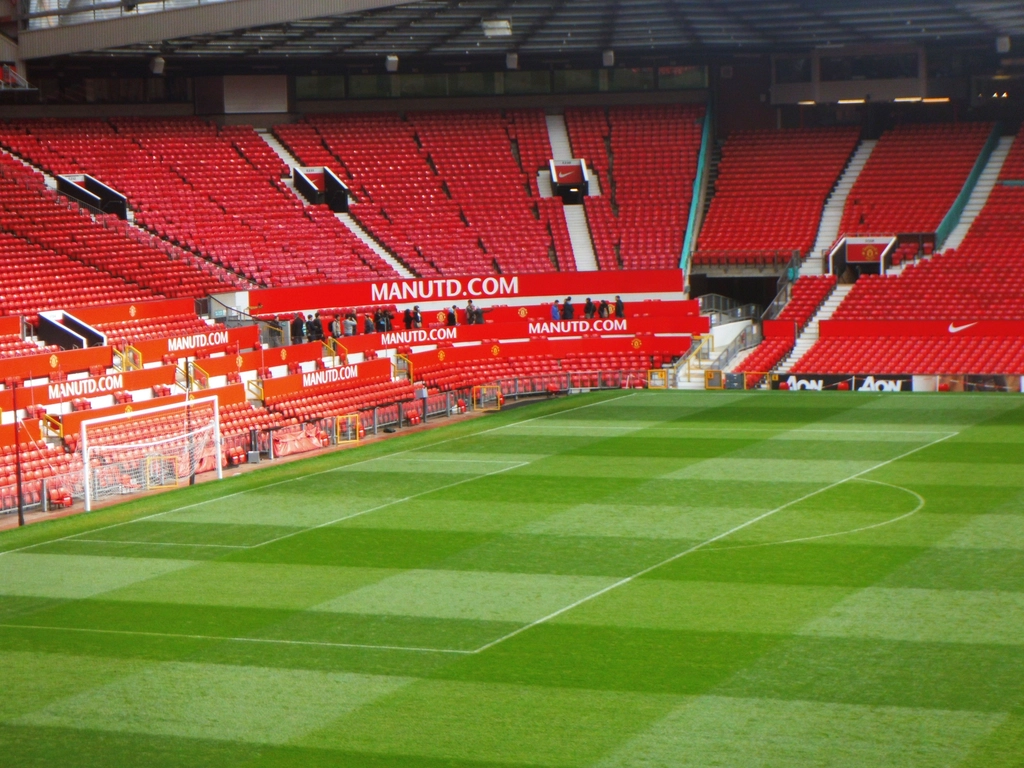
The sporting damage does not arrive as a single blow. It accumulates in a pattern that is easy to predict and difficult to prevent.
The first window is quiet. The squad is intact, the coach manages, and results are normal. The second window is where the structure fails: contracts expire, one or two players are sold to raise cash, and nothing comes in. A squad that started with twenty-four available senior players is at eighteen, with two positions covered by a single specialist.
An injury then becomes a positional crisis rather than an absence, and the fixture list does not adjust. By the third window the coaching staff are selecting from what exists rather than from what is needed, and the results follow. Squad building under registration constraints is a recurring problem across the confederation, visible in cases like the continental registration disputes that reach the same bodies.
The check that should happen before a signing, not after
Every one of these cases is preventable at one specific moment: before the club commits to a wage it has not budgeted. The check is unglamorous and takes an afternoon. What decisions are outstanding against the club, what deadlines attach to them, what interest is accruing, and what training compensation is owed on players signed in the last two seasons.
The training compensation item is the one that gets missed most often, because it is not a debt anyone invoiced at the time of the transfer. It becomes visible only when a developing club claims it, sometimes a year or more after the player arrived, and by then the money has been spent on something else.
A club that runs this check properly also knows the value of its own claims. Registration sanctions work in both directions, and a club owed an unpaid instalment by a buyer has a lever it frequently never uses because nobody in the building knows the process exists. Agents and intermediaries handle a great deal of this in practice, which is why the contractual side of representation matters more to squad building than it appears to.
The habit that separates well-run clubs is boring: a single register of every obligation with its deadline, reviewed before each window rather than when a letter arrives. Clubs that keep one rarely appear in these cases. Clubs that do not appear repeatedly.
A timeline from claim to clearance
| Stage | Who acts | What changes |
|---|---|---|
| Claim filed | Player, coach or club owed money | Nothing yet; the club can still register |
| Decision issued | Judicial body | Debt confirmed, payment deadline set |
| Deadline passes | Debtor club, by inaction | File becomes enforceable |
| Enforcement requested | Creditor | Disciplinary process opens |
| Ban imposed | Disciplinary body | Registrations blocked for up to three full windows |
| Payment proven | Debtor club | Ban lifted, including mid-window |
Frequently Asked Questions
Can a banned club still play its registered players?
Yes. The sanction blocks new registrations only. Every player already on the squad list continues normally, and renewals with those players are generally possible because no new registration is being created.
Does a change of ownership cancel a transfer ban?
No. The sanction attaches to the club as a legal entity, not to the individuals running it. A new board inherits the debt and the ban together, which is one reason unresolved claims make a club so difficult to sell.
How quickly can a club sign again after paying?
Once payment is proven to the body that imposed the sanction, the ban is lifted, and it can be lifted during an open window. Clubs have completed signings within days of settling, which is why some deals appear abruptly at the end of a period.
What is the difference between a debt ban and a minors ban?
A debt ban ends when the money is paid, so the club controls the exit. A ban imposed for breaching the rules on registering under-eighteen players runs its stated term regardless of payment, which makes it far harder to plan around.
Why do some clubs owe money for years without being sanctioned?
Because enforcement is usually requested rather than automatic. If the creditor never asks the disciplinary body to act, or accepts a private arrangement, the decision can sit unenforced. The debt remains, and so does the risk of it being activated later.
The lesson clubs draw too late is that the cheapest moment to deal with a claim is when it is still a claim. Once it becomes a decision with a deadline attached, the price stops being the money and starts being the squad.