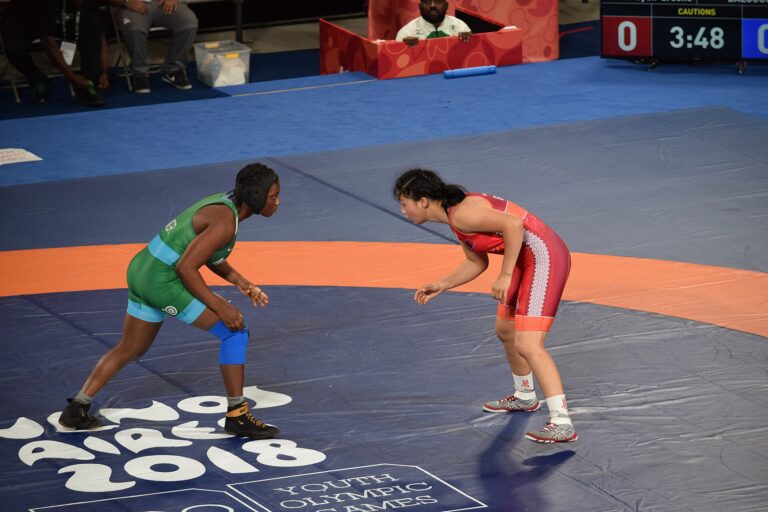

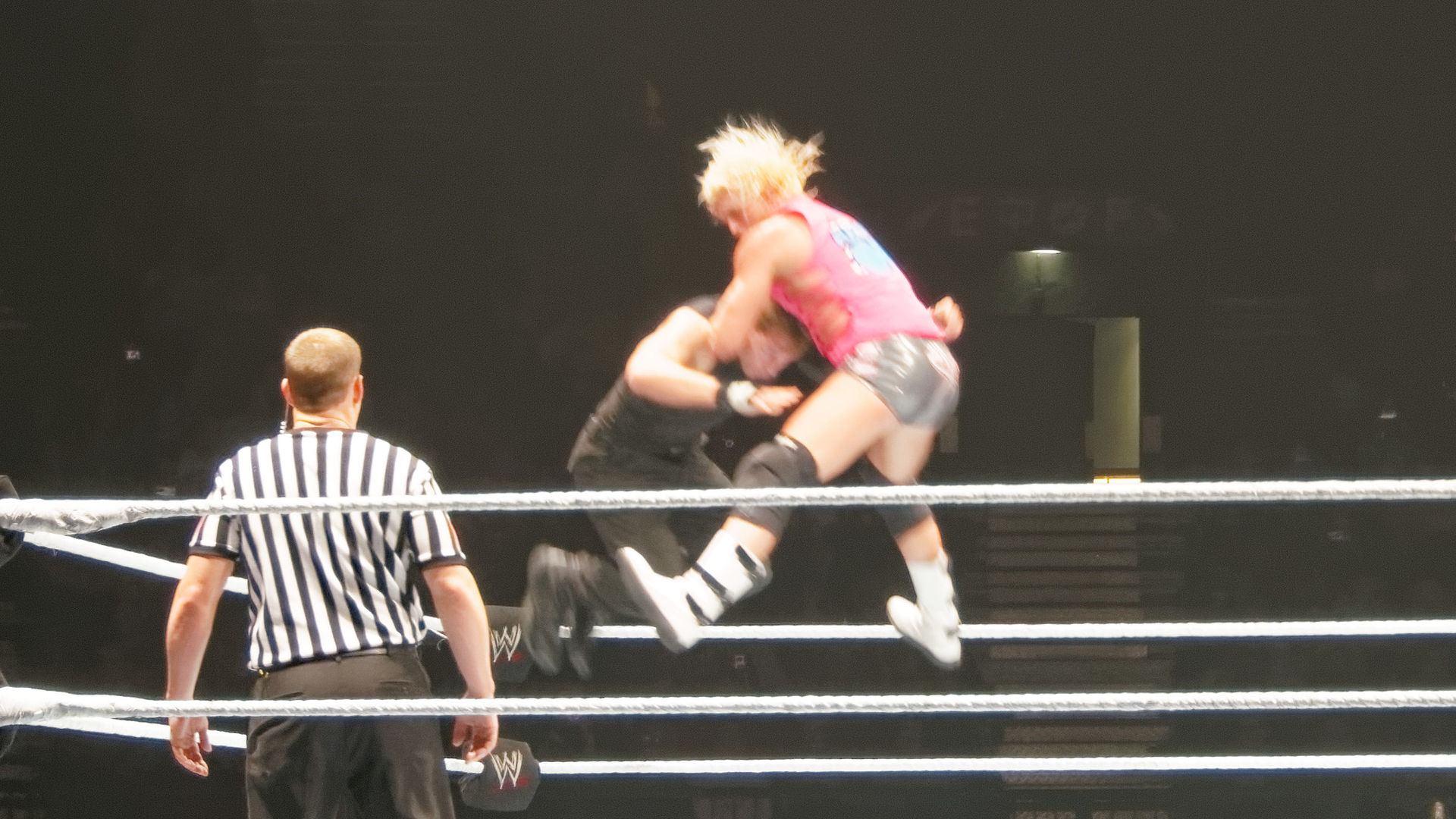
A wrestler leads by two with thirty seconds on the clock. Whether he defends the edge, attacks into a tie-up or accepts a passivity warning depends entirely on numbers that were fixed before the bout started. Point values are not bookkeeping. They are the strategy.
Most spectators learn the scoreboard backwards, watching an action and then hearing the number. Corners work the other way round. They know what each action is worth, what the criteria will do if the score finishes level, and therefore which risks are affordable at any given moment.
What follows is the current point structure in freestyle, the rules that generate points without an attack, and the way both of those change decision-making in the closing seconds of a period.
What decides a tied bout, in order
- Highest-value single action. A wrestler with a four-point throw beats one with two takedowns at the same total.
- Fewest cautions. If the high scores match, the wrestler penalised less often wins.
- Last technical point scored. With everything else equal, whoever scored last takes the bout.
- Bout format. Two periods of three minutes with a short break, one continuous score across both.
- Early finish. A fall, or a ten-point lead in freestyle, ends it immediately.
- Consequence. Late in a close bout, a single boundary point is worth more than it looks, because it can also win the criteria.
The freestyle wrestling scoring rules, value by value
The freestyle wrestling scoring rules assign one, two, four or five points to an action, and the values set by the international federation are stable enough that a corner can call them from the seat. One point covers a step out of the wrestling area, a caution awarded against the opponent, and a failed challenge by the other corner.
Two points cover the great majority of scoring: a takedown, a reversal, a hold that exposes the opponent’s back to the mat, and a correct hold that keeps him there. Four points cover a throw of grand amplitude executed from the ground, and also a standing action that brings the opponent through the air into a direct danger position without the full arc.
Five points are reserved for a throw of grand amplitude from standing, where the wrestler lifts his opponent clear of the mat, takes him over in a wide arc and lands him in immediate danger. It is the only action in the sport that can turn a bout in a second and a half, and it is attempted less often than the crowd would like.
Why the takedown is the currency of the modern bout
The two-point takedown does more work than any other action, and the reason is arithmetic rather than aesthetics. It is the highest-value action with a favourable risk profile: a failed leg attack usually costs position rather than points, while a failed five-point throw usually costs four.
That changes what an entire training week looks like. Attacking sequences are built to be repeatable at low risk, chained from a level change into a finish, and abandoned early when the defence reads them. A wrestler who scores four takedowns has a comfortable margin without ever having been in danger of conceding a large action.
It also changes the shape of a bout. Two-point exchanges accumulate, so the score climbs steadily rather than jumping, and the technical superiority threshold becomes a realistic finish rather than a curiosity. Discussion of the differences between styles usually starts with legality; the more useful starting point is which action pays best.
Exposure: the action argued about most
Exposure, or danger position, is scored when a wrestler’s back is turned toward the mat beyond a defined angle, whether or not there was a takedown. Two points are awarded, and the same two points are available again if the position is re-established after the wrestler defends out.
The judgement is where the arguments start. The angle is defined, and the moment at which it is reached during a rolling scramble is a matter of what the officials saw from where they were standing. This is the single most common subject of a challenge, and it is the reason mat chairmen review sequences that look settled to the crowd.
For a corner, the practical point is that exposure can be scored without control. A wrestler who is being turned in a scramble can concede two points and still end up on top, which means the position on the mat at the end of the sequence is a poor guide to who scored during it.
Stepping out is a point, and it moves the geometry
A wrestler who steps outside the wrestling area with both feet, or who is pushed out, concedes one point. That rule converted the boundary from an inconvenience into a scoring zone, and it changed how bouts are wrestled in the last minute.
The tactical effect runs in both directions. A wrestler holding a narrow lead can drive his opponent toward the edge and collect a point without exposing himself to a counter. A wrestler chasing the score has to defend the boundary and attack simultaneously, and the second of those is much harder near the line, because there is no space behind the opponent to finish into.
The result is that a great deal of a modern freestyle bout happens within a metre or two of the edge, and that fitness in the last minute is often spent on positional work rather than on attacking sequences.
Passivity and the thirty-second activity clock
Freestyle handles inactivity with a warning followed by a clock. The referee identifies the passive wrestler and issues a verbal caution; if the passivity continues, the wrestler is given a defined period, thirty seconds, in which he must score. If he does not, his opponent receives a point.
This is the rule that most often decides a low-scoring bout, and it is the rule spectators track least. A wrestler who has been warned is under an obligation that his opponent is not, and the opponent’s correct response is frequently to do nothing risky at all and let the clock award the point.
For the wrestler on the clock, the decision is unpleasant. He must attack inside a short window against an opponent who knows exactly when the attack is coming, and a failed attempt at the edge can hand over a boundary point on top of the passivity point.
What happens on the mat after the takedown
Freestyle allows the bout to continue on the ground, and the scoring there is where close bouts are usually settled. A wrestler on top is looking for a turn that puts his opponent’s back toward the mat, and each successful turn is another two points from the same starting position.
The wrestler underneath has two objectives that pull against each other: getting back to his feet, and avoiding exposure while he does it. A hurried escape that rolls him through his own back concedes two points on the way out, which is the most common way a defensive wrestler loses ground he thought he was recovering.
Officials also apply a limit. If the top wrestler holds a position without working toward a turn, the pair are returned to their feet, and continued inactivity can bring a passivity warning against him instead. Control on the mat is only worth something while it is producing an attempt.
Cautions, and the point they hand over
Cautions are issued for illegal holds, for fleeing the mat or fleeing a hold, for obstruction and for unsporting conduct. Each one normally carries a point for the opponent, and the accumulation matters twice: once on the scoreboard and once in the criteria, where fewer cautions breaks a tie.
The most common is fleeing the hold: breaking contact to avoid an action that has already begun. It is a judgement call, and it is punished because without it a defending wrestler could simply run at every threat.
Three cautions in a bout end it, which is a rule most casual viewers do not know until it happens. A wrestler with two cautions is wrestling a different bout from the one his opponent is wrestling, and his corner will change the instructions accordingly.
Technical superiority and the fall
A ten-point lead in freestyle ends the bout by technical superiority, and the action in progress is completed before the stoppage is applied. The threshold shapes strategy from the moment a wrestler goes four or six points up, because a further exchange either finishes the bout or invites a comeback.
The fall remains the fastest finish and is available at any score. Both shoulders held in contact with the mat for the required instant ends everything, and it is why a wrestler with a large lead still cannot afford to be careless on his back.
These two endings do something the point table alone does not show: they cap the length of a bad afternoon and reward a dominant one. A wrestler who is being taken apart is not required to absorb six minutes of it, which matters over a long day in a bracket. The competitive effect on Iranian mats is discussed in coverage of the current freestyle generation.
Reading the last thirty seconds
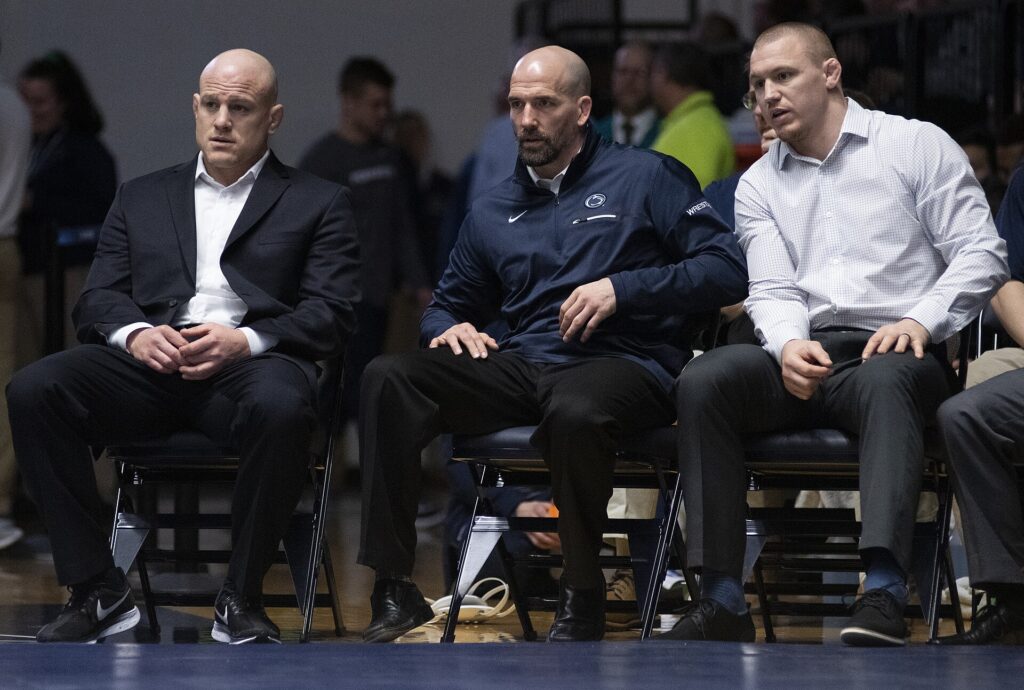
With thirty seconds left, a corner is working with four facts: the score, who scored last, how many cautions each wrestler has, and whether an activity clock is running. The instruction follows from those and not from the flow of the bout.
Leading by one with the last point scored, a wrestler defends the boundary and stays in a tie-up. Level on points but behind on criteria, he must score, and the cheapest available point is at the edge rather than in a leg attack. Two behind, he needs an exposure or a takedown, and a boundary point is close to useless because it does not change the criteria.
This is why the closing seconds so often look scrappy from the stands and read clearly from the corner. Nobody is trying to look good. They are buying the cheapest point that changes the result, and refusing to sell a more expensive one.
The challenge, and when a corner should spend it
Each corner has a challenge. A successful challenge is retained; an unsuccessful one is lost and gives a point to the opponent. That single point is the reason challenges are rarer than they might be, because a speculative challenge in a tied bout can hand over the criteria as well as the point.
The rational rule is to challenge only when the disputed action is worth more than the cost of being wrong, and when the review is likely to be conclusive on the footage available. A two-point exposure in the last minute meets that test. A boundary call in the first period usually does not.
Timing is the other half of the decision. A challenge has to be raised immediately, before the bout restarts, which means the corner is judging an action he saw once from one angle with a few seconds to decide. Experienced corners agree a short list beforehand of the situations worth spending it on, so the decision is made before the bout rather than during it.
There is a second reason to hold on to it. A corner that has already used its challenge is defenceless against a doubtful call later, and both wrestlers know it. Keeping the challenge available into the final minute is worth something even if it is never used, because it shapes how carefully the closing sequences are officiated.
A point-value reference
| Action | Points | Where it happens | Risk if it fails |
|---|---|---|---|
| Step out of the area | 1 | At the boundary | Low |
| Caution against opponent | 1 | Anywhere | None to the beneficiary |
| Takedown | 2 | From standing | Position, rarely points |
| Exposure or correct hold | 2 | On the mat | Reversal |
| Grand amplitude from the ground | 4 | Par terre | Loss of top position |
| Grand amplitude from standing | 5 | From a lock in the tie-up | Four or five to the opponent |
Frequently Asked Questions
What happens if a freestyle bout finishes level?
Criteria decide it, in order: the wrestler with the highest-value single action wins, then the wrestler with fewer cautions, and if those are equal the wrestler who scored the last technical point takes the bout.
Is a takedown worth one point or two?
Two. The value was raised from one, and the change reshaped freestyle strategy by making repeatable low-risk attacks the most efficient way to build a score rather than a way to stay level.
How does the passivity clock work?
The referee warns the passive wrestler, and if nothing changes the wrestler is given thirty seconds in which to score. If he fails, his opponent is awarded a point. The wrestler not on the clock has no obligation to engage during that window.
Why do wrestlers spend so much time near the edge?
Because the boundary is worth a point. Driving an opponent out is a cheap, low-risk way to score, so a wrestler protecting a lead works toward the line and a wrestler chasing has to defend it while also creating an attack.
When does a bout end early?
On a fall, on a ten-point lead in freestyle, on a third caution, or on injury or disqualification. The ten-point margin is the one that most often shapes tactics, because it changes how a leading wrestler treats the next exchange.
Watch the next close bout with the criteria in mind rather than the total, and the last thirty seconds stop looking like stalling. They look like two corners pricing the same clock differently.