An athlete from a provincial town arrives in a national squad and the story is written backwards: a talent was discovered, a coach believed, a family sacrificed. All of that may be true, and none of it explains how the selection actually happened.
What happened is that four separate institutions, each with its own budget and its own reporting line, produced a chain of competitions in which the athlete kept appearing. The chain is documented, it works the same way in every province, and it has predictable weak points that decide who is seen and who is not.
What follows is the structure: who runs what, where the money comes from, how an athlete moves from a school hall to a national camp, and why certain provinces have supplied certain sports for decades without that being a coincidence.
The structure on one page
- National ministry. Sets policy and holds the budget line for sport across the country.
- Provincial directorate. The ministry’s office in each province, responsible for facilities, provincial budget allocation and general administration.
- National federations. One per sport, responsible for rules, national teams, coach education and the competition calendar.
- Provincial and city boards. Each federation’s arm in each province and, below it, in each town. This is where athletes are actually registered.
- Schools and universities. A parallel system under education authorities, running its own competitions with its own qualification route.
- The gap to know about. None of these bodies is obliged to tell another one about a good fourteen-year-old.
Four institutions, four different jobs
The first thing to separate is administration from sport. The ministry and its provincial directorates own buildings, budgets and policy; they do not select athletes, coach them or enter them into competitions. A provincial director of sport can open a hall and cannot pick a team.
The federations do the opposite. A national federation writes the rules of its sport, licenses coaches and officials, runs the national championships and selects national squads. It has no facilities of its own in most provinces and depends on the directorate for access to the halls where its competitions are held.
The education system runs a third structure entirely, with its own competitions from school level upward, its own physical education teachers and its own calendar. And the universities run a fourth, with student competitions that occasionally reveal an athlete the other three missed. Coverage of the university sport route describes a pathway that operates alongside the federation ladder rather than inside it.
Four systems, four budgets, four calendars. Athletes who progress smoothly are usually athletes whose family or coach understood that they had to be registered in more than one of them.
What Iran provincial sports boards actually do
The Iran provincial sports boards are the working unit of the whole structure and the least discussed part of it. Each federation maintains a board in every province, and most maintain boards at city or county level below that. The board is where an athlete is registered, where a licence is issued, and where the provincial team is selected.
A functioning board does five things. It maintains the register of athletes and coaches in its sport in that province. It runs the provincial championship, which is the qualifying event for national age-group competition. It licenses and re-licenses coaches and officials in cooperation with the federation. It negotiates hall time with the provincial directorate. And it nominates the provincial squad for national events.
The fifth of those is the selection decision that matters most, and it is taken locally by a small number of people. A board with an active technical committee, a published selection basis and a genuine provincial championship produces defensible squads. A board that is inactive produces squads chosen from the two clubs whose officials attend meetings, and the athletes in the third club are invisible regardless of ability.
The school system is the widest net and the weakest link
Every child in the education system takes part in physical education, which makes schools the only institution that sees the entire population of an age group. That is an enormous structural advantage and it is largely unconverted.
The reason is a handover problem. School competitions run within the education system and produce their own champions; federation competitions run within the federation system and produce national squads. A child who wins a school event has not been registered anywhere that a federation board will look, unless a teacher or a parent takes the additional step of enrolling him in a club.
That step depends on individuals rather than on process. A physical education teacher who knows the local board, or a coach who visits schools, converts school performance into a registration; where neither exists, the school system identifies talent and then loses it. Work on the role of school athletic programmes consistently points to the same conclusion: the net is wide, the funnel below it is narrow, and the join between them is informal.
From board to province to national camp
The ladder itself is clear once the institutions are separated. It has five rungs and each one has a defined entry point.
- Club registration. The athlete joins a club affiliated to the city board and receives a licence for that sport and season.
- City or county competition. Run by the local board, usually by age group, and the first event with a published result.
- Provincial championship. Organised by the provincial board. Placing here qualifies an athlete for provincial squad consideration.
- National age-group championship. Provinces enter teams; federation technical staff and national coaches attend. This is the observation point.
- National camp. Invitation from the federation to a training camp, from which age-group and eventually senior squads are selected.
The observation point is the rung to understand. National coaching staff do not tour provinces looking for athletes; they watch the national age-group championships and select from what appears there. Everything below that rung is therefore about getting an athlete onto the provincial team, and an athlete who is not selected by his province is not seen at all, whatever his level.
Where the money comes from, and what it buys
| Source | Typically pays for | Reliability | Where it fails |
|---|---|---|---|
| Provincial directorate budget | Facilities, maintenance, hall time | Annual and predictable in form | Amount varies; spread thin across sports |
| Federation allocation | Competitions, officials, coach courses | Depends on the federation’s own budget | Small sports receive very little |
| Municipality | Local clubs, some facilities | Varies enormously by town | Follows local political priorities |
| Local employers | Club sponsorship, workplace teams | Strong where industry is strong | Absent in provinces without large employers |
| Families | Fees, equipment, travel | The most reliable and least discussed | Determines who can participate at all |
The last row is the honest one. Across most sports and most provinces, the largest single contributor to an individual athlete’s development is the family, through club fees, equipment and above all travel. A provincial championship in a large province can involve a long journey, and a national age-group event involves several days away. Households that cannot fund that do not appear on the ladder, and no institution in the structure is designed to notice.
The facility problem is an hours problem
Provinces are frequently described as lacking facilities, and the more accurate description is that they lack hours. A single multi-purpose hall in a town of moderate size serves volleyball, basketball, futsal, handball and several martial arts, along with school classes during the day and public sessions in the evening.
Allocation of that time is a provincial directorate decision, negotiated with the boards, and it determines what a town can be good at. A sport that secures four evenings a week develops a competitive squad; a sport that secures one develops participants. The decision is administrative and its consequences are entirely sporting.
This is why sports that need less shared infrastructure spread differently. Wrestling requires a mat and a room, which can be a converted space in a village; that low threshold is one of several reasons the sport reaches places that indoor court sports do not. Outdoor disciplines follow terrain instead, which is why mountain provinces produce climbers and skiers, as accounts of the growth of sport climbing illustrate.
Coaching lineage explains more than geography
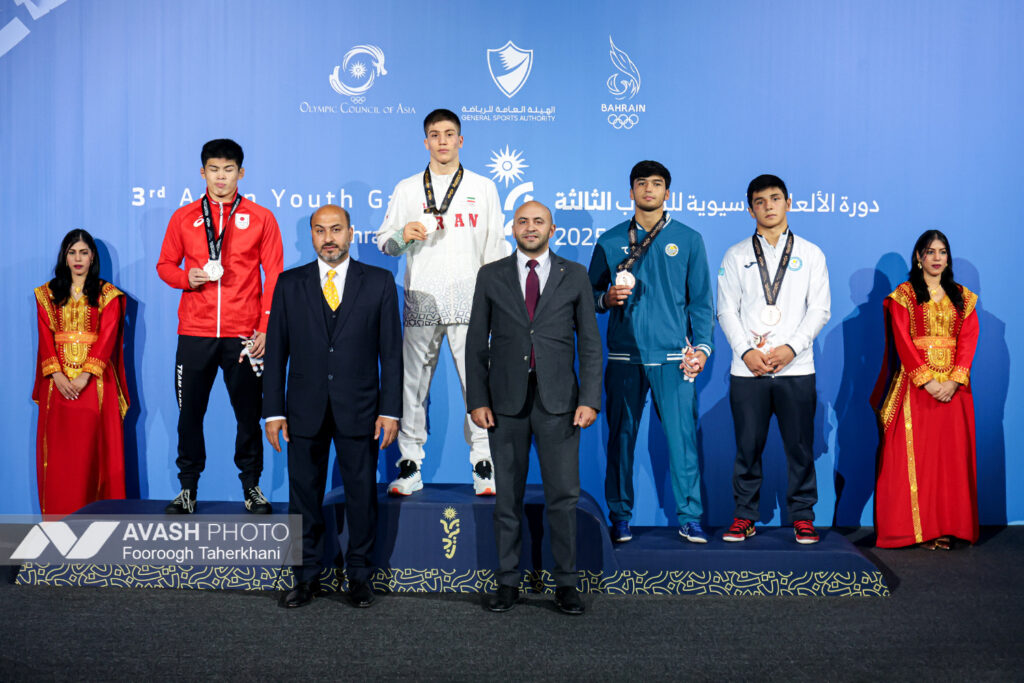
Ask why a particular town produces wrestlers or volleyball players and the usual answer is culture. The more useful answer is a coach, and then the people that coach trained, and then the people they trained.
A single well-qualified coach who stays in a town for twenty years produces two things: athletes, and other coaches. The second output is the one that compounds. A town with four coaches who all learned the same method runs four clubs to a consistent standard, and its provincial squad is drawn from a deeper and more uniform group than a town with one good coach and three improvising.
The corollary is that these traditions are fragile in a specific way. They survive the loss of an athlete easily and the loss of a coaching generation badly. Where a lineage is broken, by retirement or by migration to a larger city, a town’s output can fall within a decade and take two decades to rebuild, and nothing in the funding structure treats coach retention as the priority that this implies.
Why certain provinces dominate certain disciplines
The concentrations are real and long-standing, and four factors account for most of them. The first is coaching lineage, described above. The second is facility inheritance: a province that built for a sport thirty years ago still has the halls, and halls outlive the policy that funded them.
The third is the local employer. Where a large industrial or public enterprise organised a workplace club, that club became a competitive structure with funding, a facility and a reason to recruit locally, and the sport it chose became the province’s sport. The pattern is visible in the industrial provinces and in the towns built around a single plant.
The fourth is terrain and climate, which sets the outdoor disciplines. Coastal provinces produce rowers, sailors and beach athletes; mountain provinces produce climbers, skiers and endurance runners; provinces with a strong wrestling tradition in the Caspian region and in the west have combined lineage and facility inheritance for long enough that the tradition is now self-sustaining, as any account of the sport’s depth across the country shows.
What is not on the list is population. Several of the strongest producers per head are mid-sized provinces, and the largest are not proportionally dominant, which is what you would expect if the mechanism is institutional rather than demographic.
The pull of the capital, and what it costs the province
Once an athlete is identified, the structural gravity runs one way. National federations are based in the capital, most national camps are held there, and the strongest clubs in most sports are there, which means a serious athlete eventually moves.
For the athlete this is usually correct. For the province it is a net loss that repeats every cycle: the athlete leaves, the club that produced him receives little or nothing in return, and the coach who developed him has no claim on the outcome. Sports with a transfer mechanism recover some of the value; individual sports recover none.
The move is also the point at which many athletes stop. Relocating in the mid-teens for training, with schooling, accommodation and family arrangements to solve, is a substantial demand, and the athletes who manage it are not always the best ones. A meaningful share of provincial talent is lost at this transition rather than at any selection event.
What a family should actually check
The practical advice is short and it is not what most families ask about. Check that the club is affiliated to the city board of the relevant federation, because an unaffiliated club cannot enter its athletes into the qualifying competitions and the training is therefore a dead end however good it is.
Check that the coach holds a current federation licence at an appropriate level, and check when the provincial championship is held and whether the club has entered athletes in it in recent seasons. A club that does not appear at the provincial championship is not on the ladder.
Ask what the season costs in total, including travel to competitions, because the fee is rarely the largest number. And ask who at the club deals with the board, since the answer is sometimes nobody, and a club without a relationship to its board is a club whose athletes are not nominated.
Frequently Asked Questions
Who selects a provincial team?
The provincial board of the relevant federation, usually through a technical committee, normally on the basis of the provincial championship. The quality of that process varies considerably between boards and between sports, and it is the single most consequential selection in the whole ladder.
Does school sport lead anywhere on its own?
Rarely, without a separate club registration. The school system runs its own competitions and its own championships, and the federations select from their own events. A child who competes only within the school system can perform well for years without becoming visible to the sport’s own structure.
Why do some sports reach small towns and others do not?
Mostly because of the infrastructure required. A sport needing only a room and a mat spreads widely; a sport needing a full indoor court competes for scarce hall time and concentrates in larger towns. Cost of equipment works the same way, and both effects are administrative rather than cultural.
Is the concentration of talent in a few provinces a problem?
It is efficient in the short term and it narrows the base over time. A national structure that observes only at national age-group events is dependent on every province running a functioning board, and where a board is inactive an entire province’s athletes are effectively out of the system, which is a loss nobody measures.
How can a province rebuild a discipline that has declined?
By retaining and producing coaches rather than by pursuing individual athletes. Coach education, licence renewal and a reason for qualified coaches to stay are what rebuild a lineage, and the effect takes a decade to appear. There is no faster route, and the sports that have recovered are those that accepted the timescale. General background on the national sporting landscape and on the administrative divisions makes the geography easier to follow.
Do these structures work the same way for women’s sport?
The institutional structure is the same, with boards, provincial championships and federation selection, and the facility constraint is generally tighter because dedicated hall time is a smaller share of a limited total. Provinces where that allocation has been treated seriously produce competitive athletes in exactly the disciplines the allocation supports, which is another instance of the same administrative mechanism.
Talent is not found outside the capital by anyone travelling to look for it. It is found by a board that runs a real championship, a coach who stays, a school teacher who makes a phone call, and a family that pays for the bus. Four ordinary things, and the sports that have all four are the ones that keep producing.