

Look at any published shot chart from a domestic match and count backwards from the goals rather than the shots. A large share of them start from a dead ball: a corner headed home, a free kick curled over a wall, a penalty won from a set-piece scramble. The share is not a curiosity. It is a structural feature of how this level of football is played, and it changes what a coaching staff should spend a Tuesday session on.
The habit worth breaking is treating a high set piece goals percentage as an oddity that will correct itself once a team “plays better football.” It usually will not, because the conditions that produce it are not about quality. They are about geometry, surface and incentive, and all three point the same direction.
This piece separates the number from the folklore around it: what actually counts as a dead-ball goal, why the domestic share sits where it does, and how to work the split out yourself from nothing more than a match report.
- What counts: corners, direct and indirect free kicks, penalties, and throw-ins that lead directly to a shot
- Typical domestic split: dead-ball contribution regularly clears a third of goals scored, well above the shares reported in the biggest European leagues
- Main drivers: deep defensive blocks, pitch and ball conditions, and routines that are cheaper to coach than open-play patterns
- What to do with it: treat the split as a scouting input, not a value judgement on a team’s style
What counts as a dead-ball goal
The definition has to be drawn before the count means anything. A goal counts as dead-ball in this piece if the passage that produced the shot began from a corner, a direct or indirect free kick, or a penalty. A throw-in that turns into a training-ground routine belongs in the same bucket if the receiving move never becomes open play before the shot; most trackers keep it separate, and this piece follows that convention.
What does not count is a second phase that only loosely follows a dead ball, a rebound after a save that becomes an open-play scramble, or a counter-attack that happens to start from a cleared corner. Drawing the line there matters, because a generous definition inflates the share and makes the pattern look more extreme than it is.
Penalties sit in an odd middle position. The award itself is almost always won from a phase of open play, a dribble into the box or a through ball that draws a foul, but the shot is taken from a fixed spot under conditions closer to a set piece than to a live passage of play. Most published splits count the penalty as dead-ball on the strength of the shot conditions, and this piece does the same, but it is worth flagging when comparing two datasets that may have drawn the line differently.
Set piece goals percentage, and why the domestic figure sits high
Once the definition is fixed, the set piece goals percentage in this league sits well above what gets reported for the biggest continental competitions, where open-play combination play produces most goals. The gap is not explained by worse finishing or worse build-up alone. It reflects a league where a smaller share of possessions reach a clean shot from open play in the first place, which mechanically raises the relative weight of the possessions that do convert.
A club’s own dead-ball share is more informative than the league average, because it tends to be stable within a season and reveals a coaching priority rather than a run of luck. A side that scores a third of its goals from set pieces two seasons running is not experiencing variance. It is running a program.
The comparison also has to control for shot volume. A team that generates few shots overall will see any category, including set pieces, make up a larger share simply because the denominator is small. Looking at raw dead-ball goals per ninety minutes alongside the percentage protects against reading a low-shot side as a set-piece specialist when it is really just a side that rarely threatens from anywhere.
Block height: deep defending trades space for set pieces
Deep, compact defending is the single biggest driver of the split. A back line sitting close to its own box leaves almost no space in behind for a through ball or a run in behind to exploit, which removes the two cheapest sources of open-play chances. It does not remove crosses and set pieces, because both can be delivered into a crowded box regardless of how deep the defence sits.
The trade-off is visible in the data as a near mirror image: leagues and matches with the deepest average block heights carry the highest dead-ball shares, and the relationship holds match by match, not just across seasons. A team that wants to reduce its reliance on set pieces has to solve the block-height problem first, because no amount of corner-routine coaching offsets a defence that refuses to be broken down in open play.
Pitch conditions favour the delivery over the dribble
Pitch quality drops through a season faster outside the biggest budgets, and a slower, more uneven surface punishes exactly the skills that produce open-play goals: a first touch under pressure, a low pass through a gap, a one-on-one dribble. A crossed or driven set-piece delivery is far less sensitive to surface quality, because the ball spends most of its flight in the air rather than rolling across the grass.
That asymmetry means the same squad can look more set-piece dependent in December on a worn pitch than it did in September on a fresh one, without a single change in personnel or tactics. Anyone comparing early-season and late-season splits should check the surface before concluding anything about a change in approach.
Coaching priorities: sessions built around a spreadsheet you can defend
Set-piece routines are also cheaper to coach in a very literal sense. A corner routine is a fixed pattern that can be drilled to a stopwatch, filmed from a gantry, and corrected the same way every week. An open-play combination depends on the opponent’s shape changing possession to possession, which makes it far harder to drill to the same level of repeatability with limited staff and limited pitch time.
Clubs operating with two or three coaches and a handful of weekly sessions get a better return on an hour spent on corners than an hour spent on rehearsing a passing pattern that may never see the exact defensive shape it was built against. That is a rational allocation of scarce coaching time, not a lack of ambition.
The corner routine most sides actually run
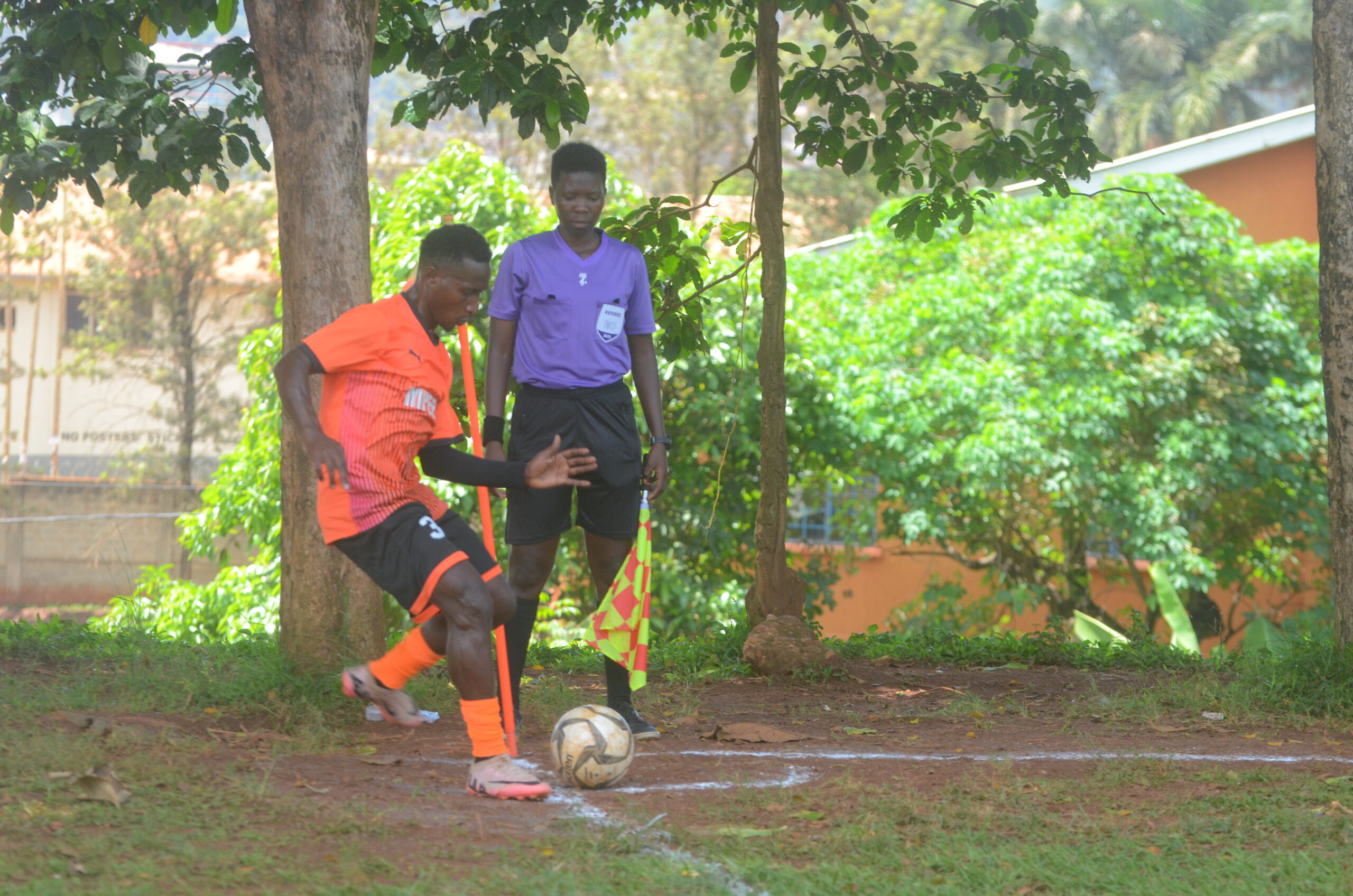
Despite the variety shown in coaching manuals, most domestic sides run a small number of corner variants: a near-post flick aimed at a blocking run, a far-post delivery to the tallest available header, and a short corner used mainly to reset the delivery angle rather than to create a direct chance. The near-post flick is the single most repeated pattern in the goals that come from corners, because it needs only one clean contact rather than a coordinated blocking sequence to work.
| Routine | Target zone | What it needs to work |
|---|---|---|
| Near-post flick | First six yards | A blocking run and a clean first contact |
| Far-post delivery | Back post | Height advantage and a delivery that beats the near defender |
| Short corner | Wide channel | A free option to reset the cross angle under pressure |
Free kicks: direct versus the second ball
Direct free kicks inside shooting range get the highlight reel, but they convert at a low rate even for good strikers of the ball, because goalkeepers and walls are drilled specifically to cut off the two or three most common trajectories. The more reliable source of free-kick goals is the delivery into the box from wider positions, scored not by the taker but by a runner attacking the second ball off a flick-on or a loose clearance.
Coaches who track this distinction separately tend to invest more practice time in the delivery and the runners than in the direct strike, because the second category produces more goals per season even though it generates fewer clips worth replaying.
The choice between the two also depends on where the foul is won. A free kick won centrally and inside twenty-five metres tempts a direct effort almost by reflex, while one won from a wider angle offers no realistic direct sight of goal and is delivered as a cross by default. Tracking the distance and angle of the foul alongside the outcome shows how much of the direct-versus-delivery decision is already made before the taker steps up.
How to calculate the split from public data
The calculation does not need proprietary tracking data. Take a season’s worth of match reports or a public goals log, tag each goal by its immediate origin using the same definition set out above, and divide the dead-ball total by the season total. Doing this by hand for even ten matches gives a usable estimate, because the split tends to be stable rather than noisy from game to game.
A faster shortcut is to note only the assist type where it is published, since corners, free kicks and penalties are usually labelled distinctly even in short-form reports, while open-play assists are labelled by pass type. Cross-checking against the actual passage of play in the two or three matches you can watch back protects against mislabelled entries.
Where the count misleads
Two situations distort the raw split. A penalty won from a dead-ball delivery, such as a corner that is handled in the box, should be logged under the phase that created the touch, not automatically as a set piece, because the shot itself is taken from the spot under different conditions than a corner header. And a second-phase goal that follows a cleared corner but only converts after several passes of open play sits closer to an open-play goal than a set-piece one, even though some trackers file it under set pieces by default.
Ignoring these edge cases in either direction can move a season’s percentage by several points, enough to change a club’s ranking against its rivals on this single metric.
What a rising share should change about a scouting report
A club whose dead-ball share is climbing year on year is telling a scout something specific: its open-play creation is either declining or was never strong, and its coaching resource is being spent accordingly. That is useful information when assessing a manager’s tactical identity or when projecting how a squad will perform if it loses its tallest central defender to a transfer, since an aerial-dependent scoring model is far more exposed to that single departure than a possession-based one.
It is also a fair caution against over-reading a strong scoring record as evidence of attacking quality. A team can finish a season near the top of the goals-scored table almost entirely on the back of set-piece routines, and that is a different, more fragile achievement than the same total built from repeatable open-play combinations.
The same logic runs the other way for a defence. Conceding heavily from set pieces points a coaching staff toward marking assignments and zonal setups rather than toward the back four’s positioning in open play, and the two problems call for different training-ground fixes even though both show up as goals conceded in the same column.
Frequently Asked Questions
What is the set piece goals percentage in a typical domestic season?
It regularly clears a third of total goals scored, though the figure varies club by club depending on defensive block heights faced and coaching emphasis.
Do throw-ins count as set pieces in this split?
Most trackers, and this piece, treat a throw-in that leads directly to a shot as a separate category from corners, free kicks and penalties, because the delivery mechanics differ.
Why does a deep defensive block increase set-piece scoring against it?
It removes space in behind for through balls and runs, which are the cheapest sources of open-play chances, while leaving crosses and dead balls into a crowded box just as available.
Can a club reduce its reliance on set pieces without new signings?
Only partially. Coaching can improve delivery and finishing, but the underlying block-height problem that suppresses open-play chances usually needs a personnel or tactical change to fix.
Is a high dead-ball share a sign of good coaching or a weakness?
Both readings can be true at once: it reflects efficient use of limited coaching time on a drillable skill, and it also reflects a limited ability to create clean chances from open play.
None of this makes a set-piece goal worth less on the scoreboard. It does mean that reading a scoring column without asking where the goals came from tells you less than it appears to.