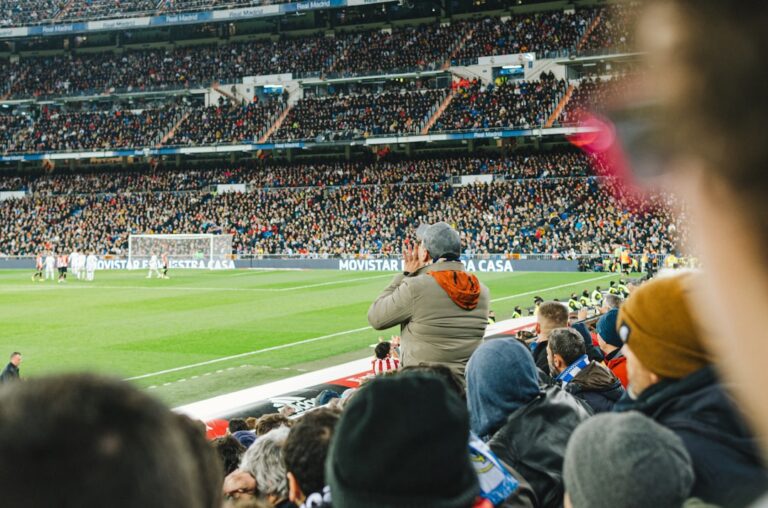

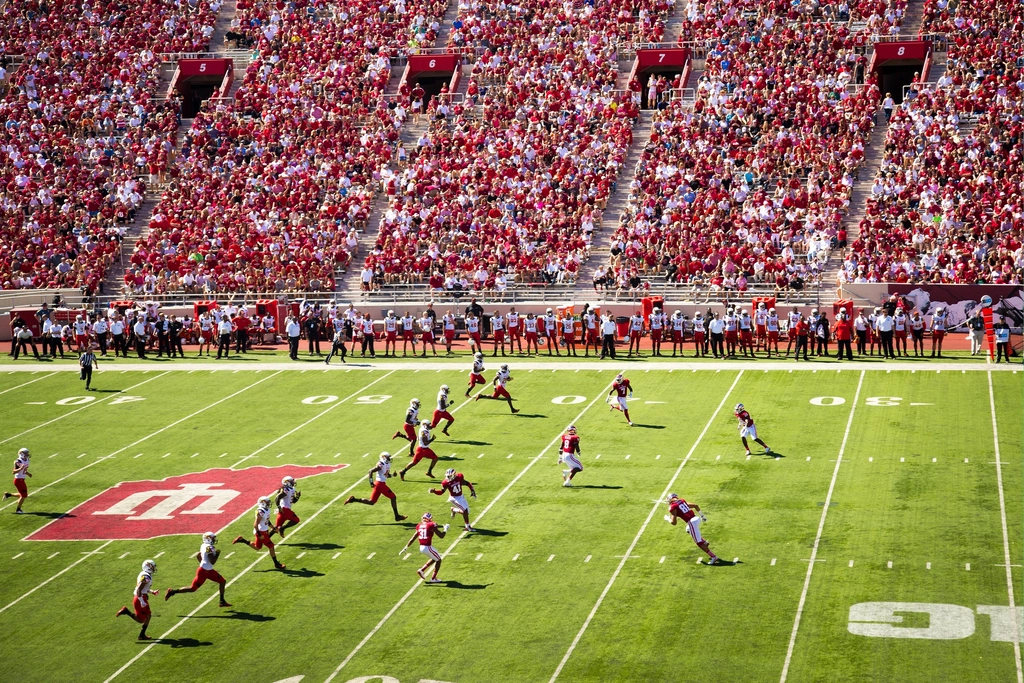
Twenty minutes before kick-off, a small group stands with its back to the pitch, facing the section it leads. A drum sets a tempo. A capo raises both arms, and a chant that took a week to finalise starts on cue, in unison, from a section that has rehearsed it more than the team has rehearsed its own set pieces.
Nothing about that scene is spontaneous, and treating it as spontaneous misses what actually makes Iranian football fan culture work as a system rather than a mood. The chants are written by named individuals, tested informally before matchday, taught in the same repetitive way a coach teaches a passing pattern, and revised when they fail to land.
This is a look at how a supporter section is actually organised: who writes the words, who keeps the rhythm, what changes when the crowd travels, and why none of it survives without a structure most spectators never see.
- Roles: a capo, a small writing group, and a percussion section that anchors tempo
- Process: chants are drafted, tested in small groups, then taught to the section before matchday
- Travel changes the sound: smaller sections mean simpler chants and a heavier reliance on percussion
- What holds it together: informal seniority, not a club appointment
The section behind the section
Every organised supporter block has an inner group that does the unpaid work of running it: choosing which chants get used that week, managing the flags and banners, and liaising with stewards over where the block can stand and what it can bring in. This group is rarely more than a dozen people, and its authority comes from time served rather than any formal title.
New members are absorbed slowly, usually starting with flag duty before being trusted with the microphone or the drum. The apprenticeship is informal but real, and it is the reason a section’s sound stays consistent across a season even as its membership turns over.
The group also carries institutional memory that outlasts any single generation of players. A chant retired three managers ago can be revived for a specific fixture because someone in the inner circle remembers exactly why it worked the first time, and that kind of continuity is one of the clearest differences between an organised section and a crowd that simply reacts to what happens on the pitch.
Money rarely changes hands for any of this work. Flags, drums and banners are usually funded by pooled contributions from the section itself, sometimes topped up by selling badges or scarves designed by a member with the right skills. That financial independence is part of why sections resist outside interference: nobody paid for the voice, so nobody outside the section gets to direct it.
Iranian football fan culture, organised like a small institution
Seen from inside, Iranian football fan culture runs on the same logic as any organisation trying to produce a consistent product with volunteer labour: division of roles, a rehearsal cycle, and quality control. The capo is the closest equivalent to a conductor, responsible for cueing the section, sustaining energy across ninety minutes, and reading when a chant has run its course.
The writing group works separately, often through the week, drafting new lyrics to fit existing melodies rather than composing music from scratch, because a new melody takes far longer to teach a section than new words set to a tune everyone already knows.
How a chant actually gets written
Most new chants start as a reaction: a refereeing decision, a transfer, a rival’s taunt from the previous fixture. The writing group turns that reaction into a short verse that scans against an existing melody, because reusing a familiar tune removes the biggest obstacle to teaching it quickly. A completely new melody is rare, reserved for occasions the section considers significant enough to justify the extra rehearsal time.
Draft lyrics are tested informally among the inner group first, sometimes over a phone call, before anyone commits to teaching them to the wider section. A line that does not scan cleanly gets rewritten immediately rather than carried into a match, because a chant that stumbles in its first public airing rarely gets a second chance.
Syllable count matters more than rhyme in this process, since a line has to fit the existing melody’s phrasing exactly or it will not be singable by a few thousand people at once. Writers who come from a background in poetry or music tend to be pulled into the group precisely for this skill, even if they have no other formal role in the section.
Teaching a chant before the whistle
New material is taught in the minutes before kick-off and sometimes at half-time, when the section is at its most attentive and least distracted by the match itself. The capo or a designated teacher repeats the line two or three times a cappella, then brings in the drum once the section can follow the words without prompting.
A chant that fails to catch after two attempts is usually dropped for that day rather than forced, because a half-hearted chant is worse for morale than silence. Sections that push a weak chant too hard risk losing the crowd’s attention for the stronger material that follows it.
Timing within the match matters as well as timing within the pre-match window. A capo introducing new material immediately after a goal, when the section’s energy is already high and forgiving, has a much easier task than one trying to land a new chant during a flat, goalless spell, which is why experienced capos often hold genuinely new material back specifically for a moment the crowd’s mood can carry it.
Printed sheets are used sparingly and mainly for longer verses tied to a specific occasion, such as a memorial chant or a testimonial. For the everyday repertoire, the section relies on repetition and peer pressure from neighbours who already know the words, which spreads a chant through a block faster than any handout could.
The role of percussion
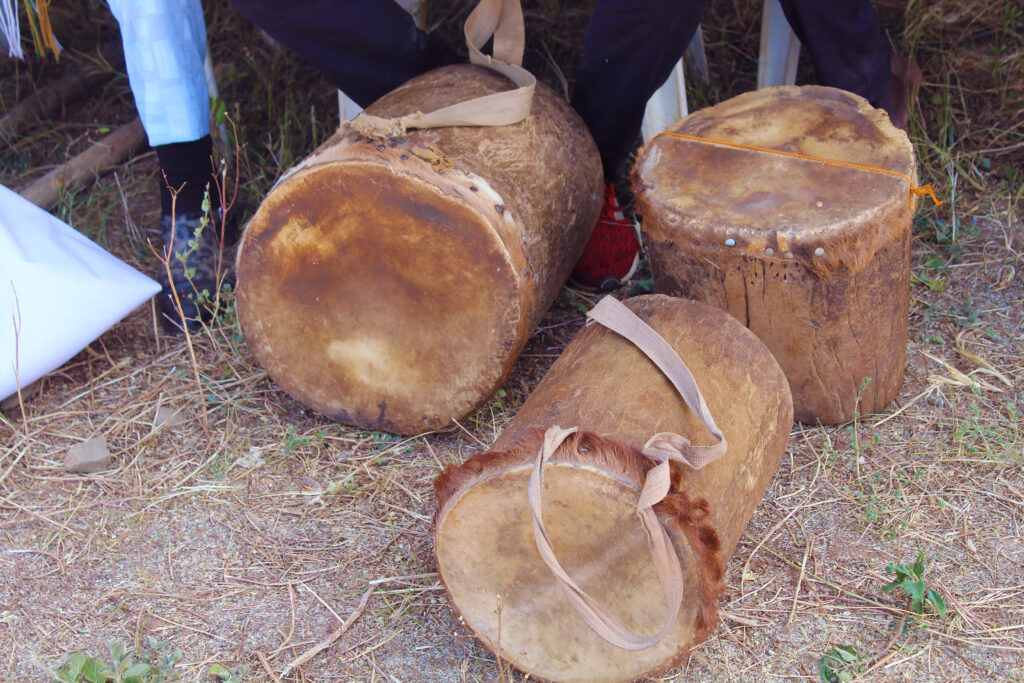
A single large drum, sometimes two, sets the tempo for the entire section and gives latecomers to a chant a rhythmic anchor to fall in with. The drummer’s job is less about volume than consistency, because a tempo that drifts mid-chant fractures the unison that makes a chant sound powerful in the first place.
Drummers are chosen for stamina as much as skill, since a ninety-minute match plus stoppage time asks for a steady arm far longer than most casual drummers can sustain without the rhythm degrading.
A second, smaller drum sometimes covers for the lead when the first drummer needs a break, and handing off mid-match without breaking tempo is treated as a mark of a well-drilled section. Sections without a reliable backup drummer tend to see their chants flatten noticeably in the closing minutes of a match, when the lead drummer’s arm has nothing left to give.
What changes when a crowd travels
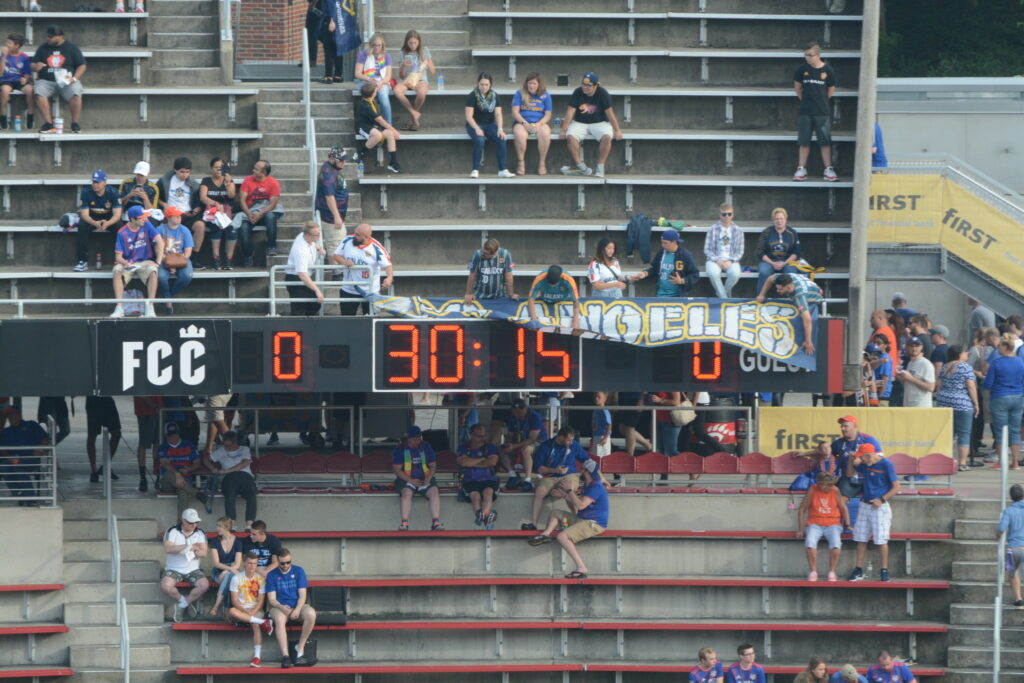
An away section is smaller, often confined to a single allocated block, and that changes the sound in predictable ways. Fewer voices mean less room for layered or call-and-response chants that rely on splitting a large crowd into two answering halves, so travelling sections lean harder on simple, repetitive lines that a hundred people can sustain as loudly as a thousand at home.
Percussion becomes proportionally more important away from home, because a drum carries across a smaller, more concentrated group more reliably than voices alone, especially in a stadium built for a much larger home crowd whose acoustics were never designed around the away end.
Logistics also shape the material used on the road. A section that has spent hours on a coach arrives with less voice in reserve than one walking in from a nearby neighbourhood, so travelling capos often front-load the loudest chants into the first twenty minutes rather than pacing the section evenly across the full match, banking on adrenaline to cover for the early fatigue.
The rival’s chant as raw material
A significant share of new chants exist because of something a rival section sang first. Sections borrow melodies from opponents, invert the meaning of a rival’s own words, or answer a taunt from a previous derby with a rehearsed reply for the next one. This back-and-forth gives certain melodies a long life across clubs even as the lyrics attached to them change completely.
Tracking a melody’s history through several clubs’ chant books is one of the more reliable ways to see how supporter culture actually spreads compared with official retellings of any single club’s traditions.
A derby fixture accelerates this exchange more than any other date on the calendar, because both writing groups know weeks in advance that the other side is preparing something and treat the build-up almost like a rehearsal deadline. Chants held back specifically for a derby are common enough that regular matchgoers can often tell a section is saving material simply by noticing what does not get aired in the fixtures beforehand.
Language, dialect and what stays local
Chants frequently use regional dialect or local references specific to a club’s city, which is part of why a chant transplanted wholesale to another section rarely lands the same way even with an identical melody. A line built around a Tabriz-specific reference means little sung by a section elsewhere in the country, so borrowed melodies are almost always relyricised rather than copied outright.
This localisation is one of the clearest signs that a chant is treated as a piece of writing with an audience in mind, not an accident of collective noise.
Some melodies do travel wholesale without relyricising, but almost always for songs pitched at a national rather than a club level, sung in support of the national team where a shared, unifying language matters more than any single city’s dialect. The distinction between club-level and national-level material is one organised sections themselves are usually careful to maintain, treating the two repertoires as serving different purposes rather than interchangeable material.
What the club has to do with any of it
Clubs rarely write or commission chants themselves, and the healthiest relationship between a club and its organised sections tends to be one of logistics rather than control: allocating tickets, coordinating with stadium security over drums and flags, and staying out of the content entirely. Sections that feel a club is trying to script their voice tend to push back hard, because the informal authority the inner group holds depends on the material staying theirs.
That separation is also why chant content can turn critical of a club’s own board without contradiction. The section’s loyalty is understood to run to the shirt and the city, not to whoever happens to be running the club that season.
Where the relationship breaks down is usually over practical friction rather than content: ticket allocations that shrink a section’s usual block, restrictions on drums or flag poles on safety grounds, or kick-off times moved for broadcast reasons that make travel harder for an away section. Those disputes tend to surface in chants themselves long before they reach any formal complaint, which is one reason club officials pay closer attention to matchday chants than they let on.
Frequently Asked Questions
Who actually writes the chants sung by Iranian football fan culture’s biggest sections?
A small, informal group within each organised supporter block, usually the same people who manage flags and coordinate with the capo, rather than any official club channel.
How is a new chant introduced during a match?
It is taught in the minutes before kick-off or at half-time, repeated a cappella by the capo or a designated teacher before the drum joins in.
Why do away sections sound different from home sections?
Smaller, more concentrated crowds favour simple, repeatable lines over layered call-and-response chants, and percussion carries proportionally more weight.
Do clubs get involved in writing chants?
Rarely, and sections tend to resist it when they do, because the informal authority behind chant-writing depends on the material staying independent of the club.
Why do the same melodies appear across different clubs’ sections?
Melodies get borrowed and relyricised between rival sections over years, so a tune can outlive any single club’s original version of it.
None of this needs a stadium announcer’s cue to start. By the time the players are warming up, the section has already rehearsed the ninety minutes it is about to sing.