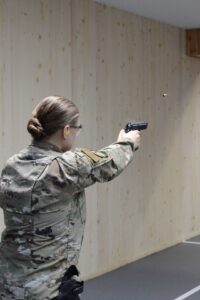



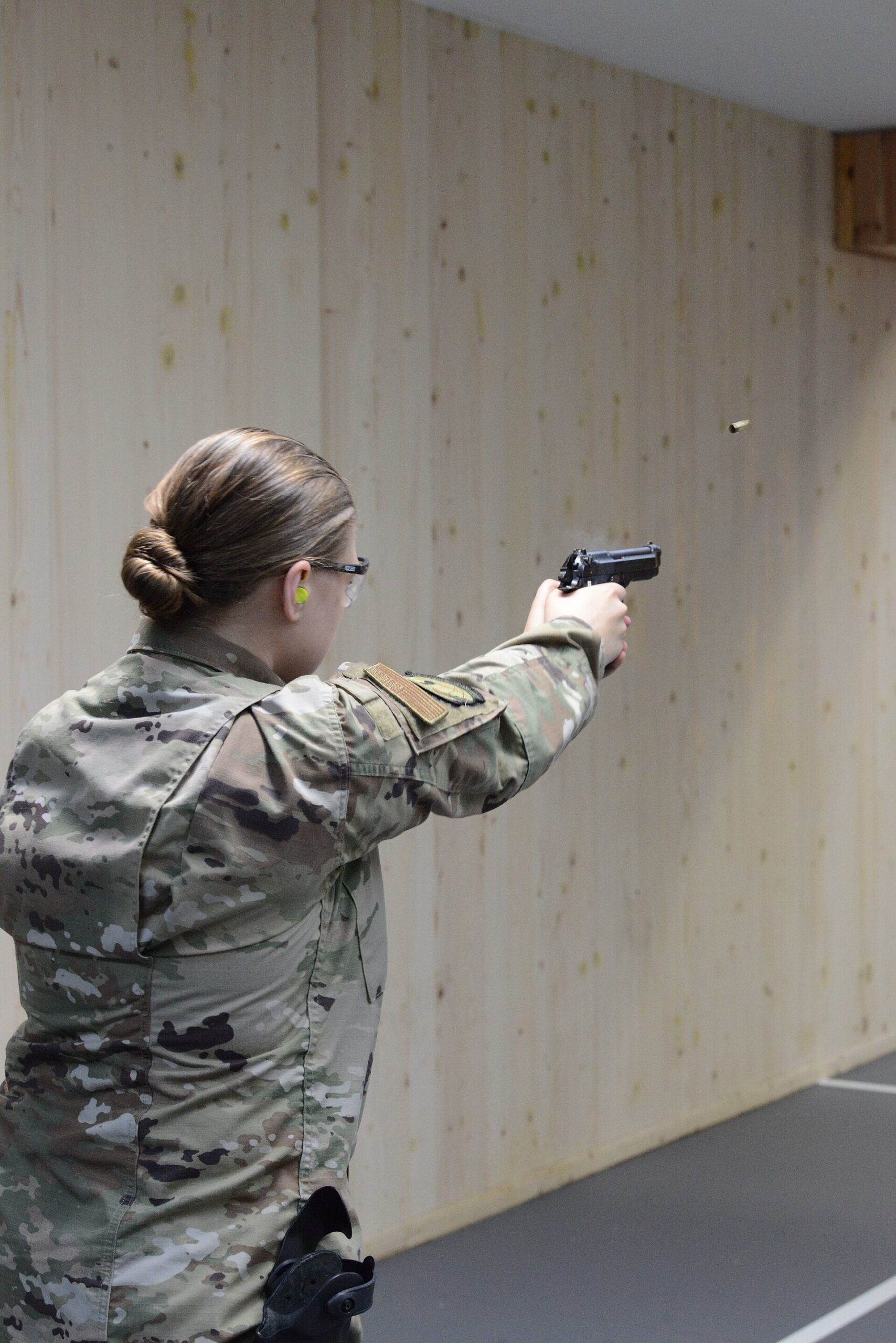
Most shooters who reach an Olympic final have spent two decades building toward it, moving through junior programmes from early adolescence, refining a stance and a trigger routine over thousands of supervised sessions. Javad Foroughi’s route to that same final started as an adult, well past the age most federations consider the window for building a competitive shooter, which forced almost everything about his preparation to be compressed and reordered.
The broader sporting world tends to treat such stories as inspirational anomalies without examining the technical substance behind them, which undersells what the case actually demonstrates about how the specific mechanics of a discipline like air pistol interact with the timeline available to someone who starts late.
Javad Foroughi shooting technique did not have the luxury of a slow, decade-long refinement most rivals were afforded. What replaced that time was an unusually disciplined, adult-learner approach to the mechanics of ten-metre air pistol, built around isolating and fixing a small number of variables rather than the broad, gradual conditioning a junior programme provides.
This profile looks at the technical demands of the discipline itself and at how a late start reshaped the preparation needed to meet them, without speculating on results beyond what is part of the public record.
- Discipline: ten-metre air pistol, decided by tenths of a point across a long series of shots
- Core mechanics: stance stability, trigger control, and shot rhythm under sustained mental load
- What a late start changes: less time for muscle memory, more reliance on conscious technical correction
- What stayed constant: the discipline’s demand for stillness rewards patience over raw physical talent
What ten-metre air pistol actually demands
Ten-metre air pistol is decided by accumulated score across a long series of shots fired at a small target from a fixed distance, with each shot scored to a tenth of a point based on how close it lands to the exact centre. At elite level, the difference between a podium finish and missing the final entirely is frequently a matter of a single decimal point accumulated over dozens of shots, which makes the discipline one of the least forgiving in competitive sport for even a small mechanical inconsistency.
Qualification and final rounds are structured separately, with a smaller number of finalists shooting an additional, closely watched series under intensified pressure and public attention, a format that specifically tests whether a shooter’s technique holds up once the stakes and scrutiny both increase sharply from the earlier qualifying stage.
Unlike sports built around explosive power or endurance, air pistol rewards the ability to eliminate movement almost entirely for the one or two seconds it takes to break a shot, repeated identically shot after shot across a competition that can last well over an hour.
Fine postural sway, the small, constant, largely unconscious movement every standing human body produces to maintain balance, becomes the central technical problem the entire discipline is built around minimising. Elite shooters do not eliminate this sway entirely, since that is physiologically impossible over a standing hold of several seconds, but they train specifically to keep it within an extremely narrow band and to time the shot’s release for the exact moment the sway is at its most stable point.
Stance: the foundation before the shot is ever considered
A shooter’s stance establishes the base of support the entire shot depends on, and elite shooters spend enormous time on foot positioning, weight distribution and body alignment relative to the target before a single shot is fired in a session. Small inconsistencies in stance compound into larger aiming errors the longer a shooting series continues, because fatigue erodes a poorly built stance far faster than a well-built one.
For a shooter who began the discipline as an adult, building this foundational stability meant consciously analysing and correcting posture in a way that a shooter trained from adolescence would have absorbed gradually, without needing to think about it explicitly by the time they reach senior competition.
Core and lower-back strength underpins this stance far more than arm strength does, since the entire skeletal structure from the feet upward has to hold a fixed posture for an extended period without the small compensating shifts that a weaker core would introduce over time. Adult-onset shooters often bring an unrelated background in another physical discipline that already built some of this foundational strength, which can shorten the specific conditioning work needed once shooting-specific stance training begins.
Trigger control, and why it decides more than aim
Trigger control, the ability to release a shot without disturbing the pistol’s aim through the pull itself, separates good shooters from great ones far more reliably than raw aiming precision does. A shooter can hold a near-perfect sight picture and still miss badly if the trigger pull itself introduces even a small jerking motion at the final instant.
Developing trigger control that survives under competition pressure typically requires thousands of repetitions to become close to automatic, which is precisely the kind of ingrained motor skill that benefits most from an early start, and precisely the gap a late-starting shooter has to close through unusually deliberate, high-repetition practice compressed into a shorter career window.
Javad Foroughi shooting technique, rebuilt after forty
What defines Javad Foroughi shooting technique as a case study is not any single mechanical innovation but the compression of a normally decades-long development process into a fraction of that time, through intensely structured, deliberate practice rather than the broad exposure a junior pathway provides. Coaches working with adult-onset shooters generally emphasise breaking the technique into isolated components, stance, grip, trigger, breathing, and drilling each separately before integrating them, rather than relying on the kind of holistic, intuitive feel a lifelong shooter develops.
This componentised approach is slower to produce a fluid, unconscious shot process, but it can compress the overall development timeline meaningfully when applied with enough discipline and volume, because it targets the specific mechanical gaps a late start leaves rather than repeating a generic beginner’s curriculum built for a teenager with years to spare.
Shot rhythm and managing a long series under pressure
A full air pistol series runs across a sustained period, and maintaining a consistent rhythm between shots, roughly the same amount of time spent settling, aiming and breaking each shot, protects against the fatigue and rushed decisions that creep in as a series wears on. Shooters who let their rhythm drift under pressure, speeding up when anxious or slowing down when chasing a perfect shot, tend to see their scores become less consistent in exactly the shots that matter most, late in a close final.
Breathing control underlies this rhythm directly, since a shot is conventionally broken during a brief natural pause in the breathing cycle, and a shooter whose breathing becomes irregular under pressure loses that stable window and has to force a shot outside it.
Timing devices and self-imposed shot clocks are used extensively in training specifically to build this rhythm as a repeatable habit rather than something a shooter has to consciously reconstruct under competition pressure. A shooter who has drilled a consistent shot interval for years develops something close to an internal metronome, and disruption to that internal rhythm, whether from a delayed range call or an equipment issue, is itself treated as a specific skill to recover from rather than dismissed as a minor inconvenience.
The mental load specific to a low-movement sport
Sports built around minimal physical movement place an unusually heavy load on sustained concentration, because there is little physical exertion to distract from or process the mental tension of a close competition. A single stray thought at the wrong instant during the final seconds of aiming can introduce enough tremor to shift a shot by a scoring ring or more.
Sports psychologists working with shooters generally focus on routine and ritual specifically for this reason, building a fixed pre-shot sequence that occupies conscious attention with familiar, well-rehearsed steps rather than leaving room for pressure-driven intrusive thoughts to take hold during the shot itself.
Equipment, and how much of it actually matters
Air pistols used at this level are precision instruments, adjustable in grip fit, trigger weight and balance to a level of customisation that can take months to settle on a final configuration a shooter trusts completely. Equipment changes are approached cautiously for exactly this reason, since altering even a small element of a trusted setup close to a major competition risks disrupting muscle memory built around the previous configuration.
For all that customisation matters, coaches in the discipline are consistent that equipment refinement can only optimise an already sound technique; it cannot substitute for the stance, trigger control and rhythm fundamentals that ultimately decide a shooter’s ceiling regardless of how well-tuned their pistol is.
What a late start changes about competitive longevity
A shooter who reaches an elite technical level as an adult often benefits from a longer effective competitive window than athletes in physically demanding sports, since ten-metre air pistol depends far less on the physical attributes that decline earliest with age, stamina, explosive power, reaction speed, and far more on the stillness and mental discipline that can, with maintenance, hold up well past the age most other sports consider a career’s peak.
This is part of why a late-starting shooter’s path, unusual as it is, is not treated within the sport as a one-off curiosity so much as evidence of how much the discipline rewards patience and technical correction over the kind of early, physically driven development that most other Olympic sports depend on.
What coaches look for in an adult-onset prospect
Coaches evaluating a late-starting candidate for serious investment tend to look past raw early scores, which are usually unremarkable compared with junior-trained shooters at the same calendar point, and focus instead on how quickly the candidate can isolate and correct a specific mechanical fault when it is pointed out. That capacity for rapid, deliberate self-correction is a better predictor of eventual ceiling in an adult learner than an early scoring average, precisely because it is the same skill the entire compressed development path depends on.
Psychological steadiness under pressure is weighted heavily as well, since an adult candidate typically brings life experience and emotional regulation skills from outside the sport that a teenage prospect has not yet had time to develop, and that maturity can partially offset the technical head start a junior-trained rival holds.
The federation’s role in supporting a late developer
Recognising talent in older prospects requires a federation to run trials and identification programmes without the usual age caps that most junior pathways are built around, a structural choice not every shooting federation makes. Where such programmes exist, they typically pair an adult-onset candidate with a coach experienced specifically in accelerated technical development, rather than assigning the standard junior curriculum built for a fifteen-year-and-counting timeline.
Funding for this kind of programme is often harder to secure than funding for junior development, since the return on investment is less predictable and the window for international results is inherently shorter, which makes federation-level commitment to supporting late developers a genuine institutional choice rather than an automatic default.
Frequently Asked Questions
What does Javad Foroughi shooting technique illustrate about late starts in the sport?
That ten-metre air pistol rewards technical discipline and mental control enough that a compressed, adult-onset development path can still reach elite level.
Why is trigger control considered more important than raw aim?
A perfect sight picture can still produce a poor shot if the trigger pull disturbs the pistol’s alignment at the final instant, making trigger control the harder skill to master.
How does a late start change the way a shooter trains?
It typically shifts training toward isolating and drilling individual components, stance, grip, trigger and breathing, separately rather than relying on the intuitive feel built up over a longer junior career.
Why does breathing matter so much in this discipline?
Shots are conventionally broken during a natural pause in the breathing cycle, and irregular breathing under pressure removes that stable window for a clean release.
Does age work against shooters the way it does in more physical sports?
Less so. The discipline depends more on stillness and technical control than on stamina or explosive power, giving shooters a comparatively long competitive window.
None of the discipline’s demands reward urgency. The shooters who last are the ones who treated a late start as a reason to be more deliberate, not less.