
A setter with excellent hands stands ready to run a fast, varied attack, and none of it matters because the pass arriving from serve receive is drifting three metres off target. Every option the setter trained for evaporates the moment the first contact in the rally is imprecise, and the team is left running the one safe set that a bad pass still allows.
Spectators watching from the stands rarely notice this collapse in options happening, since the visible result is simply a safer, less ambitious set followed by an ordinary attack, rather than any obvious, attributable error. The actual cause sits one contact earlier, in a part of the rally that gets far less attention than the kill that eventually ends it.
Coaches who build a program around this reality treat serve receive as the foundation the entire offence rests on, not as a defensive afterthought squeezed in before the fun part of practice begins. Reception quality caps everything a setter can do, and no amount of setting talent raises that ceiling once the first contact has already gone wrong.
This is not a new idea in coaching theory, but it remains one of the most inconsistently applied, since the visible reward of a spectacular attacking drill pulls practice time toward hitting and away from the comparatively unglamorous repetition that reception fundamentals actually require to hold up under match pressure.
This is a practical look at why passing platform, footwork and seam responsibility get prioritised ahead of attacking work in a well-run program, and a progression of drills that builds those fundamentals in order.
- Core principle: a setter’s options are limited entirely by where the first contact sends the ball
- Priority order: platform mechanics, footwork, then seam coverage, before any attacking refinement
- Common error: teams drill attacking patterns extensively while treating reception as a given
- Progression: static platform work, moving to serve reception under pressure, then full-speed integration
Volleyball serve receive training starts with footwork, not arms
Volleyball serve receive training that starts with arm platform alone, without first establishing the footwork that gets a player’s body behind the ball, produces passers who can execute a clean platform in isolation but consistently mistime their positioning against a live serve. The arms only finish a job that the feet have to set up first, by getting the body’s centre of mass directly behind the ball’s flight path before contact.
Coaches who reorder training to prioritise footwork drills before platform refinement typically see faster improvement in actual match passing accuracy than those who spend disproportionate time on arm mechanics against a stationary or lightly tossed ball, because match serves rarely arrive in the convenient, centred position that isolated platform drills tend to simulate.
Vision and early read work belong in this same foundational category, since a passer who identifies a serve’s likely trajectory in the split second after contact has meaningfully more time to move their feet into position than one who waits to react until the ball is already well into its flight. Coaches who drill visual tracking specifically, rather than assuming it develops automatically alongside footwork, tend to see fewer late, off-balance passing attempts in matches.
Why reception quality caps everything a setter can do
A setter’s decision tree on any given rally is defined almost entirely by where the first contact places the ball relative to the net. A pass landing in the ideal target zone, tight to the net and centred on the setter’s position, opens every attacking option a team has drilled: quick tempo through the middle, a fast outside set, a back-row attack. A pass drifting off target collapses that same decision tree down to whichever single, safer set the ball’s actual location still permits.
This is why reception quality caps everything a setter can do regardless of how much individual talent the setter possesses. A gifted setter behind poor reception is functionally limited to the same narrow set of options as a mediocre setter behind the same pass, because the constraint is imposed before the setter ever touches the ball.
This constraint compounds across a full match. A team whose reception quality degrades in the closing set, as fatigue sets in and serving pressure typically increases, sees its attacking variety narrow at exactly the moment a broader range of options would matter most, which is one reason coaches track reception quality set by set rather than only as a single match average.
The passing platform, built correctly
A stable platform depends on consistent arm angle and a locked, unmoving contact surface at the moment of the pass, formed by pressing the arms together and presenting a flat surface rather than swinging at the ball. Players who swing their arms to generate power on a pass, rather than relying on legs and body positioning to supply that power, introduce inconsistency that becomes far more visible under a fast, hard-driven serve than a slow, looping one.
Platform angle has to adjust based on where the pass needs to travel, and drilling this adjustment deliberately, rather than letting players default to a single fixed angle regardless of target, is one of the more overlooked steps in building reliable serve receive.
Footwork patterns that actually get used in a match
The footwork that matters most in live play is not a single perfect step pattern but the ability to read a serve’s trajectory early and adjust quickly, since real serves vary in speed, spin and placement in ways a fixed footwork drill cannot fully anticipate. Short, controlled adjustment steps, rather than one large committed step, allow a passer to correct late if the serve’s flight changes unexpectedly off a serving player’s contact.
Drilling footwork against a variety of serve types, floaters, topspin, short serves aimed at seams, builds the reading skill that a fixed-pattern drill against a single serve type does not, because match serves rarely repeat the same trajectory twice in a row.
A floating serve in particular demands a distinct footwork adjustment from a topspin serve, since its unpredictable, knuckling flight path can change direction late enough that a passer committed too early to a single position has no time left to correct. Teams that separate practice time specifically for floater reception, rather than treating it as a variation within general serve receive drills, tend to handle it more reliably under match conditions.
Seam responsibility, and why communication decides it
The seams between passers, the boundary zones where responsibility for a serve is ambiguous without clear communication, are where a disproportionate share of reception errors occur, not because individual platform mechanics fail but because two players hesitate or collide over the same ball. Clear, loudly called possession the instant a serve’s trajectory becomes readable resolves this far more reliably than any amount of individual skill.
Teams that drill seam coverage specifically, deliberately serving into the gaps between passers during practice rather than only at individual targets, develop a much lower rate of seam-related reception errors in actual matches than teams that only ever practise receiving serves aimed directly at a single passer.
A progression of drills, in the order that works
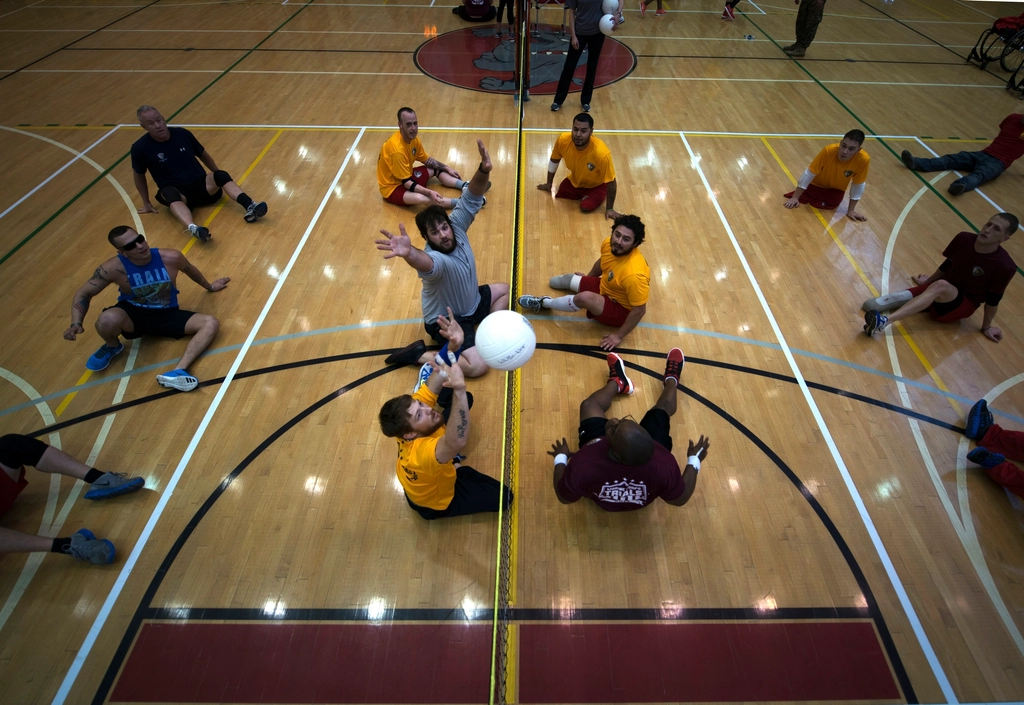
The most effective progression starts with static platform work against a stationary or lightly tossed ball, purely to establish correct arm angle and contact mechanics without the complication of movement. It then adds controlled movement, requiring a player to take one or two adjustment steps before contact, before introducing live serves at moderate pace that force genuine reading and reaction rather than a pre-planned response.
| Stage | Focus | What it isolates |
|---|---|---|
| 1. Static platform | Arm angle and contact surface | Basic mechanics without movement |
| 2. Controlled movement | Footwork before contact | Getting the body behind the ball |
| 3. Live serve, moderate pace | Reading trajectory and adjusting | Reaction under realistic conditions |
| 4. Full-speed with seams | Communication and coverage | Match-realistic decision-making |
Full-speed integration, and what changes at that pace
Only once the earlier stages are reasonably consistent does full-speed serving with genuine seam pressure get introduced, because attempting this stage too early tends to reinforce the exact errors the earlier drills were designed to eliminate, as players revert to instinctive, uncorrected habits under time pressure. At full speed, the value of the earlier isolated work becomes visible: players who built solid footwork and platform mechanics separately tend to hold that technique together even as the serve speed and communication demands increase.
This stage also reintroduces the setter and attackers into the drill, since serve receive quality only really matters in the context of what it enables afterward, and passers benefit from seeing the direct, visible consequence of a well-placed or poorly placed pass on the attack that follows it.
Why attacking work gets delayed, not skipped
None of this argues against attacking training; it argues against sequencing it ahead of the foundation that determines whether an attacking play is even available to run. A program that spends most of its practice time on hitting and blocking while treating serve receive as a warm-up formality is, in effect, training players for a version of the game where the first contact is assumed to be perfect, which it rarely is at any level below the very top of the sport.
Coaches who reallocate practice time toward reception fundamentals, even at some cost to attacking repetitions, typically see the payoff show up as a broader range of usable attacking options in matches, precisely because the passes arriving now support more of what the attackers already know how to do.
Measuring reception quality without expensive tracking tools
A simple, low-cost way to track reception quality is a target-zone grading system: assigning each pass a score based on which zone relative to the setter it lands in, rather than a binary pass or fail judgement. This gives a coach a trackable number across practice and matches that correlates directly with how many attacking options were actually available on that possession, without requiring any technology beyond a coach with a clipboard and a consistent scoring rubric.
Tracking this number over a season also helps identify which specific passers are improving and which are not, information that a team-wide reception percentage alone obscures by averaging everyone’s performance into a single figure.
Adjusting the program for younger or less experienced squads
Youth and lower-level programs benefit from the same prioritisation logic but need a longer runway on the earliest stages, since footwork patterns that an experienced adult player picks up in a few sessions can take a full season to become reliable for a younger athlete still developing general coordination. Rushing a youth group into live-serve, full-speed drills before the static and controlled-movement stages are genuinely solid tends to reinforce poor habits that are considerably harder to correct later than they would have been to prevent early.
Coaches working with less experienced squads often find that simply slowing the whole progression down, spending noticeably more sessions on stages one and two before ever introducing full-speed serves, produces better long-term reception quality than trying to compress the timeline to match a more experienced team’s practice plan.
Frequently Asked Questions
Why does volleyball serve receive training get prioritised over attacking drills?
Because a setter’s options are limited entirely by pass quality, so weak reception makes even well-drilled attacking patterns unusable in a match.
What is the biggest mistake teams make in reception training?
Drilling arm platform mechanics against a stationary ball without first building the footwork that positions the body correctly before contact.
Why do seams between passers cause so many errors?
Ambiguous responsibility zones lead to hesitation or collisions between two players, an issue solved by clear, early communication rather than better individual mechanics.
What is the correct order for building reception skills?
Static platform mechanics first, then controlled footwork, then live serves at moderate pace, and only then full-speed play with seam pressure.
Does prioritising reception mean less time for attacking practice?
In the short term yes, but it typically expands the range of attacking options a team can actually execute once reception quality improves.
A spectacular kill gets the highlight clip. The pass that made it possible rarely does, which is exactly why it gets undercoached at every level below the one where it stops being optional.