


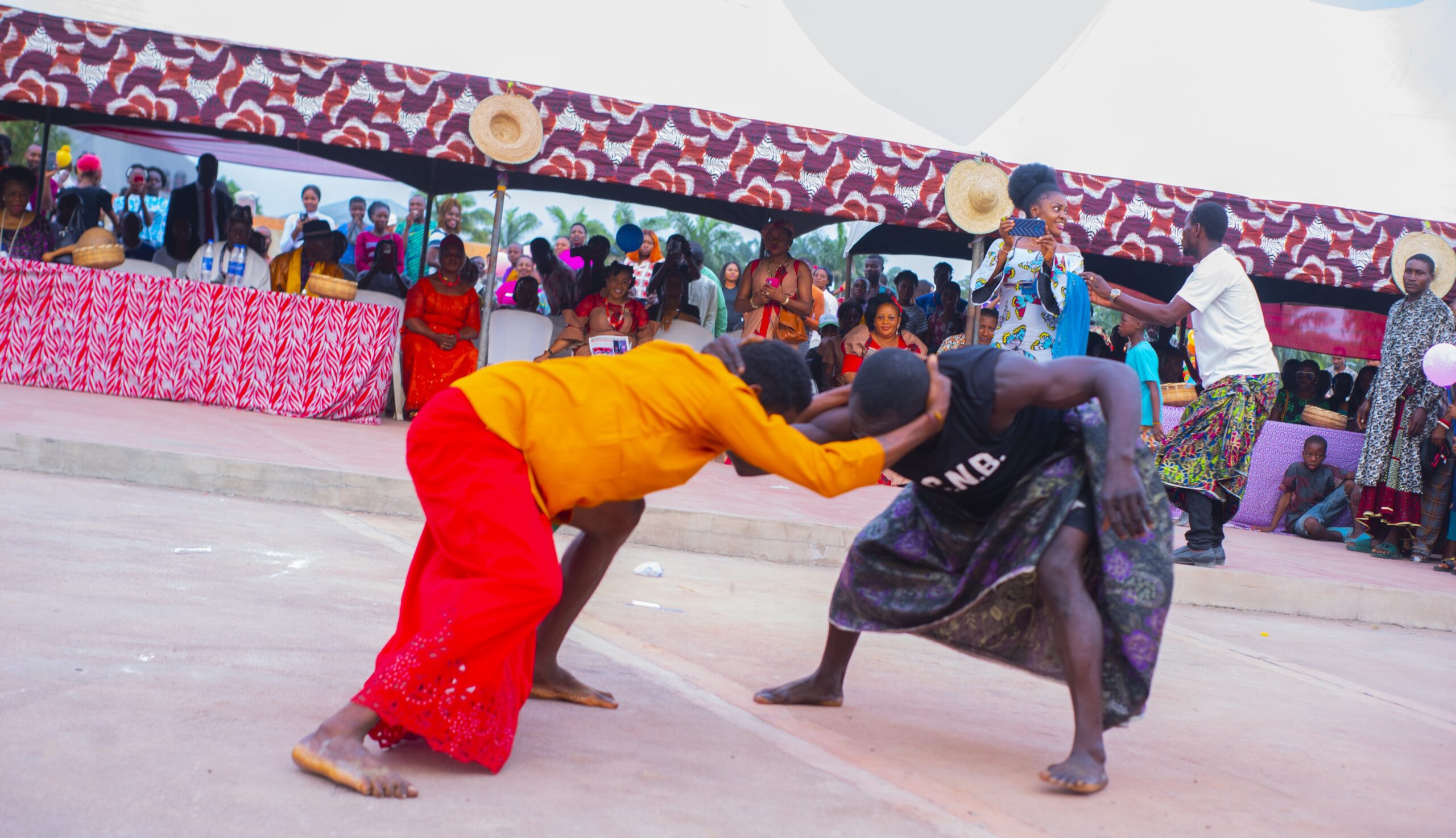
Freestyle and Greco-Roman wrestling did not arrive in Iran and find an empty mat. They arrived in a country that had already been wrestling, in several distinct regional forms, for generations, and a fair amount of what looks like natural national aptitude for the Olympic disciplines is better explained by a population that had already spent childhoods on a mat, under a different rulebook, before the international federation’s version was ever taught to them.
Koshti-e Chukheh, Loucho and Gileh-Mardi are three of the regional folk wrestling traditions that predate and continue alongside the modern competitive disciplines, each tied to a specific area, each governed by its own rules on grip, dress and scoring, and each carrying its own ceremony around a bout that has nothing to do with international competition formatting.
This is a side-by-side comparison of the three: what separates them technically, what dress and ceremony signal about each region’s tradition, and what specific habits from each one shows up, still, in the technique of wrestlers who compete under entirely different, modern rules.
- Koshti-e Chukheh. A jacket-grip style from the northwest, named for the traditional felt or wool coat worn during the bout.
- Loucho. A belt-and-trouser style associated with the Caspian region, built around a fixed grip on a special garment.
- Gileh-Mardi. A Gilan tradition closely related to Loucho, sharing much of its structure with regional variation in ceremony and scoring detail.
- What they share. A fixed initial grip, rather than the open, dynamic engagement of freestyle wrestling.
- Why it matters today. Grip-fighting instincts and balance habits from these styles are visible in the technique of modern competitive wrestlers from the same regions.
Why regional folk wrestling survived the arrival of Olympic disciplines
When freestyle and Greco-Roman wrestling spread through Iran’s expanding federation and school system across the twentieth century, they did not replace the regional folk traditions so much as sit alongside them, because the folk styles were embedded in local festivals, agricultural calendars and community identity in a way a competition format imported for international sport could not simply substitute.
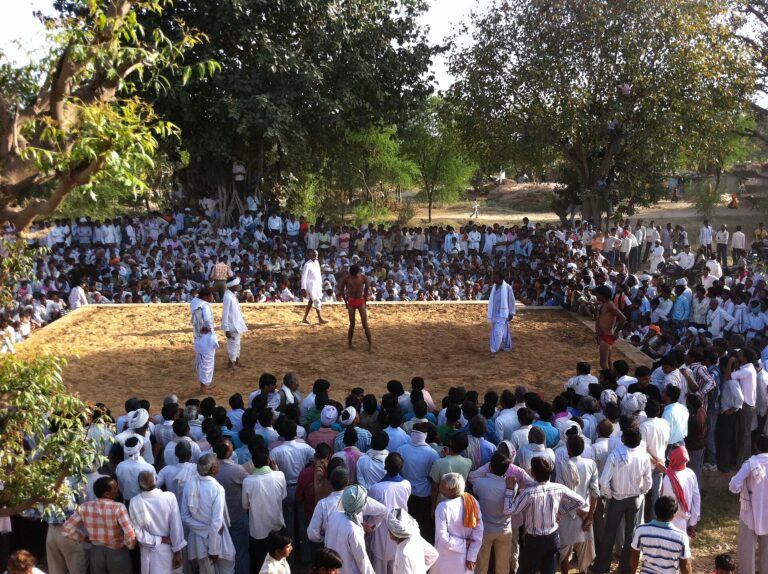
A folk bout at a regional gathering is not staged as a qualifying event for anything. It is staged because the occasion calls for it, a harvest celebration, a religious festival, a wedding, and the wrestling is part of the event’s meaning rather than a separate athletic competition scheduled around it. That distinction is a large part of why these traditions have proven durable even as competitive wrestling infrastructure, coaching and funding concentrated almost entirely around the Olympic disciplines.
Koshti-e Chukheh: grip built into the garment
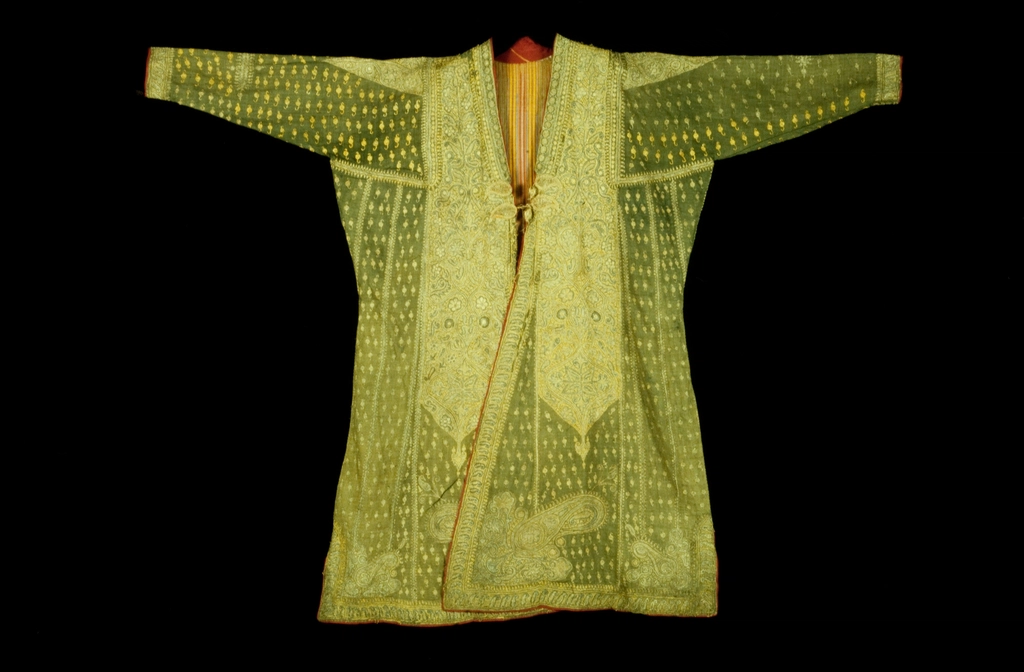
Koshti-e Chukheh takes its name from the chukheh, a thick traditional coat worn by wrestlers from the northwest of the country, and the garment is not incidental decoration; it is the mechanism the entire style is built around. Competitors grip the opponent’s chukheh directly, and the coat’s thickness and looseness shape what grips are actually available in a way a modern wrestling singlet, designed specifically to deny an opponent anything to grab, does not.
Contests are traditionally held outdoors, often on natural ground rather than a padded mat, which shapes footwork and takedown selection toward techniques that do not depend on a forgiving landing surface. Scoring in traditional practice rewards a clean throw or a controlled pin rather than the point-accumulation system used in freestyle competition, and bouts historically ran without the fixed time limits that structure a modern match, ending instead when a clear result was achieved.
The garment grip produces a technical emphasis on upper-body control and throwing technique that translates, in modified form, into the kind of grip-fighting instinct coaches still look for in young wrestlers recruited from areas where the tradition remains active.
Loucho: the belt-and-trouser tradition of the Caspian region
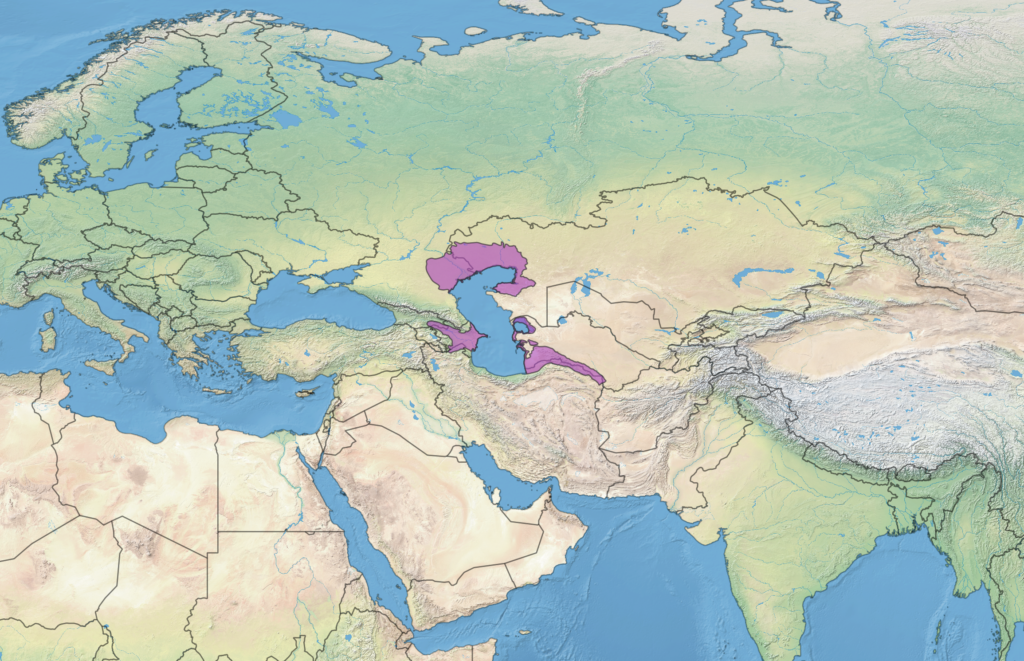
Loucho is practiced in the Caspian coastal region and is built around a fixed grip secured through a belt and a specific pair of loose trousers worn for the bout, a garment configuration that, like the chukheh in Koshti-e Chukheh, defines the entire technical vocabulary of the style. Wrestlers take hold of the belt and trouser leg at the start of the contest and are expected to maintain that grip through much of the exchange, which shifts the technical emphasis toward hip positioning, off-balancing and throwing technique executed from a fixed hold rather than the continuous re-gripping and level changes central to freestyle wrestling.
This fixed-grip structure rewards a wrestler’s ability to generate power and leverage from a static hold, a skill set with clear carryover into the clinch phases of Greco-Roman wrestling, where upper-body control without leg attacks is also the central technical problem. Coaches in the Caspian provinces have long noted that wrestlers who grew up practicing Loucho tend to bring an unusually strong sense of balance and hip mechanics into Greco-Roman training, even before any formal technical instruction in the Olympic discipline begins.
Gileh-Mardi: Loucho’s close relative in Gilan
Gileh-Mardi is closely related to Loucho and is specifically associated with Gilan province, sharing much of the same belt-and-trouser grip structure while carrying its own regional variation in ceremony, terminology and the finer detail of permitted scoring actions. The overlap between the two traditions reflects the close cultural and geographic connection across the Caspian coastal provinces rather than two unrelated inventions that happened to converge on a similar format.
Where the two most clearly diverge is in the surrounding ceremony: the music, the specific ritual phrases used to open and close a bout, and the community role the event plays within a given town or village, all of which carry local variation even where the underlying wrestling technique is nearly identical to Loucho practiced in a neighbouring area. This is a useful reminder that a folk wrestling tradition is rarely a single fixed rulebook; it is closer to a family of closely related local practices that share a technical core while diverging in the ceremony that makes each version specific to its own community.
Three styles, measured on the same criteria
| Feature | Koshti-e Chukheh | Loucho | Gileh-Mardi |
|---|---|---|---|
| Region | Northwest | Caspian coastal provinces | Gilan province specifically |
| Grip mechanism | Traditional coat (chukheh) | Belt and trouser leg | Belt and trouser leg, close variant of Loucho |
| Typical surface | Natural outdoor ground | Outdoor ground, often at local festivals | Outdoor ground, tied to community events |
| Winning action | Clean throw or controlled pin | Throw or forced loss of balance from the fixed grip | Similar to Loucho, with local scoring variation |
| Modern discipline it echoes most | Freestyle upper-body throws | Greco-Roman clinch and hip mechanics | Greco-Roman clinch and hip mechanics |
What iranian traditional wrestling styles share, and where the contrast with freestyle lies
Despite their regional differences, the three styles share a structural feature that separates all of them from freestyle wrestling as the international federation defines it: a fixed initial grip secured through a specific garment, rather than the open, continuously contested hand-fighting and level-changing that characterizes freestyle engagement. This is not a minor procedural detail. It changes the entire technical problem a wrestler is solving.
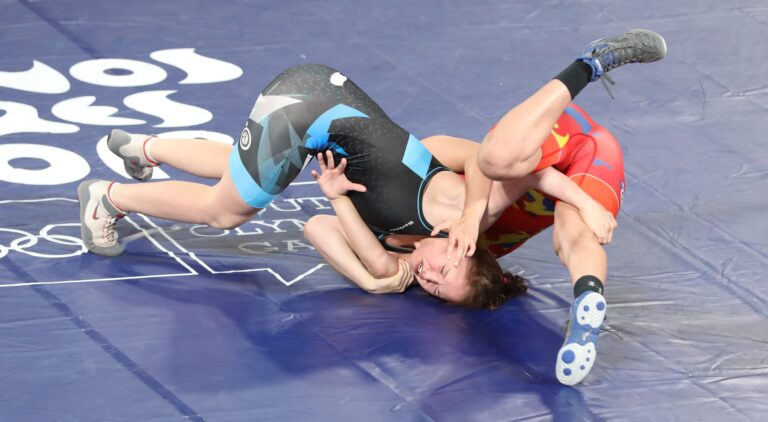
Freestyle wrestling rewards the ability to fight for and change grips continuously, to shoot for a leg from a distance, and to scramble for position on the ground once contact is broken. The three folk styles compared here remove most of that open engagement phase entirely, starting instead from a secured hold and asking the wrestler to generate an advantage from within it. A wrestler raised in one of these traditions is not learning a simplified version of freestyle; he is learning a genuinely different technical problem that happens to share underlying physical qualities, balance, hip drive, upper-body strength, with the modern disciplines.
How the garment shapes the grip, and the grip shapes the throw
It is worth being specific about why the garment in each of these styles matters mechanically rather than just symbolically. A loose coat, as in Koshti-e Chukheh, gives an opponent more fabric to seize but less certainty about exactly where the body underneath it actually is, rewarding wrestlers who can read weight shift through an imprecise handle. A fixed belt-and-trouser grip, as in Loucho and Gileh-Mardi, gives a far more precise and stable hold on the opponent’s hips and lower body specifically, which is exactly the connection Greco-Roman wrestling’s clinch phase depends on once leg attacks are removed from the rule set entirely.
This is why coaches describing the transfer from folk to Olympic wrestling almost always describe it in terms of the grip first and the throw second: the garment determines what kind of contact a young wrestler practices for years before ever training under a different rule set, and that early, repeated contact pattern is what carries over, more than any specific throw learned by name.
What each style contributed to modern Iranian wrestling technique
The contribution of these folk traditions to modern Iranian wrestling is best understood as a set of ingrained physical habits rather than a direct transfer of named techniques, since the rule sets differ too much for a specific move to translate unmodified. Koshti-e Chukheh’s emphasis on reading an opponent’s weight shift through a loose, unpredictable grip develops a sensitivity to balance disruption that shows up in freestyle wrestlers’ upper-body throwing technique from that region.
Loucho and Gileh-Mardi’s fixed hip-and-leg grip builds exactly the kind of sustained core and hip strength that Greco-Roman wrestling’s clinch phase rewards, which is part of why Caspian provinces have historically produced a disproportionate number of strong Greco-Roman wrestlers relative to their population, a pattern that mirrors the broader regional concentration seen across the sport as coaching lineage and local tradition reinforce each other over generations.
Where these traditions are practiced today
None of the three styles has a national competition structure comparable to freestyle or Greco-Roman wrestling, and participation is concentrated around local festivals, cultural preservation events and community gatherings in the specific regions each tradition belongs to, rather than a standing club and league system. Some provincial cultural authorities have made efforts to document and preserve the traditions formally, recognizing their value as intangible cultural practice distinct from, though connected to, the country’s standing as a wrestling nation in the Olympic disciplines.
A small number of clubs in the relevant regions have experimented with introducing folk wrestling exercises specifically as a training supplement for young competitive wrestlers, on the reasoning that the grip-fighting and balance habits described above are worth cultivating deliberately rather than leaving to chance exposure at a village festival a young athlete may or may not attend.
Frequently Asked Questions
What is the main technical difference between these folk styles and freestyle wrestling?
All three start from a fixed grip secured through a specific garment, rather than the open, continuously contested hand-fighting and leg attacks that define freestyle engagement.
Are Loucho and Gileh-Mardi the same style?
They are closely related, sharing the same belt-and-trouser grip structure, but differ in regional ceremony, terminology and some scoring detail, reflecting their specific ties to neighbouring Caspian communities.
Why does Koshti-e Chukheh use a coat instead of a belt?
The chukheh reflects the traditional dress of the northwest region the style comes from, and its looser structure rewards a different grip and balance-reading skill than a fixed belt hold does.
Do these folk styles have official national competitions?
Not on the scale of freestyle or Greco-Roman wrestling. They are practiced mainly at regional festivals and community events rather than through a standing club and league structure.
Do modern competitive wrestlers still train in these folk styles?
Not formally in most cases, though some clubs in the relevant regions use folk wrestling exercises as a supplementary training tool, and many wrestlers from these areas were exposed to the traditions informally in childhood.
None of these three traditions produced an Olympic medal directly. What they produced, over generations, was a population of children who had already learned to fight for a hold and read a shifting balance before a federation coach ever handed them a singlet.