

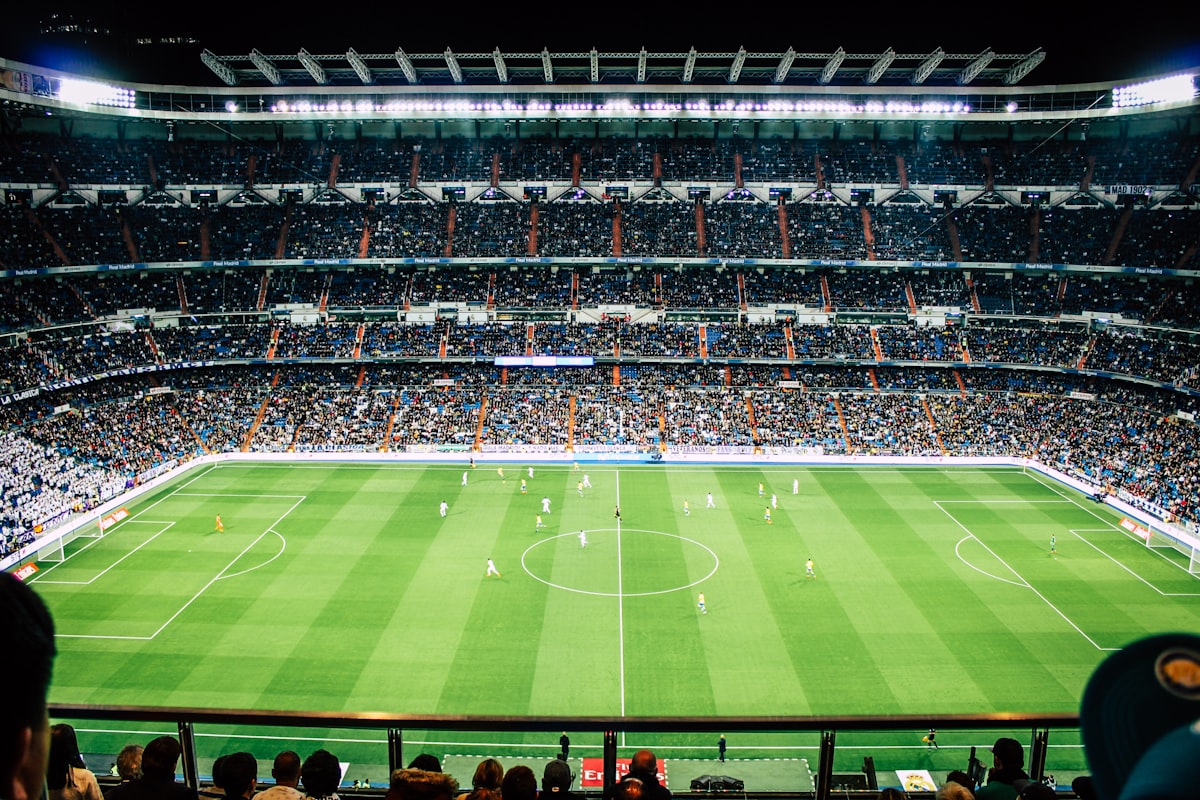
Every title race has a single moment that decides everything before the final whistle. This one happens on April 19th at the Etihad.
I know, I know — we are supposed to pretend every match carries the same weight. Thirty-eight games, three points each, the table does not lie. But that is a convenient fiction, and anyone who has followed the Premier League long enough understands that certain fixtures arrive pre-loaded with so much consequence that the result reverberates through every remaining matchday. This is that fixture. Arsenal versus Manchester City, 70 points versus 61, six games left versus nine, and a nine-point gap that is not really a nine-point gap because Pep Guardiola’s side have two games in hand.
Strip away the noise, and the mathematics are more precarious for Arsenal than the table suggests. If City win their two games in hand, the gap shrinks to three points before a single ball is kicked at the Etihad. A City victory on April 19 would leave them level or ahead on a points-per-game basis. Suddenly, the team that has led the Premier League title race for months would be looking over its shoulder with five games to play and the momentum firmly against it. That is the arithmetic that makes this match existential for both clubs.
I Have Watched Arteta’s Arsenal Evolve. This Is Their Defining Test.
I have covered Arsenal through four full seasons of Mikel Arteta’s management, and the transformation still catches me off guard sometimes. The early years were painful — eighth-place finishes, a squad that lacked identity, a manager whose ideas outpaced his personnel. There were genuine questions about whether Arteta was the right appointment, whether his Guardiola-influenced philosophy could work with a group of players who had been conditioned by years of underachievement.
What Arteta built, slowly and stubbornly, is a team that no longer resembles its mentor’s creation. Arsenal are more direct than City when the game demands it. They are physically dominant in aerial duels. They have the best set-piece record in the league with 23 goals from dead-ball situations — a weapon that Guardiola’s teams have never prioritized and never replicated. Arteta took the principles he learned as an assistant at the Etihad and bent them into something that is distinctly, unmistakably Arsenal.
The defensive numbers are extraordinary. Arsenal concede just 0.74 goals per game, the lowest figure in the division. Their expected goals against per match sits at 0.91, meaning they are actually outperforming their underlying defensive metrics — a testament to both the goalkeeping and the concentration levels that Arteta’s back line maintains for 90 minutes. At the Etihad, where City’s possession will inevitably pin Arsenal deep for extended stretches, that defensive resilience becomes the entire foundation of the game plan.
But here is the tension that keeps me up at night before matches like this: Arsenal have not won the Premier League under Arteta. Not yet. They have come agonizingly close twice, and each time the failure has left scars that no amount of positive spin can fully conceal. The mental weight of that absence — the knowledge that they have been in this position before and stumbled — is the one variable that no tactical board can account for.
Can Arsenal Absorb City’s Pressure?
The first fifteen minutes at the Etihad are unlike anything else in English football. City come out with an intensity that is almost oppressive — full-backs inverting, midfielders rotating, the ball zipping through lines with a speed and precision that reduces opponents to reactive spectators. I have watched top-four teams arrive at the Etihad with excellent game plans and still concede within the opening quarter-hour because the sheer tempo of City’s start overwhelms even the most disciplined defensive structure.
Arsenal, to their credit, have learned how to survive it. In recent visits to Manchester, Arteta has deployed a compact mid-block that cedes territory in the final third while compressing the central corridors where Kevin De Bruyne operates. The pressing triggers are more selective than in home matches — Arsenal will not hunt the ball high at the Etihad, because doing so against City’s build-up play is an invitation to be carved apart. Instead, they invite City to progress into the middle third and then spring coordinated traps designed to force turnovers in positions where City are vulnerable to the counter-attack.
The question is whether that approach can hold for 90 minutes against a City side that has found its rhythm in recent weeks. Erling Haaland’s movement stretches defensive lines vertically. De Bruyne conducts from the half-spaces with the vision of a man who sees passes three moves ahead. And the inverted full-backs — City’s tactical signature under Guardiola — create overloads in central midfield that force opposing teams into impossible choices: compress centrally and leave the flanks exposed, or hold width and concede the middle of the pitch.
Arsenal’s answer has been set pieces. When you cannot dominate open play against the best possession team on the planet, you find another way. Twenty-three set-piece goals this season is not a statistical quirk — it is a deliberate tactical investment, hours of training ground repetition translated into a weapon that functions independently of whether Arsenal control the ball. At the Etihad, where open-play chances may be scarce, a single corner or free kick could be the decisive moment of the entire title race.
What Happens If City Win?
This is the scenario Arsenal fans refuse to think about, so let me think about it for them. A City victory on April 19 would reduce the gap to six points with City still holding a game in hand. In practical terms, that means City would need to win their remaining eight matches while Arsenal would need to drop points at least once more. Given that Arsenal still face Newcastle at home, West Ham away, and Crystal Palace away on the final day at Selhurst Park — one of the most hostile away grounds in England — the probability of a perfect run is low.
More importantly, a City victory would shift the psychological balance of the race entirely. Arsenal would leave the Etihad knowing that the team behind them is in control of its own destiny, that the lead they have built over months of consistent excellence has been cut to a margin where a single bad weekend could erase it. The questions about City’s decline would evaporate overnight, replaced by the familiar narrative of Guardiola’s machine grinding its way to another title.
The Bournemouth result made this calculus worse for Arsenal. Dropping points against Andoni Iraola’s side — a team that is well-organized but should not be taking points from title contenders at this stage of the season — exposed a vulnerability that has surfaced intermittently all campaign. Arsenal sometimes struggle against physical, aggressive mid-table teams that disrupt their passing rhythm and force them into direct play they are not built for. City watched that result and sensed an opening.
The Guardiola Factor
Let me be blunt about something: Pep Guardiola does not lose title races from positions of strength. Not in Spain, not in Germany, and with one exception, not in England. His record in the final ten matches of Premier League seasons when City are within touching distance of the leaders is a horror film for rival supporters — a relentless accumulation of three-point results that crushes hope through sheer inevitability.
This season has been different, and I think the difference is real. City have dropped points in matches they historically would have won on autopilot. The defensive solidity that defined their peak years has shown cracks — lapses in concentration, moments where the press loses its coordination, periods where the midfield engine stutters in ways that would have been unthinkable eighteen months ago. Whether those are symptoms of an aging cycle or temporary fluctuations will be answered in the final nine games.
But writing off Guardiola is the most dangerous thing a rival can do. This is a man who won a treble with this club, who has assembled more domestic trophies than any manager in English football history, and who possesses a tactical mind that adapts to challenges with a speed that borders on the unfair. City’s nine remaining fixtures are spread across a congested schedule that includes Champions League commitments, and managing that workload will be complex. But Guardiola’s squad depth remains formidable, and his ability to rotate without losing quality is an advantage that no other manager in the league can match.
The master-and-student narrative has been told so many times it risks cliche, but it remains the emotional core of this fixture. Arteta spent three and a half years at Guardiola’s side, learning the principles that he has since adapted into Arsenal’s identity. On April 19, the student will try to finish what he has built at the expense of the teacher. Guardiola will try to prove, one more time, that the original is still superior to the adaptation.
The April Fixtures That Decided Titles
History provides uncomfortable precedents for both sides. In 2013-14, Liverpool’s title challenge famously collapsed in April — Steven Gerrard’s slip against Chelsea at Anfield became the defining image of a season that slipped away in the final weeks. Liverpool led the table entering the match and were undone not by tactical failure but by a single moment of individual misfortune that shattered their psychological composure for the remaining fixtures.
In 2018-19, the title was decided on the final day, but the real turning point came in mid-April when City beat Tottenham at the Etihad in a match where the margins were impossibly thin. That result gave City the momentum they needed to reel off eleven consecutive league victories to close the season — a run that, in retrospect, began with a single decisive April performance.
And in 2021-22, City’s wobble against Liverpool at the Etihad in April — a 2-2 draw that kept the title race alive — demonstrated that even Guardiola’s best teams can be disrupted when the occasion and the opposition combine to create the kind of atmospheric pressure that overrides tactical preparation.
The pattern is clear: April fixtures in title races carry a weight that exceeds their three-point value. They set the psychological tone for the remaining weeks. They either confirm a frontrunner’s resolve or expose the cracks that widen under pressure. On April 19, both Arsenal and City will know exactly what is at stake. The question is which team absorbs that knowledge and converts it into performance, and which team buckles under it.
Arsenal’s Remaining Run-In
- Apr 19 — Manchester City (away) — the title decider
- Apr 26 — Newcastle United (home)
- May 3 — Fulham (home)
- May 10 — West Ham United (away)
- May 17 — Burnley (home)
- May 25 — Crystal Palace (away) — Selhurst Park on the final day
Four of those six matches are at the Emirates, where Arsenal have been virtually impregnable — 15 wins, two draws, no defeats this season. But the two away trips are treacherous. The Etihad requires no explanation. Selhurst Park on the final day, with Palace likely playing for nothing but pride and spite, is exactly the kind of fixture that has haunted title contenders for decades. If the race is still alive on May 25, that last match at Crystal Palace could be the cruelest possible stage for Arsenal’s championship hopes.
My Prediction
I am going to make a call that I will either look back on with satisfaction or regret by the end of May, and here it is: Arsenal draw at the Etihad, 1-1, and it is enough.
Not enough in isolation — a draw does not kill City’s hopes, and the title race will grind on for another five weeks after April 19. But enough in the sense that matters most: Arsenal leave Manchester without losing, without their confidence being shattered, without the psychological collapse that a defeat would trigger. They return to the Emirates for Newcastle, Fulham, and Burnley with their belief intact, and they grind out three home wins that put the title beyond City’s reach with a game to spare.
City, for all their quality and Guardiola’s brilliance, run out of runway. Nine games in a compressed schedule, with Champions League football demanding physical and mental energy, proves to be too much. They drop points in one of their games in hand — probably away at a mid-table side on a Wednesday night when the legs are heavy and the concentration wavers — and the effective three-point gap becomes an actual three-point gap that Arsenal’s home form seals shut.
Arsenal win the title with 85 points. City finish on 83. The gap is two points, and both sides know it was decided at the Etihad on April 19 — not by who won, but by who did not lose.
That is my call. I could be spectacularly wrong. But I have watched this Arsenal team absorb punishment all season and refuse to break, and I think that resilience — more than any tactical adjustment, more than any individual performance, more than any set-piece routine — is what carries them over the line. Arteta’s Arsenal do not have to be better than City on April 19. They just have to survive it.
The Etihad awaits. Neither side can blink.
| Pos | Team | Pld | W | D | L | GF | GA | GD | Pts |
|---|---|---|---|---|---|---|---|---|---|
| 1 | Arsenal | 32 | 23 | 6 | 3 | 68 | 24 | +44 | 75 |
| 2 | Manchester City | 32 | 22 | 6 | 4 | 71 | 30 | +41 | 72 |
| 3 | Liverpool | 32 | 20 | 7 | 5 | 63 | 32 | +31 | 67 |
| 4 | Newcastle United | 32 | 18 | 6 | 8 | 55 | 35 | +20 | 60 |
Frequently Asked Questions
What are the title implications of Arsenal vs Manchester City on April 19?
Arsenal currently lead Manchester City by three points at the top of the Premier League. A win for Arsenal would extend the gap to six points with six matches remaining, effectively ending the title race. A City victory would bring them level on points, with momentum and goal difference potentially favoring Guardiola’s side. A draw would maintain Arsenal’s three-point cushion.
What is the head-to-head record between Arsenal and Manchester City in recent seasons?
Arsenal and City have developed one of the Premier League’s most compelling rivalries since Mikel Arteta’s side became genuine title contenders. Over the past three seasons, the results have been remarkably even, with both sides trading victories at home and away. City have traditionally been stronger at the Etihad, but Arsenal’s improved tactical discipline has made them competitive in every encounter.
Who are the key players to watch in Arsenal vs Manchester City?
For Arsenal, Bukayo Saka remains the primary creative threat, with Martin Odegaard orchestrating play from the number ten position. William Saliba and Gabriel form one of Europe’s best center-back partnerships. For City, Erling Haaland’s goal threat is ever-present, while Kevin De Bruyne’s fitness and form could be the decisive factor. Phil Foden’s ability to find pockets of space may prove critical against Arsenal’s compact block.
What are Arsenal and Manchester City’s remaining fixtures after they play each other?
Both clubs face a demanding run-in. Arsenal’s remaining fixtures after the City match include trips to mid-table opposition and home games they would be expected to win, though scheduling congestion from European commitments adds fatigue risk. City face a similarly navigable set of fixtures on paper, but their Champions League involvement could impact squad freshness during the decisive final weeks.
What happens if Arsenal vs Manchester City ends in a draw?
A draw at the Etihad would maintain Arsenal’s three-point lead with six games remaining for each side. Historically, a three-point gap at this stage of the season is enough for the leading team to hold on, provided they avoid unexpected defeats. However, City’s superior goal difference means any slip by Arsenal in subsequent matches could quickly erase the advantage. A draw is widely considered to favor Arsenal, as it preserves their cushion without requiring them to win at one of the most difficult away venues in English football.
Disclaimer: The opinions, predictions, and tactical assessments in this column are the author’s own, based on publicly available match data and years of covering the Premier League. Points totals and fixture schedules are accurate as of publication. For official Premier League standings and results, visit premierleague.com.
Sources: Premier League Official | BBC Sport Football | Sky Sports Premier League