Beneil Dariush Faces Perth and Possibly the End — UFC Fight Night 275
By Arman Petrosian — Published 30 April 2026
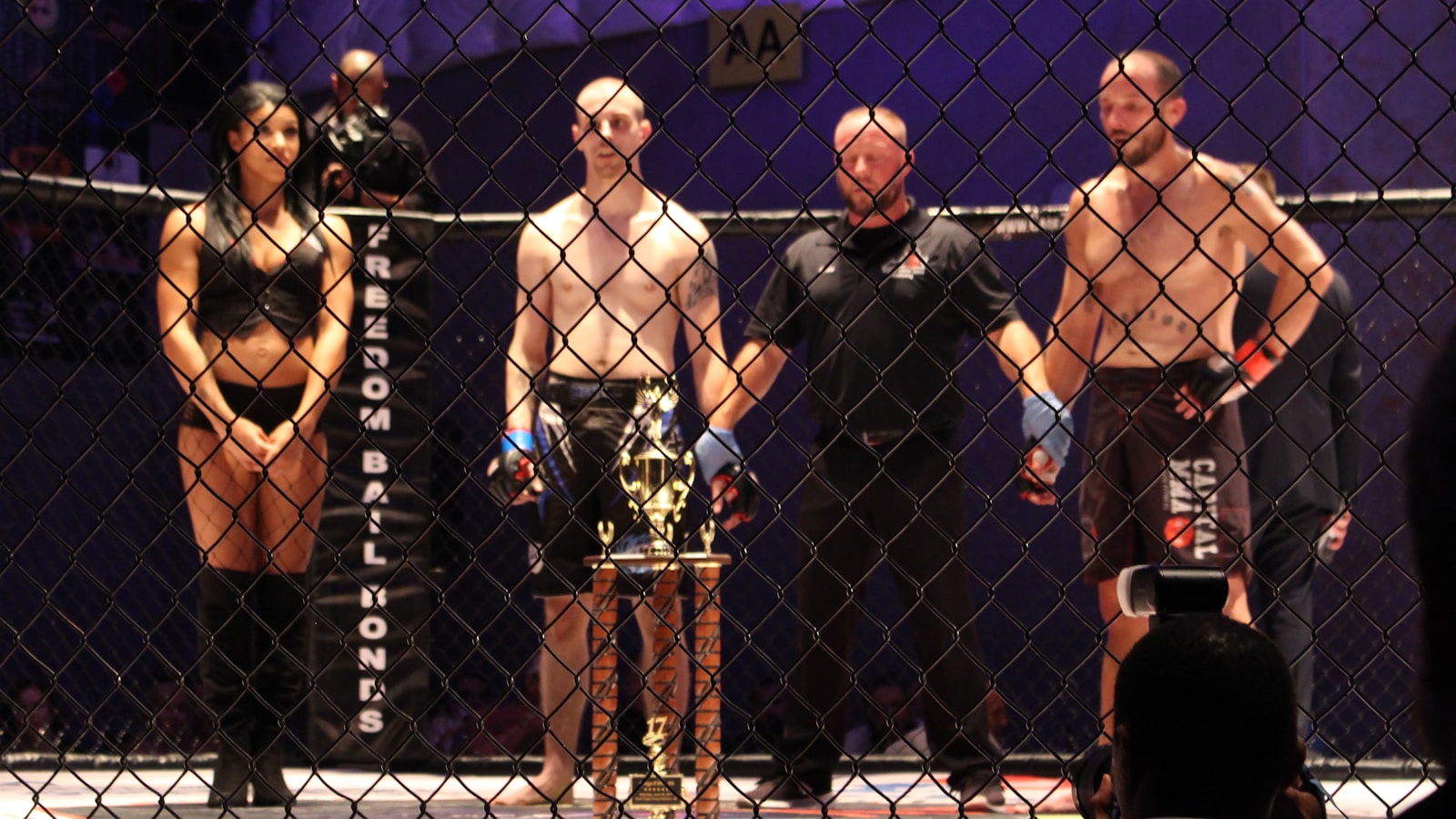
Perth is a long flight for a fighter in any stage of his career. For Beneil Dariush, 36 years old, coming off one of the most brutal losses of a 17-year professional life, the flight to Western Australia for UFC Fight Night 275 on 2 May 2026 is closer to a pilgrimage than an assignment. The last time he competed, Benoit Saint Denis knocked him out in 16 seconds. The time before that, Arman Tsarukyan stopped him in the first round. Somewhere on the road between those two punches, Dariush said out loud what most veteran fighters only say in private: if the next one does not go well, I am finished.
The next one is Quillan Salkilld. 23 years old. 11-1. Born and raised in Perth. Voted UFC Rookie of the Year in 2025 after going 4-0 in his first year on the roster. The matchmaking is so neat it looks like a narrative choice more than a business one, and in a sense it is. Dariush is the experienced name Salkilld needs to lock in his standing in the division. Salkilld is the hungry local hero Dariush will either outlast or be replaced by. The card, headlined by Jack Della Maddalena versus Carlos Prates, will sell out regardless. The co-main event is the one the Iranian diaspora in Australia is flying in to watch.
When Dariush steps into RAC Arena, he will be carrying a specific history. Not a simple one. Born in Urmia. Raised in an Assyrian Christian household. Emigrated to California as a boy. Climbed through Brazilian jiu-jitsu and mixed martial arts with a grappling base good enough to earn a black belt under Romulo Barral in five years and elite enough to beat Kron Gracie at the coloured-belt IBJJF Worlds. He turned professional in 2009, reached the UFC lightweight top five by 2022, and did all of it as one of the most publicly devout Christians in the sport. If his career ends in Perth, the obituaries will have more to work with than most.
The Urmia Start
Dariush was born on 6 May 1989 in Urmia, capital of West Azerbaijan Province in northwestern Iran, near the Turkish and Iraqi borders. Urmia is a historically complex city: predominantly Azeri-speaking, home to significant Kurdish and Armenian communities, and the cultural and demographic heart of Iran’s Assyrian Christian minority. The Dariush family were part of that last group, one of the oldest continuous Christian communities in the Middle East, tracing its church lineage back to the first century and its liturgical language to Aramaic.
He has spoken, cautiously, about what that identity meant during his childhood. In a 2026 interview he told MMA Junkie that there was “always some persecution toward Christian Assyrians” in Iran, which contributed to his family’s decision to emigrate when he was nine. The family moved to California in 1998, where relatives had already settled, and Dariush grew up in the Assyrian community of Turlock, a few hours east of San Francisco. His English still carries a trace of the specific Assyrian cadence of that community, softened by three decades in California.
The Brazilian Jiu-Jitsu Years
He came to combat sport late. He was 18 when he first walked into a Brazilian jiu-jitsu academy in 2007, a casual attempt to find a physical discipline that matched what he had been looking for in the church community and not quite finding. The discipline stuck. Within five years he was a black belt under Romulo Barral at the Gracie Barra lineage, and within seven he had accumulated a coloured-belt competition record that included IBJJF No-Gi titles and a win over Kron Gracie, the son of Rickson Gracie.
Old BJJ video of Dariush shows a specific style: a strong guard game built on collar-sleeve control, a close-guard triangle he set up from deep positions, and a standing passing game he used late in matches when he was ahead on points. In MMA language, that translated into a submission-first early career with a specific identity as an opportunistic finisher from bad positions. He was the rare fighter who genuinely wanted the referee to stand him up because it meant he could try again from a better setup.
The Climb to the UFC Lightweight Top Ten
Dariush turned professional in 2009. His first UFC appearance came in 2014, a submission-of-the-night win over Charlie Brenneman. The years between 2014 and 2019 were mixed: flashes of brilliance, a few losses, a learning curve that most late-bloomers experience at the UFC level. The turn came in 2020. Beginning with a knockout of Drakkar Klose in March of that year, Dariush embarked on an eight-fight winning streak that carried him into the top five of the lightweight division.
The two signature wins of that run were against Tony Ferguson in May 2021 and Mateusz Gamrot at UFC 280 in October 2022. The Ferguson bout ran the full three rounds, with Dariush controlling the pace through a combination of kicks, pressure and the occasional take-down to reset the range. The Gamrot win was the one that arguably placed him a single victory from a title shot. After that fight, Dariush said in his post-event interview that he believed his body had two more years of championship-level performance in it. He was 33.
The Three Losses That Changed the Map
The first sign of the current difficulty came at UFC 289 in June 2023, when Charles Oliveira, the former champion, stopped Dariush in the first round. Dariush has since said that he “didn’t show up that night,” a phrase that carries a particular meaning in fighter vernacular and refers not to effort but to the cognitive preparation that the week of a fight is supposed to produce. Six months later, at UFC on ESPN 52 in December 2023, Arman Tsarukyan knocked him out in the first round. A third loss followed in November 2025, to Benoit Saint Denis, in 16 seconds.
Three first-round losses in two and a half years rewrite what a fighter is allowed to think of himself. Dariush is a professional realist. In interviews between the Tsarukyan and Saint Denis losses, he acknowledged that the cumulative damage was real, that his timing had begun to slip on shots he would have read at 30, and that the answer would either be found in the next camp or would not be found at all. The Salkilld bout, announced in March 2026, is that next camp. He has not explicitly said this is a retirement fight, but he has told more than one Iranian and American outlet that he will “take a hard look” at his career afterward.
Perth as a Venue, Salkilld as a Profile
RAC Arena in Perth holds around 15,000 for combat sports, which for a non-PPV Fight Night is a robust stage. The Della Maddalena versus Prates main event guarantees the building will sell out. Salkilld in the co-main is a Perth-native story: he trains at Scrappy MMA under head coach Adrian Pang, he came up through Australian amateur circuits, and he signed with the UFC in 2024 at age 21. His 4-0 rookie year included stoppage wins over Yanal Ashmouz and Anshul Jubli and a decision over Daniel Zellhuber that earned him a spot near the lightweight rankings.
For Dariush, the matchup is a specific kind of problem. Salkilld is a pressure striker with a southpaw stance, a willingness to take shots to land shots, and the youth to maintain pace through a five-round championship profile even if this particular bout is scheduled for three. Dariush’s traditional answer to that profile is to drag the fight to the floor, exhaust the opponent through clinch control, and look for the late submission. The question is whether his body, after Saint Denis, can still execute that answer under live pressure.
The Technical Questions The Fight Will Answer
Dariush’s best path to victory runs through the clinch and the floor. His striking has never been the most refined in the division, but he has an effective jab from southpaw, a hard left round kick he throws from range, and a lead right hook that has caught taller opponents in the past. He rarely throws in combination; he prefers single committed strikes with long recoveries. That style rewards a specific kind of discipline and punishes a moment of lapsed concentration, and it is the Saint Denis knockout that has put the lapsed-concentration risk in sharp focus.
Against Salkilld, the plan is probably to force the Australian into the body-lock and the low single early, test whether the rookie’s takedown defence holds up under sustained attack, and if it does not, move to the ground and look for the classic Dariush transitions — the step-over to mount, the arm-triangle from half-guard, the back-take from a failed opponent scramble. If Salkilld stuffs the first two takedowns, Dariush will have to strike at range with an opponent who is younger, faster and hungrier. That is the nightmare scenario for any veteran.
Faith, Identity, the Stuff Underneath
One thing that distinguishes Dariush from most UFC fighters is the public visibility of his faith. He is a devout evangelical Christian, attends a non-denominational church in Southern California, prays visibly in the octagon before and after fights, and has given interviews in which he discusses his Assyrian heritage as inseparable from his Christian identity. In the fight industry, which tends to reduce identities to marketing hooks, he has refused the reduction. He will talk about his faith and his Assyrian family as specific things rather than as content, and he has said repeatedly that fighting is his work rather than his self.
That is an unusual position for a fighter approaching the end of a career. Most men in his situation struggle with the question of who they will be when the cage light no longer turns on for them. Dariush has spent seventeen years actively preparing a non-fighting identity in parallel with his fighting one. He owns a ranch in California, runs a jiu-jitsu affiliate there, and has spoken about his post-career interest in pastoral work. Whatever happens in Perth, the second act has been on the drawing board for a while.
The Assyrian-Iranian Audience
For Iranian fight fans, Dariush occupies a specific and somewhat complicated slot. He is, by any neutral measure, the most accomplished Iranian-born fighter the UFC has ever had. He has twenty-four wins on his professional record, seven losses, one draw, and a lightweight top-ten stay that spanned roughly four years. He has represented Iran, if reluctantly, at the identity level: the Iranian flag has appeared on his walkout, his UFC bio lists Iran as his country of birth, and he has spoken respectfully about his Iranian roots in every major interview.
At the same time, his Assyrian Christian identity places him outside the majority Shia Muslim culture that defines most of Iranian public sports fandom. The result is that he has been more celebrated in the Iranian-American diaspora than in Iran itself, more read about in Tehran than watched in it, and more claimed by Iranian Armenians and Assyrians than by the mainstream Iranian sports establishment. That calculus has quietly shifted in recent years. Iranian state television has acknowledged his career. Iranian sports journalists have begun to write about him without the earlier hesitation. Whether Perth is his farewell or not, he has already crossed most of the lines that his generation could reasonably cross.
The Kings MMA Camp and the Rafael Cordeiro Factor
Dariush has trained out of Kings MMA in Huntington Beach, California, under head coach Rafael Cordeiro for essentially his entire UFC career. Cordeiro, a Chute Boxe-lineage Brazilian Muay Thai and MMA coach, has developed some of the most successful lightweights and middleweights of the modern era, including Rafael dos Anjos, Fabricio Werdum, and Wanderlei Silva at earlier stages of his coaching career. The Kings MMA training culture is famously old-school: long rounds, hard sparring, an emphasis on technical discipline over athletic explosiveness, and a tight inner circle of fighters who have been together for years.
Dariush’s technical evolution over the last decade — the way his Muay Thai has tightened, the way his wrestling entries have become more economical, the way his top-position control has learned to travel from position to position without giving up structural leverage — all of it traces to the Kings MMA room. Cordeiro is, by his own description, not a yeller. He teaches through reps and repetition. That suits Dariush’s temperament. The two men have a working relationship that most fighter-coach pairs envy, and if Dariush retires after Perth, Cordeiro will almost certainly be on the short list of people he consults about next steps.
The Perth camp itself, according to reporters who visited the Kings MMA room in late March 2026, has focused on two specific technical preparations. The first is reintroducing head-movement drills intended to address the timing issue that produced the Saint Denis knockout. The second is emphasising takedown entries from the clinch rather than from open space, a strategic choice designed to neutralise Salkilld’s early-round striking pressure. Neither adjustment is radical. Neither would transform Dariush’s fundamental approach. But both reflect a fighter and a coach making specific, disciplined calibrations rather than reinventing the wheel in a late-career camp.
The Scenarios
There are essentially three ways the Perth bout resolves. Dariush wins decisively, in which case he probably stays active another 12 to 18 months and takes one more ranked opponent to see where he stands. He wins narrowly in a competitive fight, in which case he likely retires on his own terms with the last victory to close the book. He loses, in which case he almost certainly retires within weeks of the event. None of these scenarios is particularly favourable to Salkilld being stopped, and none of them turn Dariush back into a title contender. But they do frame the departure of an Iranian fighter who has meant more to the sport and to a specific minority community than most fans outside the MMA ecosystem have fully registered.
He is 36. He has lost three of his last four. He has a ranch waiting. He has a diaspora watching. He has a congregation praying. The book closes when he decides it does, and he has earned the right to decide.
What His Career Already Means For Iranian MMA
Whatever happens on 2 May, Dariush’s broader legacy for Iranian mixed martial arts is already settled. He is the most successful UFC fighter to emerge from Iran to date, bar none, and his trajectory has opened a door that a younger generation of Iranian fighters is now walking through. Amir Albazi, the Iraqi-born Iranian flyweight, and Hakeem Dawodu, who has Iranian-Nigerian heritage, have both cited Dariush as a model. So has Arman Tsarukyan, the Armenian-born fighter who beat Dariush in December 2023 and who has publicly said that Dariush was one of the first visibly Iranian-background fighters he watched as a teenager in Yerevan.
In Iran itself, where MMA remains a contested cultural category because of its perceived conflict with traditional wrestling values, Dariush has functioned as a kind of translation figure. Iranian wrestling purists who dismiss MMA as brawling have, in interviews, granted Dariush the respect they grant traditional wrestlers because his jiu-jitsu lineage and his technical discipline look, to them, like legitimate combat skill. Iranian MMA promoters, a nascent ecosystem with a handful of regional shows in Tehran and Mashhad, have used his career as a calling card for young fighters who want to pursue international careers through the American promotional system.
The Iranian diaspora population in California, particularly in the Bay Area and in Los Angeles, has been Dariush’s most visible fanbase for the last decade. Perth’s RAC Arena will see a significant contingent of that diaspora making the Pacific crossing specifically for this fight, and the Iranian-Assyrian community in Sydney and Melbourne has organised its own viewing events at community halls. Whatever the scorecards say on 2 May, the room will know what it is watching.
Dariush’s Recent UFC Record
| Date | Opponent | Event | Result |
|---|---|---|---|
| Oct 2022 | Mateusz Gamrot | UFC 280 | Win — Decision |
| Jun 2023 | Charles Oliveira | UFC 289 | Loss — TKO R1 |
| Dec 2023 | Arman Tsarukyan | UFC ESPN 52 | Loss — KO R1 |
| Nov 2025 | Benoit Saint Denis | UFC Fight Night | Loss — KO :16 |
| May 2 2026 | Quillan Salkilld | UFC Fight Night 275, Perth | — |
Frequently Asked Questions
When and where is Dariush vs. Salkilld?
UFC Fight Night 275 on 2 May 2026 at RAC Arena in Perth, co-main to Jack Della Maddalena vs. Carlos Prates.
Where was Beneil Dariush born?
Urmia, West Azerbaijan Province, Iran. He is of Assyrian Christian descent and emigrated to the United States at age nine.
What is his BJJ lineage?
Black belt under Romulo Barral at Gracie Barra. Earned in five years, with IBJJF No-Gi titles and a coloured-belt win over Kron Gracie along the way.
Is this his retirement fight?
Not officially, but he has publicly said he will “take a hard look” at his career after Perth, following three first-round losses in two and a half years.
Sources
- UFC — Fight Night Della Maddalena vs. Prates official page
- Wikipedia — Beneil Dariush
- BJJ Heroes — Beneil Dariush profile
Related coverage on Sports Persia
Arman Petrosian covers combat sports, wrestling, and strength athletics for Sports Persia. He writes from Tehran and Yerevan.