
The Road to LA 2028: Iran’s Push Through the 2027 FIBA World Cup Asian Qualifiers
By Saman Azizi — Published May 5, 2026
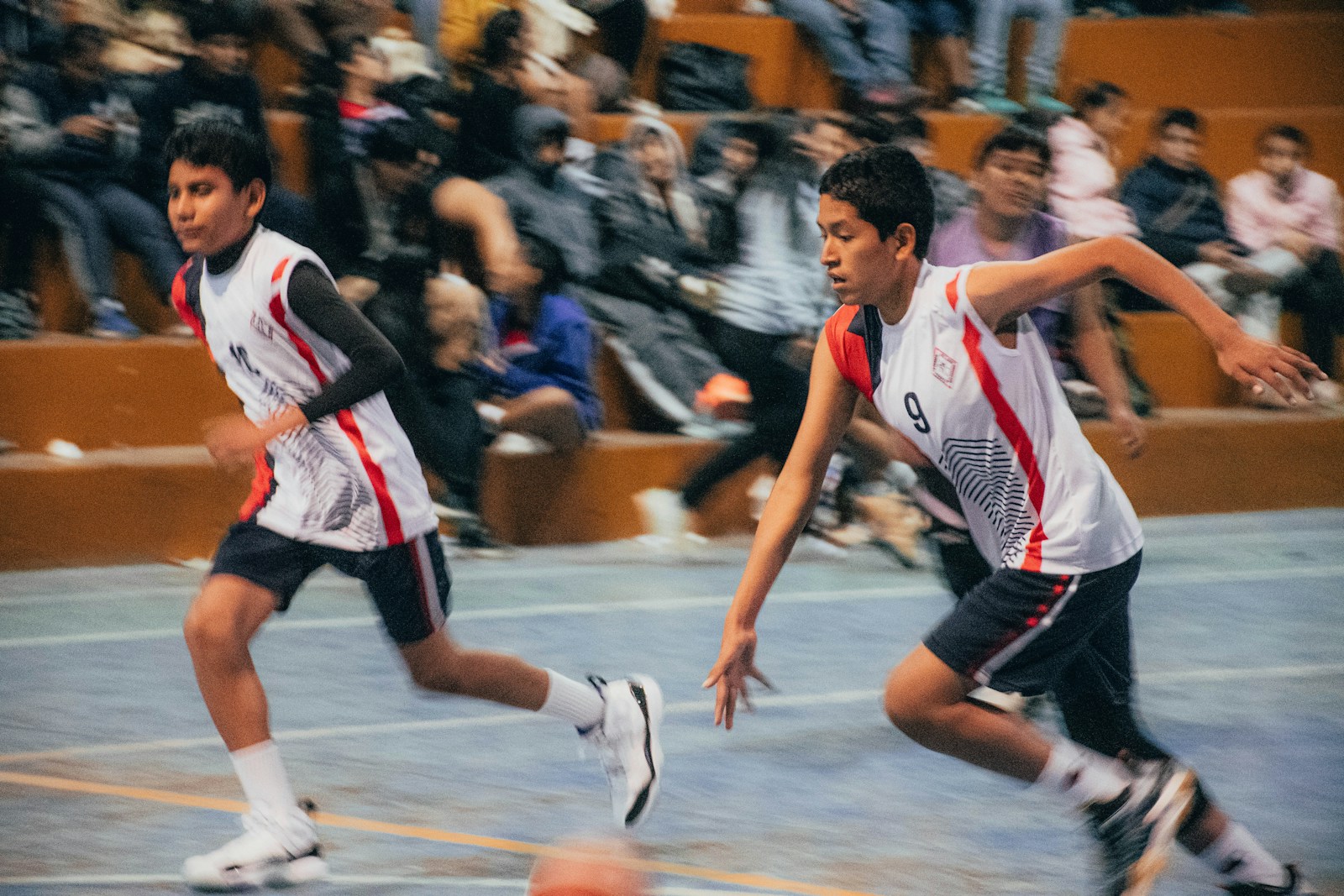
The Mahmoud Mashhoun Basketball Hall in Tehran is quieter than it was twelve months ago for Hamed Haddadi’s jersey retirement, but only slightly. Iran’s national team has taken the floor for the second window of the 2027 FIBA Basketball World Cup Asian qualifiers, and the crowd — heavily male, heavily loyal, heavily invested — has filled the bowl to roughly three quarters capacity. The starting five runs through its warm-up routine. Sina Vahedi dribbles through cones. Mohammad Jamshidi warms the corners with catch-and-shoot reps. On the bench, head coach Sotirios Manolopoulos writes something in Greek on a tactics board.
No number 15 jersey is in the rotation. The banner hangs overhead, and that is how it will stay. Haddadi is gone. So, notably, is Behnam Yakhchali, whose absence from the federation’s call-up list has become one of the quiet storylines of Iranian basketball’s current cycle. What remains is a program that won bronze at the 2025 FIBA Asia Cup in Saudi Arabia last summer and is now trying to convert that continental credibility into something larger: a third consecutive Olympic Games appearance.
To get there, it has to navigate the 2027 FIBA World Cup Asian qualifiers, an eighteen-month road that opened in late 2025 and will end in March 2027. Iran has started well. But the real test is still ahead.
The Qualifier Structure
The 2027 FIBA Basketball World Cup will be hosted by Qatar, making it the second straight Asian-hosted Men’s World Cup. The Asian qualifying pathway accommodates sixteen teams split into four groups of four for the first round, with the top three from each group advancing to a second round of twelve teams. Those twelve are redrawn into two groups of six, and the top three from each group — plus Qatar as hosts — fill the eight Asian berths at the World Cup.
The full schedule spans five windows: November 2025, February-March 2026, June-July 2026, November 2026, and February-March 2027. Each window hosts home-and-away games. It is a slow-burn format designed to build continuous national-team identity between summers, closer to how European federations have operated for years.
Group C: Iran’s Path
Iran drew into Group C alongside Iraq, Jordan, and Syria. On paper, it is a favorable group. Iran is the highest-ranked member by a comfortable margin, Jordan has historically been the group’s second-best team, and Iraq and Syria are rebuilding programs without continuous international exposure.
In Window 1, Iran opened at home against Iraq on November 27, 2025, and won 94-68. The scoreline was emphatic, but the tape was more interesting than the margin. Manolopoulos’s team hit 13 three-pointers — a team record in a qualifier — and moved the ball through 27 assists. The rebuild of Iran’s offense around perimeter shooting, a marked shift from the Haddadi-era low-post orientation, was already visible.
Game two came three days later against Jordan. Vahedi was rested. Piter Girgoorian, a 23-year-old combo guard born in Tehran to an Iranian-Armenian family, stepped into the starting five and dropped 21 points. Seyed Mahdi Jafari added 9 points and 9 assists in the point-guard role. Iran won comfortably and closed the first window at 2-0.
What Manolopoulos Is Building
Sotirios Manolopoulos took over the Iranian program in 2024. He is a journeyman Greek coach with Iberian and Turkish club experience, and he was hired specifically to modernize Iran’s tactical system. The pitch from the federation was straightforward: the Haddadi-anchored post offense had run its course, the 2025 Asia Cup bronze team needed perimeter shooting and faster defensive rotations, and Iranian youth academies were producing players who suited a European-style motion offense better than a classical inside-out system.
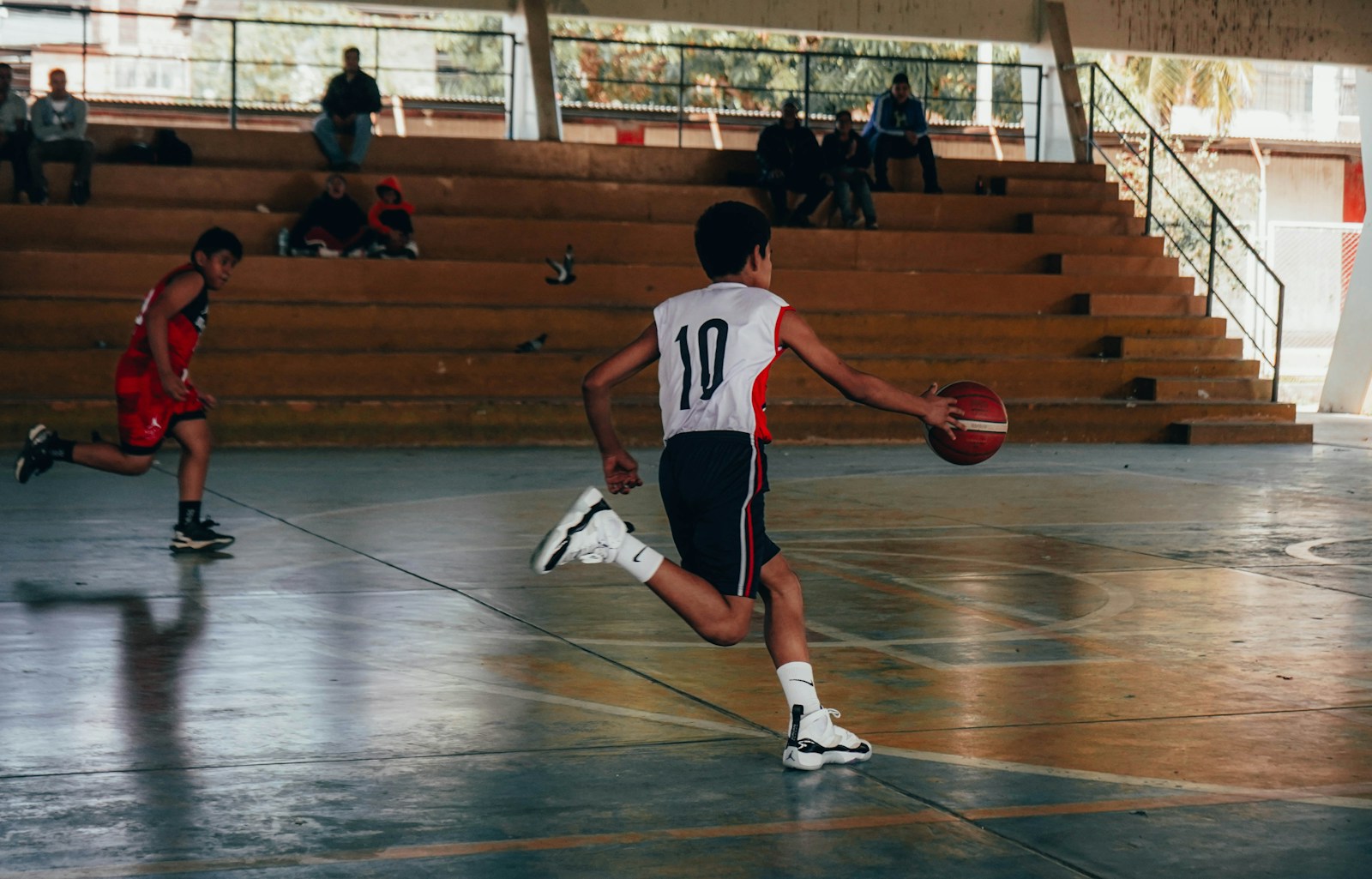
Manolopoulos’s Iran runs significantly more pick-and-roll action than the teams of the previous decade. The two big men on the roster — Mohammad Amini and Ardeshir Jafari — are mobile enough to screen high and either roll or pop. Jamshidi, the longtime captain, has been reshaped into a combo-forward who initiates from the elbow. Vahedi, at point guard, is given the keys to the offense more often than any Iranian guard in a decade.
Defensively, the shift is toward aggressive high screens and switching against smaller lineups. It is a bet that athleticism, not size, will decide Asian basketball’s near future. The early returns in Asia Cup 2025 and in the first qualifier window support the thesis.
The Yakhchali Question
Behnam Yakhchali remains the most talented scoring guard of his Iranian generation. His three-point shooting, his handle, and his ability to get to the rim have made him a fixture in European leagues since his mid-twenties. He is only 30 now.
Yet he is not on the floor for Iran. Tehran Times and a handful of English-language Asian basketball outlets reported in 2024 and 2025 that Yakhchali opted out of national team windows for what federation officials described, without further elaboration, as personal reasons. He was absent from the Asia Cup bronze run. He was absent in Window 1. As of the most recent federation communications in April 2026, no timeline for his return has been published.
Manolopoulos has declined, in press availabilities, to speculate publicly about Yakhchali’s availability. Federation officials have confined themselves to polite non-answers. The program has essentially moved on from Yakhchali as a rotation assumption — a decision that was forced on it, but one that has unexpectedly accelerated the development of the younger guards.
The Core and the Rotation
A snapshot of the rotation entering Window 2 looks like this.
| Player | Position | Role | Notable |
|---|---|---|---|
| Sina Vahedi | PG | Starting point guard, offensive engine | 2025 Asia Cup All-Star Five |
| Mohammad Jamshidi | SF | Captain, combo initiator | Iran’s most veteran scorer |
| Piter Girgoorian | SG | Rising wing, off-ball shooter | 21-point breakout vs Jordan |
| Seyed Mahdi Jafari | PG | Backup point guard, distributor | 9 assists vs Jordan |
| Mohammad Amini | C | Starting centre, pick-and-roll finisher | Replaces the Haddadi-era pivot role |
The rotation depth extends to roughly ten players. Navid Rezaeifar, a long shooting forward, has emerged as an instant-offense option off the bench. Meisam Mirzaei, a Super League veteran, provides frontcourt minutes without taking offensive possessions. The bench does not yet have a true closer — the player you want taking the last shot of a tied third-window game against, say, the Philippines — but the development curve is steep.
The Philippines, New Zealand, and Australia
Assuming Iran advances from Group C — which the numbers strongly suggest — the second round will draw in the stronger Asian nations. Australia is the continental heavyweight; Iran is unlikely to beat them in a best-of-one at home. New Zealand, whom Iran beat 79-73 for the 2025 Asia Cup bronze, is the most winnable top-tier opponent. The Philippines, steadily improving since hosting their share of the 2023 World Cup, are the wild card.
The math is uncomfortable. Seven Asian berths, not counting host Qatar. Twelve teams in the second round. It means five programs go home. Iran is not safe. It is inside the bubble of probable qualifiers, but not comfortably inside it.
The Olympic Connection
A top-two finish at the 2027 FIBA World Cup from the Asia/Oceania region books an automatic berth at LA 2028. That outcome is unlikely for any non-Australian Asian team. The realistic path runs through the Olympic Qualifying Tournaments in mid-2028, where top World Cup finishers from each region are seeded into a handful of four-team mini-tournaments.
Iran’s Olympic basketball history is short. Beijing 2008 and Tokyo 2020. A third appearance would mean a team assembled in the aftermath of the Haddadi era reached a height comparable to the team built around him. It would be, without exaggeration, the most significant structural achievement in Iranian basketball history.
The Domestic Backdrop
All of this sits on top of a domestic competition — the Iranian Super League — that has had a complicated decade. Budgets have swung. Franchises have folded and been reconstituted. Foreign players have come and gone with the ruble-dollar exchange rate. The product on the court is inconsistent, and national-team coaches for years have complained that the league does not adequately simulate international tempo.
Under federation president Mahmoud Mashhoun, there have been reform attempts — more streamlined foreign-player quotas, a mandatory youth-development line for each club’s budget, and coaching-education partnerships with Greek and Serbian federations. It is early to judge the reforms, but Iranian scouts report that the 2025-26 Super League season has produced the best crop of 20-to-22-year-old prospects in a decade.
Without a strong domestic league, no national team can build a genuine second wave. Iran’s current push through World Cup qualifiers will indirectly test whether the Super League reforms have begun to work.
The Next Windows
Window 3 opens in late June 2026 with Iran visiting Jordan in Amman before hosting Syria in Tehran. Window 4 follows in November, the point at which the second-round teams will be settled. By the time the calendar turns to 2027, Iran should either be comfortably in the second round or else in a position where a single loss could cost them a generation of momentum.
Manolopoulos, asked in April whether he felt the pressure of the Olympic narrative behind the qualifier, offered a coach’s answer. “I watch the next forty minutes,” he said. “The rest is not my job.”
A Quiet Belief
There is a belief inside Iranian basketball, rarely stated in public, that this generation of players can do what the Haddadi generation did — reach the Olympics — without the singular superstar at its centre. The belief is not universal, but it is there. It is what drives the federation’s investment in Manolopoulos, in the youth pipeline, in the longer qualifier cycle.
The next eighteen months will tell whether the belief is well-founded. For now, the jersey in the rafters watches over a team that no longer plays the way it used to, chasing a prize the program is still learning to believe it can win.
The Calendar Reality
The qualifier structure is demanding on Iranian players in specific ways that are worth laying out clearly. Windows in November and February pull players out of their club seasons — whether those clubs are in the Iranian Super League, in Turkish or Greek leagues, or in more distant European and Middle Eastern competitions. The travel alone is significant. Tehran to Amman. Tehran to Manama. Tehran to Taipei. Each round trip consumes roughly 36 hours of transit time and compresses recovery schedules.
For national-team players based domestically, the disruption is somewhat less severe — the Iranian Super League can flex around international windows. For players based internationally, the coordination is harder. Mohammad Jamshidi, who has played professionally in Turkey during recent seasons, has had to negotiate club release windows carefully around each qualifier. Piter Girgoorian, based in Armenia, has been available consistently but at the cost of club minutes at key points in the league schedule.
The FIBA calendar, as structured, privileges programs with deep domestic rosters of players whose clubs can accommodate international releases. For mid-sized programs like Iran’s, the calendar is a constant logistical negotiation. The federation’s ability to maintain roster continuity across the five qualifier windows will itself be one of the quieter tests of the program’s institutional maturity.
Lessons from the 2025 Asia Cup Bronze
The foundation for the current qualifying campaign was laid at the 2025 FIBA Asia Cup in Saudi Arabia. Iran finished 5-1 with a bronze medal after defeating New Zealand 79-73 in the third-place game. The tournament served, retrospectively, as the dress rehearsal for the post-Haddadi system. Manolopoulos tested his motion offense. The younger guards logged their first meaningful senior international minutes. The centre rotation was audited against top-tier Asian competition.
Several tactical lessons from the bronze run have carried directly into the World Cup qualifiers. The pick-and-pop action used extensively in the semifinal against Australia has become a staple of the offense. The switching-defense scheme against smaller lineups, first tested in the knockout bracket, is now the default against teams without a dominant interior scorer. And the bench rotation patterns — particularly the use of Seyed Mahdi Jafari as a closing-lineup combo guard — have been retained wholesale.
The bronze also confirmed, in the federation’s internal review, that the program no longer needs a traditional low-post scorer to function. This was a psychologically significant finding. For two decades the assumption had been that Iranian basketball required the kind of interior presence Haddadi had provided. The 2025 Asia Cup demonstrated that the assumption was, in modern competitive terms, outdated.
The Perimeter Shooting Transformation
Iranian basketball, for most of its modern history, has been a low-post-dominated program. Haddadi was the focal point of every offensive set. Sets flowed through him. When he was doubled, kickouts to open shooters occurred, but the shooters themselves were not always the primary identity of the team. That has changed dramatically.
Manolopoulos has reshaped the offensive system around three-point shooting. In the November qualifier window, Iran averaged 13.5 three-pointers per game — a figure that would have been unthinkable for the Haddadi-era program. Five different players on the active roster shot above 36 percent from three during the 2025 Asia Cup. The three-point attempt rate climbed above 40 percent of total shots, putting Iran statistically in line with European national teams rather than with its Asian peers.
The transformation is partly personnel-driven. The younger generation of Iranian guards grew up watching the NBA’s three-point revolution and trained their shooting form accordingly. It is partly tactical. And it is partly psychological. The new generation of players enters games expecting to shoot threes, expecting to defend threes, and expecting the game plan to revolve around the perimeter. The cultural shift inside the locker room has happened faster than most observers expected.
The Center Rotation
Replacing Haddadi has, inevitably, been the most discussed aspect of the post-2021 program. Mohammad Amini, 26, has emerged as the primary option. He is 6-foot-10 — four inches shorter than Haddadi — but substantially more mobile, particularly in pick-and-roll defense. Amini’s game is modern: he rolls hard to the rim, he sets screens at the three-point line, and he occasionally steps out to shoot from distance himself.
Behind Amini, Ardeshir Jafari and the veteran Meisam Mirzaei split backup minutes. Neither is a traditional Asian post scorer. Both are physical screens, rim-protectors, and transition-break finishers. The centre room lacks a true low-post threat in the Haddadi mold, but it compensates with mobility and switching defense that the prior generation did not have.
The longer-term centre question is more open. The 2025-26 Iranian Super League has produced two genuinely promising big-man prospects in the 19-to-21 age range, both of whom have been invited to senior training camps. Whether either develops into an international-level starter in the next two seasons is uncertain.
The Turkish and Iranian Diaspora Basketball Scene
A lesser-covered aspect of the Iranian basketball program is the growing role of Iranian-heritage players who grew up and play professionally outside Iran. Piter Girgoorian, the breakout star of the November qualifier window, was born in Tehran but played much of his youth basketball in Armenia. Several players in the federation pipeline have played at European junior levels before returning to the Iranian senior program.
The federation has increased its scouting presence in Turkey, Germany, Armenia, and Dubai, where substantial Iranian expatriate populations produce a steady supply of dual-eligible talent. The administrative process for registering diaspora players is complex but functional, and the competitive uplift is meaningful.
This kind of diaspora integration has been standard in many national-team programs for years — from Poland’s use of Polish-American players to Lebanon’s reliance on Lebanese-heritage Americans. For Iran, it is relatively new as a formal strategy, and it is already shaping the rotation.
Sources
- FIBA — 2027 World Cup Asian Qualifiers
- Tehran Times — Iran win bronze at 2025 FIBA Asia Cup
- Wikipedia — Iran men’s national basketball team
Related Reading
- Iran’s broader international sporting posture
- Tactical breakdowns from our knockout-round preview
Frequently Asked Questions
When did the 2027 FIBA World Cup Asian qualifiers begin?
The first round opened in November 2025. The second round runs through early 2027, with 16 teams competing across two phases for seven Asian berths at the 2027 FIBA Basketball World Cup.
What group is Iran in?
Iran is in Group C alongside Iraq, Jordan, and Syria. The top three teams from each first-round group advance to the second round.
Why is Behnam Yakhchali not in the current squad?
Yakhchali opted out of recent national team camps for what the federation has described as personal reasons. He was absent from the 2025 FIBA Asia Cup bronze-medal roster and has not returned for the qualifiers.
How is Iran’s Olympic qualification linked to these games?
A strong World Cup performance is the most direct path to the 2028 Olympic tournament, either through the World Cup itself or through the Olympic Qualifying Tournaments that use World Cup results for seeding.