
Silence in Sydney: Iran’s Women’s Football Team and the 2026 AFC Women’s Asian Cup Anthem Controversy
By Fatemeh Kianpour — Published May 4, 2026
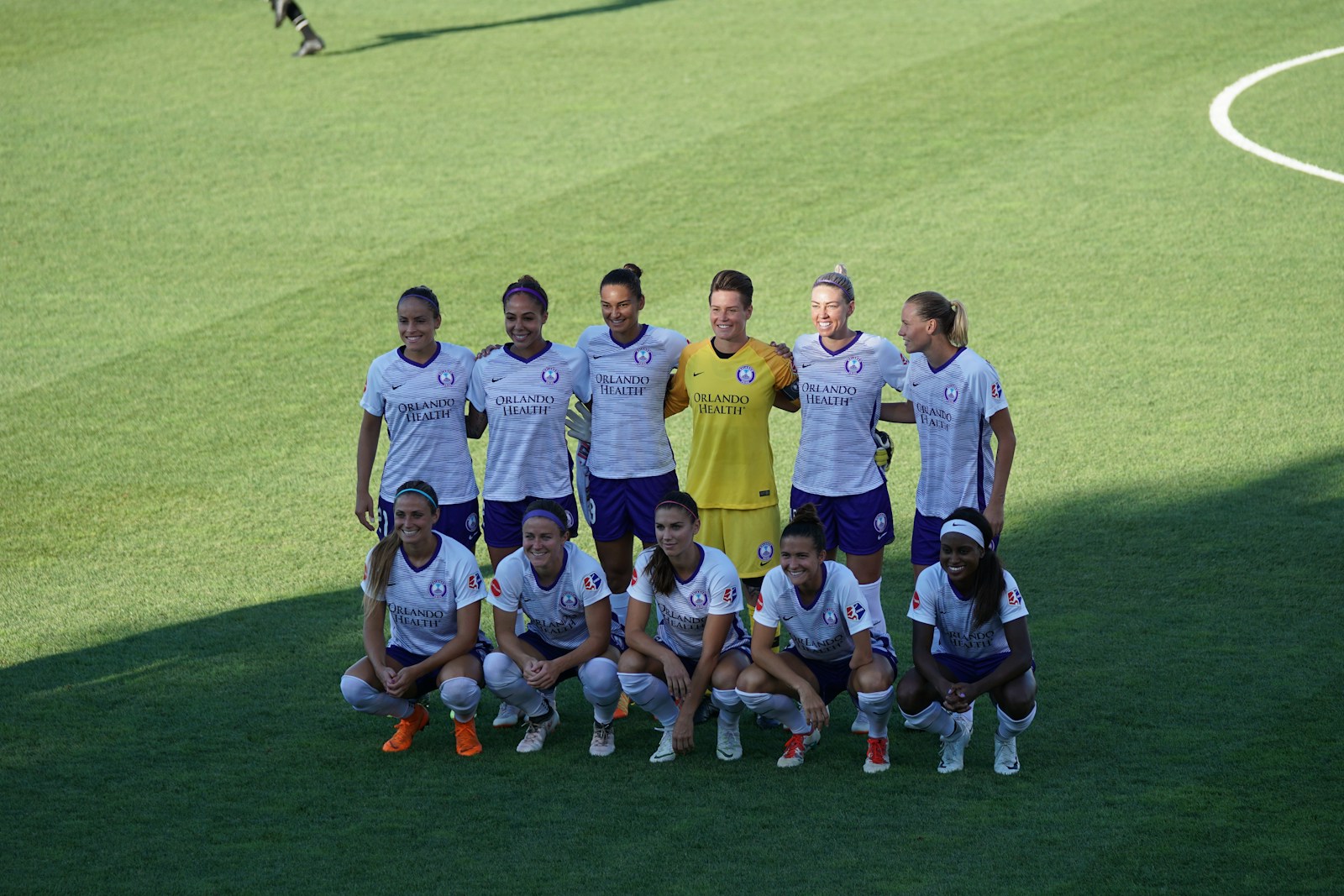
The Iranian players stood in a line across the centre circle. Their hands were at their sides. Their mouths did not move. Behind them, the green-white-red of the Iranian flag was projected on a large screen at one end of the stadium in Sydney, where the 2026 AFC Women’s Asian Cup had opened two days earlier. The anthem, Mehr-e Khavaran, played through the stadium speakers at its usual official tempo. It was 2 March 2026. Iran’s opening match at a continental tournament was minutes away. And its team, on camera before a global audience, chose silence.
The images travelled immediately. Al Jazeera, CNN, Reuters, the BBC, and Fox Sports each filed reports within hours. Persian-language outlets based outside Iran — IranWire, Radio Farda, BBC Persian — reported the silence in detail. Inside Iran, state media eventually addressed the story, though its framing diverged sharply from international coverage.
In subsequent matches at the tournament, the players sang. International reporting attributed the change to intervention from officials travelling with the delegation. Iran finished last in Group A, conceding nine goals and scoring none. The sporting story was, on its own terms, a disappointment. But it was the silence before the opening whistle that defined the tournament’s reporting arc.
The Setting
The 2026 AFC Women’s Asian Cup was held in Australia across three venues, with the group stage beginning on 1 March 2026. It was Iran’s third consecutive appearance at the tournament, and the program had improved meaningfully in the qualifying cycles leading up to it. The squad, built under head coach Maryam Irandoost, included domestic-league players from Tehran-based clubs as well as several based abroad.
Iran drew into Group A alongside Australia (the tournament hosts and co-favorites), South Korea, and the Philippines. On paper it was an unforgiving group. Australia and South Korea are perennial Asian Cup semifinalists. The Philippines, a rising program since its 2023 World Cup appearance, presented the most winnable opportunity for Iran’s three points.
The opener against South Korea, scheduled for 2 March in Sydney, would be the first time Iranian television audiences saw their women’s national team at the continental showpiece.
The Opening Match
Iran lost 3-0 to South Korea. South Korea scored in the 14th, 42nd, and 71st minutes. Iran’s shot count was in single digits. Possession was heavily in South Korea’s favor.
The result was consistent with pre-tournament expectations. South Korea entered the match ranked well above Iran in the FIFA women’s rankings, and the gap in tactical organization was visible from the opening minutes. What was not expected, and what dominated post-match coverage, was what happened before kick-off.
During the playing of Iran’s national anthem, the eleven Iranian starters and head coach Irandoost stood silently. None sang. None mouthed the words. The image, captured by AFC’s host broadcast feed, was carried live to dozens of international markets.
Iranian state television, broadcasting the match domestically, cut away from the anthem in its main feed, according to monitoring reports from several Persian-language outlets.
The International Coverage
Al Jazeera reported the silent protest on 5 March, framing the moment as a gesture tied to the broader domestic context inside Iran at the time of the tournament. The Al Jazeera piece noted that the tournament coincided with a period of significant internal political tension in Iran, which the outlet described in its reporting.
CNN, in a report filed on 6 March, cited unnamed sources indicating that the players had been under institutional pressure regarding their behavior during the anthem. Fox Sports, the BBC, and Reuters produced broadly similar reports, each emphasizing the factual record: the players stood silently, and the moment was televised.
Outlook India and several other Asian outlets covered the story as both a sporting and diplomatic matter. Wikipedia’s entry on the event refers to the incident as the “anthem controversy” during the 2026 AFC Women’s Asian Cup.
The Subsequent Matches
Iran’s second Group A match was against Australia on 5 March. Iran lost 4-0. Before that match, the players sang the national anthem. The shift from silence to singing was immediate and highly visible. According to international reporting, the change came after members of the travelling delegation — including officials from the Iranian Revolutionary Guard Corps sport section, according to multiple outlets — held conversations with the team.
Al Jazeera, in follow-up coverage on 8 March, reported the change in detail and quoted an unnamed team source describing the intervening pressure. The Football Federation Islamic Republic of Iran (FFIRI) did not directly address the initial silence or the subsequent singing in public statements, though it did issue routine match-related communications throughout the tournament.
Iran’s third group-stage match, against the Philippines, ended with Iran failing to score. The team finished bottom of Group A with zero points, nine goals conceded, and none scored.
The Player Statements
Iranian players who did speak to media during the tournament did so briefly and carefully. Captain Zahra Ghanbari, in a short mixed-zone exchange after the South Korea match, spoke about the disappointment of the result on the pitch without addressing the anthem moment directly.
Head coach Maryam Irandoost, in her post-match press conference, focused on tactical matters. Asked about the anthem by one international correspondent, she declined to comment and moved the discussion back to football.
Several players, after the tournament concluded, gave limited interviews to Persian-language outlets based outside Iran. Those interviews, published by outlets including IranWire and Radio Farda, offered a wider range of personal reflections but generally did not identify individual players on the record.
The Domestic Response
Inside Iran, coverage of the tournament was filtered through state-aligned media. Some outlets described the silent gesture directly and criticised the players involved. Others focused on the sporting results and did not discuss the anthem moment at length. A small number of Iranian journalists based in Tehran reported, on their personal social-media accounts, that there had been internal discussion of the incident in sports-ministry circles.
Several Iranian media figures aligned with more conservative editorial positions publicly described the players as having failed in their representational duty. Others, including some former national-team players now working as pundits, expressed a more sympathetic view on the same domestic platforms.
The Football Federation Islamic Republic of Iran, as noted, did not issue a detailed public statement on the silent protest itself. Its communications during and after the tournament focused on match results, scheduling, and general operational matters.
What Happened on the Return to Iran
International reporting in the days following the tournament referenced concerns about the safety of players returning to Iran. Al Jazeera, in a piece filed on 8 March, described the “safety concerns” surrounding the return. Wikipedia’s entry on the matter notes that “asylum” was mentioned in international coverage of individual players from the squad.
At the time of this writing in April 2026, the full picture of what occurred after the team returned to Iran is not publicly documented. The Football Federation has confirmed that the team returned and that training operations for the next qualification cycle are ongoing. Individual player situations beyond that baseline information have not been addressed in detailed official statements.
The Tournament Record
| Match | Date | Result | Anthem Behaviour |
|---|---|---|---|
| Iran vs South Korea | 2 March 2026 | 0-3 loss | Silent |
| Iran vs Australia | 5 March 2026 | 0-4 loss | Sang and saluted |
| Iran vs Philippines | 8 March 2026 | Loss (0 goals scored) | Sang and saluted |
| Group A finish | — | 4th (0 pts, -9 GD) | — |
The Broader Context of Iranian Women’s Football
The 2026 AFC Women’s Asian Cup appearance was, before the tournament, a sign of meaningful progress for a program that has existed only in its modern form since 2005. The FFIRI women’s program has expanded its league structure, broadened coaching qualifications, and increased the frequency of international fixtures over the past decade.
The program faces practical constraints that are well documented: restrictions on attire during competition (with athletes required to wear the hijab), limits on male spectator attendance at women’s matches inside Iran, and ongoing questions about scheduling, stadium access, and federation resourcing relative to the men’s program.
Despite these constraints, Iranian women’s football has produced competitive teams at the West Asian and Central Asian regional levels. The 2026 AFC appearance was the third consecutive qualification, a meaningful institutional marker.
The silent-anthem moment of 2 March, and the subsequent tournament arc, are likely to affect how the FFIRI structures the program’s next competitive window. How that adjustment plays out — in selection decisions, in staffing, and in public messaging — will be one of the significant Iranian sports stories of the coming year.
What Is Known and What Is Not
What is known, on the public record, is this: the Iranian women’s national football team stood silently during the national anthem before its opening match on 2 March 2026; it sang during its two subsequent matches; it finished last in Group A without a point; and its return to Iran was covered internationally with references to safety concerns for individual players.
What is not known, on the public record, includes the specific content of internal federation discussions during the tournament, the individual status of each player after the team’s return, and the longer-term federation response to the events.
Reporting on the story remains active across multiple international outlets. The record, as it stands in April 2026, is the one outlined above.
The Coach’s Position
Head coach Maryam Irandoost has been in charge of the Iran women’s national team since 2020. Her tenure has coincided with the team’s three consecutive AFC Women’s Asian Cup qualifications and with the development of several of the program’s most technically accomplished players. She took the job after a playing career in Iranian women’s football and a coaching career at the club and youth-national-team levels.
Irandoost stood with her players during the silent anthem moment on 2 March. Her position during the subsequent singing matches was also alongside the team, without public elaboration of her personal position on either decision. In her post-tournament press conferences, she focused narrowly on football-related questions and did not offer extended public commentary on the anthem matters.
Her future with the federation, at the time of this writing, is not publicly contested. She has continued to participate in federation planning for the next qualification cycle. Whether the tournament’s events affect her tenure over the longer term is among the open institutional questions the federation will answer in the months ahead.
The Group Match Summaries
Each of Iran’s three group-stage matches produced its own narrative arc. The South Korea opener on 2 March was dominated by South Korea from the early going, with Ji So-yun scoring twice and Lee Geum-min adding a late third. Iran’s attack produced limited shots on target. The silent anthem before kick-off framed the entire match in international coverage.
The Australia match on 5 March produced a 4-0 loss, with Australian forwards Sam Kerr and Mary Fowler combining for three of the goals. Iran’s defensive shape, organized by Irandoost, held for thirty minutes before breaking down under sustained Australian pressure. The anthem was sung. The tactical contest was predictable in its outcome but notable in Iran’s willingness to play a mid-block rather than a deep defensive set.
The Philippines match, Iran’s final group-stage fixture, was the most competitive of the three from a pure football perspective. Iran’s players had the best chances of any of their three matches but could not convert. The Philippines scored in the second half to register a clean sheet. Iran ended the tournament without a goal, a statistical low for the program’s Asian Cup appearances.
What Comes Next for the Program
The Football Federation Islamic Republic of Iran’s women’s programme now moves into a preparation cycle for the next round of international qualifying events. The West Asian Women’s Championships, held in Jordan in late 2026, will be the program’s first significant post-Asian Cup competition. Friendlies with regional partners are expected through the middle of the year.
Player-selection decisions for the next cycle have not yet been publicly finalized. The federation has confirmed that Irandoost will continue as head coach through at least the immediate post-tournament window. Roster turnover, if it occurs, is likely to be gradual rather than dramatic. Several of the senior players who featured at the Asian Cup are in their late twenties and may see reduced roles as younger players come through the pipeline, but this is a standard competitive-cycle turnover rather than anything unusual to this specific tournament.
The medium-term ambition of the programme, as articulated by federation officials in pre-tournament interviews, was to make the knockout stage of the AFC Women’s Asian Cup. That ambition was not achieved in 2026. The programme’s longer-term target — FIFA Women’s World Cup qualification — will depend on continued development across multiple factors beyond the current cycle’s results.
The Institutional Background
The Football Federation Islamic Republic of Iran (FFIRI) operates as the sole national governing body for football in Iran, affiliated with both FIFA and the Asian Football Confederation. The women’s national team, formally established in the post-2005 era, falls under the same institutional umbrella as the men’s program but with its own set of operational protocols.
The women’s team operates under regulations that include mandatory head covering during competition, restrictions on mixed-gender practice environments, and specific rules governing travel for international events. These regulations have been consistently applied across the program’s modern history and are enforced through the federation’s internal rulebook.
The 2026 AFC Women’s Asian Cup delegation was accompanied, per standard federation practice for international women’s competitions, by a mixture of coaching staff, medical personnel, federation officials, and representatives from affiliated government bodies. The latter category has been the subject of particular attention in international reporting, with multiple outlets indicating that travelling officials included personnel associated with the Islamic Revolutionary Guard Corps sport section.
Comparable Moments in Iranian Sport
The 2 March 2026 anthem moment was not the first such incident in recent Iranian sporting history. At the 2022 FIFA World Cup in Qatar, the Iranian men’s national football team stood silent during the national anthem before their opening match against England. The moment drew similar international attention and was followed by singing during subsequent matches in the tournament.
In other sports, individual Iranian athletes have made varying gestures during international competition — some explicit, some ambiguous — that have been interpreted by international media as having political or personal significance. The context of each gesture has varied. Some athletes have spoken openly about their intentions. Others have declined to discuss them in public.
The 2026 women’s football gesture fits within this broader pattern without necessarily being identical to any single prior incident. Each event has operated under its own specific political circumstances, its own competitive pressures, and its own individual athlete decisions.
The AFC’s Position
The Asian Football Confederation, which organized the tournament, did not issue a formal statement on the anthem moment. AFC’s general position across similar incidents has been to treat the playing of national anthems as a ceremonial matter governed by the tournament host broadcaster and the participating federations, with individual player conduct during the anthem not typically subject to AFC disciplinary review.
FIFA, which similarly governs international football at the global level, has a broadly parallel position on anthem conduct. FIFA’s disciplinary code addresses specific political statements on jerseys or equipment but does not typically sanction silence during anthems.
The absence of formal international-federation intervention in the 2026 AFC case is consistent with these standing positions.
The Australian Host Context
The 2026 AFC Women’s Asian Cup’s Australian hosting added a particular contextual layer. Australia has an active Iranian diaspora community, particularly in Sydney and Melbourne, and supporter groups from this community attended multiple group-stage matches involving Iran. Some of these supporter groups displayed banners and symbols referring to domestic Iranian political events. The banners were visible during several of Iran’s matches and were captured in international broadcast footage.
Stadium operations at the host venues operated under standard AFC event-management protocols. Security arrangements for the Iranian team delegation were managed by the AFC in cooperation with Australian authorities and the Iranian federation. No specific security incidents involving the team were publicly reported during the tournament.
The Broader Reporting Environment
International coverage of the 2026 AFC Women’s Asian Cup was more extensive than is typical for a women’s continental tournament in Asia, driven in substantial part by the anthem story. Al Jazeera, CNN, Reuters, BBC, Fox Sports, Outlook India, Madhyamam, NewsX, and several other regional outlets published multiple pieces across the tournament window. Persian-language diaspora outlets — IranWire, Radio Farda, BBC Persian — provided additional depth, particularly on individual player circumstances.
Iranian domestic coverage was, by comparison, more restrained. State television broadcast the matches but with limited commentary on the anthem moment. Print media coverage varied by outlet, with reformist-aligned publications providing somewhat more detailed treatment than more conservative outlets, though all operated within the constraints of the country’s broader media environment.
The reporting environment itself thus became part of the story. How the tournament was covered inside Iran, and how it was covered outside, produced two substantially different public narratives of the same events.
Sources
- Al Jazeera — Iran women’s football team and the anthem
- CNN — Iranian women’s soccer team and the anthem
- Wikipedia — Iran women’s national football team 2026 events
Related Reading
- Iran’s broader international sporting posture
- More international reporting from SportsPersia
Frequently Asked Questions
What happened before Iran’s opening match at the 2026 AFC Women’s Asian Cup?
Before Iran’s 2 March 2026 group-stage opener against South Korea, the Iranian players and their coach stood silently as the national anthem, Mehr-e Khavaran, played. None of them was seen singing or mouthing the words.
Did the team sing the anthem in later matches?
Yes. The players sang and saluted during the anthem in their subsequent group-stage matches against Australia and the Philippines. International media reported that the change followed intervention from officials travelling with the delegation.
How did Iran finish in the tournament?
Iran finished bottom of Group A without a win. The team lost 3-0 to South Korea, 4-0 to Australia, and also lost to the Philippines, conceding nine goals and scoring none across three matches.
How did Iranian officials respond?
Segments of Iranian state media publicly criticised the players. The Football Federation Islamic Republic of Iran did not release a detailed public statement about the silent protest itself, though officials travelling with the delegation were reported to have held internal discussions with players.