
Persian wrestling, and the broader tradition of the zurkhaneh or «house of strength», is one of the oldest and most distinctive athletic cultures in the world. More than a sport, it blends physical training, ancient ritual, music, poetry and a code of ethics that has shaped Iranian ideas of what a champion should be. For anyone curious about the roots of Iranian sport, understanding pahlevani wrestling and the zurkhaneh offers a window into a tradition where strength and character are meant to go hand in hand. This guide explains, in general terms, what these traditions are, where they come from and why they still matter, without claiming to cover every regional variation or to settle debates that scholars continue to explore.
It is worth noting from the outset that this article is a general, cultural introduction rather than a definitive historical account. The origins of the zurkhaneh and of Persian wrestling are ancient and in places uncertain, and different sources emphasise different influences. What is widely recognised, however, is the cultural importance of these practices in Iran, and the fact that the rituals of the zurkhaneh, together with pahlevani wrestling, have been acknowledged internationally as part of the world’s intangible cultural heritage. Where details are debated or subject to change, we have tried to keep the description general and to encourage readers to consult specialised sources for deeper study.
What is the zurkhaneh?
The zurkhaneh, literally the «house of strength», is a traditional Iranian gymnasium where a distinctive form of physical and spiritual training takes place. Historically it is often a domed building with a central sunken octagonal pit, called the gowd, where practitioners perform their exercises. What sets the zurkhaneh apart from an ordinary gym is that training is accompanied by music and by the recitation of poetry and moral sayings, led by a figure known as the morshed, who sets the rhythm with a drum and a bell. The atmosphere is meant to be as much about character and community as about physical strength, and the space itself is treated with a certain reverence by those who train there.
Understanding what the zurkhaneh is helps make sense of the tradition as a whole, because it shows that this is not simply a place to build muscle but a setting where physical effort is woven together with ritual, music and ethics. The exercises, the music and the moral framework are all part of a single practice. This does not mean that every zurkhaneh is identical, as customs vary by region and over time, but the combination of physical training and cultural ritual is a defining feature. Seeing the zurkhaneh in this light explains why it is often described as a cultural institution rather than only a sporting venue.
The traditional equipment and exercises
Training in the zurkhaneh uses a set of traditional implements that have become symbols of the practice. Among the best known are the mil, heavy wooden clubs that are swung in rhythmic patterns; the sang, large wooden shields used in a form of resistance exercise; and the kabbadeh, a heavy bow-shaped implement strung with a chain. Practitioners also perform push-up-like movements on a wooden board called the takhteh shena, as well as rhythmic footwork and spinning movements. These exercises are performed in time with the morshed’s rhythm, so that the whole group often moves together, giving the session a communal and almost choreographed quality that distinguishes it from solitary weight training.
Understanding the equipment and exercises helps explain the character of zurkhaneh training, because the implements and movements have developed over a long time and carry symbolic as well as physical meaning. The rhythmic, communal nature of the exercises reflects the idea that strength is built within a community and a tradition, not in isolation. This does not mean the training is easy or purely ceremonial, as the implements can be genuinely heavy and demanding, but that the physical challenge is framed within ritual and rhythm. Appreciating this blend of demanding exercise and symbolic tradition is key to understanding what makes the zurkhaneh distinctive.
Pahlevani wrestling
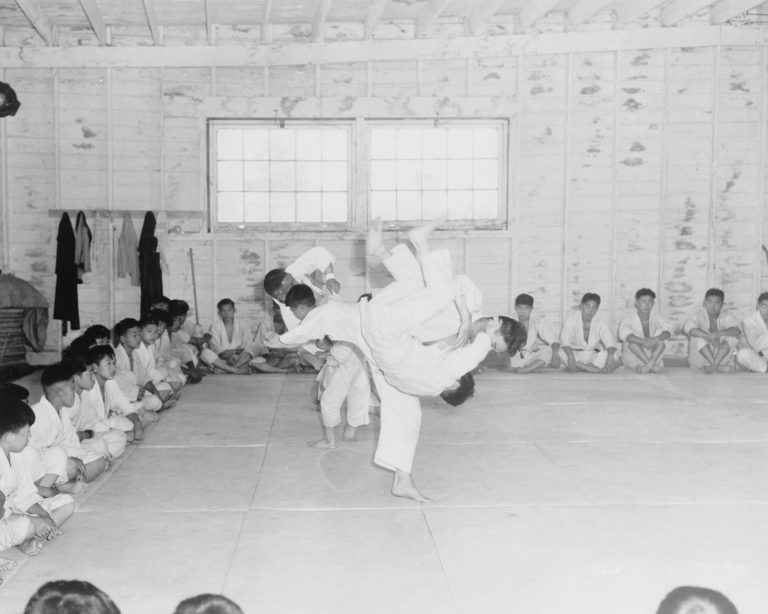
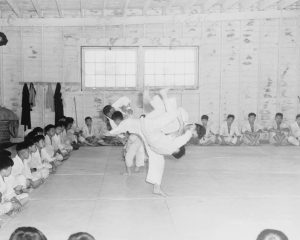
Closely linked to the zurkhaneh is koshti pahlevani, a traditional form of wrestling. The word pahlevan can be translated as «hero» or «champion», and it carries connotations that go well beyond athletic ability: a true pahlevan is expected to be strong but also humble, generous and morally upright. Traditional wrestling has long been practised in and around the zurkhaneh setting, and it connects to Iran’s broader and very strong wrestling culture, which extends to the modern Olympic styles of freestyle and Greco-Roman wrestling as well. The traditional and modern forms are distinct, but they share a common cultural soil in which wrestling is held in especially high regard.
Understanding pahlevani wrestling helps clarify why wrestling occupies such a special place in Iranian sport, because the traditional figure of the pahlevan links athletic strength to moral character. This connection between physical prowess and ethical conduct is central to the tradition. It is worth being careful here, however, not to blur the line between the traditional pahlevani practice and modern competitive wrestling, which are governed by different rules and structures. What they share is a cultural respect for wrestling and for the ideal of the champion who is admired not only for winning but for how they carry themselves, an ideal that runs deep in Iranian sporting culture.
It is also worth adding that the ideal of the pahlevan has, over the centuries, become a broader cultural figure that extends beyond the wrestling arena. In Iranian literature, folklore and popular memory, the pahlevan represents a certain model of manhood and virtue: someone who uses their strength to protect the weak rather than to dominate, and who values honour and modesty over boastfulness. This is why the word is sometimes applied, admiringly, to people who are not wrestlers at all. Recognising this wider cultural meaning helps explain why traditional wrestling and its ethics have retained such symbolic power, even in an era dominated by modern professional sport. The pahlevan is, in a sense, as much a moral idea as an athletic one.
| Aspect | Common belief | Reality |
|---|---|---|
| Nature | The zurkhaneh is just an old-style gym | It blends physical training with music, poetry and ethics |
| The pahlevan | A champion is simply the strongest fighter | The ideal pahlevan combines strength with humility and virtue |
| Ethics | Values are separate from the sport | The code of javanmardi is woven into the practice itself |
| Music | Music is background decoration | The morshed’s rhythm guides the exercises and the ritual |
| Status | It is a purely local curiosity | It is recognised internationally as intangible cultural heritage |
The code of javanmardi
At the heart of the zurkhaneh and pahlevani tradition lies a code of ethics often referred to as javanmardi, a term that can be loosely translated as chivalry, or the quality of being a noble and generous person. This code emphasises values such as humility, honesty, courage, respect for elders and opponents, and the use of one’s strength in the service of others rather than for personal domination. Within the zurkhaneh, these values are reinforced through ritual, through the sayings recited by the morshed, and through the expectation that a strong person should also be a good person. The ethical dimension is not an optional extra but is regarded as inseparable from the physical practice.
Understanding the code of javanmardi helps explain why the zurkhaneh tradition is described as a moral and cultural institution and not merely a form of exercise, because the ethical framework is woven into every part of the practice. This ideal of linking strength to virtue is one of the tradition’s most distinctive features. It is worth acknowledging that, as with any ideal, the reality of individual practitioners varies, and no tradition guarantees virtuous behaviour. Nonetheless, the explicit emphasis on character alongside physical strength is a defining aspiration of the tradition, and it is a large part of what gives the zurkhaneh and pahlevani wrestling their particular cultural resonance in Iran.
Music, poetry and ritual
One of the most striking features of the zurkhaneh, to an outside observer, is the central role of music and poetry. The morshed, seated on a raised platform, leads the session by playing a goblet-shaped drum and ringing a bell, while reciting poetry, moral tales and sometimes verses drawn from classic Persian literature. The rhythm of the drum guides the pace of the exercises, so that the physical training and the music are tightly bound together. This use of music and recited poetry gives the practice a ceremonial, almost devotional quality, and it is one of the elements that most clearly distinguishes the zurkhaneh from a conventional athletic setting.
Understanding the role of music and ritual helps explain why the zurkhaneh is often described in cultural rather than purely sporting terms, because these elements transform physical exercise into a shared ceremonial experience. The morshed is not merely a timekeeper but a custodian of tradition, weaving together rhythm, poetry and moral instruction. This does not mean that the athletic side is secondary, as the exercises remain genuinely demanding, but that the physical and the cultural are experienced as one. Appreciating this integration of music, poetry and movement is essential to understanding why the tradition has been valued as a form of living cultural heritage.
Recognition as cultural heritage
The cultural importance of these traditions has been recognised internationally. The rituals of the zurkhaneh, together with pahlevani wrestling, have been acknowledged by UNESCO as part of the intangible cultural heritage of humanity, a designation that highlights their significance not only for Iran but as part of the wider heritage of the world. This recognition reflects the way the tradition combines sport, ritual, music, ethics and community into a single distinctive practice. It also underlines the value placed on preserving such living traditions, which are passed down through practice and mentorship rather than only through written records, and which continue to be practised today.
Understanding this international recognition helps put the tradition in perspective, because it confirms that the zurkhaneh and pahlevani wrestling are regarded as culturally significant well beyond Iran’s borders. The heritage designation is a marker of the tradition’s richness and of the interest in preserving it. It is worth remembering, however, that recognition does not freeze a tradition in time, and living practices continue to evolve. What the designation captures is the enduring value of a practice that unites physical strength with cultural and ethical meaning, a combination that is comparatively rare in the world of sport and that gives the Iranian tradition its distinctive character.
The tradition today
Today the zurkhaneh tradition continues to be practised in Iran, alongside modern sports, and it retains a place in the country’s cultural life. Modern competitive wrestling, in the Olympic freestyle and Greco-Roman styles, is enormously popular and successful, and it draws on the same deep cultural respect for wrestling that the traditional practice embodies. At the same time, the traditional zurkhaneh continues as a distinct cultural and athletic institution, valued for its rituals, its ethics and its connection to Iranian heritage. The relationship between the traditional and the modern is one of shared roots rather than direct competition, with both reflecting the special status wrestling holds in Iranian sport.
Understanding how the tradition continues today helps show that it is a living practice rather than a historical relic, because the zurkhaneh and its values remain part of contemporary Iranian culture. This does not mean the tradition is unchanged, as customs and levels of participation naturally vary over time and place, and specific details are best confirmed through current sources. What remains clear is the enduring cultural respect for wrestling and for the ideal of the pahlevan, which continues to inform how Iranians think about strength, character and sport. The tradition’s survival alongside modern athletics is a testament to its deep roots in the country’s cultural identity.
Why it matters
Understanding Persian wrestling and the zurkhaneh matters because it reveals a distinctive vision of what sport can be: not only a contest of strength but a practice that binds together physical training, music, ethics and community. In an age when professional sport is often measured purely in results and records, the tradition offers a different model, in which how an athlete behaves is considered as important as how they perform. This vision, embodied in the ideal of the pahlevan and the code of javanmardi, is one of the tradition’s most valuable contributions to the wider culture of sport, and it helps explain the special affection with which wrestling is regarded in Iran.
Understanding why this tradition matters helps place it within the broader story of Iranian sport, because it shows that the country’s sporting culture has deep roots that extend far beyond modern competition. The zurkhaneh and pahlevani wrestling are not only historical curiosities but a living expression of values that continue to shape Iranian attitudes to strength and character. For readers new to the subject, this general introduction is only a starting point, and those interested in the finer historical and regional details are encouraged to explore specialised sources. What this overview offers is a sense of why a tradition that unites body, community and ethics has endured, and why it remains a source of pride.
Frequently asked questions
What is the zurkhaneh?
The zurkhaneh, or «house of strength», is a traditional Iranian gymnasium where physical training is combined with music, poetry and a code of ethics. Exercises are performed in a central pit called the gowd, led by a figure called the morshed who sets the rhythm with a drum and bell. It is regarded as a cultural institution as much as a sporting venue.
What does pahlevan mean?
Pahlevan can be translated as «hero» or «champion», but it carries moral connotations: a true pahlevan is expected to be strong yet humble, generous and upright. Over time the word has become a broader cultural figure representing virtue and honour, and it is sometimes used admiringly for people who are not wrestlers at all.
Is pahlevani wrestling the same as Olympic wrestling?
No. Koshti pahlevani is a traditional form linked to the zurkhaneh, while Olympic freestyle and Greco-Roman wrestling are modern competitive styles with different rules and structures. They are distinct, but they share a common cultural respect for wrestling, which holds a special place in Iranian sport.
What is javanmardi?
Javanmardi is a code of ethics at the heart of the tradition, loosely translated as chivalry or nobility of character. It emphasises humility, honesty, courage, respect for opponents and using one’s strength in the service of others. Within the zurkhaneh, these values are considered inseparable from the physical practice.
Why are music and poetry part of the training?
In the zurkhaneh, the morshed leads the session by playing a drum and bell and reciting poetry and moral sayings. The rhythm guides the pace of the exercises, binding physical training and music together. This gives the practice a ceremonial quality and is one of the features that most distinguishes it from a conventional gym.
Has the tradition been officially recognised?
Yes. The rituals of the zurkhaneh, together with pahlevani wrestling, have been acknowledged by UNESCO as part of the intangible cultural heritage of humanity. This recognition highlights the tradition’s significance as a living practice that unites sport, ritual, music, ethics and community, valued well beyond Iran’s borders.
Conclusion
Persian wrestling and the zurkhaneh tradition offer a distinctive vision of sport, one in which physical strength is bound together with music, ritual, ethics and community. From the traditional implements and exercises to the ideal of the pahlevan and the code of javanmardi, the tradition links athletic prowess to character in a way that is comparatively rare. Recognised internationally as cultural heritage, it continues as a living practice alongside modern wrestling. This article offers a general cultural introduction rather than a definitive history: where details are debated or may change, readers are encouraged to consult specialised sources for a deeper understanding of this rich tradition.