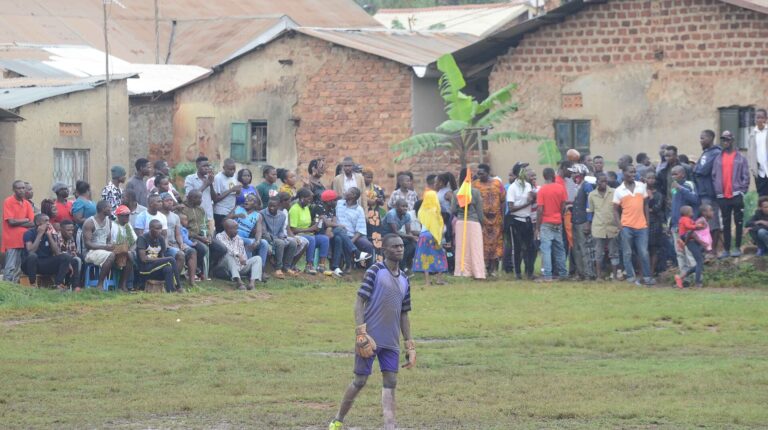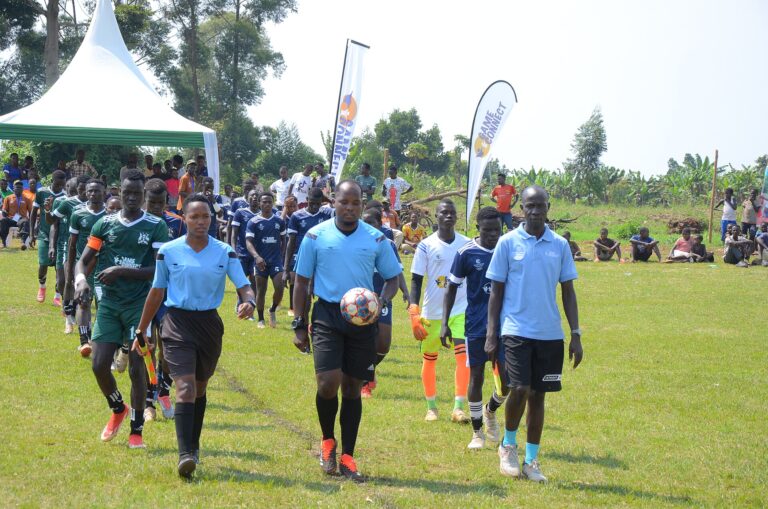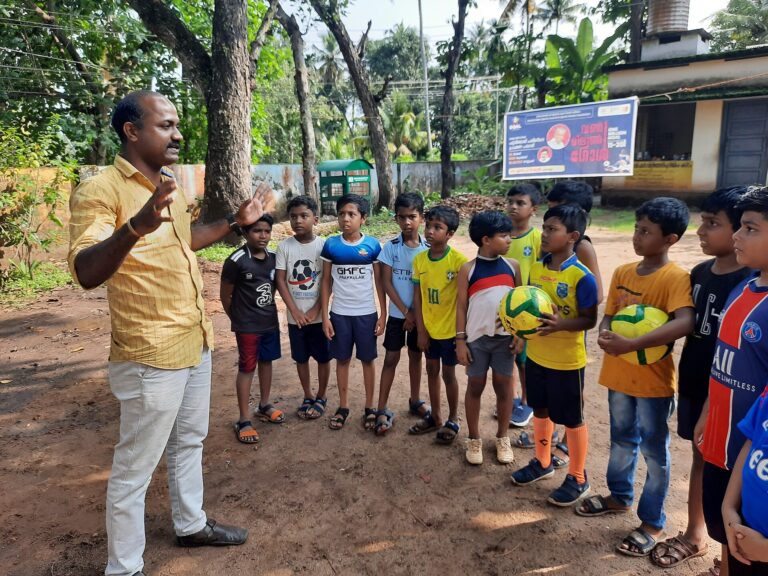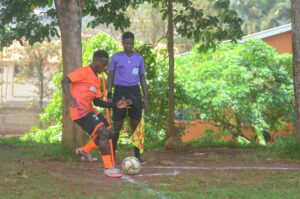


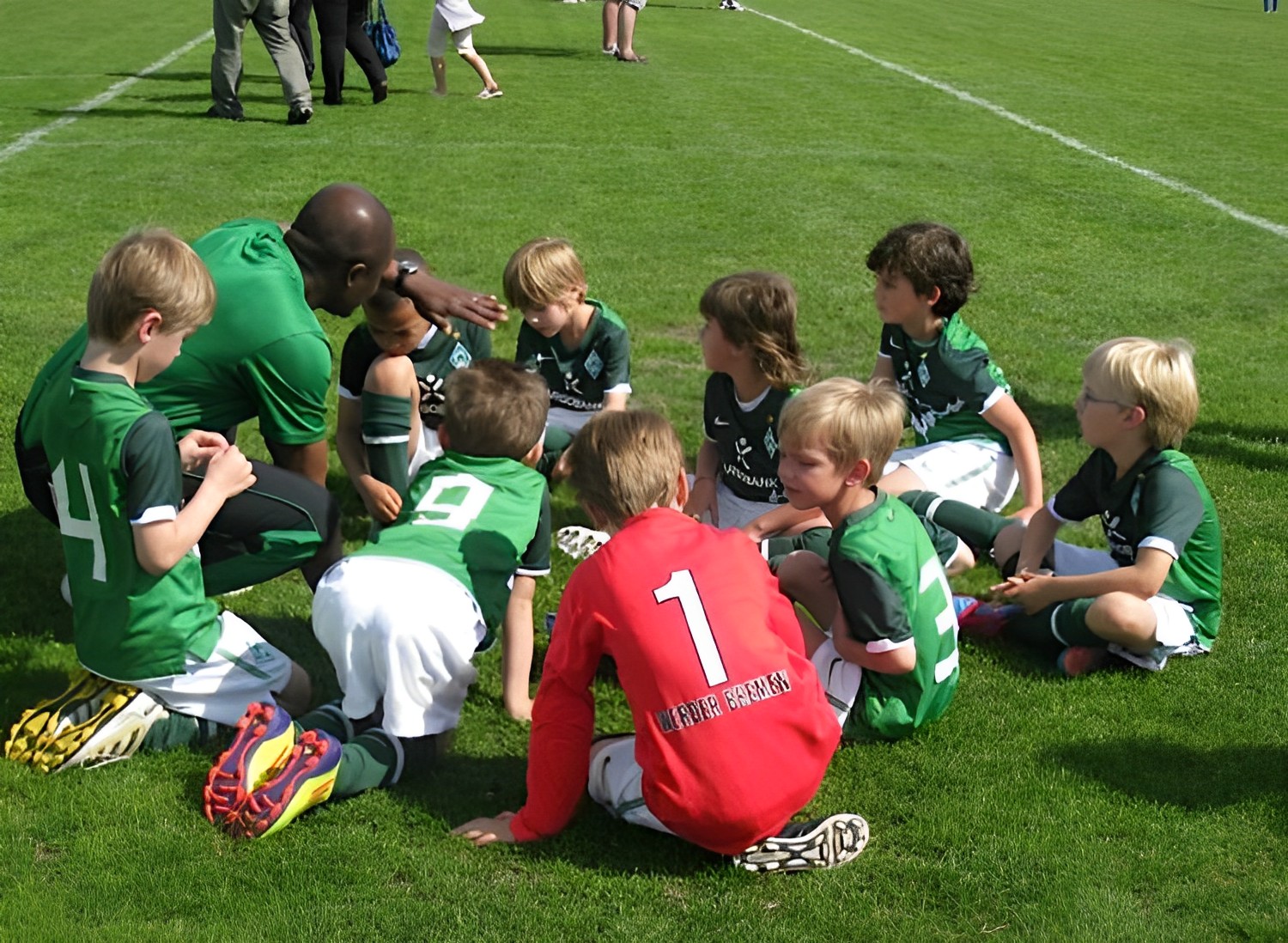
An open trial in Tehran is not a mysterious process. It is a car park full of parents, a pitch divided into quarters, four small-sided games running at once, and two or three coaches walking the touchline with a clipboard. Each boy gets somewhere between twenty and forty minutes of football in front of an adult who is watching six other boys at the same time.
The intake at the end of it is a squad. An age band holds twenty-odd players, most of the places are already occupied by boys retained from last year, and the number genuinely open is usually somewhere between two and a handful. That is the entire arithmetic, and it does not change with the size of the crowd outside.
The interesting part of a youth system is therefore not the boys it takes. It is the structure that produced the queue, the reasons the queue looks the way it does, and what the system offers the overwhelming majority who go home on the same afternoon.
The funnel on one page
- Entry. Neighborhood and school football, rented artificial pitches, futsal halls, municipal and provincial tournaments.
- First filter. A trial day or a coach’s recommendation, both heavily weighted toward whoever is already visible.
- Second filter. The age band. Retained players hold most places; the annual opening is small by design.
- Third filter. Growth. A large share of selections made at twelve are reversed by sixteen for reasons that are biological rather than technical.
- Exit. Deregistration at the end of a season, usually between fifteen and eighteen, usually after other squads have been filled.
- The number that matters. Places per band per year, not applications. Everything else is downstream of that.
Where the first look actually happens
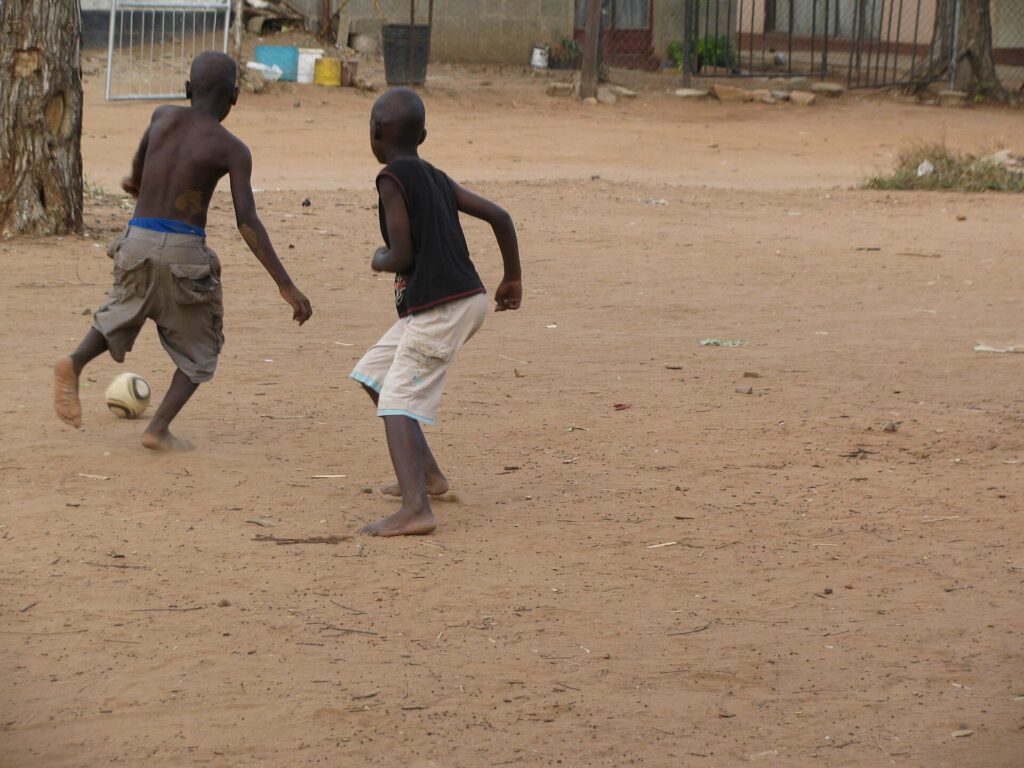
Very little talent identification begins at an academy gate. It begins where boys already play in quantity: on street and courtyard pitches, on the rented artificial surfaces that fill the gaps between apartment blocks in every large Iranian city, and in the school competitions organized through the education system, which remain the widest net anyone casts.
Coaches do not scout individuals; they scout events. A municipal tournament puts two hundred boys in one place across a weekend, in teams, in a competitive structure, with results that produce a shortlist. That is a far more efficient use of a coach’s Saturday than a training ground visit, and it is why tournament football matters out of proportion to its quality.
The consequence is a visibility bias that has nothing to do with ability. A boy in a district with an active school program and a municipal tournament is seen. A boy forty minutes away with neither is not, and no amount of talent corrects for not being in the room.
The age bands, and the cut-off date nobody argues about
Youth football is organized in bands, typically in two-year steps from around ten through to the under-21 group that sits directly beneath the professional squad. Each band uses a single cut-off date, and the civil year here begins at Nowruz, at the spring equinox, so the oldest boy in a band was born in the first weeks of spring and the youngest almost a full year later.
At twelve, a year of development is an enormous physical difference. The predictable result is that the boys born just after the cut-off are systematically over-represented in selected squads, everywhere the system has been examined. The pattern has a name, the relative age effect, and it is one of the most reliably reproduced findings in youth sport.
The effect is not a scandal, and nobody selects for it deliberately. It is what happens when a snap judgment is made in forty minutes and the fastest, strongest boy on the pitch is nine months older than the boy he is beating. The remedies are known and expensive: grouping by maturity rather than birth date, multiple viewings across a year, and holding places open for late developers.
The arithmetic behind Iranian football academy recruitment
Set the numbers next to each other and the shape of the system becomes obvious. A first-tier club is required by licensing rules to run youth teams at defined age levels, and each of those teams is a squad, not a college. The annual intake across an entire academy is therefore measured in dozens, and much of it is internal promotion from the band below.
Against that, the candidate pool at any single birth year in a metropolitan area of Tehran’s size runs to tens of thousands of boys who play football regularly. Iranian football academy recruitment is not a search for the best of them. It is a search that stops as soon as the small number of available places is filled, from whichever fraction of the pool happened to be visible.
That distinction matters because it changes what a rejection means. Failing a trial is weak evidence about a player and strong evidence about supply. The system is not calibrated to find everyone; it is calibrated to fill a squad, and it does that efficiently.
What a trial day can and cannot see
In forty minutes of small-sided football a coach can see genuine things: acceleration over five meters, willingness to enter a duel, first touch when the ball arrives badly, whether a boy defends when he loses possession, and whether he looks over his shoulder before receiving. Those are real signals and they are not trivial.
What the format cannot see is longer than the format. Decision-making inside an eleven-a-side structure does not appear in a four-a-side game. Growth trajectory is invisible: the tall thirteen-year-old may be finished growing and the small one may not have started. Coachability, home stability, schooling, injury history and how a boy responds to a bad month are all outside the window.
Clubs that take the problem seriously watch a player in his own team, more than once, across a season. That is expensive in staff time, which is precisely why it is the first thing cut when a budget tightens, and why the single-day trial persists despite everybody knowing its limits.
Futsal is a parallel funnel, not a consolation
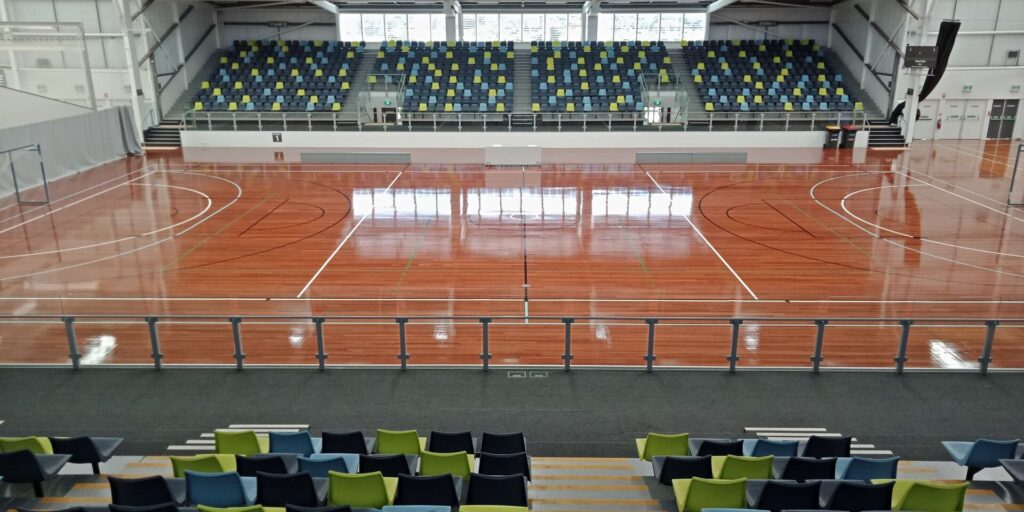
Iran has one of the deepest futsal cultures in the world, with a domestic structure that operates as a sport in its own right rather than as a feeder. That matters for football recruitment because a large number of boys arrive at eleven-a-side having done most of their technical development on a hard court in a hall.
The transfer is real in specific areas: close control under pressure, the sole-of-the-foot vocabulary, speed of decision in a two-meter window, and a defensive instinct that is built on angles rather than on distance. Coaches who have worked in both codes tend to identify futsal players by their first touch away from a defender rather than by anything they do with the ball at their feet.
The transfer stops at scale. Aerial contests, running volume across a full pitch, defending as one of a line of four across seventy meters of width, and the timing of long diagonal passes are all outside the futsal problem set and have to be learned late. Meanwhile futsal itself, including the national programs built around it, offers a competitive career for players who never intended to switch codes at all.
The cost side that decides who even attends
Private academies charge fees. Club academies generally do not, but they recruit from the pool that private academies and school competitions have already surfaced. Add boots that fit a foot which is still growing, a training kit, and the transport cost of crossing a large city three times a week, and a place at a decent academy carries a real monthly bill for a family.
Distance compounds it. A boy in a provincial town who is invited to a Tehran trial needs a parent to give up two days and pay for travel and a bed. The invitation is free; accepting it is not. That single mechanism removes a large share of the country’s talent pool from consideration before anyone assesses a football skill.
None of this is unique to Iran, and the honest way to describe it is as a filter on the sample rather than as a filter on ability. The players who arrive are the ones whose families could arrange for them to arrive.
What the club is buying when it registers a fourteen-year-old
A registration is not a prediction that a boy will play in the first team. It is an option, held for a small annual cost, on a player whose value may appear years later or never. Clubs that understand this keep more players for longer and are slower to release; clubs that treat every intake as a search for a first-teamer churn constantly and lose the late developers.
Registration also creates a paper trail with money attached. International transfer rules oblige a buying club to compensate the clubs that trained a player between defined ages, and to distribute a share of later transfer fees back through that training history. Recovering any of it requires records: which club, which season, which registration, signed and filed at the time.
Age verification sits alongside this. Confederation youth competitions have used wrist imaging to screen for declared ages that do not match skeletal development, which tells you both that the problem exists and that it is being policed. For a club, an unreliable birth date is not a moral question but a squad-planning one: an over-age player in an under-16 band distorts every judgment made about the boys around him.
Release: the timing, the conversation and the paperwork
Most releases happen at the end of a season, and most of the damage is done by the timing rather than the decision. A boy told in late spring has time to find another club. A boy told after the registration period has closed at every club within reach has lost a year, whatever anyone intended.
The mechanics are simple: the club does not renew the registration and the player is free to register elsewhere. What is rarely simple is the conversation, because the family has usually organized several years of its life around the arrangement, and because a fifteen-year-old hears the decision as a verdict on himself rather than as an outcome of squad arithmetic.
The clubs that handle it best do three concrete things: they give notice early enough to be useful, they make a call to two or three clubs at a level the player can reach, and they say plainly what the player would need to change to be reconsidered. None of that costs money. Most academies still do none of it.
Where released players actually go
| Route | What it requires | Realiztic outcome |
|---|---|---|
| Lower-division club | A trial in the same window, and transport to training | Competitive football, modest or no pay, a second look later |
| Provincial and municipal leagues | Residence and a local club with an open place | Regular football, visibility only to local coaches |
| Futsal | Court skills and a hall within reach | A genuine parallel career, with its own domestic structure |
| University competition | A place at an institution that fields teams | Football alongside a degree; the safest route by some distance |
| Company and amateur teams | An employer or a neighborhood side | Football as recreation, income from elsewhere |
| Coaching and refereeing | An entry-level course and the fee for it | A career in the game that does not depend on playing |
| Out of the game | Nothing | The most common outcome, and the one least discussed |
The routes that survive contact with reality all share one feature: they do not require the player to be spotted a second time by chance. University competition is the clearest example, because it attaches football to something that continues whether or not the football works out.
What a family should ask before paying for a place
- Who coaches, and with which license. Ask to see it. A coaching qualification is a document, not a claim.
- Is the academy attached to a registered club? An independent academy can be excellent, but it cannot register a player for competitive football on its own.
- How many competitive matches a year? Training volume without competition produces players who are comfortable in drills and lost on Saturday.
- What is the registration status of my son, and in whose name? The answer determines who is entitled to what if he later moves.
- What medical cover exists, and who pays for a scan? Ask before the injury, not after.
- What happens at the end of the season if he is not kept? A club with a real answer to this has thought about children. A club without one has thought about fees.
Frequently Asked Questions
At what age do clubs start registering players seriously?
Serious registration, with contracts and squad planning attached, clusters in the mid-teens, because that is when a club can form a defensible view about what a body will become. Younger bands exist and matter, but the turnover in them is high and a place at eleven carries little guarantee of a place at fifteen.
Does being released mean a player is finished?
No, and the age-group records of most senior squads make the point. Late physical development, a bad year at the wrong moment, or a coach who preferred a different profile all produce releases that say nothing durable. What ends careers more often is the year of football lost after release, not the release itself.
Is futsal a step down for a footballer?
It is a different sport with its own professional structure, and treating it as a demotion misreads both codes. Many players move in both directions. The technical benefits of a futsal background are well recognized by coaches at the age-group levels above the academies.
Why do so many places go to boys born in spring?
Because the selection year begins at Nowruz and the selection method is a short trial. Those two facts together guarantee a bias toward the physically older boy in every band. It is correctable, but only by methods that cost more time than a single trial day.
How much does a club recover if a graduate is sold abroad?
Something, if the paperwork exists. International rules provide for training compensation and for a share of subsequent transfer fees to be distributed among the clubs that trained the player during defined years. The recovery is real but modest, and it is lost entirely when registrations were never properly filed.
What single change would improve the funnel most?
More viewings per player. Almost every failure described above, from the age bias to the loss of late developers, is a symptom of judging a child in one session. Clubs that watch three times across a season make visibly better decisions, and the players they eventually promote tend to be the ones who come through the domestic age groups rather than arriving from outside them.
A youth system is judged by the players it produces and lived by the players it does not. The second group is thousands of times larger, and the difference between a good academy and a bad one is mostly in how it treats them on the way out.