

Two squads run the same session on the same afternoon. One is on the Gulf coast, where the air is heavy and the shirt is soaked before the first drill ends. The other is on a plateau in the northwest, where the same shirt is dry after twenty minutes and the players are still cold. The plan was written once, for both.
That is the error worth fixing, and it is not fixed by shortening the session everywhere. Humid heat, dry heat and cold each break a different part of the plan, and each has a specific adjustment attached to it. Get the wrong one and you either waste the session or make it dangerous.
What follows is the practical version: what the environment does to the body, which variables to move, in what order, and how long adaptation takes. It is a planning framework rather than medical guidance, and any athlete with a cardiac, respiratory or metabolic condition needs an individual assessment from a qualified professional before working in extreme conditions.
What changes, and by how much
- Humid heat. Evaporation stalls. Cut total volume, shorten work intervals, lengthen rest, move the session to first light.
- Dry heat. Evaporation works, so cooling holds up longer, but fluid loss is invisible. The failure mode is dehydration rather than heat build-up.
- Cold. Nothing is dangerous quickly, but the warm-up has to roughly double and the technical quality of the session falls if it does not.
- Acclimatisation. Most of the adaptation to heat arrives inside the first week of daily exposure and is largely complete within two.
- The measurement that settles arguments. Body mass before and after a session, on the same scale, with fluid intake recorded.
- The variable to move last. Intensity. Cut the duration and the density first; intensity is what the session was for.
The body has one cooling system and humidity switches it off
During hard work, almost all of the heat a body sheds leaves through sweat evaporating from the skin. Radiation and convection help when the air is cooler than the skin, and they stop helping when it is not. That leaves evaporation carrying the load, and evaporation depends on the water content of the air rather than on its temperature.
This is the single fact that reorganises everything. Air that is already close to saturated cannot absorb much more water, so sweat runs off the athlete instead of evaporating from him. The fluid is lost, the cooling is not delivered, and core temperature keeps climbing while the player looks like he is cooling down.
It is also why the air temperature reading on a phone is a poor planning tool. Composite indices such as wet-bulb globe temperature exist because they weight humidity and radiant heat alongside air temperature, and a coastal morning at a modest air temperature can score worse on that scale than a much hotter inland afternoon.
Training in hot and humid climates: what has to change in the session
Training in hot and humid climates is a problem of heat accumulation across a session rather than of any single effort. A player can complete one hard repetition in almost any conditions; what he cannot do is complete twelve of them with the rest intervals he uses in October.
The adjustments, in the order to make them, are these.
- Move the session. Early morning is the only window where humidity and radiant load are both tolerable on the coast. Late evening helps with the sun and not with the air.
- Shorten the work interval, not the intensity. A four-minute block becomes two and a half. The physiological target is preserved; the heat load is not.
- Lengthen the rest, and put it in the shade. Rest in direct sun is not rest. Recovery time in the heat has to be longer to return the same amount of readiness.
- Cut the total. Fewer repetitions, fewer blocks. The last third of a hot session usually contributes fatigue rather than adaptation.
- Add cooling between blocks. Cold towels on the neck, ice slush, shade, airflow from a fan. Small interventions repeated often beat one large one at the end.
- Change the clothing. Light, loose and pale. A compression layer that traps sweat against the skin defeats the only cooling mechanism still available.
Technical work survives the heat far better than repeated high-intensity running, which is a useful lever. A session that would have been an interval block in the winter can be a possession game with the same duration and a fraction of the thermal cost, and it keeps the players in the environment without cooking them.
Dry inland heat is a different problem with the same name
On the central plateau the air is hot and thirsty. Sweat evaporates almost as fast as it appears, so the cooling system works, and an athlete can be losing fluid at a high rate while his shirt stays dry and his skin feels normal.
The consequence is that dry heat allows harder training than humid heat at the same air temperature, and it punishes poor hydration much faster. Thirst arrives late and unreliably, and by the time an athlete notices it, the deficit is already meaningful. The classic dry-heat session failure is not collapse; it is a squad that trains well on day one, adequately on day two and badly on day three, because the deficit has been carried forward.
Radiant load is the other difference. Direct sun on an exposed pitch adds heat the air temperature does not describe, and a shaded thirty-degree afternoon is a different session from an unshaded one. Where shade does not exist, the sensible adjustment is the clock rather than the content.
Timing is the only free adjustment available
Every other change to a session costs something. Moving it costs nothing except convenience, and it is by a wide margin the most effective single intervention in a hot climate.
On the coast, the useful window opens before sunrise and closes early. Humidity is highest overnight in absolute terms, but the combination of air temperature and radiant heat is at its most manageable in the hour after first light, and the surface has not yet absorbed the day’s sun.
Inland, the picture is different: the daily temperature swing is large, evenings cool quickly, and a late session is genuinely viable. That distinction alone explains why a training schedule copied from an inland club fails on the coast. Clubs preparing for competition on the southern and Caspian coastlines build their week around the clock before they build it around the content.
Hydration is a measurement, not a habit

Telling players to drink more is not a plan. The usable method is arithmetic and takes a few minutes per session: weigh in before, weigh out after, record everything drunk in between, and the difference between the two masses plus the fluid consumed gives the sweat loss for that session in those conditions.
Individual sweat rates vary widely between players in the same squad, and that variation is the reason a single squad-wide fluid instruction fails. One player finishes a humid session having lost a modest amount and another has lost several times as much, and the same bottle schedule cannot serve both.
Two further points matter. Losses beyond roughly two per cent of body mass are the point at which thermoregulation and performance are commonly considered to start suffering, so that figure is a practical alarm rather than a hard threshold. And sodium leaves with the sweat, which is why long, heavy sessions need electrolyte replacement rather than water alone. General guidance on fuelling and fluid strategy covers the principles; the numbers have to come from the individual athlete.
Work-to-rest ratios, rewritten for the environment
A conditioning block is defined by the relationship between work and rest, and that relationship is what the environment attacks. In temperate conditions a squad might run a short, dense ratio and recover adequately between efforts. In humid heat the same ratio produces a session where the fourth repetition is already slower than the first, which trains fatigue tolerance rather than the quality intended.
The correction is to protect the quality of the repetition and pay for it with time. Keep the intensity and the distance, extend the recovery until the second repetition matches the first, and accept fewer repetitions in total. A block of six clean efforts is worth more than a block of twelve degrading ones, and it is far less likely to end a session in a medical room.
Monitoring makes this concrete. Timing every repetition and stopping the block when the time drops by a set percentage is a simple rule that any coach can apply without equipment, and it converts an argument about toughness into a number. Clubs with monitoring systems can watch the same decline in real time, and for this particular job the stopwatch version works just as well.
Acclimatisation takes days, and the days are not interchangeable
The body adapts to heat, and it adapts quickly by the standards of most training adaptations. Plasma volume expands, the sweat response begins earlier and at a higher rate, sweat becomes more dilute as sodium is conserved, and heart rate at a given workload falls back towards normal.
The practical timeline is roughly this: the first adaptations appear within a few days of daily exposure, the majority of the benefit is present after about a week, and the process is largely complete somewhere in the second week. The exposure has to involve actual work in the heat, not simply being in it, and it has to be close to daily. The adaptations also decay within a similar timeframe once exposure stops.
Two planning consequences follow. A squad travelling from a cool region to a humid one for a short trip will not acclimatise in time, so the plan has to be built around managing the exposure rather than adapting to it. And a squad returning from a cool pre-season to a hot early season needs a deliberate reintroduction week, because the adaptations built last summer are gone. General material on acclimatisation describes the physiology; the calendar decision is a coaching one.
Cold in the northwest: the warm-up gets longer, the session gets shorter
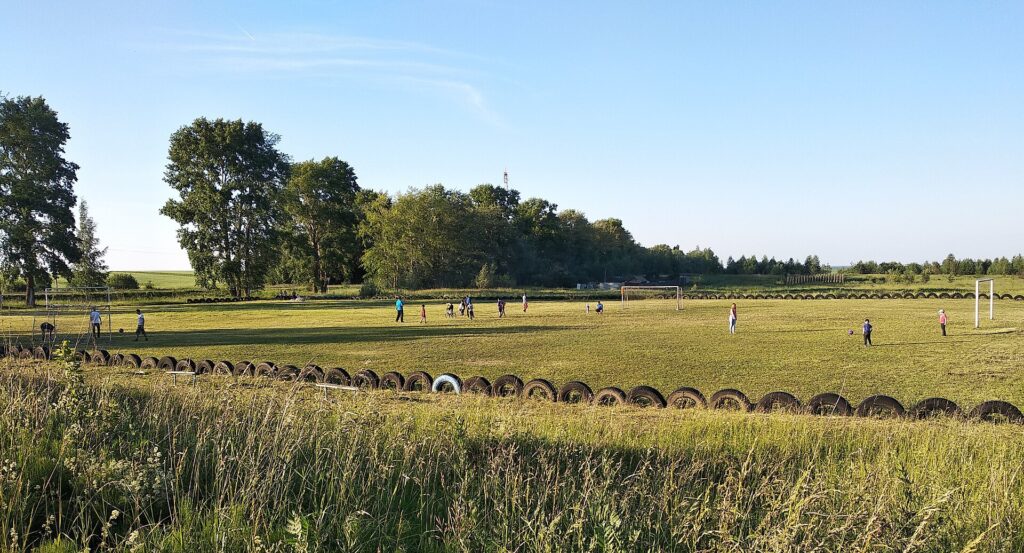
Cold does not threaten a healthy athlete the way heat does, and it degrades a session in quieter ways. Muscle temperature falls faster during any pause, which reduces power output and raises the risk of a muscle injury on the first hard effort after standing still. Fine motor control drops with cold hands. Breathing dry, cold air irritates the airways of susceptible athletes.
The adjustments are structural. The warm-up runs substantially longer and finishes closer to the first hard effort, with no long tactical talk between the two. The session is organised to avoid long static periods; where an explanation is needed, the squad keeps moving. Layers come off late and go back on immediately, and the goalkeepers, who stand still by definition, are treated as a separate case with their own clothing and their own re-warming.
Total duration comes down rather than up. A cold session that runs long produces a squad that is cooling throughout its second half, and the technical quality of that half is not worth the exposure. Winter work at altitude resorts such as the Alborz ski areas uses the same principle for the same reason.
Altitude sits on top of the cold, not beside it
Several northwestern and western cities sit well above sea level, high enough for the air to be measurably thinner even though nobody would describe them as high-altitude training centres. The effect on a single session is small and it is not zero.
At moderate elevation, maximal aerobic performance drops slightly, heart rate at a given submaximal workload rises, and repeated high-intensity efforts take longer to recover from. For a visiting squad, the first two or three days are where the difference is most obvious, and the sensible response is to reduce the density of the first sessions rather than to change their content.
The other altitude effect is the one people forget: the air is drier, so respiratory fluid loss increases and the athlete dehydrates faster than the temperature suggests. Cold plus elevation is a combination in which hydration is under-managed almost everywhere, because nobody feels thirsty at eight degrees.
A four-environment reference table
| Environment | Main threat | First adjustment | What to monitor |
|---|---|---|---|
| Humid coastal heat | Heat accumulation; evaporation blocked | Move to first light; halve work intervals | Body mass change; repetition times |
| Dry inland heat | Fluid loss without visible sweating | Scheduled drinking; shade for all rest | Fluid intake against measured sweat rate |
| Cold plateau winter | Muscle cooling and injury on first efforts | Double the warm-up; cut total duration | Static time; goalkeeper clothing |
| Moderate elevation | Slower recovery between efforts | Reduce density for the first three days | Heart rate at fixed workload; hydration |
The column that most coaches skip is the last one. Every adjustment above is a hypothesis about the athlete in front of you, and the monitoring column is what turns it into a decision rather than a preference.
Frequently Asked Questions
Is it safe to train at all in high humidity?
In most conditions yes, with the volume, the density and the timing adjusted, and with cooling and fluid available throughout. Above the point where a composite heat index reaches the levels national federations use to suspend competition, the correct decision is to move the session indoors or to another time. Any athlete showing confusion, stopping sweating or losing coordination needs immediate medical attention rather than a shorter drill.
How long should a squad arrive before competing in a much hotter city?
If the schedule allows a full acclimatisation block, roughly ten to fourteen days of daily work in the conditions delivers most of the available adaptation. Where that is impossible, arriving very late and managing the exposure tightly is generally preferred to arriving two or three days early, which is long enough to accumulate fatigue and too short to adapt.
Does drinking more water always help?
No. Replacing large sweat losses with water alone dilutes blood sodium, and in extreme cases that is dangerous. Long or heavy sessions in the heat need sodium alongside the fluid, and intake should be matched to measured losses rather than pushed as high as possible.
Do players from a hot region need less acclimatisation?
Living in a hot climate produces partial adaptation, and it is not the same as trained heat acclimatisation, which requires exercise in the heat. A player raised on the coast will adapt faster and still needs the exposure. The reverse case matters more: a player from a hot region moving to a cold one has no advantage at all and often needs longer to adjust his warm-up habits.
What is the minimum useful monitoring for a club with no budget?
Bathroom scales, a stopwatch and a notebook. Pre and post-session mass, fluid recorded, repetition times written down. Those three things detect almost every environmental problem worth detecting, and they cost nothing beyond the discipline of doing them every session rather than on the hot days only.
Should the same rules apply to youth squads?
They should be stricter. Younger athletes have a less efficient sweat response, a higher surface area relative to mass and less reliable self-regulation of drinking, so the volume reductions and rest extensions should be larger and supervision closer. Guidance from a qualified medical professional should govern any youth programme working in extreme conditions, and broader material on preparation and recovery practice is a starting point rather than a substitute for it.
A session plan is a set of assumptions about the environment it will be run in. Write the assumptions down, and the plan stops being one document that travels badly and becomes four that each work where they were written.