
Look at where the money in a football club comes from and you learn more about how it will behave than from any tactical analysis. In Isfahan, the answer for the city’s two long-established clubs has historically been the same: a large industrial employer, with a payroll, a works site and a reason to put its name on a shirt.
That arrangement produces a recognisable kind of club. It plans in years rather than in windows, it builds training facilities other clubs cannot afford, it pays on time, and it carries a single point of failure that nobody discusses while the parent company is profitable.
This is that model examined as an organisational form: where it came from, what it buys, how it changes recruitment, and the specific mechanism by which a stable club becomes an unstable one. It is compared against the state-enterprise clubs of the capital, which solve the same problem differently and inherit a different set of weaknesses.
The model on one page
- Owner. A large industrial enterprise, historically the club’s founding workplace, funding the club from its operating budget.
- Revenue. Overwhelmingly a single transfer from the parent, with gate, sponsorship and prize money as small supplements.
- Strength. Predictable cash, wages paid on schedule, capacity to build and hold physical assets.
- Behaviour. Longer contracts, lower squad turnover, willingness to invest in things that pay back over years.
- Weakness. Concentration. One decision by one board removes most of the income at once.
- The tell. A club with excellent facilities and no commercial department is a club with one revenue line.
Why an industrial city produced this form
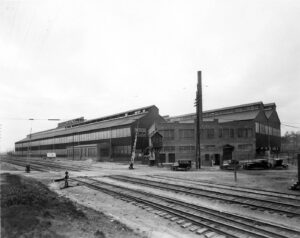
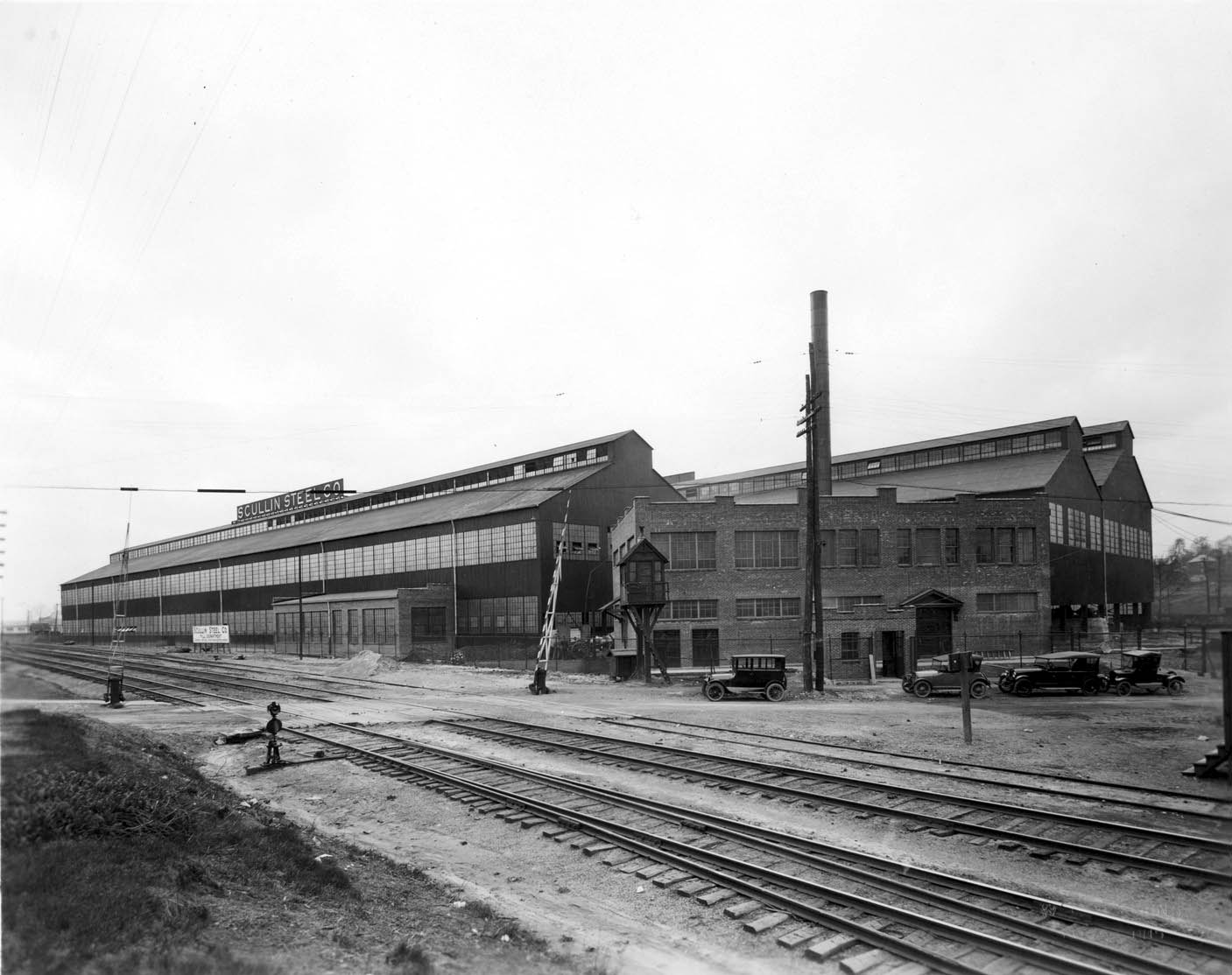
Isfahan is one of the country’s principal manufacturing centres, and heavy industry there has for decades organised sport the way large employers everywhere once did: a works team, a ground on or near the site, and participation as part of the employment relationship rather than as a commercial venture.
Football clubs founded that way inherit a particular logic. The club is a department of a company, its costs sit inside a corporate budget, and its purpose is a mixture of employee welfare, local standing and, later, brand visibility. Nobody founded it to generate a return, which is why nobody built the apparatus for generating one.
The form persisted because it worked. Through periods when independent clubs struggled to secure predictable income, a club attached to a functioning industrial enterprise had a budget approved annually and paid monthly. That reliability is unglamorous and it is worth more over a decade than any single strong season.
What industrial club ownership actually buys
Industrial club ownership buys three things that are difficult to obtain any other way in this market, and it is worth separating them because they are often collapsed into one.
The first is payment reliability. Wages arriving on the agreed date is not a modest advantage; in a league where arrears are a recurring problem, it is the single strongest recruitment argument a club can make, and it is available to a corporate-owned club without spending more than a rival.
The second is a planning horizon. A club whose income is a budget line rather than a hope can commit to a four-year academy programme or a three-year contract, because it knows roughly what next year looks like. The third is capital access: a parent company with a balance sheet can build a training ground, and a club dependent on gate receipts cannot.
What the model does not buy is independence. Every one of those advantages is granted rather than earned, and each can be withdrawn by the same body that granted it, on a timetable the club does not control.
Budget stability, and what it is stability of
The stability is real and it is narrower than it appears. What is stable is the mechanism: a budget is proposed, approved and disbursed on a corporate calendar. What is not stable is the amount, which is set annually by people weighing the club against every other call on the enterprise’s money.
In good years the amount grows quietly. In difficult years it is reduced quietly, and the reduction reaches the club as an instruction rather than as a negotiation. Because the club has no other significant revenue, a modest percentage cut at the parent becomes a large percentage cut at the club, and it arrives mid-cycle with contracts already signed.
This is the difference between stability and resilience. The model is highly stable under normal conditions and poorly resilient to a shock, because there is nothing else to draw on. A club with four revenue lines of moderate reliability survives the loss of one; a club with a single reliable line does not survive its interruption. Broader work on the economics of the sports industry makes the same point in general terms; the concentration here is unusually extreme.
Recruitment behaviour: what a stable budget changes
Ownership shapes squad building more directly than most supporters expect, and the industrial club’s behaviour is distinctive in three ways.
It offers longer contracts. In a market where the one-year deal is close to a default, a club confident of its budget can offer two or three years, which costs it flexibility and buys it a better player at the same wage. Players accept term in exchange for money when they believe the money will actually arrive.
It carries fewer emergency signings. Squad turnover falls because the club is not replacing players who left over unpaid wages, and a lower turnover compounds: a squad that stays together implements a tactical idea faster than one rebuilt every June.
And it is conservative in the transfer market. Corporate governance produces approval processes, and approval processes are slow. The industrial club rarely wins a bidding contest conducted over a weekend, which costs it some signings and saves it from most of the expensive mistakes. It tends instead to buy earlier, at settled prices, from a longer shortlist.
Reading a club’s ownership from its squad list
The funding model is visible in the registration documents long before it is visible in the accounts, and three columns give it away. Contract length is the first: a squad in which most deals run beyond the current season indicates a club that believes its budget, and a squad of one-year agreements indicates one that does not.
The second is the age profile of the signings. Corporate-funded clubs skew towards players in their mid-to-late twenties on multi-year terms, because that is the profile that rewards stability and does not require resale. Clubs that need to trade skew younger, and clubs in trouble skew older and cheaper.
The third is the timing of the announcements. A club that completes its recruitment early in the window is a club whose budget was approved on time; a club whose signings cluster in the last week is one that waited for a decision. None of this requires access to a balance sheet, and it is more reliable than most of what is said about club finances in public.
Facilities: the asset that outlives the sponsor
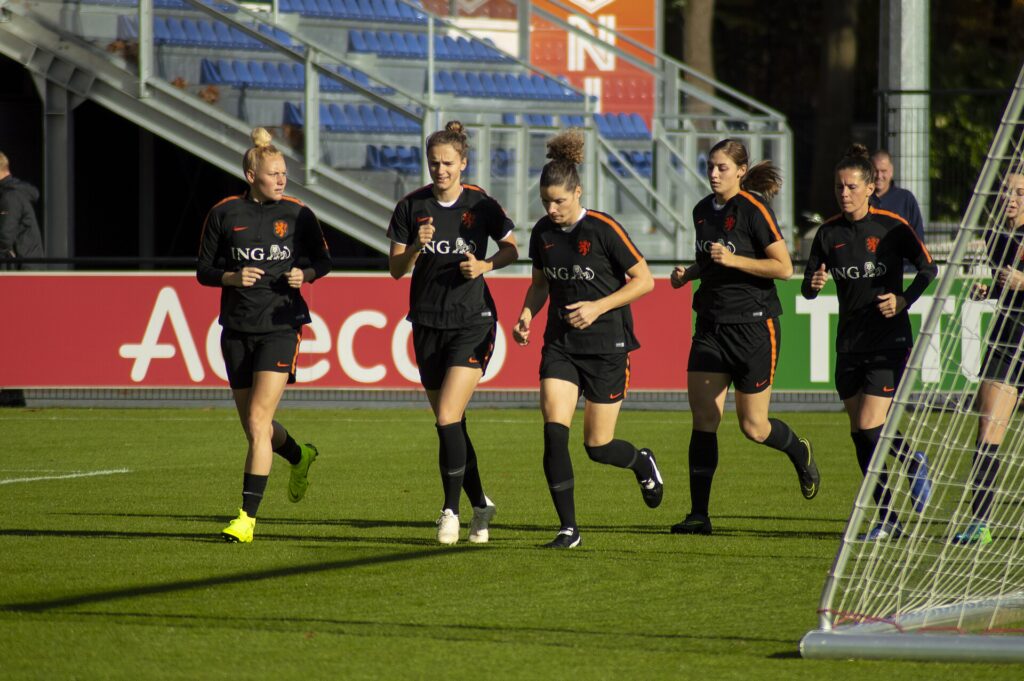
The most durable output of the model is physical. Training grounds, pitches, gymnasiums, medical facilities and academy accommodation are exactly the kind of capital project a company can fund and an ordinary club cannot, and once built they belong to the football operation regardless of what happens to the budget.
The strategic significance is easy to miss. A club with its own training base controls its schedule, its pitch quality and its medical environment, and it removes an entire category of dispute with a municipal landlord. Over a decade that is worth more than several strong transfer windows.
The qualification is the title deed. Where the facility is owned by the parent company and used by the club, the asset is not the club’s, and a separation of the two can leave a club with a history and no home. Where the ownership sits with the club as a distinct legal entity, the facility is a genuine buffer. That distinction is worth checking before describing any club as well resourced, and it is a straightforward matter of corporate governance rather than of football.
The academy consequence, and its limit
Stable funding and owned facilities produce good youth departments, and the industrially owned clubs in the region have generally run them for long enough to have a recognisable style. Continuity of coaching staff matters more than any curriculum, and continuity is what a predictable budget buys.
The limit is on the other side of the pathway. An academy justifies itself either by supplying the first team or by selling players, and the second route requires a club that is willing to sell. A corporate-owned club under pressure to deliver visible success is often reluctant to sell its best young player, which removes the revenue that would otherwise reduce its dependence on the parent.
The result is an academy that functions as a cost-saving measure rather than as a business. That is a legitimate model and it does not diversify anything, which is precisely the vulnerability the club needs to address.
The dependence risk, stated precisely
Dependence risk is not the risk that the owner is unreliable. It is the risk that a club’s entire income depends on decisions taken for reasons that have nothing to do with football, by people whose primary obligation is to something else.
Three mechanisms convert that dependence into a crisis, and they are worth naming separately because they require different defences.
- The commodity cycle. Heavy industry is exposed to prices set on world markets. A downturn compresses budgets across the enterprise, and discretionary spending is reduced first.
- The change of priority. A new board, a restructuring or a shift in corporate strategy can end sponsorship of a football club that no previous board would have questioned.
- The ownership transition. A sale, merger or privatisation of the parent puts the club into a due diligence process it cannot influence, and clubs are among the least defensible items in such a process.
Each mechanism has the same signature at club level: a budget that was approved is reduced or delayed, a squad already contracted becomes unaffordable, and the club discovers it has no independent revenue with which to bridge the gap. Wider shifts in the sponsorship market tend to reach these clubs late and hard, because there is no gradual erosion, only a decision.
The state-enterprise model in the capital, compared

The capital’s two largest clubs grew from a different root and carry a different profile. Historically attached to state bodies and enterprises rather than to a single industrial employer, they trade a corporate parent for a public one, and the exchange has clear terms.
What they gain is scale of support. National followings produce gate revenue, merchandise and sponsorship interest that no provincial club can match, and that revenue is genuinely independent of the owner. Fixtures such as the capital derby are commercial events in their own right, which is a form of income diversification that the industrial model simply does not have.
What they lose is decisiveness. Public ownership brings political appointment cycles, longer decision chains and periodic privatisation processes, and the consequence is instability at the top of the organisation rather than in the bank account. Frequent changes of board and coach, of the kind that accompany a change of era at a capital club, are the characteristic failure of that model, as arrears are the characteristic failure of the weaker private ones.
| Model | Main revenue | Characteristic strength | Characteristic failure |
|---|---|---|---|
| Industrial enterprise | Parent company transfer | Payment reliability; facilities | Single point of failure |
| State enterprise | Public funding plus large support base | Scale, revenue independent of the owner | Governance churn and political cycles |
| Municipal or provincial | Local authority budget | Ground access and local backing | Budget set by an unrelated cycle |
| Private owner | Owner injection | Speed of decision | Arrears when the owner tires |
What would actually reduce the dependence
The remedies are known and they are slow, which is why they are rarely started while things are going well. The first is legal separation: a club constituted as its own entity, holding its own contracts, registrations and ideally its own facilities, is a club that survives a change at the parent.
The second is a commercial department that exists. Most corporate-owned clubs have no meaningful sales function, because they have never needed one, and building it takes years of relationships that cannot be assembled during a crisis. Naming rights, regional sponsorship, matchday hospitality and a functioning retail operation are unremarkable revenue lines that many of these clubs simply do not operate.
The third is a willingness to sell players. An academy that produces a saleable asset every second or third season converts a cost centre into a revenue line and reduces the parent’s share of the budget without asking anyone for more money. It requires accepting that the best young player will leave, which is a decision about the club’s purpose rather than about its finances.
Frequently Asked Questions
Is corporate ownership better or worse than private ownership here?
Neither, and the comparison is the wrong shape. Corporate ownership trades independence for reliability, and private ownership does the reverse. In a market where wage arrears are common, reliability has been the more valuable of the two, which is why the model has lasted.
Why do these clubs rarely sell their best players?
Because the parent funds the club for visibility and standing, and selling the best player reduces both in the short term. The incentive structure rewards keeping him. That is rational for the owner and it is exactly what keeps the club dependent.
Does the model produce better facilities than anything else in the league?
Frequently, yes, because it is the only model with routine access to capital. The question worth asking is whose name is on the title, since a facility owned by the parent is not a buffer for the club that uses it.
What is the early warning that a parent is stepping back?
Budget approval slipping later each year, payment dates moving from the start of the month to the end, and capital projects being deferred rather than cancelled. Squad decisions follow those signals by roughly a season, which is why contract length in the summer is a useful indicator of what the club expects.
Could a supporter-owned model work as an alternative?
Membership models require a legal framework, a subscription culture and reliable governance, and they build slowly. As a complete replacement for corporate funding at this level it is not realistic in the short term. As a supplementary revenue line and a source of independent governance, it is a serious option that almost nobody has tried.
Does this pattern appear outside football?
It appears across the country’s sporting landscape, in volleyball, basketball and the mat sports, and for the same reason: large employers organised sport before commercial sport existed. The dependence risk described here applies equally to those codes, and in smaller sports it bites harder, because the alternative revenue lines are thinner still.
An industrially owned club is not a compromised club. It is a club that has solved the hardest problem in this market, and has done so in a way that leaves it exposed to a single decision taken in a building where nobody watches the football. The work worth doing is the unexciting kind: a separate legal entity, a title deed, a sales team and the discipline to sell a player occasionally.