
Say checkmate out loud and you are speaking a Persian phrase that has survived roughly fourteen centuries of transmission through Arabic, Latin, Spanish, French and English without losing its meaning. The board changed, the pieces changed, most of the moves changed. The words did not.
The game that became modern chess arrived in Persia from India as chaturanga, was reorganised there as shatranj, and travelled outward again through the Arab world into Europe, where its two weakest pieces were rebuilt in the fifteenth century into the two strongest. What came back to Iran centuries later was recognisably the same game with a different tempo.
This is that journey traced through the rules rather than through legend: what changed, what stayed, and how the game was re-established as an organised sport in the country it passed through.
The journey in five stages
- Chaturanga. An Indian game with four arms of an army: infantry, cavalry, elephants and chariots, on an eight by eight board.
- Shatranj. The Persian reorganisation, with a counsellor beside the king and a body of written theory around it.
- Transmission. Carried into the Arab world, where the problem literature and the opening arrays were formalised.
- Europe. The counsellor becomes the queen and the elephant becomes the bishop, both gaining long-range movement in the late fifteenth century.
- Return. The modern game re-enters Iran as an international sport with a federation, ratings and tournaments.
- What survived intact. The board, the eight pawns, the knight’s move, and the vocabulary.
Chaturanga, and what arrived in Persia
The oldest recognisable ancestor is chaturanga, played in India on the same sixty-four squares used today. Its name refers to the four divisions of an army, and the pieces map onto them: foot soldiers, horses, elephants and chariots, arranged around a king and a counsellor.
Two features of that arrangement passed through every later version without alteration. The board is eight by eight and unmarked. The knight moves in the same bent line it moves in now, jumping over occupied squares, which makes it the only piece whose movement has never been revised in the entire history of the game.
What arrived in Persia was therefore not a rough sketch. It was a complete game with a working balance, and the Persian contribution was less an invention than an organisation: fixed names, a written vocabulary, and eventually a body of analysis. Comparable transmission stories run through other traditional disciplines in the region, though few are documented this well.
How shatranj chess pieces became the modern set
The shatranj chess set is the modern set with two pieces demoted. The shah is the king and behaves the same way. The asb, the horse, is the knight. The rukh, the chariot, is the rook, moving in straight lines across the board exactly as it does now. The piyadeh, the foot soldier, is the pawn.
The two that differ are the ones next to the king. The farzin, the counsellor, stood where the queen stands and moved a single square diagonally. The pil, the elephant, stood where the bishop stands and jumped exactly two squares diagonally, passing over whatever sat in between.
Those two restrictions define the whole character of the older game. With no long-range diagonal piece, attacks develop slowly and the rooks carry most of the offensive weight. A shatranj position that looks passive to a modern player is often perfectly sharp; there is simply no piece capable of crossing the board in one move to prove it.
The words that survived the journey
The vocabulary is the clearest surviving evidence of the route. Checkmate comes from shah mat, the king is helpless. Check is shah, the king. Rook comes from rukh by way of Arabic and Italian, and it is the reason an English-speaking player calls a piece shaped like a tower by a word that originally meant chariot.
Bishop is a local substitution rather than a translation: the piece was the elephant, al-fil in Arabic, which became alfil in Spanish and alfiere in Italian before English replaced the animal with a clergyman. The French fou, meaning jester, is a third substitution for the same piece.
Queen is the odd one. The Persian farzin became the Arabic firzan and the Old French fierce, and only later was reinterpreted as a queen standing beside a king. The reinterpretation preceded the change in movement, and it may well have suggested it.
The moves that did not survive: farzin, pil and the slow game
A game with a one-square counsellor and a two-square jumping elephant produces a completely different tempo. Development takes many more moves. Pawn structures matter more, because there is no piece that can ignore them. Long-range tactics of the kind that decide modern games are largely unavailable.
The elephant is the strangest piece to a modern eye. Jumping exactly two squares diagonally, it can only ever reach eight squares on the entire board, and two elephants on different-coloured squares can never meet or defend each other. It is a piece with a permanent, unfixable weakness built into its movement.
The pawn also behaved differently. There was no two-square opening move, which removed the entire modern debate about tempo in the opening, and promotion delivered a farzin rather than a queen, which meant reaching the eighth rank produced a modest gain rather than a decisive one. Castling did not exist; the king walked to safety one square at a time.
Openings were positions, not sequences
Because the pieces developed so slowly, the opening phase of shatranj was not a contest. Both players spent a dozen or more moves arranging their pieces into a chosen formation, and neither could seriously interfere with the other while doing so.
Those formations were named and catalogued as ta’biyat, and the literature discussed them as arrangements to aim for rather than as move orders to memorise. A player chose a setup, reached it, and only then began playing against the opponent.
This is the single largest structural difference between the two games. Modern opening theory is a study of sequences in which every move can be punished. Shatranj opening theory was a study of destinations. The change came not from a new idea about openings but from giving two pieces the range to make the opening contestable.
Mansubat: the problem tradition
The slower game produced a rich tradition of composed positions, known as mansubat, in which a player is given a position and asked to force a win in a set number of moves. These were collected in manuscripts, circulated, and studied in the way modern players study endgame tables.
Composed problems suited the game for a specific reason. With limited piece mobility, the difference between winning and drawing an endgame frequently came down to a precise sequence that would never be found over the board without prior study. The problem literature was practical training, not entertainment.
It also preserved the rules. A composed problem only works if the reader knows exactly how each piece moves, so the manuscripts that survive are the clearest record of what shatranj actually was, more reliable than any narrative description of the period.
What changed in Europe, and why the game accelerated
The decisive change happened in Europe toward the end of the fifteenth century, when the counsellor was given the combined movement of rook and bishop and the elephant was given the full diagonal. Both pieces went from being the weakest on the board to being, in the queen’s case, by far the strongest.
The effect was immediate and violent. Games got shorter. Attacks became possible from the first dozen moves. The opening turned into a contested phase, because a queen and two bishops could reach across the board before either side had finished developing. Castling and the two-square pawn move were added in the same period, both of them responses to a game that had suddenly become too fast for a king walking one square at a time.
Everything else was left alone. The board, the knight, the rook, the pawn’s capture and the object of the game all came through unchanged from the version that had been played in Persia eight centuries earlier. General accounts of the older game and of its Indian predecessor agree on that continuity.
Winning conditions then and now
Checkmate ended a shatranj game as it ends a modern one, but it was not the only win. Capturing every enemy piece except the king, leaving a bare king, was also a victory, and so was stalemate in most traditions of the period: a player who could not move lost, rather than drawing.
Both rules make sense in a slow game. With weak pieces, grinding an opponent down to a bare king was a realistic plan that deserved a reward, and forcing a position with no legal moves required genuine technique. Modern chess, where the queen makes forcing mates common, treats stalemate as a draw and ignores the bare king entirely.
This is the change most likely to trip up a modern player trying an old position. A sequence that looks like a stalemate escape in a manuscript is not an escape at all; it is the losing move.
The return as an organised sport
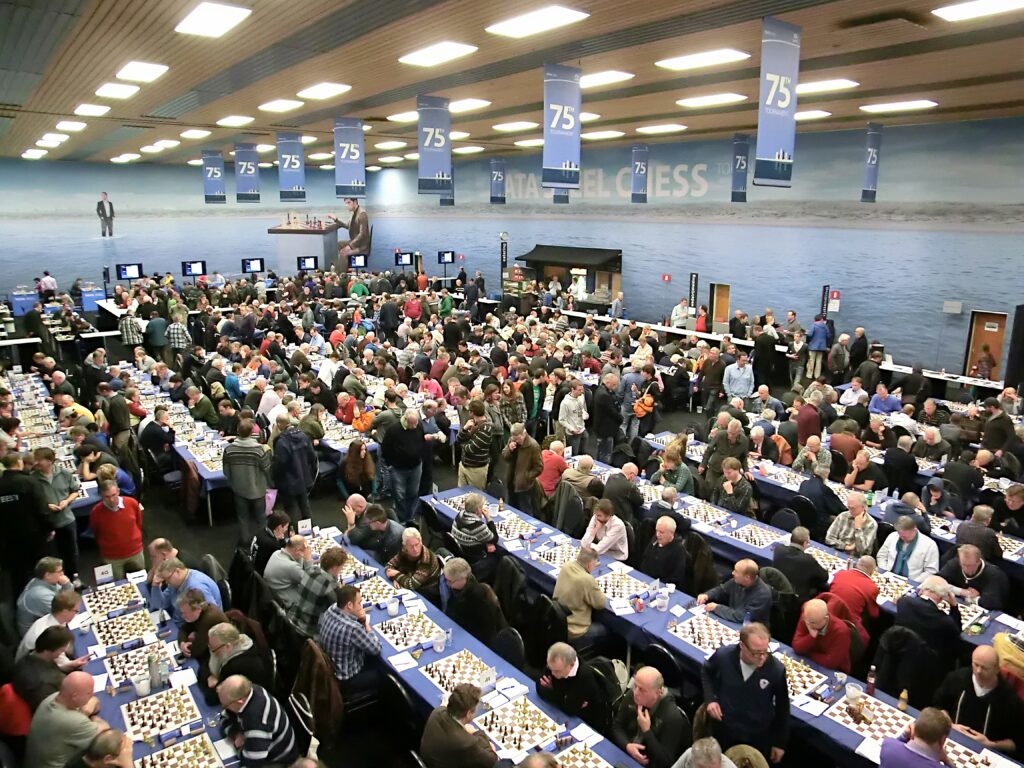
Competitive chess in Iran was interrupted after the end of the 1970s and was not played publicly for much of the following decade. A ruling in 1988 permitted the game as a sport where no wagering was involved, and the federation was rebuilt from that point: clubs, national championships, international affiliation, and a rating system tied to the world body.
What followed was structural rather than dramatic. Junior programmes, school competitions, provincial championships feeding a national calendar, and eventually a steady flow of titled players from cities that had no formal chess infrastructure a generation earlier. The pathway looks much like the ones described for the current generation of players.
The domestic game today is administered as any other federated sport: a calendar, a ranking, national teams for age groups, and coaching qualifications. The historical vocabulary survives in the language, and the game itself came back as an import.
Playing an old position on a modern board
Nothing prevents a modern player from setting up a shatranj position tonight. The board is identical, six of the eight piece types behave the same way, and the only physical adjustment is agreeing which piece stands in for the counsellor and which for the elephant.
Four rule changes have to be applied honestly, and they are the ones players forget in the first game. Pawns move one square from their starting position. Promotion produces a counsellor, not a queen. There is no castling. And a player with no legal move loses rather than draws.
The experience is instructive rather than nostalgic. Without a long-range diagonal, the centre becomes a slow wrestling match, the rooks become the only pieces capable of decisive action, and material advantages that would be trivial in modern chess take twenty moves to convert. Most modern players lose their first few games to the stalemate rule, having spent years treating it as a safety net.
It also makes the fifteenth-century change legible. Play one game each way and the reason the queen and bishop were rebuilt stops being a historical curiosity and starts being obvious: the older game was excellent and it was slow, and the redesign traded depth of manoeuvre for speed of contact.
Shatranj and modern chess compared
| Element | Shatranj | Modern chess |
|---|---|---|
| Piece beside the king | Farzin, one square diagonally | Queen, unlimited in all directions |
| Piece next to the knight | Pil, jumps exactly two squares diagonally | Bishop, unlimited on the diagonal |
| Pawn first move | One square only | One or two squares |
| Promotion | To a farzin | To any piece, usually a queen |
| King safety | Walks, no castling | Castling on either side |
| Stalemate | Generally a loss for the stalemated player | A draw |
| Bare king | A win for the opponent | No such rule |
Frequently Asked Questions
Was chess invented in Persia?
No. The direct ancestor, chaturanga, came from India. Persia received it, reorganised it as shatranj, gave it the vocabulary that survives in most European languages, and passed it westward. The invention was Indian; the standardisation and transmission were Persian.
Where does the word checkmate come from?
From the Persian shah mat, meaning that the king is helpless or defeated. Check comes from shah, the king itself. Rook comes from rukh, a chariot, which is why the word does not describe the tower-shaped piece it now names.
Why was the queen so weak in shatranj?
Because it was not a queen. The piece was a counsellor to the king and moved one square diagonally. The change to a long-range piece happened in Europe in the late fifteenth century, several hundred years after the game left Persia.
Can shatranj still be played today?
Yes, and it is, mostly by historically minded players working from surviving problem collections. The board and most pieces are identical, so the only adjustments needed are the counsellor, the elephant, the pawn’s first move and the stalemate rule.
How is chess organised as a sport in Iran now?
Through a national federation affiliated to the world body, with rated tournaments, national championships across age groups, school and provincial competitions, and coaching qualifications. It is administered on the same model as any other federated discipline.
The pieces on a modern board are still the four arms of an old army, renamed twice and re-armed once. Only two of them were ever redesigned, and the game people play today is what happened when those two were let off the leash.