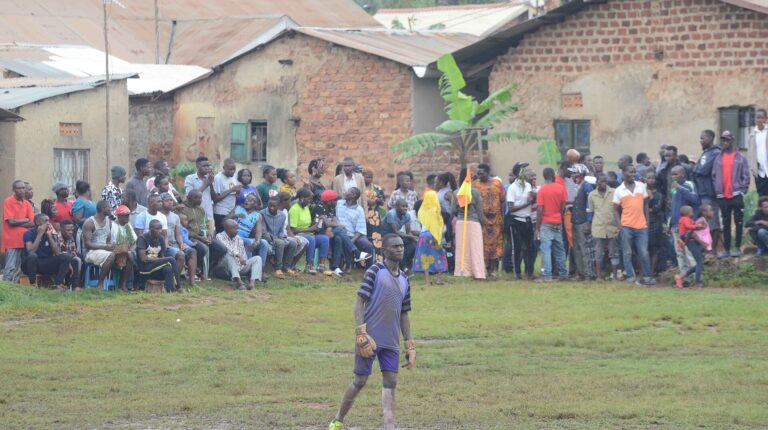


Two schools sit forty minutes apart, one in a provincial capital and one in a village outside it, and a student in each is nominally entitled to the same number of scheduled physical education periods per week. In practice, one school has a covered hall, working equipment and a teacher trained specifically in physical education; the other rotates an outdoor yard between several classes and a teacher covering the subject alongside an unrelated main assignment. The entitlement on paper is identical. What a student actually receives is not.
This gap, between scheduled hours and delivered hours, is the more useful thing to measure than the official curriculum figure, because the official figure is the same everywhere and explains nothing about why some schools produce federation-ready athletes and others produce students who have barely touched a ball by the time they leave.
What follows looks at how much scheduled physical activity students actually receive, where the urban-rural facility gap is sharpest, and how the school system connects, imperfectly, to the federation pathway that eventually produces provincial and national athletes.
- The formal entitlement. A set number of physical education periods per week under the national curriculum, consistent on paper across the country.
- Where delivery diverges. Facility quality, specialist staffing and class size vary sharply between urban and rural schools.
- The urban advantage. Covered halls, dedicated equipment and, more often, a teacher trained specifically in the subject.
- The rural constraint. Shared outdoor space, generalist staffing and weather that cancels sessions the urban school would simply move indoors.
- The connection to sport. School PE is the widest net available; it only converts into a federation pathway where a teacher or coach actively makes that link.
What the curriculum actually schedules
The national curriculum allocates a defined number of physical education periods per week across primary and secondary education, set centrally and applied, on paper, uniformly to every school in the country regardless of location or resources. This is the number that appears in official planning documents and in any comparison with other education systems.
The number is a scheduling commitment, not a delivery guarantee. It says a period exists on the timetable; it says nothing about whether that period is taught by a specialist, whether the school has functioning equipment for it, or whether the weather and available space allow it to run as planned through an entire school year. Those are the variables that actually determine what a student experiences, and none of them are captured by the headline figure.
Physical education iran schools: the gap between scheduled and delivered
Comparing physical education iran schools purely on the scheduled curriculum hides most of what matters, because the delivered hours in a well-resourced urban school and a poorly resourced rural one can diverge substantially even where both timetables show the identical number of periods. A period that is regularly cancelled for lack of space, folded into another subject when a specialist teacher is unavailable, or reduced to supervised free time rather than structured instruction does not deliver the same educational or athletic value as a period run to the curriculum’s actual intent.
Tracking delivered hours rather than scheduled hours is difficult precisely because it requires school-level observation rather than a single national figure, which is part of why the gap tends to be discussed anecdotally, through teachers, parents and provincial sports board officials, rather than through a single widely cited statistic. The anecdotal pattern is nonetheless consistent enough across regions to be treated as a real structural feature rather than a collection of isolated complaints.
Facilities: the variable that decides everything else
A covered, indoor teaching space changes what physical education can deliver more than any other single factor, because it removes weather as a constraint. An outdoor-only school loses sessions to rain, extreme heat, cold and poor air quality during exactly the seasons discussed elsewhere as difficult for outdoor training generally, while a school with an indoor hall simply moves the lesson inside and continues on schedule.
Equipment compounds the gap. A school with a stock of balls, mats and basic apparatus can run a varied curriculum across multiple sports; a school without it is limited to activities requiring no equipment at all, which narrows both the educational content and the chance that a student discovers an aptitude for a sport that happens to need a ball, a net or a mat to introduce properly.
Urban schools, particularly in larger provincial capitals, are considerably more likely to have both an indoor space and a working equipment stock than rural schools, which is the single largest driver of the delivery gap described above.
Staffing: specialist versus generalist
A physical education class taught by a teacher trained specifically in the subject differs from one taught by a generalist teacher assigned the period alongside an unrelated core subject in ways that go beyond simple enthusiasm. A trained specialist can identify a technical issue in a student’s movement, structure a progression across a term rather than repeating the same activity, and recognize when a student’s ability is genuinely above the level the class requires, which is the first informal step in the talent identification chain described in coverage of provincial sports boards.
Urban schools, again, are more likely to have access to a specialist, partly because a larger urban school can justify a dedicated position where a small rural school, with fewer total students, often cannot support one and assigns the subject to whichever teacher has capacity in their schedule. This is not a failure of individual teachers doing their best with an assignment outside their training; it is a structural staffing constraint that follows school size and location.
Class size and the ratio nobody publishes
| Factor | Typical urban condition | Typical rural condition |
|---|---|---|
| Teaching space | Indoor hall, weather-independent | Outdoor yard, weather-dependent |
| Equipment | Varied stock across several sports | Minimal, often shared across classes |
| Staffing | Specialist physical education teacher more common | Generalist teacher covering the subject |
| Class size per session | Larger schools, but often split into smaller groups | Smaller total enrollment, but limited grouping options |
| Link to a sports club | More local clubs and federation boards nearby | Fewer clubs; travel required to register with a board |
A large class taught in a small space produces less actual activity time per student regardless of the total period length, since time is lost to organizing groups, waiting for equipment to become free, and managing a space too small for the number of students in it. This constraint applies in both settings but is more often reported in dense urban schools with high enrollment, which is a reminder that the urban advantage described elsewhere in this piece is real on average without being universal in every specific school.
Where the school system connects to the federation pathway, and where it does not
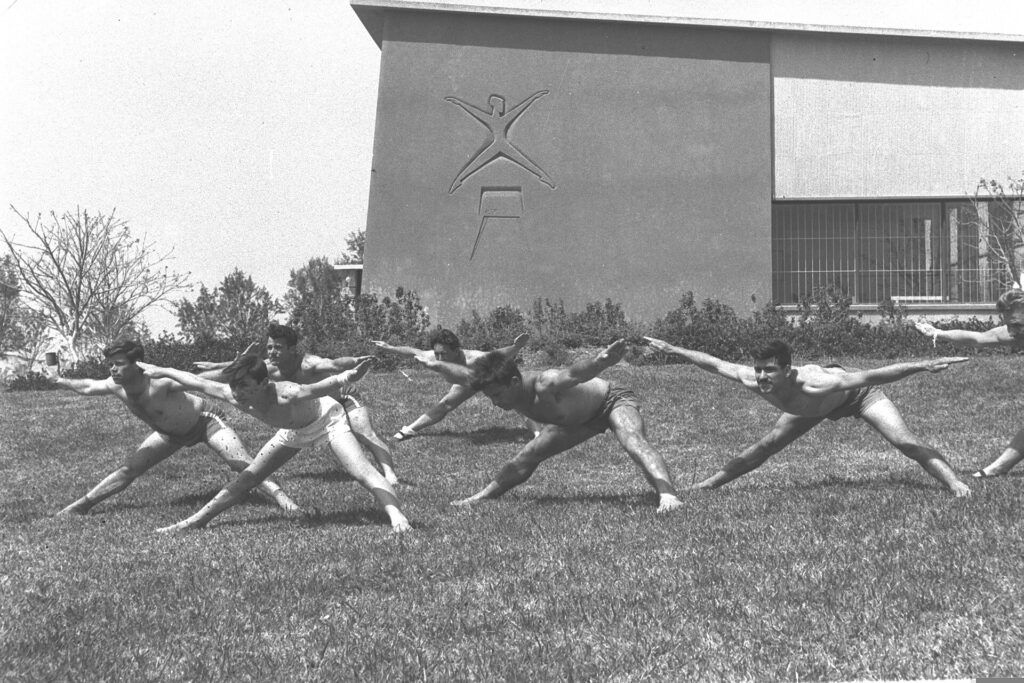
School physical education is the only institution that reaches the entire student population of an age group, which makes it, in principle, the widest possible net for identifying sporting talent before any federation board or club has had a chance to see a student at all. In practice, that net converts into an actual sporting pathway only where an individual, a teacher who knows a local club, a coach who visits schools, a parent who takes the initiative, makes the connection between what a student showed in a school setting and a registration with a federation-affiliated club.
Where that individual link exists, a talented student moves fairly quickly from school competition into club registration and the provincial competition ladder described in coverage of how talent is found outside the capital. Where it does not exist, which is more common in areas without a nearby specialist teacher or an active local board, a student can perform well in school sport for years without ever being registered anywhere a federation would see him.
This is not a flaw unique to physical education specifically; it is the same handover problem that affects the wider schools-to-federation pipeline, and physical education’s role in it is simply to be the first point at which raw aptitude becomes visible at all.
What a facility gap costs a specific sport
The consequences of the facility gap are not evenly distributed across sports. A sport that needs only an open space and minimal equipment, distance running, some forms of wrestling, spreads relatively well into schools with limited resources. A sport that needs an indoor court, specific markings, or costly equipment concentrates almost entirely in schools that already have those things, which in turn concentrates the talent pool for that sport in exactly the urban areas already advantaged by the broader facility gap.
This mechanism is one of the reasons certain sports draw their national talent disproportionately from a handful of provincial capitals rather than spreading evenly across the country in proportion to population, a pattern that mirrors the provincial concentration discussed in relation to wrestling and other traditions in different regions, except that here the driver is school-level infrastructure rather than coaching lineage specifically.
What schools with limited resources actually do
Resourceful schools without dedicated facilities have found partial workarounds rather than accepting the gap as fixed. Some negotiate shared use of a nearby municipal hall or a facility belonging to a local employer during hours the primary user does not need it, which recovers some of the indoor-space disadvantage without requiring new construction. Others rotate a limited equipment stock across a tighter timetable, prioritizing the activities that stock actually supports rather than attempting a full curriculum with insufficient equipment for it.
These are real, if partial, solutions, and they depend heavily on an individual school administrator’s initiative and local relationships rather than on a systemic policy that guarantees the same workaround everywhere. A well-run rural school with an engaged administrator can outperform a poorly run urban one on delivered hours, even without matching its facilities, which is worth stating plainly against a tendency to treat the urban-rural gap as a strict, deterministic rule rather than a strong general pattern with real exceptions.
What parents ask that schools rarely answer directly
A parent trying to judge whether a school’s physical education programme actually functions is usually working from limited information: a curriculum document that lists periods per week and says nothing about delivery, and whatever a child reports informally, which skews toward whether the class was enjoyable rather than whether it was structured. A more useful set of questions, rarely asked but answerable if put directly to a school, covers how often sessions are actually held indoors when weather requires it, whether the same teacher covers the subject across a full term or whether coverage rotates, and whether the school has ever referred a student to a local club or provincial board.
Few schools publish answers to these questions unprompted, not necessarily to hide a weak programme but because the questions are simply not part of how a school’s performance is usually reported or compared. A parent willing to ask them directly, and to compare the answers against a neighbouring school, gets a far more accurate picture than the scheduled-hours figure alone provides.
Frequently Asked Questions
Is the number of scheduled physical education periods the same across the country?
Yes, the national curriculum sets a uniform scheduled entitlement, but the hours actually delivered vary considerably depending on facilities, staffing and local conditions.
What is the single biggest driver of the urban-rural gap?
Access to an indoor teaching space, since it removes weather as a constraint and allows a school to deliver its scheduled periods consistently through the year rather than losing sessions to conditions an urban school with a hall would simply work around.
Does a generalist teacher do a worse job than a specialist?
Not necessarily in effort, but a specialist is more likely to structure a progressive curriculum and recognize a student’s aptitude in a way that connects to the federation pathway, which a generalist covering the subject alongside other duties is less positioned to do.
Does school sport lead directly to a federation career?
Rarely on its own. It requires an individual, a teacher, coach or parent, to convert a student’s school performance into an actual club registration, without which the student remains invisible to the federation system regardless of ability.
Can a rural school overcome its facility disadvantage?
Partially, through shared use of nearby facilities and a focused equipment strategy, though this depends heavily on individual school leadership rather than on a guaranteed systemic remedy.
The curriculum guarantees a number of periods. It does not guarantee a hall, a specialist teacher, or the one adult willing to make a phone call, and it is those three things, not the number on the timetable, that decide what a student actually gets out of school sport.