On a cold December evening in Washington, the Kennedy Center lights dimmed and a room of broadcasters leaned toward a crystal draw machine. When the ball containing “Iran” rolled out into Group G, the reaction inside Tehran’s cafés and Mashhad’s late-night teahouses was not fear. It was something closer to relief, then calculation. Belgium, Egypt and New Zealand: a group nobody in the Persian football press wanted to call easy, but nobody could call cruel either.
Five months later, the smell of wet grass at Iran’s Antalya training base carries a different weight. Amir Ghalenoei, sixty-nine years old, white-haired and famously unhurried, stands at the edge of a shooting drill with his hands behind his back. Mehdi Taremi jogs to the halfway line. Ali Gholizadeh pulls on a bib. Sardar Azmoun, freshly arrived from Dubai, ties a boot that costs more than most Iranians earn in a year, and he knows it. This is Team Melli in April 2026, two months from the biggest tournament of their footballing lives, and for the first time in a decade the question in the room is not “will we go” but “how far can we go?”
The answer has to pass through three cities few Iranian players have ever set foot in — Inglewood, Los Angeles, Seattle — and through a political backdrop that only days ago threatened to cancel the whole project.
The Draw That Surprised Nobody and Everybody
Pot 3 was always going to be a minefield for a team ranked 21st in the world. Iran could have drawn Germany or Spain in Pot 1, Uruguay or Croatia in Pot 2. Instead, the sequence produced Belgium — a side still rebuilding after the so-called Golden Generation’s quiet disbandment — then Egypt, whose Mohamed Salah remains the continent’s most marketable export, and finally New Zealand, the All Whites, back at a World Cup for the first time since 2010.
Iranian analysts reacted the way Iranian analysts always do: with measured optimism stapled to a centuries-old habit of expecting the worst. Tehran Times called it “navigable.” Sobh-e Varzesh used the word “karsaz” — workable. Inside the federation, a senior official reportedly told local media that the draw was “a gift we must not waste,” a comment repeated often enough to become the tournament’s unofficial slogan.
The schedule arrived with the draw. Iran open against New Zealand at SoFi Stadium in Inglewood on 15 June. Six days later they return to the same venue to face Belgium. The group closes on 26 June at Seattle’s Lumen Field against Egypt. All three matches sit on American soil, a fact that became politically explosive in the weeks that followed.
Infantino’s Guarantee and the Politics Nobody Wanted
On 15 April 2026, at a CNBC-hosted panel in Miami, Gianni Infantino was asked directly whether Iran would actually travel. The FIFA president had just returned from Antalya, where he’d watched Ghalenoei’s squad train. His answer was unusually unambiguous. “The Iranian team is coming for sure,” he said. “Iran has to come. Of course, they represent their people. They have qualified.” He added the phrase that made headlines in every Persian-language outlet within the hour: “Sports should be outside of politics.”
The statement mattered because, behind the scenes, the Iranian federation had filed a formal request for its matches to be relocated to Mexico. That request was denied. Italy, freshly eliminated in European qualification, had reportedly been sounded out by third parties as a possible replacement should Iran withdraw. Iran declined to withdraw. The federation’s president, speaking to reporters in Tehran, framed it simply: “We have earned this. We will play.”
What that means, practically, is that Ghalenoei’s squad will spend the group phase training in Southern California, sleeping in Seattle, and navigating a visa process that has already forced two administrative staffers to remain in Doha. Every Iranian journalist who has applied for U.S. press accreditation is still waiting as of this week.
Amir Ghalenoei’s Quiet Revolution
Ghalenoei is not the obvious face of a modern international coach. He doesn’t wear tracksuits in press conferences. He doesn’t talk in metrics. What he does, and has done since taking the Team Melli job in the summer of 2023, is the thing Iranian coaches have rarely managed: he has made Iran hard to score against without sacrificing the one generational attacking talent the country has produced in a decade.
The numbers tell the first part of that story. Across the third round of Asian qualifying, Iran lost only once, conceded at a historically low rate, and qualified with two matches to spare after a 2–2 draw at home to Uzbekistan in March 2025 clinched mathematical certainty. That draw, in Tehran, is the moment most Iranian supporters will point to when they recall how this campaign became real.
The tactical skeleton Ghalenoei has settled on is a 4–2–3–1 that mutates into a back-five out of possession, with the two fullbacks dropping low and the wingers tucking into a narrow mid-block. Mehdi Taremi operates as a lone nine but drifts left constantly, pulling the weakside centre-back with him and leaving space for a late-arriving runner — usually Gholizadeh, increasingly Azmoun when he’s starting off the bench. It’s not beautiful. It does, however, create exactly the kind of low-event match Iran survived in Qatar 2022 against Wales.
The Spine: Taremi, Azmoun, Jahanbakhsh, Hajsafi
Any conversation about Iran’s 2026 squad starts with Mehdi Taremi. Thirty-three years old in June, he is scoring at better than a goal every two matches for Olympiacos since his August 2025 transfer from Inter Milan for a reported €2.5 million fee. Ten Greek Super League goals, a Champions League brace, and the kind of form the 2022 version of Taremi — worn down by Serie A defensive blocks — could not have produced. He will be the captain’s armband’s most likely landing spot on any given matchday.
Sardar Azmoun, once breathlessly marketed abroad as the “Iranian Messi,” occupies a stranger, more interesting position. After his July 2024 move from Bayer Leverkusen to Shabab Al Ahli Dubai for a reported €5 million, Azmoun’s minutes dropped sharply. He has played limited football in the UAE Pro League this season, and his match fitness is the single biggest selection question Ghalenoei faces. Reports from the Antalya camp suggest the coaching staff view him as an impact substitute unless injuries reshape the front three.
Alireza Jahanbakhsh, now at Belgian side Dender EH after leaving Heerenveen in November 2025, brings something the squad sorely lacks: experience of playing against European top-tier opposition in a contemporary, non-legacy role. Ehsan Hajsafi, who returned to Sepahan in the Persian Gulf Pro League in July 2025 after four seasons at AEK Athens, is almost certainly in his final international tournament, and his leadership during the Qatar 2022 armband protest remains part of the dressing-room fabric.
Behind them comes a generation Ghalenoei has spent two years blooding: Mohammad Mohebi in the front line, Saeid Ezatolahi anchoring the midfield, Hossein Kanaanizadegan in central defence. For the first time since the 2014 squad, there is no single obvious weak position on the field.
The Group, Match by Match
| Match | Opponent | Venue | Date | FIFA Rank (Apr 2026) |
|---|---|---|---|---|
| Matchday 1 | New Zealand | SoFi Stadium, Inglewood | 15 June 2026 | 94 |
| Matchday 2 | Belgium | SoFi Stadium, Inglewood | 21 June 2026 | 6 |
| Matchday 3 | Egypt | Lumen Field, Seattle | 26 June 2026 | 36 |
| Iran | — | — | — | 21 |
The opening match is, in competitive terms, the one Iran must win. New Zealand are improved under Darren Bazeley and qualified via the OFC pathway with only a single loss, but they remain a step below Iran in every measurable category. Anything other than three points in Inglewood would turn the next two fixtures into a survival exercise.
Belgium is the glamour fixture, the test, the potential masterpiece. Domenico Tedesco’s rebuilt Red Devils — less Hazard, more Openda, more Doku — are ranked sixth in the world but are widely considered beatable. Iran’s low-block record against elite European opposition is historically strong; they held Spain to 1–0 in Rio in 2014, held Portugal to 1–1 in 2018. A draw here is the realistic ceiling and a world-class result.
Egypt on Matchday 3, with Mohamed Salah at thirty-three likely playing his final World Cup group stage, is the fixture most Iranian analysts are quietly optimistic about. The two federations have met before in friendlies; Iran historically handles African opposition comfortably when fit. The venue — Seattle’s Lumen Field, with its partial roof and notoriously loud home crowd — may actually play to Iran’s advantage if the USMNT-indifferent local population decides to back the neutral.
What Iran Needs to Escape the Group
The mathematics of the expanded 48-team format changes the calculation. With 32 teams advancing to the round of 32 — the top two from each group plus the eight best third-placed sides — four points can be enough. Five points makes it extremely likely. Six puts Iran through as group winner or runner-up.
Four points means beating New Zealand and drawing either Belgium or Egypt. That is, in honest terms, the floor Ghalenoei’s staff are planning around. Anything below three points would represent a collapse at the level of Iran’s 6–2 opening loss to England in Qatar. Anything at seven points or above would be the greatest group-stage performance in Iran’s World Cup history, surpassing the 2022 four-point haul.
The team has never, in six previous World Cups, advanced from the group. That is the single sentence around which every Iranian fan’s hope is currently organised. The 1998 France squad famously beat the United States 2–1 in Lyon, a match that still carries political weight decades later, but finished third on goal difference behind Germany and Yugoslavia. The 2014 and 2018 teams were better-organised but less lucky. The 2022 side beat Wales, lost heavily to England, and fell 1–0 to the United States via a Christian Pulisic goal in Doha. Seven straight group exits. That record ends or extends in Seattle on 26 June.
The Shadow of Doha and the Fabric of Protest
No preview of Iran at a World Cup in 2026 can avoid what happened in Doha. Before the opening match against England, the entire starting XI refused to sing the national anthem. It was the first visible public solidarity by the national team with the protests that followed the death of Mahsa Amini, and it cost several players — Hajsafi most prominently — political goodwill at home. Four years on, the dressing room’s current leadership is quieter but not silent. The players have said almost nothing publicly about the coming tournament’s political dimension. The federation has asked them not to. Whether that silence holds under the pressure of a U.S.-based group stage is one of the tournament’s open questions.
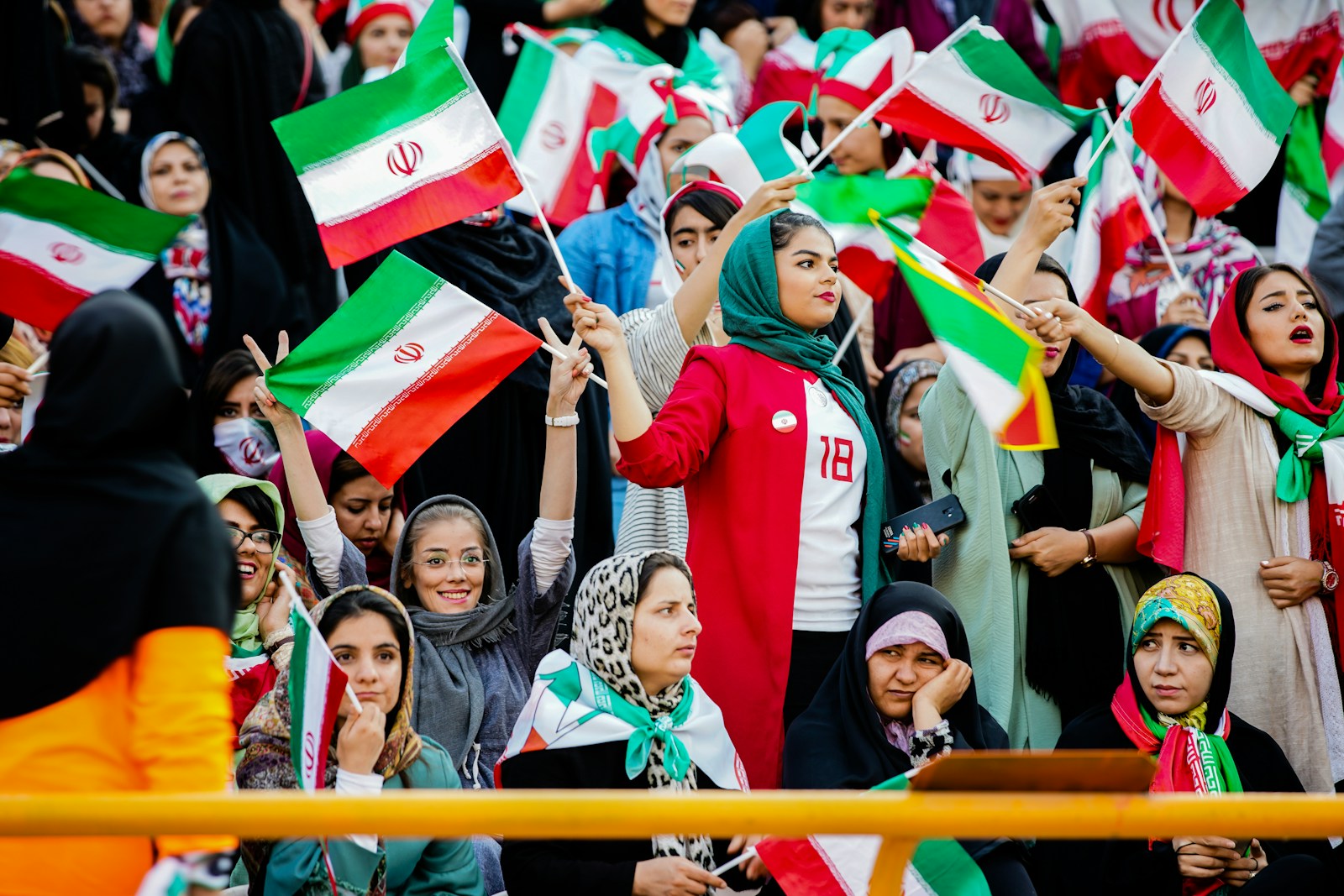
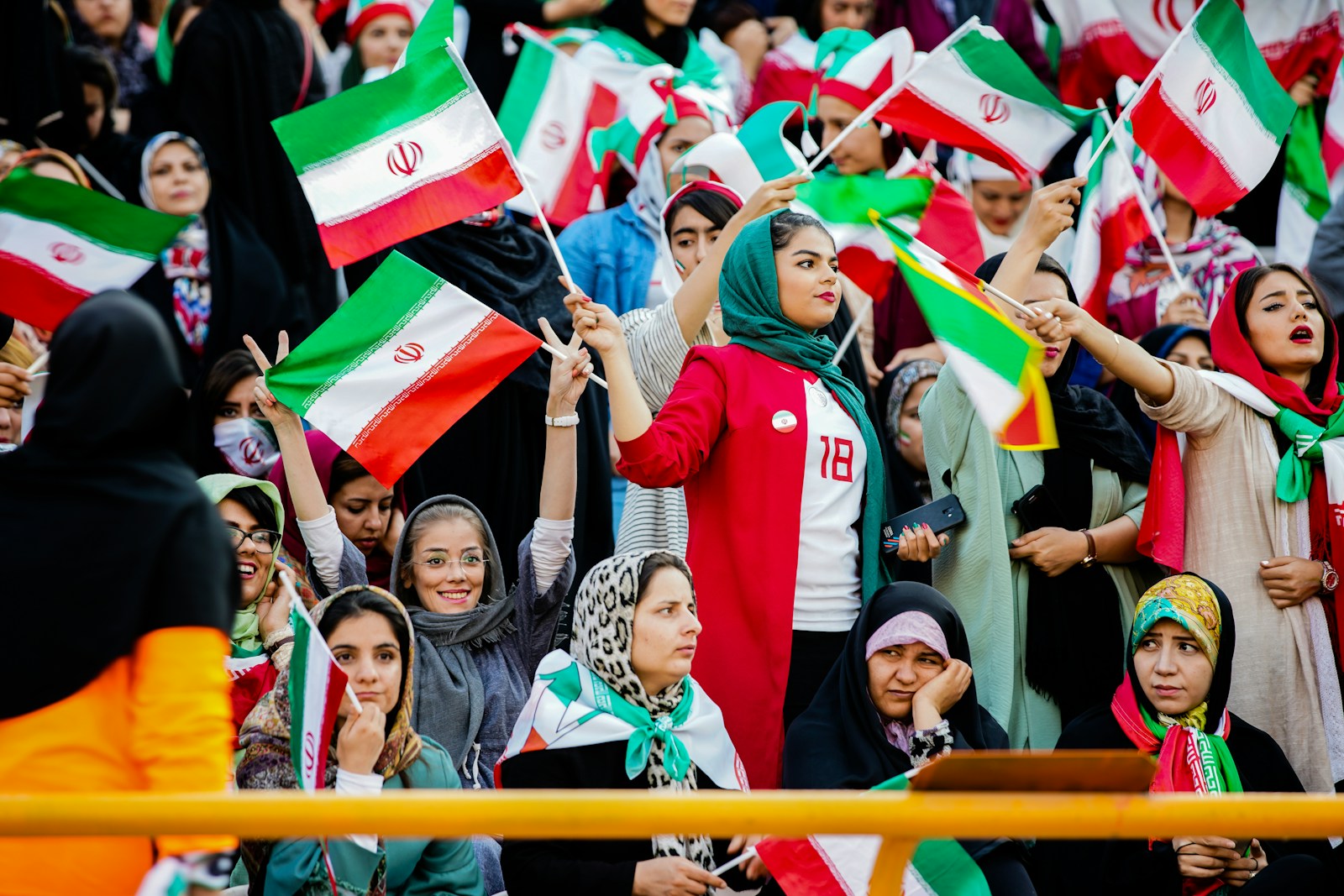
For many Iranians in the diaspora, particularly those now scattered between Los Angeles and Toronto and Stockholm, the team represents something complicated: a source of pride, a source of protest, a source of ambivalence. Ticket demand in Southern California has reportedly been among the highest of any group in the tournament. Los Angeles County is home to the largest Iranian population outside Iran. SoFi Stadium will not be a neutral venue on 15 June or 21 June. It will feel, in many ways, like a home fixture played in exile.
The Coach’s Final Word
Amir Ghalenoei has given exactly one long interview to Persian-language media in 2026, and in it he said a thing that deserves to be remembered. Asked what success would look like in June, he answered: “Success is when the players walk off the field and the supporters walk out of the stadium knowing we represented them. The result comes after that.” It was a sentence that could have been platitude in any other country. In Iran, in April 2026, it read as a statement of intent.
If this squad is going to become the first to advance from a World Cup group, it will do so because of Taremi’s goals, Ghalenoei’s organisation, the Los Angeles crowd’s noise, and the kind of result-tournament luck Iran has rarely enjoyed. If it does, the bracket from the round of 32 onward would likely send them into the path of a Pot 1 runner-up — possibly Portugal, possibly the Netherlands, possibly the host United States. None of those opponents would be welcoming. All of them would be, by the standards of Iranian football history, progress.
The qualification trophy is already in the federation’s cabinet. The harder trophy — a place in Iran’s first knockout match — is waiting in Inglewood on 15 June. For the first time since the late 1990s, there is a credible argument that it might actually come home.
The Training Camp Inside Antalya
The Iranian federation picked Antalya as its April base for reasons that are half footballing, half logistical. The Turkish Mediterranean coast offers late-spring weather conditions that approximate Southern California in June. The training pitches at the federation’s chosen resort complex are FIFA-grade. The flight from Istanbul to Los Angeles, routed through European hubs, is manageable. And the Turkish football authorities are comfortable hosting Iranian national team activities in a way that almost no European federation currently is.
Ghalenoei’s staff has broken the April window into three specific phases. The first ten days focus on fitness benchmarking. Each player arrives from his club with a slightly different physical profile — Taremi coming off a demanding Greek and European schedule, Gholizadeh fresh from a Polish season that runs deeper into spring than the Italian or Spanish ones, Hajsafi already at his post-AEK domestic pace, Azmoun carrying the match-fitness question everyone wants to watch. The federation’s sports science team, led by a domestic staff with supplementary European consultants, runs standardised tests at the start, middle and end of the phase.
The second phase, overlapping with a set of closed-door friendlies against European and African opposition, focuses on tactical integration. Ghalenoei’s preferred 4–2–3–1 demands specific patterns: the defensive midfielder pair alternating drops, the wingers pinning opposing fullbacks, the number ten picking up pockets between the lines. These patterns are not complicated at the whiteboard level. They are, however, difficult to execute against real opposition at tournament pace. The closed-door friendlies are designed to test the seams.
The third phase is logistical and psychological. By late May, the squad will have relocated to an American base. Most reporting suggests a camp in the greater Los Angeles area, within an hour’s drive of SoFi Stadium. The federation has contracted with security and media handlers experienced in operating Iranian national team activities in politically sensitive environments. The players have been briefed on what to expect: enthusiastic diaspora support, likely protest activity outside team hotels, extensive American media attention, and a level of public scrutiny none of them have previously faced outside Iran itself.
A Generation’s Last World Cup
For several of the senior players, the 2026 tournament will almost certainly be their final World Cup. Ehsan Hajsafi, at thirty-six in August, has already signalled as much privately. Mehdi Taremi, thirty-four by the tournament’s end, could realistically stretch to 2030 but has not committed either way. Sardar Azmoun, thirty-one, has the athletic profile to make another cycle but will need to rebuild club minutes to do so. Alireza Jahanbakhsh, thirty-two, is in a similar situation.
What that means for the tournament’s emotional stakes inside the Iranian camp is significant. There is a generational weight on this squad that the 2022 Qatar group did not carry. Those players went into Doha knowing 2026 was likely available. This squad has no such cushion. The World Cup that arrives is the last one most of them will play. The fixture against Belgium, the match against Egypt that could produce Iran’s first knockout-round qualification: these are the matches around which late-career legacies will be built.
Iranian football journalists who have covered the team for multiple cycles describe the current camp as noticeably more serious than previous editions. The veterans are, reportedly, less playful in training. The younger players are taking cues from them. The atmosphere is less “boys’ holiday” and more “final exam.” That shift is, by most measures, what Iran has historically needed.
The Tactical Questions That Remain Open
Three tactical questions remain unresolved as of mid-April. The first is central defence. Hossein Kanaanizadegan is a locked-in starter. His partner is less obvious, with Shojae Khalilzadeh, Majid Hosseini and Aref Aghasi all under consideration depending on matchup. Against Belgium’s mobile forward line, pace matters more than aerial dominance. Against Egypt’s Mohamed Salah, the question reverses.
The second is defensive midfield partnership. Saeid Ezatolahi is first choice, but his partner rotates between Ahmad Nourollahi and a younger option depending on whether Ghalenoei wants a second press-resistant midfielder or a more progressive ball-player. The answer likely depends on whether Iran start games from a high or low block.
The third, and most interesting, is the number ten. Mehdi Ghayedi, Saeid Sadeghi and a handful of domestic players from Persepolis and Esteghlal have competed for the role. Ghayedi’s creativity is the highest in the pool; his defensive work rate is the lowest. Sadeghi’s profile is almost the reverse. Against New Zealand, where Iran will have more of the ball, Ghayedi is the obvious choice. Against Belgium, Sadeghi’s defensive contribution becomes essential. A split selection across the group phase is the most likely outcome.
Frequently Asked Questions
Which group is Iran drawn in for the 2026 World Cup?
Iran is in Group G with Belgium, Egypt and New Zealand. The draw took place at the Kennedy Center in Washington on 5 December 2025, and all three Iranian group matches will be staged in the United States.
Has Iran ever reached the knockout rounds of a World Cup?
No. Iran has played in six previous World Cups — 1978, 1998, 2006, 2014, 2018 and 2022 — and has never advanced past the group stage. The closest they came was a famous 2–1 win over the United States in Lyon in 1998, which still left them third in their group. 2026 will be their seventh appearance.
Who are Iran’s key players for the 2026 tournament?
Mehdi Taremi of Olympiacos is the first name on the team sheet and Iran’s all-time leading active scorer. Sardar Azmoun, now at Shabab Al Ahli in the UAE, remains a major presence if fit. Alireza Jahanbakhsh (Dender EH), Ehsan Hajsafi (Sepahan) and Ali Gholizadeh (Lech Poznan) complete the experienced attacking core.
Did FIFA confirm Iran will actually travel to the United States?
Yes. On 15 April 2026, FIFA president Gianni Infantino publicly confirmed Iran’s participation, saying the team is “coming for sure” and that Iran “has to come” because they had qualified on sporting merit. Iran’s federation had previously requested that matches be moved to Mexico; that request was denied.
Sources
- Al Jazeera — Iran has to come to the US, Infantino says
- Wikipedia — 2026 FIFA World Cup Group G
- Tehran Times — 2025/26 PGPL coverage
Further SportsPersia reading: our earlier coverage of the World Cup boycott question, the tactical deep-dive on Taremi’s Olympiacos form through the European spring, and our broader spring 2026 tournament coverage.