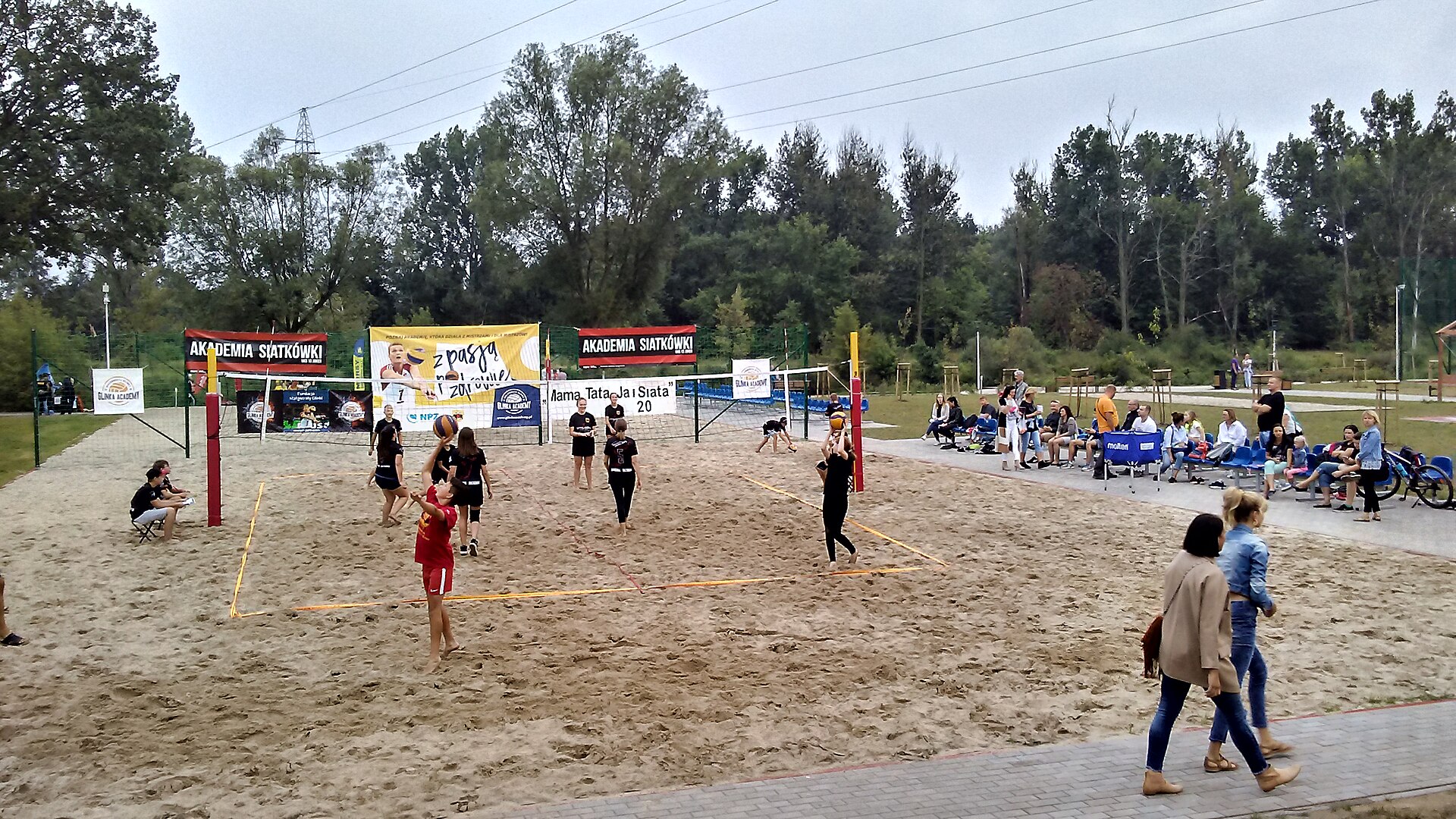
A single arena in a provincial capital can stage a volleyball match on Thursday, a basketball fixture on Saturday and a junior wrestling event the weekend after that. Ask the people who run the building which part is hard and none of them will say the sport. They will say the floor, the seating conversion and the twenty-four hours in between.
Autumn is when that pressure peaks. Domestic football settles into its rhythm after the first international window, the indoor leagues open within weeks of one another, and the mat sports reach the busiest stretch of their championship year. Four or five codes end up competing for the same halls, the same broadcast hours and the same attention.
What follows is a map of that block rather than a preview of it. It describes the shape the season takes: which competitions open when, what each one demands from a building, and where the collisions occur. None of it forecasts a result, because the durable part of a calendar is structural and outlives the season it was drawn for.
What overlaps, and when
- The anchor. Top-flight football owns the weekend and, when continental fixtures are on, most of the midweek as well.
- The indoor block. Volleyball opens first, basketball follows, futsal runs alongside both. All three want the same halls.
- The mat block. Wrestling, weightlifting and taekwondo run to a championship clock: national events, selection meets and continental or world competition compressed into a few weeks.
- The hard constraint. Buildings, not enthusiasm. A city with one competition-standard hall can serve one code properly and two badly.
- The soft constraint. Broadcast hours. There are far more events than slots, and the ranking of slots is decided long before a ball is thrown up.
- What moves. Everything except football and the international windows.
Football sets the frame everything else fits around
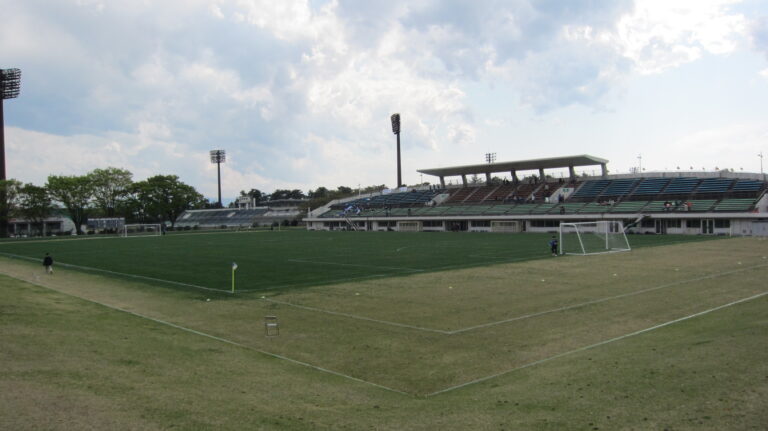
The first tier restarts in late summer, but the autumn version of the competition only appears once the opening international window has passed and squads are complete again. From that point the weekend is spoken for. Kick-offs spread from Thursday through Saturday, and the biggest domestic fixtures take the evening slots.
Clubs entered in continental competition remove the midweek as well. Their group matches sit in fixed blocks published by the confederation, and the domestic rounds around those blocks shift to accommodate them. That leaves the indoor codes with Sunday to Wednesday and whatever the football schedule has not claimed.
None of this is a ranking of importance. It is a consequence of sequence: the football calendar is drawn first because its international obligations are fixed first, and every other federation drafts against a document that already exists. The competition regulations of the top division are therefore the first thing to read if you want to understand why a volleyball match starts at five on a Tuesday.
Volleyball opens the indoor season first
The domestic volleyball league is the earliest of the indoor competitions to get going, and it is the one with the deepest club network outside the capital. Teams are spread across a wide set of provincial cities, which means the league needs more halls than any other indoor code and has to accept a broader range of building standards.
The national team calendar cuts into the club season in a way football supporters would recognise. International competition in this sport clusters in the summer, but continental club events and preparation camps reach into the autumn, and a club that supplies several internationals will start the league short. The national programme and the club programme are drawn by different bodies and only partly reconciled.
Volleyball is also the code with the least demanding conversion. A wooden or synthetic floor, a net system, referee stands and a clear run-off area are the essentials. That flexibility is why it opens first: it can use buildings the other codes would have to modify.
Basketball opens into the same buildings
The basketball league starts a few weeks behind volleyball and wants the same halls, with two additional requirements that narrow the list. It needs fixed or reliably mounted backstops, and it needs a floor that will not punish repeated lateral loading. A hall that hosts volleyball comfortably can be marginal for basketball.
The consequence is concentration. Basketball clusters in fewer cities than volleyball, which shortens the travel map but sharpens the competition for dates inside those cities. Where a club shares a building with a volleyball side, the two fixture lists are effectively negotiated as one.
Continental club competition adds a further layer, and the national team’s qualification commitments fall in windows that empty club squads mid-season. Autumn is when those windows first bite, which is why an early-season basketball table is even less informative than a football one.
Futsal is a third claim on the same floor
Futsal is played on a hard court of similar dimensions to a basketball floor, with different markings and a different ball. Where a hall serves both, the markings coexist and the changeover is quick. Where it does not, the club plays somewhere smaller and the attendance shows it.
The domestic futsal structure is unusually strong relative to the sport’s international profile, with a first division spread across the country and a genuine second tier beneath it. That depth is a scheduling problem as much as an achievement: more clubs mean more fixtures competing for the same limited stock of certified halls.
The overlap with football is the interesting one. Futsal supplies technique to the eleven-a-side game and takes players back from it, and in some provinces the two share coaching staff. The competitive structures around the code have grown fast enough that the venue shortage is now the binding limit rather than participation.
The mat sports run on a championship clock, not a league clock

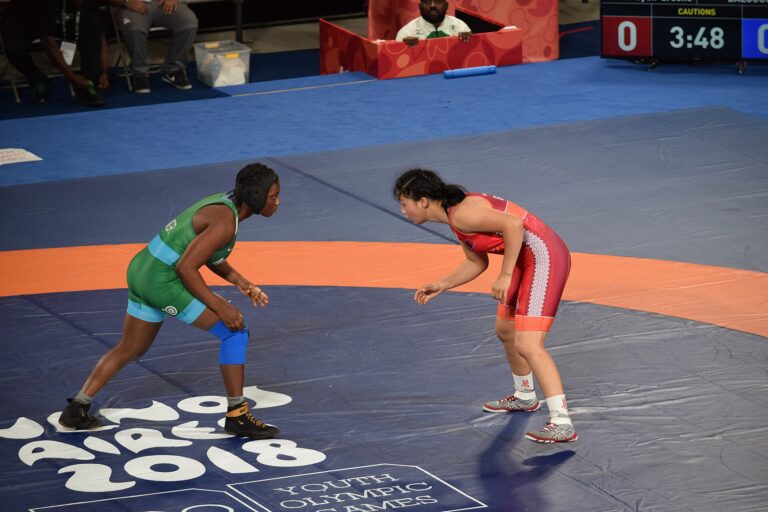
Wrestling, weightlifting and taekwondo do not fill the autumn with weekly fixtures. They fill it with peaks. A national championship, a selection event, an age-group competition and then a continental or world championship arrive in a compressed sequence, and between them there is very little to watch.
That shape changes how the sport is followed. A wrestling supporter is not checking a table on a Sunday; they are waiting for a bracket to be published a few days before a competition and then watching the whole thing inside two days. Coverage is intense and short rather than steady, which is exactly the opposite of the league codes.
It also changes what the venues need. A mat competition needs floor area, warm-up space and scales, not fixed seating or a converted court, so it can occupy buildings the leagues cannot use. That is a rare piece of good news in an autumn otherwise defined by competition for halls, and it is one reason the mat disciplines can run alongside everything else without displacing it.
Why one arena cannot serve three leagues
The obstacle is rarely the playing surface itself. It is the time and labour around it. Converting a hall between codes means moving equipment, restriping or covering markings, repositioning officials’ tables and scoreboards, and re-checking safety clearances. Done properly that is hours of work by staff who are usually paid per event.
Then there is the floor. A sprung wooden floor is the standard for indoor sport and the most expensive part of the building to maintain. Repeated events on consecutive days, especially with heavy load-in and load-out, shorten its life, and a venue manager protecting a fifteen-year asset will refuse a booking that a federation considers reasonable.
Add lighting to broadcast standard, a control room, changing capacity for two squads and officials, and a medical room, and the number of halls in any city that can host a first-tier match at short notice is small. Investment in newer multi-purpose facilities has widened the list in a handful of cities and left most of the country where it was.
Broadcast slots decide what you can actually watch

There are more events in an autumn week than there are hours on the national sports channels, and the ranking is stable. Top-flight football takes the prime evening slots. Continental club football takes its midweek slot. Indoor leagues take what is left, which is often an afternoon, and mat sports take a live window when a major championship is on and highlights the rest of the time.
The practical result for a viewer is that the second and third indoor fixtures of a round frequently go untelevised, appearing instead on a federation stream or a club channel of variable reliability. Following a full league round in any indoor code usually means using more than one source.
Kick-off and throw-up times move to fit the slot rather than the other way round, which is why an indoor fixture can start at an hour that suits nobody in the building. The audience the schedule is protecting is not the one in the seats.
The codes do not share a travel map
Football is spread across the country, from the northwest to the Gulf coast, and its travel burden is the heaviest of any code. Volleyball is almost as widely distributed. Basketball and futsal cluster more tightly, and the mat sports are concentrated in particular provinces with deep club traditions.
Those different maps interact badly in one specific way. When a football club and an indoor club from the same city both travel in the same week, they compete for the same charter capacity, the same buses and the same medical staff, because in most cities those resources are shared or held by the same municipal body.
Distance also decides what an away following looks like. A journey of a thousand kilometres for a Tuesday indoor fixture produces a handful of travelling supporters; the same journey for a weekend football match produces coaches full of them. That asymmetry shapes which fixtures a broadcaster bothers with, which closes the loop back to the slot problem.
Reading the Iran sports calendar without waiting for a preview
Four checks handle most of the confusion. First, find the federation’s own published competition calendar for the code you follow, because the club and media versions are downstream of it and often out of date. Second, mark the international windows for that sport; they explain most of the gaps.
Third, identify the venue and find out what else it hosts. A hall shared with another first-tier club will produce fixture moves that look arbitrary and are not. Fourth, check whether the club is in continental competition, which converts a normal week into a travel week.
Run those four and the Iran sports calendar stops looking like a jumble of unrelated announcements. It becomes what it is: several federations drafting against a football list they did not write, inside a stock of buildings none of them own. The broader picture of organised sport in the country is the same story at a larger scale, and the venue constraint is the thread running through all of it.
A month-by-month reference
The table below describes a pattern rather than a set of dates. Federations publish their own calendars each year and the boundaries move, but the sequence and the pressure points repeat. Read the rows as competition for resources, not as a schedule.
| Period | Football | Indoor codes | Mat sports | Where the pressure lands |
|---|---|---|---|---|
| Early September | League settles after the first international window | Volleyball pre-season and opening rounds | National championship season begins | Broadcast slots; football takes the evenings |
| Late September | Continental group stage opens; midweeks disappear | Volleyball in full flow; basketball pre-season | Selection events and age-group competition | Midweek halls; travel staff shared with football |
| October | Second international window; catch-up rounds | Basketball league opens; futsal fully under way | Continental and world championship block | Peak venue conflict; three codes, one floor |
| November | Congestion and postponement risk; air quality in the capital | All three indoor leagues in mid-season | Domestic club and league competition on the mat | Afternoon slots and untelevised fixtures |
| Early December | Run toward the mid-season pause | Fixture blocks before the winter interruption | Quieter; preparation blocks begin | Cold-weather venues in the northwest |
Frequently Asked Questions
Why do indoor fixtures move so often compared with football?
Because they are scheduled last and in buildings they do not control. A football round can move an indoor round; the reverse almost never happens. Where a hall is shared with another club or booked for a non-sporting event, the indoor fixture is the one that gives way.
Is there a single calendar covering all the codes?
No. Each federation publishes its own, on its own timetable, and there is no consolidated national fixture list. Anyone following more than one sport ends up keeping a private version assembled from several sources, which is the practical reason a structural map is more useful than a weekly preview.
Why does the wrestling season feel so short?
Because it is a championship sport rather than a league sport. Competition is concentrated into events lasting a day or two, separated by training blocks with nothing public in them. The volume of competition is far lower than in a league code, and the intensity of each occasion is far higher.
Do the indoor leagues ever play on football weekends?
They do, particularly when a round has to be completed before an international window. The result is predictable: lower attendance, less coverage and, where the two clubs share a city, a direct split of the available audience. Federations avoid it where the calendar allows, and the calendar frequently does not.
What decides which matches get televised?
Slot availability, expected audience and rights arrangements, in roughly that order. A first-tier football fixture will beat any indoor fixture for an evening slot. Among indoor codes, the match involving the better-supported clubs takes the live window and the rest go to streams.
How far ahead are these calendars actually fixed?
The international elements are set years out and do not move. Domestic calendars are published before the season and then revised through it, sometimes heavily. Treat a published domestic date more than a month away as an intention, and confirm the venue in the week of the fixture.
The autumn block is not a series of separate seasons that happen to coincide. It is one competition for a fixed stock of halls, hours and staff, refereed by nobody, and most of what looks like poor planning is the visible edge of that shortage.