


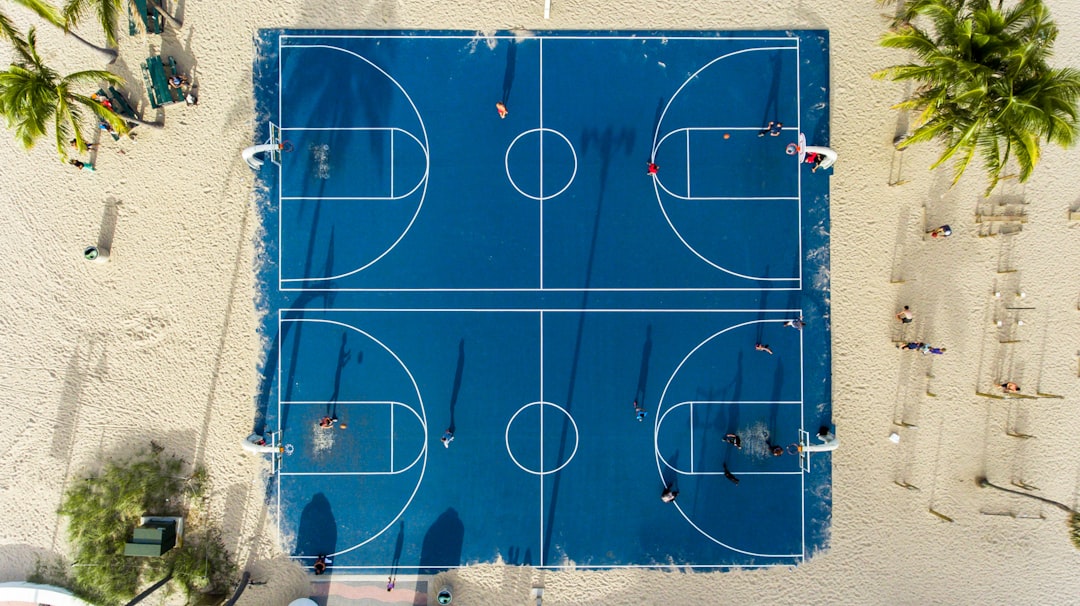
Every March, American college basketball transforms into the most unpredictable sporting event on the planet. The 2026 NCAA Tournament — universally known as March Madness — tips off with the First Four in Dayton, Ohio on March 17–18, and will culminate with the National Championship game in San Antonio on April 7. Sixty-eight teams enter. One survives. And somewhere between the opening tip and the final buzzer, a mid-major program that nobody outside their campus has heard of will destroy a bracket and create a legend.
For international sports fans more familiar with football’s Champions League or cricket’s World Cup, March Madness can seem bewildering in its format and intensity. This guide breaks down the 2026 tournament: how it works, who to watch, why it matters, and how the numbers point toward potential chaos.
How the Tournament Works
The NCAA Tournament is a single-elimination bracket. Lose once and your season is over — there are no second legs, no aggregate scores, no group stages. This format is what makes March Madness uniquely volatile. A team that has won 30 games across a five-month season can be eliminated by a single missed free throw in a Tuesday night game that 90 percent of the country did not plan to watch.
The 68 teams are seeded 1 through 16 in four regional brackets (South, East, West, Midwest), based on their regular-season performance. The First Four (March 17–18) eliminates four teams, leaving 64 for the main bracket. From there, the field is halved every two days until four teams remain for the Final Four.
| Round | Dates | Location | Teams Remaining |
|---|---|---|---|
| First Four | March 17–18 | Dayton, Ohio | 68 → 64 |
| First Round | March 20–21 | Multiple venues | 64 → 32 |
| Second Round | March 22–23 | Multiple venues | 32 → 16 |
| Sweet 16 | March 27–28 | Regional sites | 16 → 8 |
| Elite Eight | March 29–30 | Regional sites | 8 → 4 |
| Final Four | April 5 | San Antonio, TX | 4 → 2 |
| Championship | April 7 | San Antonio, TX | 2 → 1 |
Teams to Watch: The Men’s Tournament
Florida Gators (Defending Champions)
Florida enter the tournament as the team everyone wants to dethrone. Their championship run last season was built on elite defense and clutch shooting, and both pillars have returned largely intact. The question is whether the pressure of defending a title — historically one of the hardest things in college sports — will sharpen or burden them.
Duke Blue Devils
Duke are many experts’ pick to cut down the nets this year. Their roster combines veteran leadership with explosive freshmen, and their coach has the tournament pedigree to navigate the single-elimination pressure. Duke’s offense ranks in the top five nationally in efficiency, according to ESPN’s analytics.
Arizona Wildcats
Arizona’s size advantage is a problem that few teams in the bracket can solve. Their frontcourt dominance has produced the nation’s best rebounding margin, and in a single-elimination format, controlling the boards often controls the game.
Michigan Wolverines
Michigan play with a pace and style that can overwhelm opponents before they adjust. Their three-point shooting percentage leads the Big Ten, and they enter the tournament on a 12-game winning streak.
The Prospect Everyone Is Watching: AJ Dybantsa
Every March Madness produces a player who announces himself to the national audience. In 2026, that player is AJ Dybantsa, a freshman guard whose combination of size, court vision, and scoring ability has drawn comparisons to a young LeBron James from NBC Sports’ draft analysts. NBA scouts have been tracking Dybantsa since high school, but the tournament is where draft stock is made or broken. A dominant three-week run in March could make him the consensus number one pick in June’s NBA Draft.
The Women’s Tournament: Connecticut’s Quest for Perfection
On the women’s side, the headline writes itself: the University of Connecticut enters the 2026 tournament undefeated. The Huskies are chasing their 13th national championship, and no team in the bracket has come within single digits of beating them this season. Their dominance is so complete that the only real drama surrounds whether any opponent can make the game competitive enough to be called a contest rather than a formality.
Why March Madness Produces Upsets: The Mathematics of Chaos
In a seven-game NBA playoff series, the better team wins roughly 80 percent of the time. In a single NCAA Tournament game, the upset rate for double-digit seeds (10–16) against top seeds (1–4) is approximately 22 percent. Over six rounds, those probabilities compound. The chance that all four No. 1 seeds reach the Final Four is just 12 percent in any given year. This mathematical reality is what makes bracket pools impossible and March evenings unforgettable.
The tournament’s history is littered with legendary upsets: No. 16 UMBC over No. 1 Virginia (2018), No. 15 Florida Gulf Coast reaching the Sweet 16 (2013), No. 11 Loyola Chicago making the Final Four with a 98-year-old team chaplain named Sister Jean (2018). These stories are not anomalies — they are the tournament’s identity.
How to Watch Internationally
For viewers outside the United States, the tournament is available through several international broadcasters and streaming services. In most markets, ESPN’s international feed carries the games. The NCAA also streams select games on its website. For a similar format of single-elimination drama in a European context, our Champions League knockout coverage offers a useful comparison point.
How the Bracket Works: A Visual Guide
For international fans more accustomed to group-stage formats, the NCAA bracket can feel alien. Here is a complete breakdown of how the seeding and bracket structure create the controlled chaos that defines March Madness.
The Four Regions
The 68-team field is divided into four regions: South, East, West, and Midwest. Each region contains 16 seeds (numbered 1 through 16), with the No. 1 seed being the strongest team and the No. 16 seed being the weakest. The selection committee, a group of athletic directors and conference commissioners, assigns both the seeds and the regions based on a combination of regular-season record, strength of schedule, and results in conference tournaments. The committee also considers geography, attempting to place teams reasonably close to their home campuses in the early rounds to boost attendance.
How Seeding Creates Matchups
The bracket is structured so that the strongest seeds face the weakest in the first round: No. 1 plays No. 16, No. 2 plays No. 15, No. 3 plays No. 14, and so on. In theory, this means the best teams have the easiest path. In practice, the single-elimination format means that a cold-shooting night, a hot opposing guard, or a single missed free throw can end a top seed journey on the first weekend. The No. 1 seeds have historically won their first-round games 99.4 percent of the time, but the upset rate increases dramatically as the rounds progress and the talent gap narrows.
From 68 to One
The First Four (four play-in games) reduces the field from 68 to 64. From there, the bracket operates as a pure single-elimination tournament: 64 becomes 32 (First Round), then 16 (Second Round), 8 (Sweet 16), 4 (Elite Eight), and finally 2 teams from each region emerge as the Final Four. The two semifinal winners meet in the National Championship game. The entire process takes three weeks, with games played Thursday through Sunday in the early rounds, creating a concentrated burst of basketball that dominates American sports media and watercooler conversation.
The Economics of March Madness
March Madness is not just a sporting event — it is an economic engine that generates billions of dollars and supports the entire financial structure of college athletics in the United States.
The Television Deal
The NCAA tournament is broadcast under a massive television contract with CBS and Turner Sports (TNT, TBS, truTV) worth approximately 8.8 billion dollars over the current agreement period. This deal, which averages over 1 billion dollars per year, represents the single largest revenue source for the NCAA. The tournament generates approximately 85 to 90 percent of the NCAA total annual revenue, meaning that three weeks of basketball fund virtually every other championship in every other sport the NCAA oversees — from tennis to swimming to track and field. No other sports organization in the world is as dependent on a single event for its financial survival.
Economic Impact on Host Cities
Host cities for tournament games see significant economic boosts. The Final Four alone generates an estimated 300 to 400 million dollars in economic activity for its host city, including hotel stays, restaurant spending, transportation, and retail purchases. San Antonio, which hosts the 2026 Final Four, has invested heavily in infrastructure around the Alamodome specifically to attract events of this magnitude. First- and second-round host cities see smaller but still meaningful impacts, typically in the range of 20 to 50 million dollars per hosting weekend.
The Bracket Pool Economy
Perhaps the most uniquely American aspect of March Madness economics is the office bracket pool. The American Gaming Association estimates that Americans wager approximately 15 billion dollars on March Madness brackets annually, the vast majority in informal pools among friends, family, and coworkers. These pools drive engagement: people who would never normally watch college basketball suddenly have a financial and emotional stake in whether a No. 12 seed upsets a No. 5 seed. This engagement, in turn, drives television ratings, which justify the massive broadcast deal, which funds the entire system. It is a self-reinforcing cycle that has no parallel in global sports.
Key First and Second Round Results
The opening weekend of the 2026 tournament delivered on its promise of unpredictability, with several results that reshaped brackets and created the storylines that will define the rest of March.
Notable Upsets
No. 12 seed Grand Canyon stunned No. 5 seed Marquette in a game that went to double overtime, with the Antelopes prevailing 87-83 behind a 34-point performance from their senior guard. The upset continued a well-documented trend: since 1985, No. 12 seeds have beaten No. 5 seeds roughly 35 percent of the time, making it the most common upset pairing in tournament history. In the South Region, No. 11 seed New Mexico knocked off No. 6 seed Illinois in a defensive grind that finished 58-52, proving once again that mid-major teams with disciplined defensive systems can neutralize more talented rosters in a single-game format.
Dominant Performances
Duke validated their pre-tournament favorite status with a 28-point demolition of their first-round opponent, holding them to just 31 percent shooting from the field. Arizona similarly impressed, using their size advantage to dominate the glass by a margin of plus-18 rebounds. Michigan survived a scare in the first round, trailing by 8 at halftime before their three-point shooting exploded in the second half, turning a potential upset into a comfortable 14-point victory.
The Women’s Tournament Opening
On the women’s side, the opening rounds confirmed what the regular season suggested: Connecticut is in a class of their own. The Huskies won their first two games by a combined 67 points, with their defense holding opponents to under 50 points in both contests. Their backcourt depth and defensive versatility make them the clear championship favorite. However, South Carolina, the 2024 national champions, signaled their intent with equally dominant wins, setting up a potential collision course that could produce one of the great championship matchups in women’s basketball history.
The women’s tournament has seen record attendance and television ratings in recent years, driven by increased visibility and the emergence of transcendent stars. The 2026 tournament is tracking to surpass all previous records, with multiple first- and second-round games selling out for the first time. This growth has attracted significant investment from sponsors and broadcasters, suggesting that the economic gap between the men’s and women’s tournaments, while still large, is narrowing faster than most observers predicted.
Understanding the Bracket Pool
For international readers unfamiliar with the concept, the bracket pool is perhaps the most culturally significant aspect of March Madness. Before the tournament begins, millions of Americans fill out brackets predicting the winner of every single game from the First Round through the National Championship. These brackets are then compared against actual results, with points awarded for each correct pick.
The mathematical odds of filling out a perfect bracket — correctly predicting all 63 games in the main draw — are approximately 1 in 9.2 quintillion (that is 9.2 followed by 18 zeros). To put that in perspective, you are roughly 1,000 times more likely to win the lottery on two consecutive days than to achieve a perfect bracket. No verified perfect bracket has ever been recorded in tournament history, despite tens of millions of attempts annually.
This statistical impossibility is precisely what makes bracket pools so engaging. Since nobody can predict the tournament perfectly, the game becomes about making better guesses than your friends, coworkers, or family members. Upsets — particularly in the first two rounds — are what separate winning brackets from losing ones. The person who correctly picks a No. 12 seed upset while everyone else took the favorite gains a decisive advantage. This creates a strange incentive structure where casual fans sometimes outperform basketball experts, because they are more willing to pick upsets based on gut feeling rather than rational analysis.
Major companies like ESPN and Yahoo host free bracket contests that attract over 20 million entries each. Warren Buffett famously offered 1 billion dollars for a perfect bracket in a promotional challenge — a bet he knew he would never have to pay. The bracket pool phenomenon has become so embedded in American culture that economists estimate it costs employers approximately 6 billion dollars in lost workplace productivity during the first week of the tournament, as employees check scores, update brackets, and debate matchups instead of working.
Frequently Asked Questions
What is March Madness?
March Madness is the nickname for the NCAA Division I Men’s and Women’s Basketball Tournament, a single-elimination bracket competition featuring 68 college teams. It runs from mid-March to early April and is one of the most-watched sporting events in the United States.
Who is favored to win March Madness 2026?
Duke, Florida (defending champions), Arizona, and Michigan are among the top contenders for the men’s title. On the women’s side, undefeated Connecticut is the overwhelming favorite for their 13th national championship.
What is the First Four?
The First Four consists of four play-in games held in Dayton, Ohio before the main 64-team bracket begins. The four lowest-seeded automatic qualifiers and the four lowest-seeded at-large teams compete for the final four spots in the bracket.
Who is AJ Dybantsa?
AJ Dybantsa is a freshman guard widely considered the top prospect for the 2026 NBA Draft. His performance in March Madness is expected to solidify his draft position, with many analysts projecting him as the number one overall pick.
Where is the 2026 Final Four?
The 2026 Final Four and National Championship game will be held at the Alamodome in San Antonio, Texas, on April 5 and April 7 respectively.
The Bottom Line
March Madness 2026 promises the same blend of excellence, heartbreak, and improbable storylines that makes the tournament the most compelling event on the American sports calendar. Whether Connecticut completes perfection, AJ Dybantsa cements his legend, or a No. 14 seed from a conference nobody has heard of ruins 30 million brackets in a single afternoon — the only guarantee is that no one will predict it correctly.
Disclaimer: This article is for informational and entertainment purposes only. Tournament projections are based on publicly available statistical analysis. This content does not constitute betting advice.