

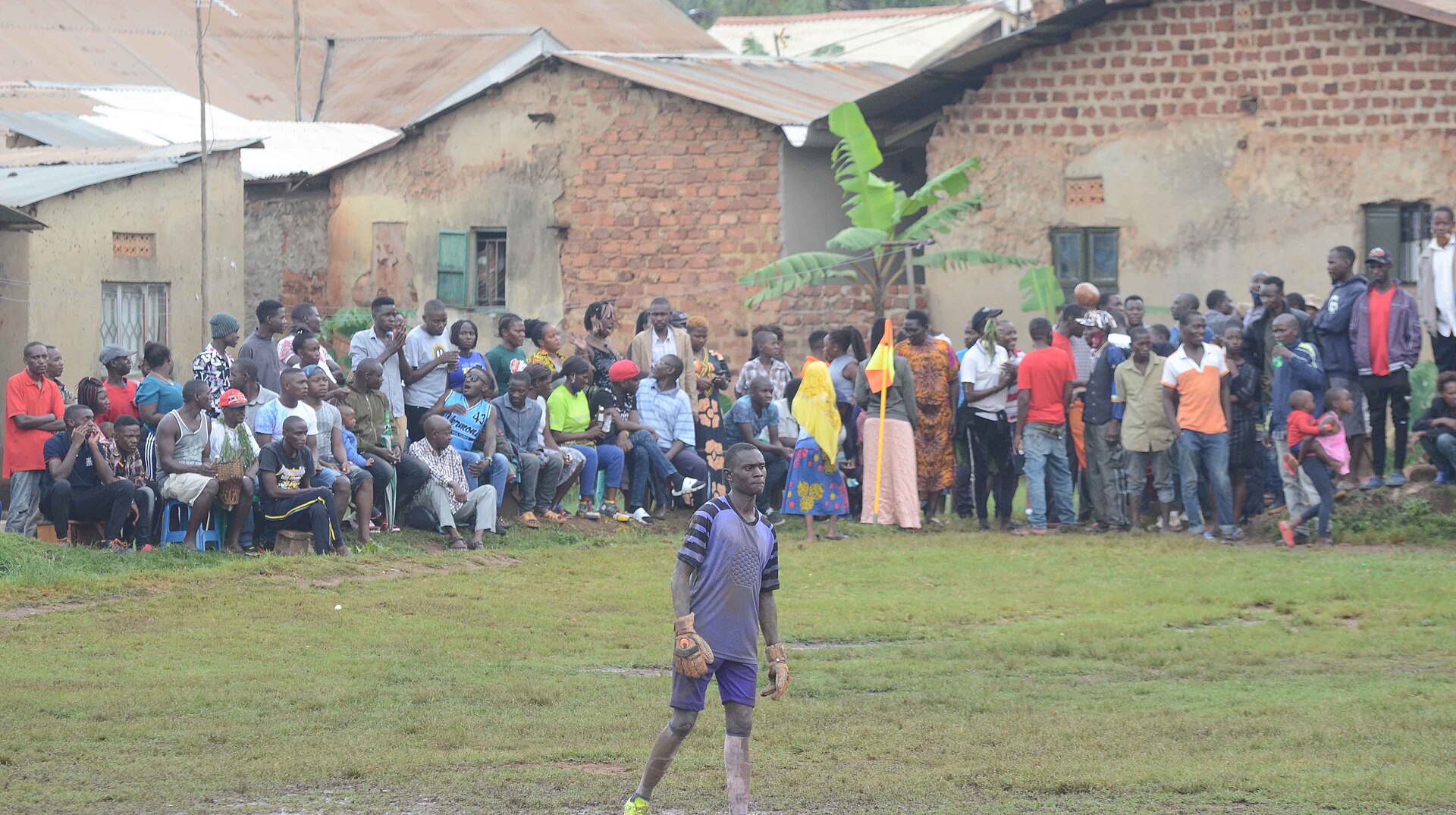
An away end that outnumbers the home support is a strange thing to watch. The noise arrives from the wrong side of the ground, the home team’s own songs get answered rather than echoed, and for long stretches the fixture stops behaving like an away match at all.
Clubs from Tabriz produce that effect more often than anyone else in the country, and the explanation usually offered is passion, which explains nothing. Passion is evenly distributed. What is not evenly distributed is a set of structural conditions that convert feeling into six hundred kilometres of road and a bus that leaves at midnight.
This is a case study in those conditions: where a regional following comes from, how a mass away trip is actually organised, what limits it, and what the club gets out of an asset it does not control.
The case in short
- Catchment. Not a district or a city, but a region and the population that has moved out of it.
- Distance. Roughly six hundred kilometres of road between Tabriz and the capital, which is a long overnight coach journey rather than an impossible one.
- Origin. A workplace club from a manufacturing city, which is a different founding story from a district club.
- Language. A regional language used on the terrace, which makes the support instantly identifiable and self-reinforcing.
- The multiplier. A large community already living in the capital and in other host cities, so the travelling group is joined rather than isolated.
- The limit. Ticket allocation and policing conditions, not enthusiasm and not transport.
A club that stands for a region, not a district
The size of a following is set first by what the club is understood to represent. A club identified with one neighbourhood of a large city draws from that neighbourhood and competes with three or four rivals inside the same municipal boundary. A club identified with a province draws from every town in it and competes with nobody.
That distinction is the largest single factor in the whole case. It multiplies the potential catchment by an order of magnitude before anything else is considered, and it changes the meaning of an away fixture: supporters are not travelling to watch their team, they are travelling as the visible presence of a region in somebody else’s city.
It also explains an asymmetry that puzzles people. The club can fill an away end in a city hundreds of kilometres away while a local rival with a comparable record cannot fill its own, because the local rival is drawing on a district and this club is drawing on a province plus everyone who has left it.
Where the Tractor Tabriz fan base actually came from
The Tractor Tabriz fan base begins with a factory. The club was founded around a tractor manufacturing works, which is a workplace origin rather than a neighbourhood one, and workplace clubs behave differently from the start.
A factory club is tied to a city’s economy rather than to one part of its map. Employees come from across the region, the plant is a source of civic identity in a manufacturing city, and the team is understood as belonging to the place that built the machines rather than to a quarter of it. When such a club later becomes the region’s leading side, the identification is already regional and does not need to be constructed.
The second ingredient is scarcity. Where a large province has one club at the top level, that club absorbs the entire following of an area with several million people. Where a city has three, the same population is divided. The mathematics of that are unglamorous and they account for more of the difference than any account of terrace culture.
Distance is the feature, not the obstacle
The road between the north-west and the capital is long enough to be an undertaking and short enough to be routine. That combination is what produces a travelling culture; a shorter distance would make the trip ordinary, and a longer one would make it rare.
An overnight coach departing after work arrives in the morning, which means a supporter loses a day rather than three. The economics follow from the timetable: a shared coach seat is the cheapest way to move a person several hundred kilometres, and the fixture becomes a trip rather than a holiday.
The consequence is a habit rather than an event. Groups that have made the same journey twenty times have solved the problems once, and the marginal effort of the twenty-first trip is far lower than the first. That accumulated competence is a real asset and it is invisible in any attendance figure.
Language on a terrace
A terrace that sings in a regional language does two things at once. It is instantly recognisable, so a few thousand supporters sound and look like a bloc rather than like a crowd. And it is self-selecting, since joining in requires belonging in a way that a shared national language does not.
The north-west is largely Azerbaijani-speaking, and the songs on the away end reflect that. The effect on the group is cohesion; the effect on the fixture is that the away support becomes a distinct presence rather than a smaller version of the home one.
This is not unique and it is not political in itself. Regional language on a terrace occurs wherever a club represents a linguistically distinct area, and it functions the same way everywhere: as the fastest available marker of who is in the group. The broader relationship between clubs and local identity is examined in work on sport and community belonging, and the pattern here is a textbook version of it.
The second home crowd in the capital
The part most often missed is that a large away following is rarely composed only of people who travelled. Internal migration means that a substantial community from the north-west lives in the capital and in other large cities, and for them the club’s away fixture is a home fixture.
That community changes the arithmetic completely. A coach convoy carrying a few thousand supporters is joined at the ground by residents who needed no transport at all, and the resulting away end is several times the size of the travelling party.
It also stabilises attendance. Travelling numbers fluctuate with the season, the weather and the cost; resident numbers do not. A fixture in the capital at a venue such as the national stadium therefore has a reliable floor of support that has nothing to do with whether the coaches ran.
Organising a trip for thousands
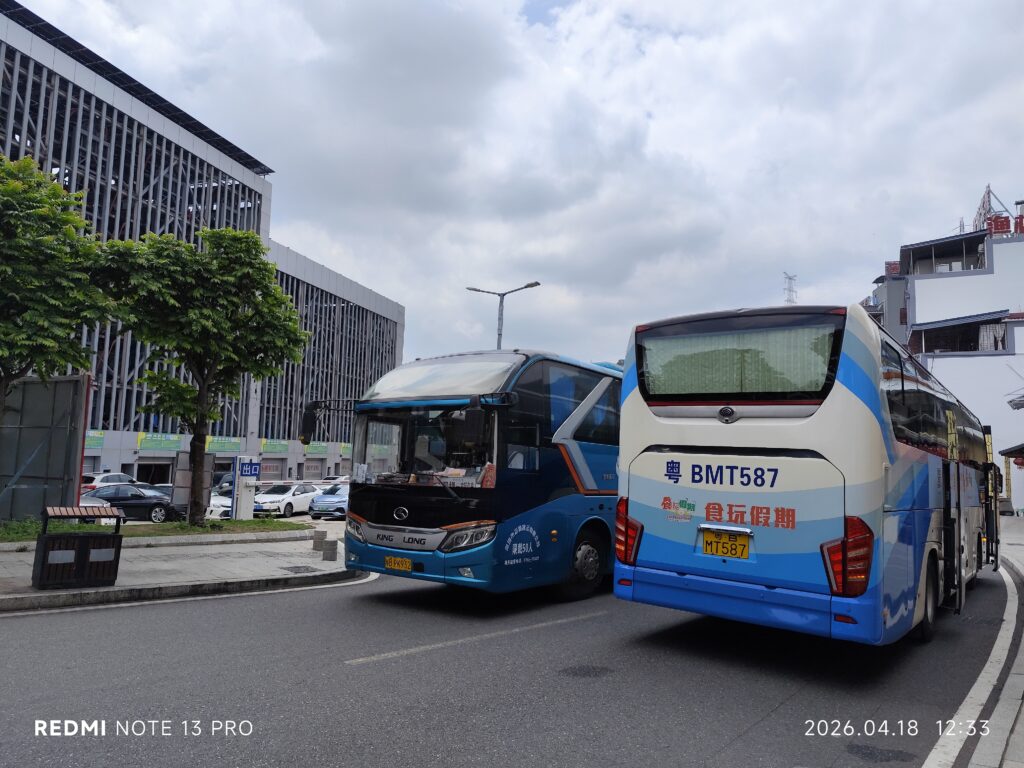
Moving several thousand people across a country is a logistics operation, and it is run by supporters rather than by the club. The structure is consistent: a set of organised groups, each with a coordinator, each responsible for a number of coaches, with departure points across the city and the surrounding towns.
The sequence starts weeks out. Coaches are booked provisionally as soon as the fixture date is confirmed, because a fixture change or a kick-off time moved for television invalidates every arrangement. Seats are sold in advance to cover the deposit. Departure is timed to arrive several hours before kick-off, which usually means leaving the night before.
The practical details are the ones that decide whether a trip works. Where the convoy stops. Whether food is arranged or bought en route. Where the coaches park at the destination, which requires an arrangement with the police rather than a hope. And what happens if the match finishes late, since a return journey beginning at eleven at night puts drivers on the road for the whole of it. None of this appears in coverage of the fixture, and all of it is why the away end fills.
Ticket allocation is the constraint nobody sees
The binding limit on a large away following is almost never the number of people willing to travel. It is the size of the allocation and the way it is distributed.
Away allocations are set by the home club and the competition rules, moderated by the safety assessment for the fixture, and they are frequently smaller than the demand. When an allocation is exhausted, the surplus does one of three things: it stays at home, it buys tickets in home sections, or it arrives at the ground without a ticket. The second and third both create safety problems, and both are the direct product of an allocation set below demand.
Distribution matters as much as size. Where a club can distribute its allocation through recognised supporter groups, the trip organises itself and the people who travel are accounted for. Where tickets are sold generally, coordinators cannot guarantee that the people on their coaches will get in, which is the fastest way to turn an organised trip into an unmanaged crowd.
Policing, segregation and the conditions attached
Every large away following operates inside a set of conditions that are negotiated before the fixture: arrival routes, parking, entry gates, segregation inside the ground, and the timing of the exit afterwards.
The standard arrangement holds visiting supporters in the ground after the final whistle while home supporters disperse, then releases them to coaches parked on a designated route. It is unpopular, it works, and it adds an hour to a journey that is already long. Where it breaks down is when the away group is far larger than the assessment anticipated.
Restrictions on the fixture itself are the sharper cost. A safety assessment can reduce an allocation, close a section, or in extreme cases move a match to a neutral venue, and each of those falls hardest on the supporters who had already booked. The relationship between the assessed risk and the size of a travelling group is circular, and the group with the largest following carries the tightest conditions.
What travelling support is worth to the club
Directly, less than people assume. Away ticket revenue belongs to the home club, so a following that fills an away end is generating income for its opponent. The travelling supporters spend money on transport and food, and almost none of it reaches the club they support.
Indirectly, it is one of the most valuable assets the club owns. A guaranteed large away following makes the fixture more attractive to broadcasters and to the home club, gives the club leverage in scheduling discussions, and is the single most persuasive number in any sponsorship conversation. A commercial director with evidence of a national travelling audience is selling something no league table can supply.
There is also a sporting value that is hard to quantify and easy to observe. A team playing away in front of a majority of its own supporters is not playing away in the psychological sense, and the effect on young players making a first appearance in a hostile ground is real. Coverage of the club’s most successful recent seasons repeatedly returns to that point.
What one away trip actually costs a supporter
| Item | What it involves | Where it varies |
|---|---|---|
| Coach seat | Return, overnight outbound | Group size and how early it is booked |
| Match ticket | Allocation price set by the home club | Category of fixture |
| Food | Two meals on the road | Whether the group arranges it centrally |
| Time | Roughly twenty-four hours door to door | Kick-off time and post-match hold |
| Work | One day lost, sometimes two | Midweek fixtures are far more expensive |
| Risk | Allocation exhausted, fixture moved | Late television scheduling changes |
What does not transfer to another club
The temptation is to read this as a model that a mid-sized club elsewhere could copy. Most of it cannot be copied, because the inputs are structural rather than strategic.
A club cannot decide to represent a province; either it already does or a rival does. It cannot manufacture a diaspora in the host cities. It cannot invent a distinct terrace language. And it cannot choose to sit at a distance from the main venues that makes an overnight coach sensible rather than absurd.
What can be copied is the organisational half. Recognised supporter groups with named coordinators, an allocation distributed through them, provisional transport booked as soon as a fixture is confirmed, and a working relationship with the police at the destination. Those four things are the difference between a following that could travel and one that does, and they are available to any club prepared to treat its away support as an organisation rather than as a crowd. Fixtures in the capital, described in accounts of recent returns to full stadiums, are where the difference is most visible.
Frequently Asked Questions
Why does one club draw from an entire region?
Because it is the only top-flight club in it. A city with three clubs divides its population three ways; a province with one club concentrates several million people behind a single side, and the identification becomes regional rather than municipal.
Does a large away following make money for the club?
Not directly. Away ticket revenue belongs to the home club, and travel spending goes to coach operators and roadside businesses. The value is commercial and reputational: it strengthens sponsorship negotiations and makes the fixture more attractive to broadcasters.
What actually limits the size of an away end?
The allocation and the safety assessment, almost always. Demand and transport capacity are rarely the constraint, which is why a fixture with a reduced allocation produces the same number of travelling supporters and a worse situation outside the ground.
Why are supporters held in the ground after the match?
To separate the two sets of supporters as they leave and to load coaches on a controlled route. It adds around an hour to an already long journey and it is the standard arrangement wherever a large visiting group is expected.
Can another club build the same thing deliberately?
Only the organisational part. Regional exclusivity, a community in the host cities and a workable travel distance are inherited conditions. Recognised supporter groups, allocation distributed through them and an agreed arrangement with the police at the destination are choices any club can make.
The away end that outnumbers the home support is the visible end of a province with one club, a road that can be driven overnight, and a few dozen people who spend their week booking coaches. Take away any one of the three and the picture on the television changes completely.